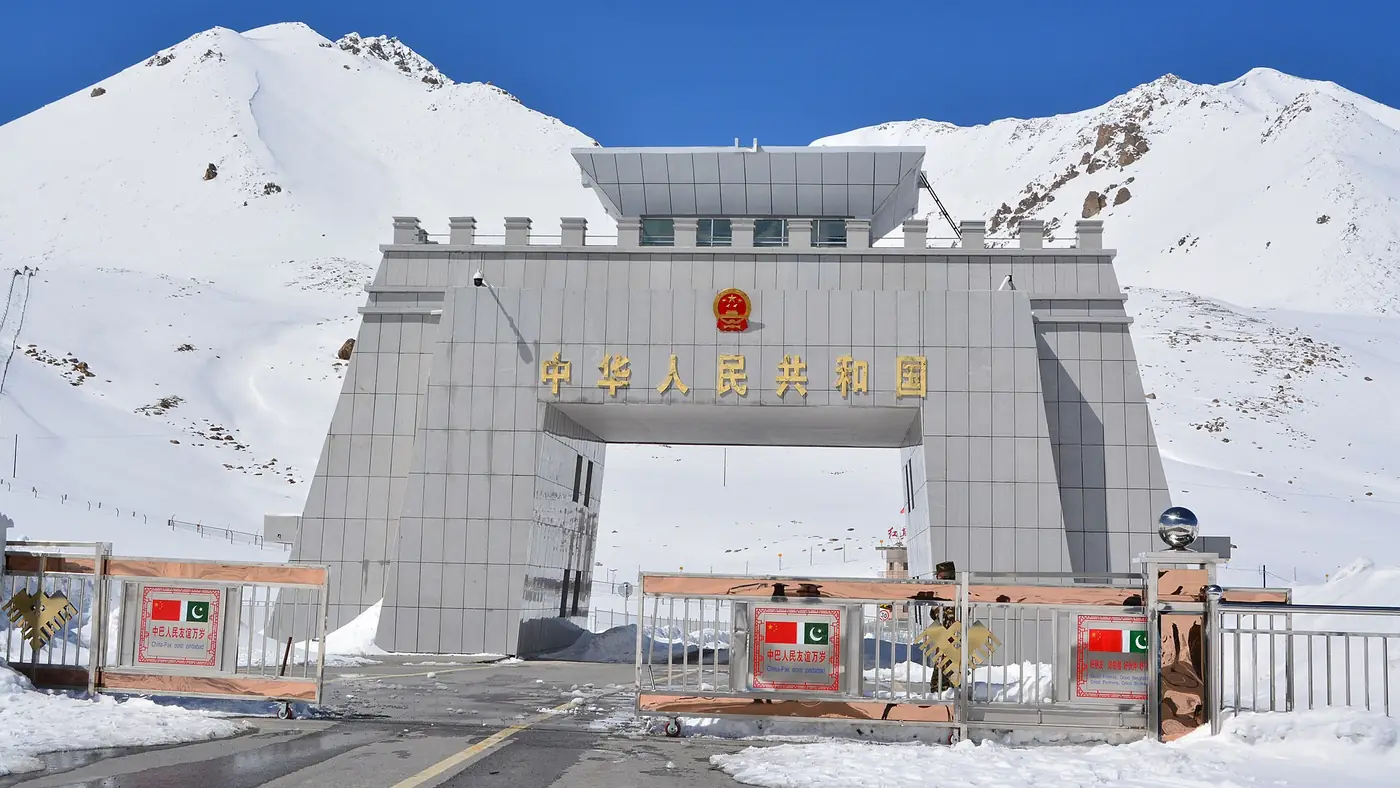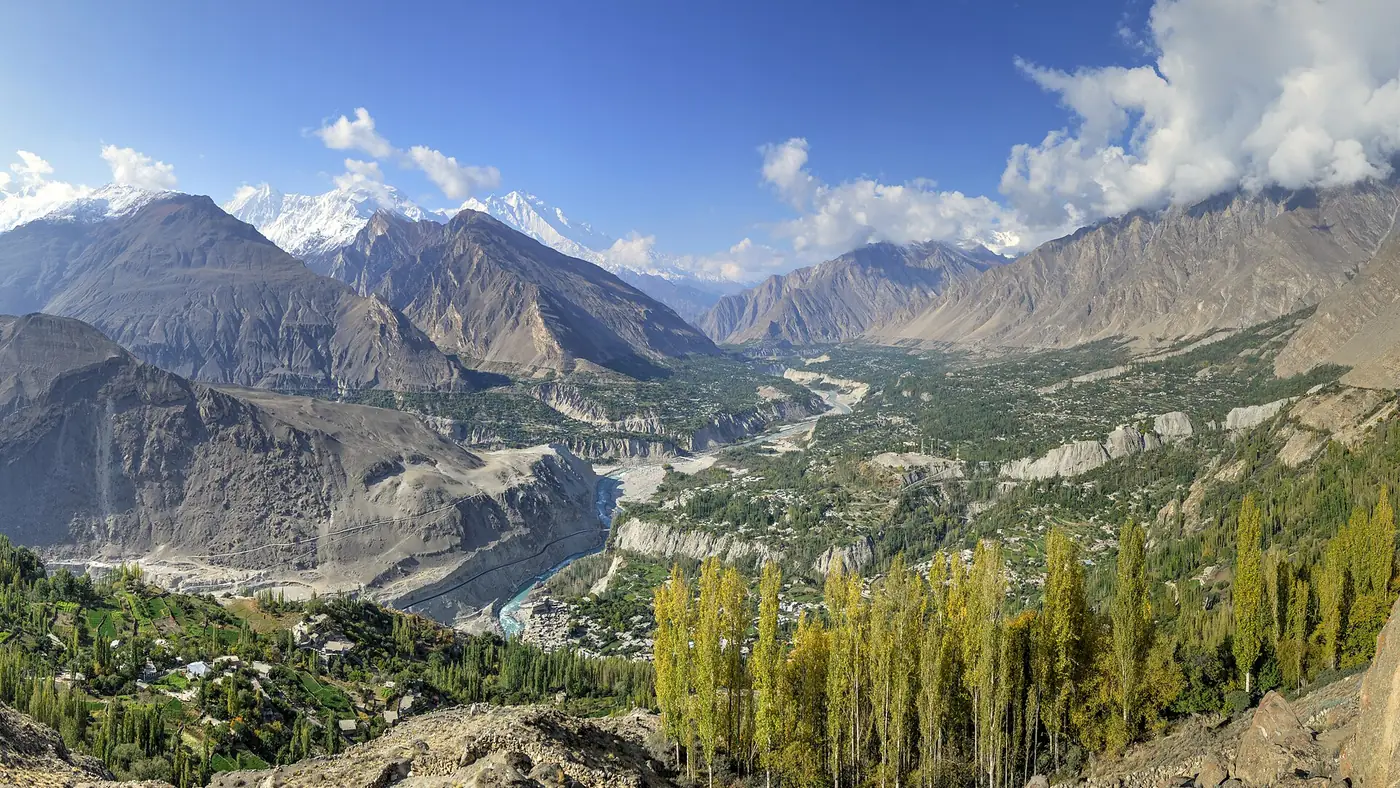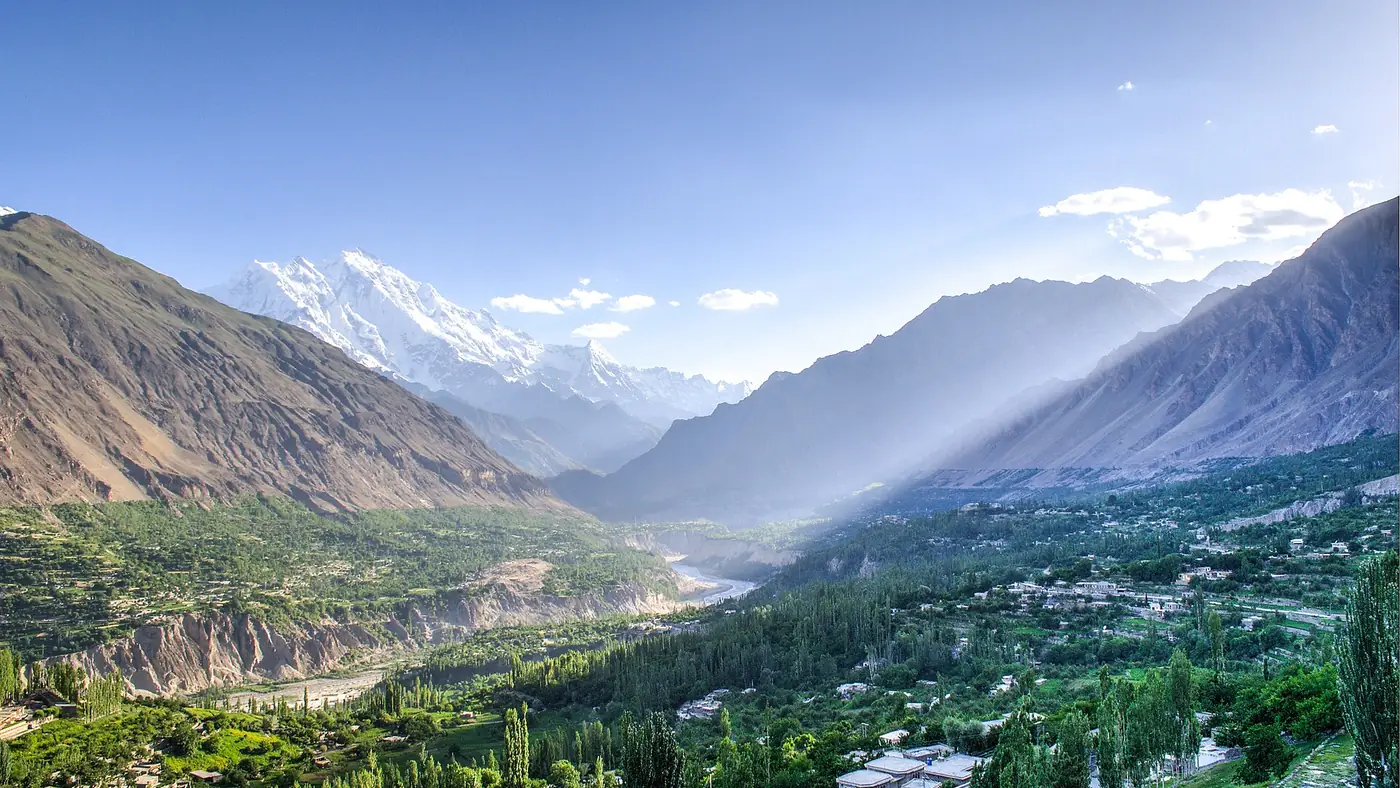
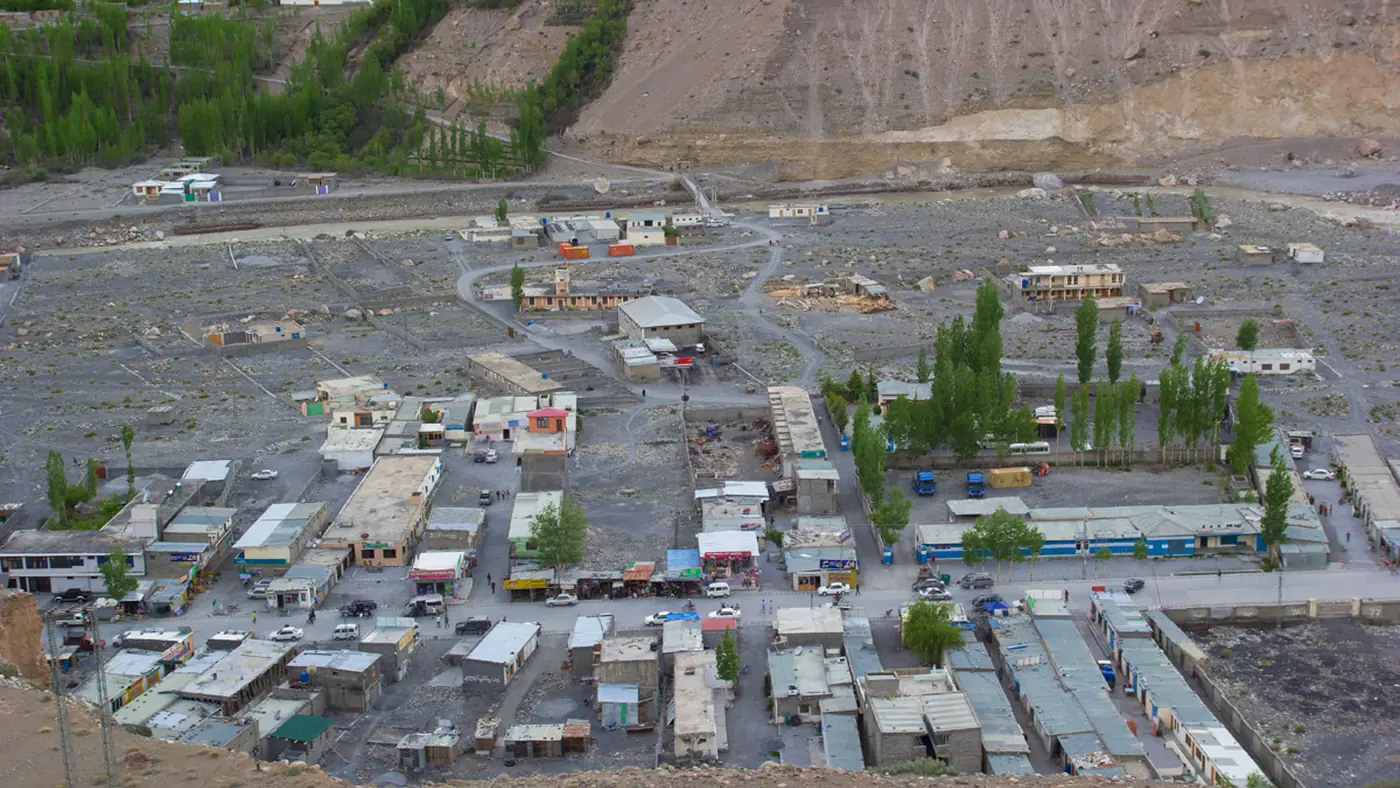
Sost is the last town in Pakistan on the Karakoram Highway, about 2,800 metres up in the Gojal part of upper Hunza, roughly 95 km and two to two and a half hours north of Karimabad. It exists because of the border: Sost holds Pakistan's customs and immigration post for the Khunjerab crossing, a dry port for trade with China, the last fuel pumps before the pass, and a handful of hotels and guesthouses. Almost everyone passes through it on the way to Khunjerab Pass; far fewer stay the night.
This guide covers what Sost is for, the services worth knowing about before you go further up the highway, and whether it is worth overnighting there rather than in Passu or Gulmit.
| At a glance | |
|---|---|
| Altitude | About 2,800 m |
| From Karimabad | About 95 km, 2 to 2.5 hours |
| From Passu | About 40 km, 45 minutes to 1 hour |
| To the Dih park checkpoint | About 35 km |
| To Khunjerab Pass | About 75 to 80 km, 1.5 to 2 hours |
| What's here | Customs and immigration post, dry port, last fuel, ATM (unreliable), a few hotels |
| Mobile network | SCO signal only, patchy beyond the town |
What is Sost, and why does everyone pass through it?
Sost sits in the Gojal valley, the northernmost stretch of Hunza, between Passu and the Khunjerab Pass. It grew up around the border rather than as a traditional village, and it looks it: a strip along the highway of NATCO's bus terminal, customs sheds, small hotels and general stores, with the mountains of upper Gojal behind.
Two things happen here. The Sost Dry Port, opened in 1985, is where cargo moving between Pakistan and China's Xinjiang region clears customs, and it has grown into a serious trade hub: dry port revenue passed Rs 9.5 billion in 2024. And Sost holds the Pakistani immigration and customs office for anyone crossing into China, since the actual border post at Khunjerab itself has no facilities for paperwork. The Chinese side of the same process happens in Tashkurgan, about 100 km beyond the pass.
For a day-tripper heading up to Khunjerab, none of this needs much attention. What matters is that Sost is the last proper town: the last fuel, the last ATM (when it works), and the last real choice of food before the national park.
Fuel, cash and services
Fuel. Sost has the last standard petrol pumps on the highway. Fill up here even if the gauge looks fine, because there is no fuel for the round trip to the border and back, roughly 150 km over a long climb that uses more fuel than flat driving.
Cash. Sost has an ATM, but power cuts in upper Hunza make it unreliable, and it is not something to plan around. Draw the cash you need in Aliabad or Karimabad before heading north, including money for the Khunjerab National Park entry fee, which is paid in cash at the Dih checkpoint further up the road. Our guide to the Khunjerab National Park entry fee covers what to expect there.
Mobile signal. Only the state-run SCO network has coverage in Sost and further up the valley; other operators drop out well before the town. Even on SCO, signal thins out beyond Dih and is often absent at the pass itself.
Food. Simple restaurants along the highway serve the usual Pakistani menu, plus tea and snacks. It is a reasonable lunch stop on the way back down from Khunjerab.
Hotels in Sost: should you stay the night?
Sost has a working range of places to sleep, from basic guesthouses to a Serena property in Lower Sost. For most visitors it is not worth it. Staying in Karimabad, Gulmit or Passu and driving up to the border as a day trip saves you a night in a functional border town and puts you somewhere more pleasant to spend the evening.
There are two situations where a night in Sost makes sense:
- You are crossing into China. Bus tickets and immigration formalities for the Tashkurgan and Kashgar services are handled from Sost's bazaar offices, and international buses tend to leave early, so an overnight here avoids a long drive on the morning of the crossing.
- You want the shortest possible run to Khunjerab. From Sost the pass is under two hours away, which makes an early, quiet visit to the border easier than from Karimabad.
For everyone else, our Hunza to Khunjerab Pass drive guide sets out how the day trip runs from Karimabad, Gulmit or Passu, and staying in Gojal the night before, rather than in Sost itself, shortens the drive without the trade-off of a night in a border town.
The dry port and the border traffic
Even if you are not interested in trade, the dry port explains why Sost feels different from the rest of Hunza. Trucks queue along the highway, customs sheds sit beside ordinary shops, and the town's rhythm follows the border rather than tourist hours. Since December 2024, the Khunjerab crossing has stayed open through winter for trade, which keeps Sost busier through the colder months than it used to be, even though the pass is rarely open to tourist traffic in that season. Our Khunjerab Pass guide explains the difference between the trade opening and the tourist season.
Is Sost worth stopping at on its own?
Not really, beyond the practical stop it makes for fuel, cash and a break in the drive. It has none of the scenery that draws people to Passu or Gulmit, and it is not a place to linger. Treat it as the last services stop before Khunjerab National Park, and spend your time in Gojal in Passu, at the Hussaini bridge or Borith Lake instead.
Frequently asked questions
Is Sost the last town before the China border?
Yes. Sost is the last Pakistani town on the Karakoram Highway before Khunjerab Pass, and it holds the customs and immigration post for the crossing.
Is there fuel in Sost?
Yes, Sost has the last standard petrol pumps before Khunjerab. Fill up there even with a near-full tank, since there is no fuel for roughly 150 km to the border and back.
Can you get cash in Sost?
There is an ATM, but power cuts make it unreliable. Withdraw what you need in Aliabad or Karimabad before heading north.
Should I stay overnight in Sost or in Passu?
Passu or Gulmit, for most visitors. They are more pleasant places to spend the evening and only add a short amount of time to the drive up to Khunjerab. Stay in Sost only if you are crossing into China early the next morning.
How far is Sost from Khunjerab Pass?
About 75 to 80 km, roughly 1.5 to 2 hours by car, including the stop at the Dih park checkpoint along the way.