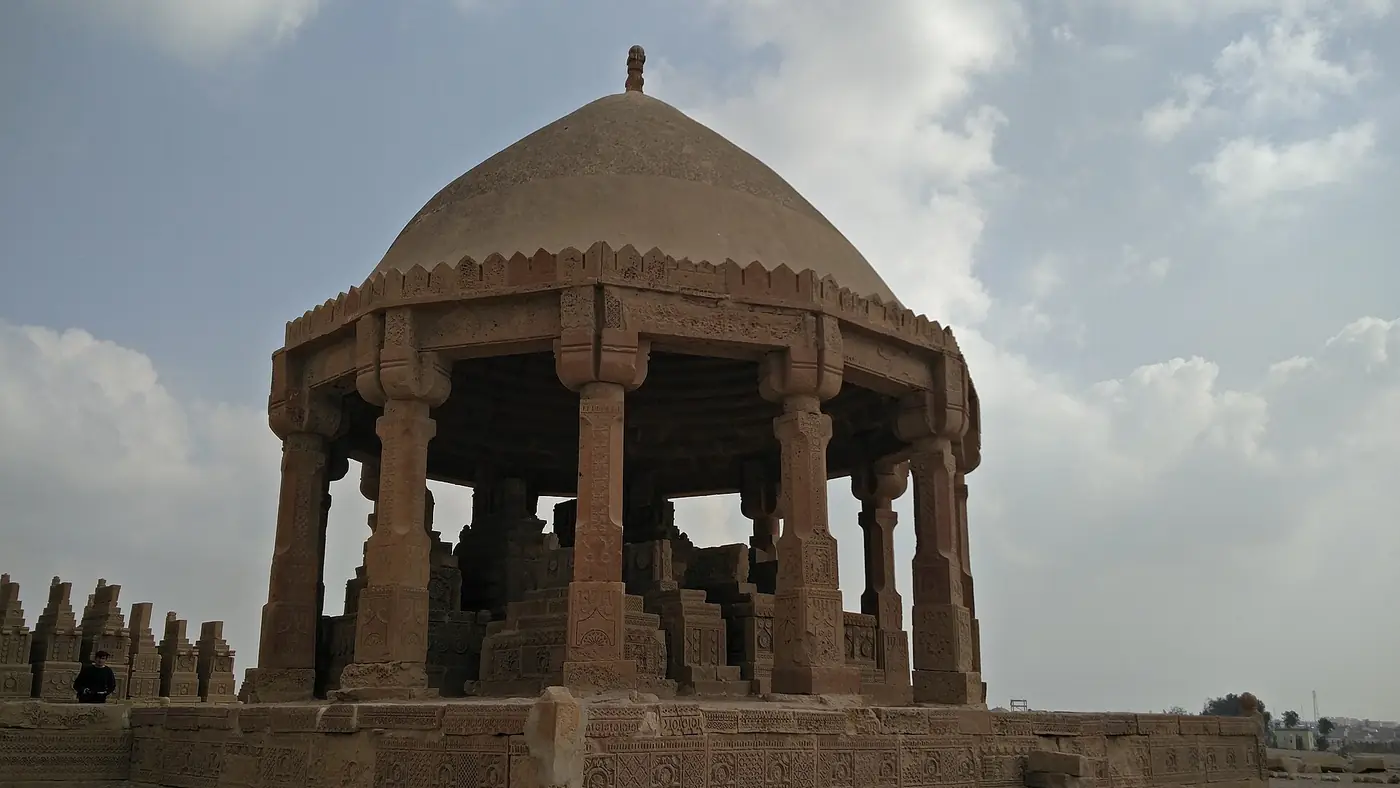
The Chaukhandi Tombs are a cluster of carved sandstone graves about 30 km east of Karachi, just off the N-5 towards Thatta, built mostly between the 15th and 18th centuries by the Jokhio tribe and other Baloch and Samma-descended families of lower Sindh. There's no museum-style display here, just weathered step-pyramid graves covered in some of the finest stone carving in the country, in a setting that has grown more built-up around it every year. Half an hour is enough for a look; longer if the carving interests you.
This guide covers who is buried here, what the carving shows, and how to fit the tombs into a longer trip towards Thatta.
| At a glance | |
|---|---|
| Where | About 30 km east of Karachi, off the N-5 towards Thatta |
| Built | Mostly 15th to 18th century |
| Buried here | Jokhio tribe, with Baloch, Jam, Burfat and other families |
| Material | Local sandstone |
| Entry | No official fee; a small tip for a caretaker who shows you around is customary |
| Time needed | 30 to 45 minutes |
| Combine with | Banbhore, Makli and Thatta, on the same road |
Who is buried at Chaukhandi?
The site is best known as the family graveyard of the Jokhio tribe, said to descend from the Samma of Sindh, but tombs of Baloch families, along with Jam, Burfat and Jakhra groups, stand alongside theirs. Most graves date from the 15th to the 18th century, with an inscribed tomb recording a date in the mid-18th century, and the finest carving generally attributed to the first half of the 17th century.
The tombs sit close together on raised, stepped platforms, giving the site its "step-pyramid" look from a distance. There's no grand entrance or single monument to head for; the interest is in walking among the graves and looking closely.
What the carving shows
The graves are carved from local sandstone, a soft stone that has held its detail well in Sindh's dry climate, though weathering and, in places, damage from neglect and theft have taken a toll over the years.
The carving follows patterns specific to Sindh, and much of it tells you something about who is buried beneath:
- Men's graves are typically carved with horsemen, hunting scenes and weapons, marking status and, in some cases, how the person died.
- Women's graves carry jewellery motifs: necklaces, earrings and bangles worked into the stone in fine detail.
- Geometric and floral bands run across many of the platforms, in patterns that echo the carving style seen later at the Makli Necropolis near Thatta.
Reading a grave this way, once you know what to look for, turns a quick walk into something more interesting than a row of old stones.
Visiting: what to expect
There's no ticket office and no fixed entry fee. A caretaker or local guide is often on hand and will offer to show you the main tombs and point out the better carvings; a tip, rather than a fixed charge, is the usual arrangement, so carry some cash in small notes.
Chaukhandi is not a large or formally managed site. Karachi's growth has closed in around it over the years, and encroachment and the state of the boundary have been a recurring concern for the Sindh government, which has looked at plans to protect the site and set it up as a proper archaeological park. Don't expect signage or facilities beyond what's there on the day; treat it as a quick, worthwhile stop rather than a destination in itself.
- Go in the morning or late afternoon, when the low light shows the carving best and the heat is easier to manage.
- Don't climb on the tombs. The stone is old and, in places, unstable.
- Keep an eye on where you step. The ground between platforms is uneven.
Chaukhandi and Makli: two chapters of the same tradition
The carving at Chaukhandi is often mentioned alongside the much larger Makli Necropolis near Thatta, and the comparison is a fair one. Both sites use local stone worked by craftsmen of the same broad region and period, and the geometric bands, floral motifs and figural carving found at Chaukhandi reappear, on a grander and more varied scale, across Makli's tombs.
Seeing Chaukhandi first, on the way out of Karachi, gives useful context for Makli later in the day: a smaller, more intimate introduction to a carving tradition that Makli then shows at its fullest, across tombs built for kings and governors rather than a single tribal community. Visitors who see Makli first sometimes skip Chaukhandi as repetitive; seeing it the other way round tends to make more sense of both.
Fitting it into a longer trip
Chaukhandi sits right on the route most people take towards Thatta, so it works best as a first stop rather than a destination on its own. A natural order along the N-5:
- Chaukhandi Tombs, half an hour from central Karachi.
- Banbhore, the ruins of an ancient port city further along the same road; see our Banbhore guide.
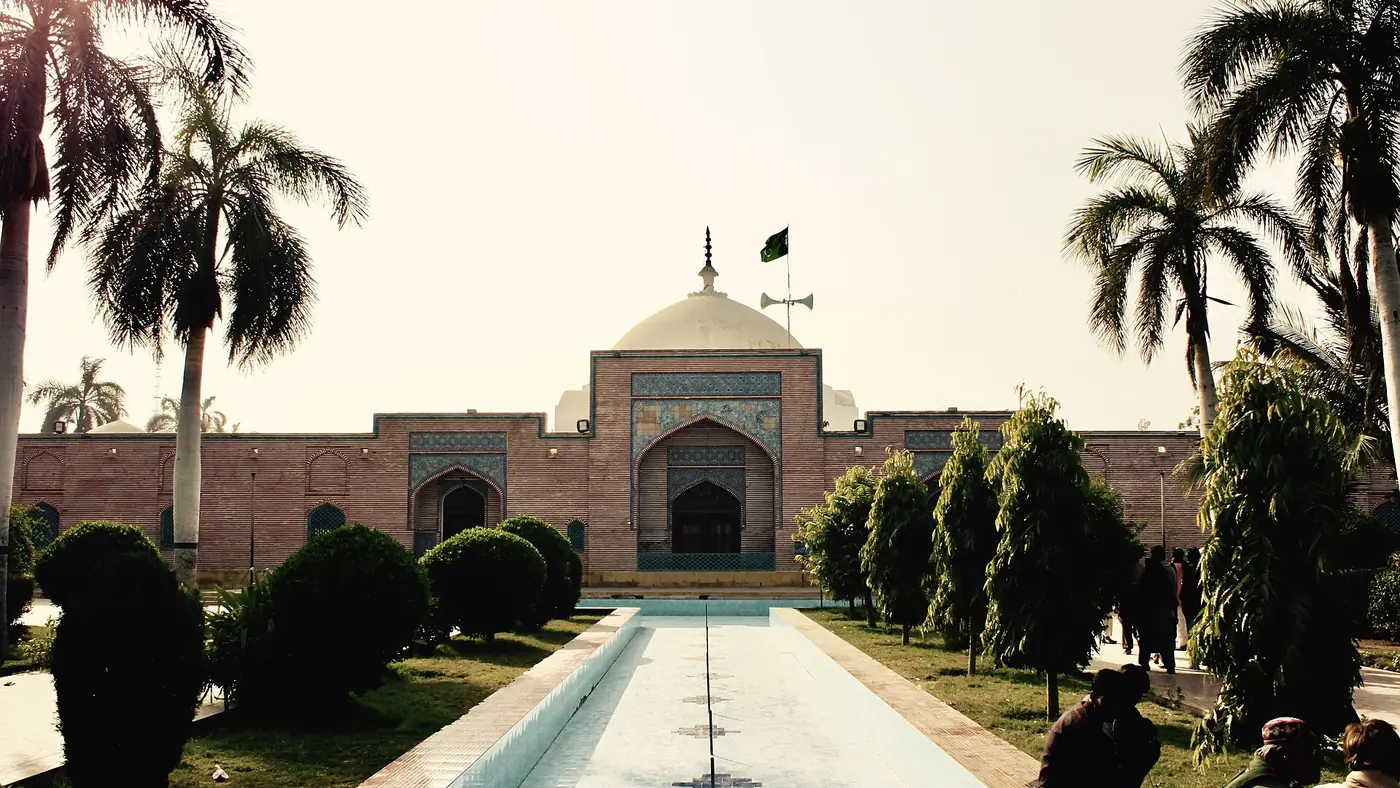
- Makli Necropolis and the Shah Jahan Mosque in Thatta, the main event of the day; our Makli guide and Shah Jahan Mosque guide cover both.
Our full Thatta day trip plan puts all of this together with timings, and if you're building out a wider trip through lower Sindh, our trip planning page is a good starting point.
Is Chaukhandi worth the stop?
Yes, if you're already heading out of Karachi towards Thatta, since it costs you little more than half an hour off the road. It isn't worth a dedicated trip on its own for most visitors; the carving is genuinely fine, but the site is small and unmanaged compared with Makli, and there's nothing else nearby to build a day around.
Anyone with a real interest in Sindhi carving and funerary architecture should stop regardless, since it shows the same tradition that reaches its fullest expression at Makli, just on a smaller and more intimate scale.
Frequently asked questions
How far are the Chaukhandi Tombs from Karachi?
About 30 km, roughly 30 to 45 minutes by road, just off the N-5 National Highway on the way towards Thatta.
Who built the Chaukhandi Tombs?
They were built mostly between the 15th and 18th centuries as a burial ground for the Jokhio tribe, alongside Baloch, Jam and other families of lower Sindh.
Is there an entry fee for Chaukhandi Tombs?
No official fee. A caretaker often shows visitors around and appreciates a small tip, so carry some cash.
What do the carvings on the tombs mean?
Men's graves are typically carved with horsemen, hunting scenes and weapons; women's graves carry jewellery motifs such as necklaces and bangles. Geometric and floral bands decorate many of the platforms.
Can Chaukhandi Tombs be combined with a trip to Thatta?
Yes, easily. The tombs sit on the same road most people take towards Thatta, so they make a natural first stop before Banbhore, Makli and the Shah Jahan Mosque.