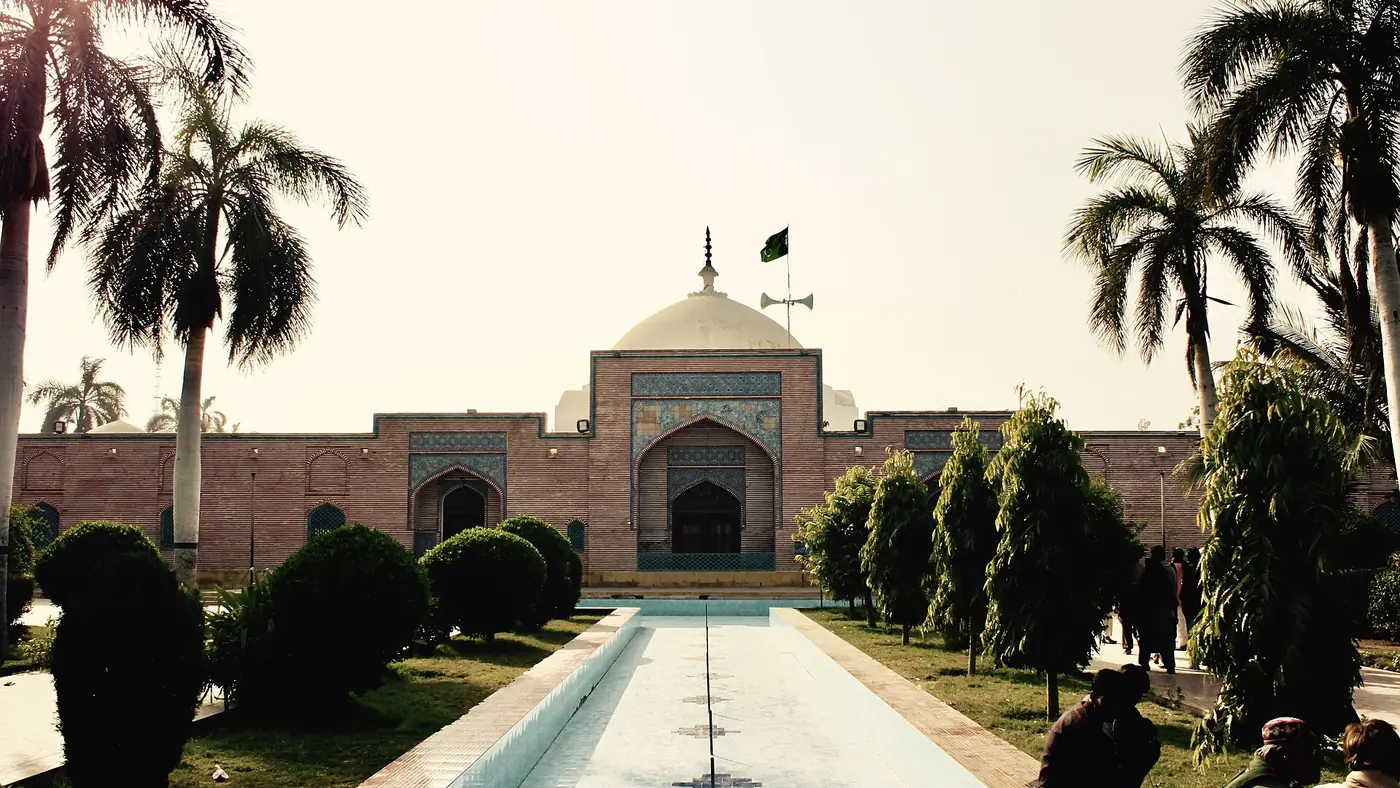
The Shah Jahan Mosque in Thatta is a 17th-century Mughal mosque covered in around 93 small brick domes, most of them faced in blue and turquoise tile, on the eastern edge of the town about 100 km from Karachi. It was built between 1644 and 1647 and is still a working mosque, open to visitors outside prayer times. Go for the tilework, the unusual all-brick construction, and the acoustics the building is known for.
This guide covers who built it and why, what to look at once you're inside, the acoustics, timings and how to visit.
| At a glance | |
|---|---|
| Where | Eastern Thatta, Sindh, near the Makli Necropolis |
| From Karachi | About 100 km on the N-5, around 2 hours |
| Built | 1644 to 1647, with an eastern extension added in 1659 |
| Built by | Emperor Shah Jahan, as a gift to Thatta |
| Domes | Around 93, in brick |
| UNESCO status | On Pakistan's UNESCO tentative list since 1993 |
| Entry | Free; no published fee |
| Dress | Modest dress for all visitors; head covering for women |
Who built it, and why?
Shah Jahan built the mosque during his own reign as Mughal emperor, as a gift to the people of Thatta. As a young prince he had rebelled against his father, Jahangir, and taken refuge in Sindh; Thatta is said to have sheltered him during that period, and the mosque was his gesture of thanks once he held the throne. Building work ran from 1644 to 1647, and his son Aurangzeb added an extension on the eastern side in 1659, after he too became emperor.
The mosque may also have been part of a wider effort to help Thatta recover after a severe storm damaged the city in 1637. Either way, it was a substantial undertaking for what was then a provincial capital of the Mughal empire, and it remains one of the largest Mughal-era mosques standing in what is now Pakistan.
The tilework and the domes
What sets the mosque apart from other Mughal buildings is its material. Most Mughal mosques of this period are built in red sandstone and white marble, in the manner of Delhi or Agra. Thatta's mosque is built almost entirely in brick, glazed tile and geometric brickwork, closer to the mosques of Central Asia than to anything in the Mughal heartland, which reflects the trade and cultural links between Sindh and Persia and Central Asia at the time.
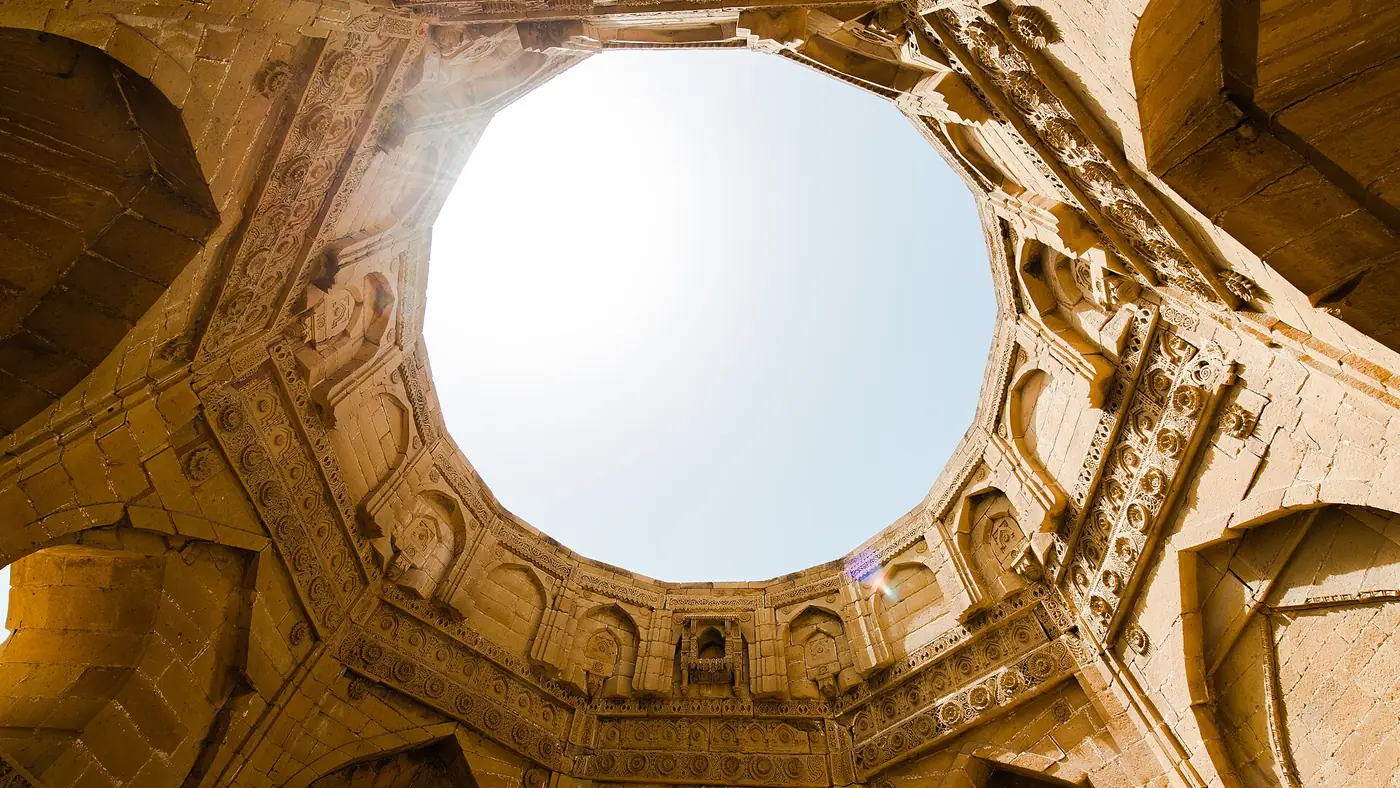
The roof is carried on roughly 93 small domes of varying sizes, most faced in glazed tile in cobalt blue, turquoise and white, with details in manganese violet. The tiles are laid in geometric, floral and star patterns, and the effect changes through the day as the light moves across them; early morning and late afternoon show the colours best. Some of the calligraphic panels are signed by the craftsmen who made them, a detail unusual enough to be noted by historians of the site.
The acoustics
The mosque is well known locally for its acoustics. The many domes and the geometry of the walls are said to carry a voice spoken at one end of the main hall clearly to the other, without any amplification, an effect put down to the shape and number of the domes and the way the walls and tile surfaces handle sound. It is worth testing for yourself: stand at one end while someone speaks quietly at the other.
Whether every claim made about the acoustics is precisely engineered or partly coincidence is debated among historians of the building. What isn't in question is that the effect is noticeable, and it is one of the reasons the mosque is worth more than a quick look from the gate.
Visiting: hours, entry and etiquette
The mosque is looked after by the Sindh Directorate General of Antiquities and Archaeology, which lists opening hours in line with the department's other Thatta sites: roughly 8 am to 7 pm in summer and 9 am to 6 pm in winter. It closes to visitors, as any working mosque does, during prayer times, so avoid arriving right at prayer calls if you want to look around unhurried.
There is no published entry fee. A few practical points:
- Dress modestly. Cover shoulders and legs, and women should carry a scarf for their head.
- Remove your shoes before stepping onto the mosque floor, as at any mosque.
- Ask before photographing anyone praying, and keep phones on silent inside.
- Go early or late in the day for the best light on the tiles and to avoid the worst of the heat, especially between April and October.
Getting there
The mosque sits in eastern Thatta, close to the road up to the Makli Necropolis, so the two are easy to combine on the same visit; our Makli visitor guide covers Makli's tombs and a route across the site. Thatta is about two hours from Karachi on the N-5 National Highway, and the mosque is a short drive or a walk from the edge of town depending on where you're coming from.
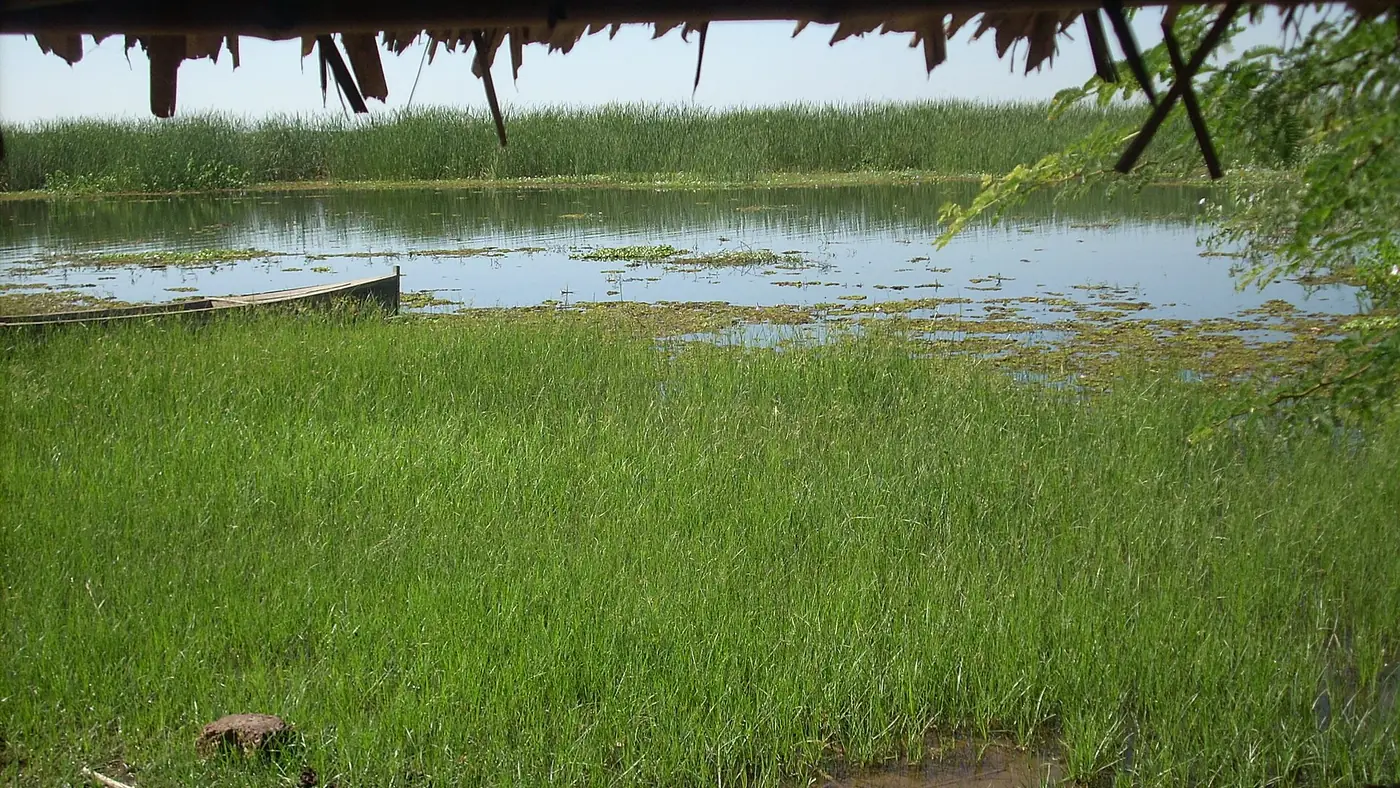
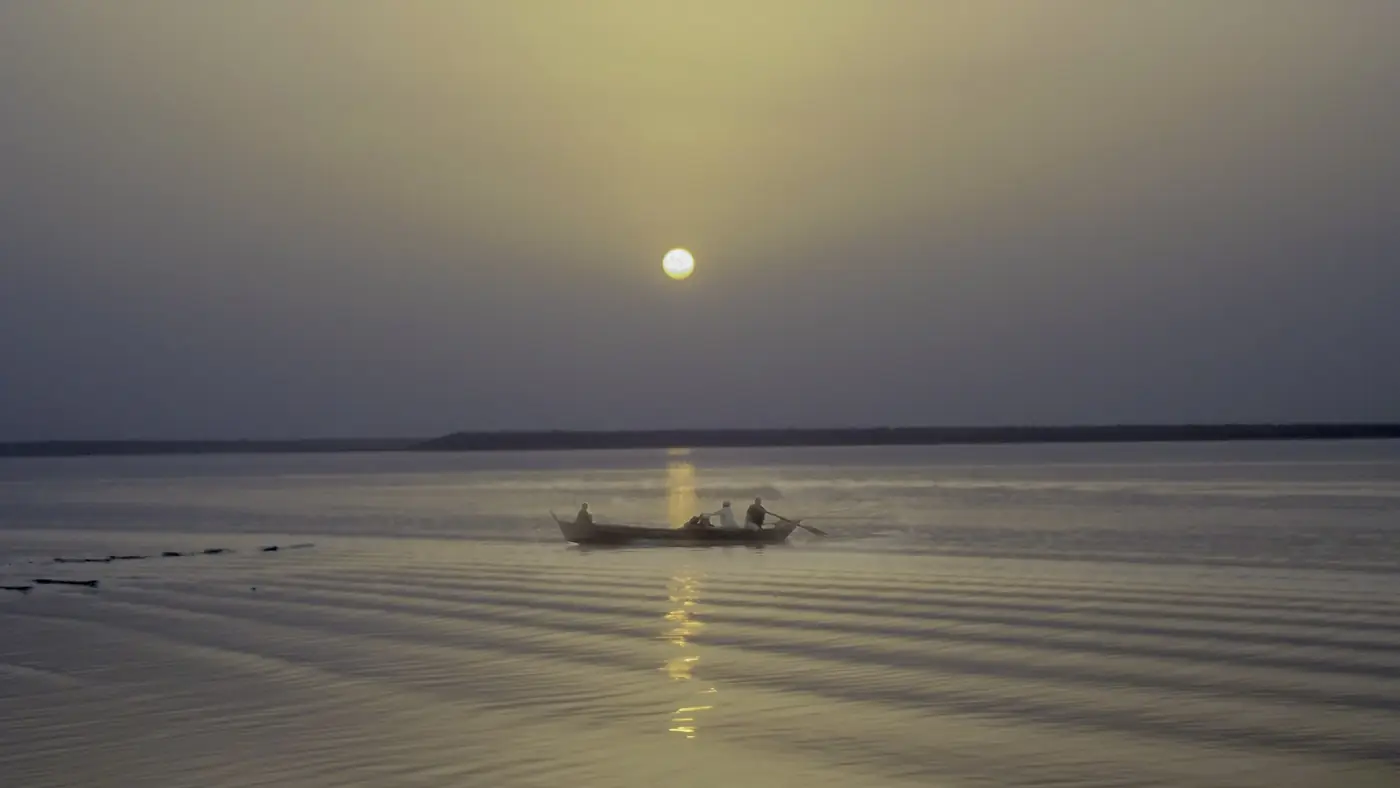
Most visitors see the mosque as one stop on a longer day out. Our Thatta day trip guide sets out a full day combining the mosque, Makli and Keenjhar Lake, and if you're building a wider Sindh trip, our trip planning page is a good place to start.
Is it worth the stop?
Yes, and it takes less time than Makli, so there's little reason to skip it if you're already in Thatta. Thirty to forty-five minutes is enough to walk the courtyard, look closely at the tile patterns and test the acoustics, unless you want to linger over the calligraphy.
It suits anyone interested in architecture or Mughal history, and it works well for families since there's no walking on rough or exposed ground, unlike Makli. It's a working mosque rather than a museum, so it rewards a quieter, unhurried visit over a rushed photo stop.
Frequently asked questions
How old is the Shah Jahan Mosque in Thatta?
It was built between 1644 and 1647, during the reign of the Mughal emperor Shah Jahan, with an extension added in 1659 under his son Aurangzeb. That makes it just under 400 years old.
Why does the Shah Jahan Mosque have so many domes?
It has around 93 small brick domes of different sizes, more than almost any other mosque in Pakistan. They cover the prayer hall and courtyard arcades and are closely tied to the building's tilework and to its reputation for good acoustics.
Is there an entry fee for the Shah Jahan Mosque?
No fee is published. It is a working mosque maintained by the Sindh antiquities department, and entry is free, though dress modestly and remove your shoes before entering.
How far is the Shah Jahan Mosque from Karachi?
About 100 km, roughly two hours by road on the N-5 National Highway, the same route used to reach the Makli Necropolis and Keenjhar Lake.
Can the Shah Jahan Mosque and Makli be visited on the same day?
Yes, easily. The mosque sits close to the road up to Makli Hill in Thatta, and most day trips from Karachi combine the two, often with time at Keenjhar Lake as well.