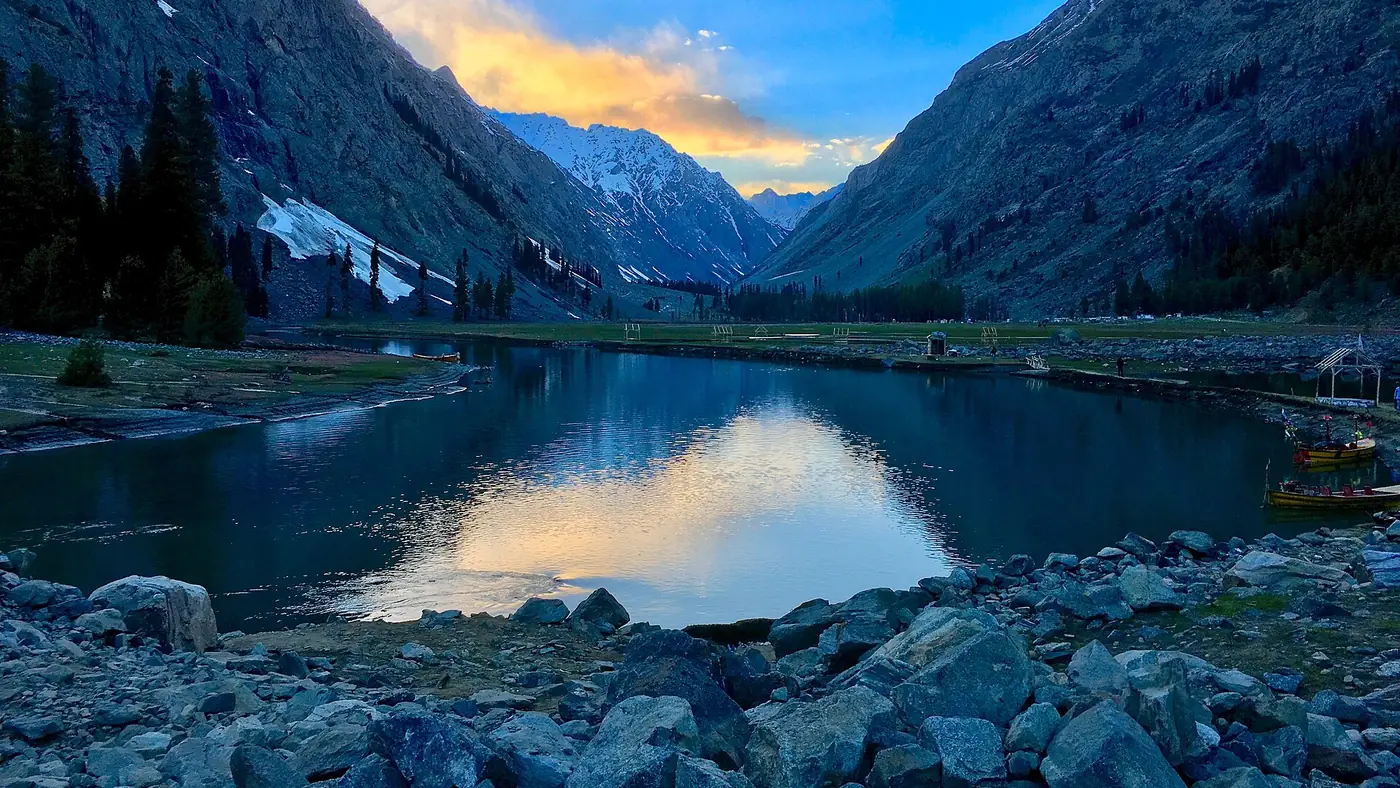
Blue Water, near Kalam, is a clear, ice-cold stream in the Anakar valley, a short drive from Kalam off the road to Utror, where charpoys are set out in the shallows in summer. You can get there by jeep from Kalam bazaar, or in your own car in dry weather. The water comes down from Kooh Lake at the head of the valley, and on a sunny day it runs so clear that it looks blue.
It is one of the easiest outings from Kalam and one of the busiest. This guide covers the ride out, why the stream is that colour, what you will find there, and how to picnic or camp without being the visitors the locals complain about.
| At a glance | |
|---|---|
| Where | Anakar village, in a side valley off the Kalam to Utror road |
| From Kalam | About 4 km, a short drive |
| Vehicle | Car in dry weather; jeep after rain or if you have no car |
| Water | Glacier and snow melt from Kooh Lake, very cold |
| What's there | Charpoys in the stream, tea and food, a few small resorts |
| Best months | June to September |
| Crowds | Heavy on summer weekends and at Eid |
How do you get to Blue Water from Kalam?
Leave Kalam on the road west towards Utror. The Anakar valley opens off it a short way out of town, and a side road runs up to the village and the stream. Blue Water is about 4 km from Kalam, though some count it as 6 or 7 km depending on how far up the stream you go.
By jeep. Jeeps from Kalam bazaar do the run, usually as a return trip with waiting time. It is one of the shorter and cheaper jeep runs from Kalam, and can be combined with Utror or Gabral further up the main road. Agree the price, the stops and how long the driver will wait before you set off; our Kalam jeep fare guide explains how fares work.
In your own car. Cars reach Blue Water in dry weather. The side road is narrow, and after rain it is muddy, so take a jeep if it has been wet. On summer weekends, arrive early or be ready to park further away and walk. Our Kalam road condition guide covers the roads out of town.
Allow two to three hours for the whole outing, or half a day if you plan to walk up the valley.
Why is the water so blue?
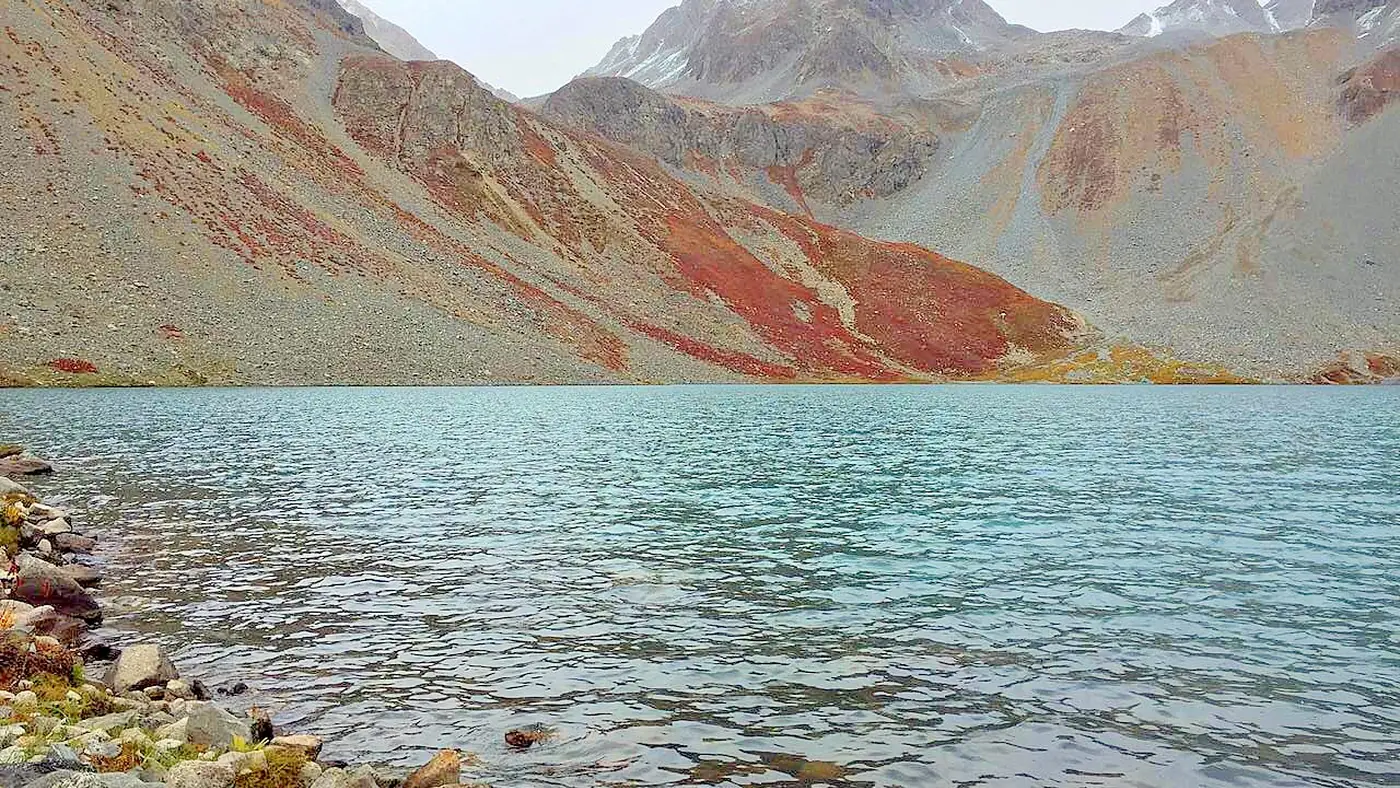
The stream starts at Kooh Lake, higher up the Anakar valley, and is fed by snow and ice on the mountains around it.
On a dry, sunny day the water is extremely clear and cold, and over the pale stones of the streambed it looks blue-green, deepest in the pools. That clarity is what gives the place its name. It is also why the colour is not guaranteed:
- After heavy rain, mud washed off the slopes turns the stream grey or brown, and it can rise quickly.
- On overcast days the colour is much duller.
- Late morning to mid-afternoon, with the sun high, is when the blue is strongest.
If you are coming for photographs, choose a clear day after a dry spell.
What is there?
In summer, the stream is set up for visitors:
- Charpoys in the shallows, so you can sit with your feet in the water. Ask the price before you sit down.
- Tea and simple food, in season, from stalls and the resorts nearby.
- A few small resorts and guesthouses near the stream, for anyone who wants to stay the night.
- Room to walk up the valley, away from the busiest stretch.
It is not a big place, and on a hot summer weekend every charpoy is taken and the noise carries. Walk ten minutes upstream and the crowd thins.
Blue Water is also the starting point for longer walks to the lakes above Anakar, including Kooh Lake itself. These are full-day or overnight treks into high, remote country, and need a local guide and proper gear rather than a pair of trainers.
Picnic etiquette
Anakar is a village, and people live and farm along the stream that visitors come to sit in. A little care goes a long way:
- Keep soap, shampoo and detergent out of the water. Wash dishes well away from the stream.
- Take all your rubbish back to Kalam. Plastic left at Swat's popular sites has become a serious problem.
- Don't let children wade beyond the shallows. The current is stronger than it looks and the water is cold enough to take the breath away.
- Keep music low, and keep your distance from local homes.
- Dress modestly. This is a conservative area.
- Park where you are told, not across the village road or in a field.
- Don't light fires on the grass or under trees; use a stove.
Camping at Blue Water
Blue Water is the lowest and mildest of the camping spots around Kalam, easy to reach and close to food and help. People camp on the grassy ground beside the stream, and some of the small resorts nearby have space for tents.
Two rules matter more than any others here:
- Pitch well above the water. Streams around Kalam rise fast after rain higher up, sometimes when it is dry where you are. Never camp on gravel or low ground by the stream.
- Ask before you pitch. The land belongs to local families. Ask whose field it is and pay a fair fee if one is asked.
Nights are cool even in summer, so bring a warm layer and a proper sleeping bag. Our guide to camping in Kalam compares Blue Water with Mahodand, Ushu and Desan, and has a full kit list.
When to go
- June to September is the season, when the charpoys are out and the stalls are open.
- July and August are the busiest, and the monsoon months when the stream is most likely to run muddy.
- September is the best compromise: clear water, settled weather and far fewer people.
- Weekday mornings are the quietest time in any month.
Outside the summer months, expect little to be open, and cold water in a quiet valley.
Combining Blue Water with Utror and Gabral
Because Blue Water is just off the Utror road, it fits neatly into a day on the western side of Kalam. A good plan is Blue Water in the morning, then on to Utror, about 16 km from Kalam, and Gabral beyond it, with lunch along the way. Our Gabral Valley guide covers the road beyond Utror and what is up there.
Is Blue Water worth it?
As a short, easy outing, yes. It is ideal for families with young children, older parents, and anyone who wants a relaxed few hours after the long drive to Kalam. Sitting on a charpoy with your feet in the stream and a cup of tea is what most people come for, and it delivers.
It is not a wilderness, and on a busy Sunday it can feel like a crowded riverside café. If you want quiet water and mountains, Mahodand early in the morning or the upper Gabral valley will suit you better. Our Swat Valley guide covers the rest of the valley.
Frequently asked questions
Where is Blue Water in Kalam?
In the Anakar valley, about 4 km from Kalam, reached by a side road off the Kalam to Utror road.
Can a car go to Blue Water, Kalam?
Yes, in dry weather. The side road is narrow and muddy after rain, when a jeep is the better choice.
Why is the water blue at Blue Water?
The stream is snow and glacier melt from Kooh Lake, higher up the valley. In dry weather it is so clear that it looks blue-green over the pale stones; after rain it turns muddy.
Can you camp at Blue Water?
Yes, on grassy ground beside the stream or at some of the small resorts nearby. Pitch well above the water and ask the landowner first.
Is Blue Water safe for children?
In the shallows, with an adult close by, yes. Keep children out of the faster water, and leave the stream at once if it starts to rise or turn muddy.
Is it safe to travel to Blue Water and Kalam?
The UK advises against all travel to Swat after a suicide bombing at Kabal, near Mingora, killed 17 people on 2 August 2026. Pakistani families still visit Blue Water in large numbers; check local news before you travel, and overseas visitors should check their own government's advice, which can affect their insurance.