Bird watching in the Galiyat centres on Ayubia National Park, where more than 200 species have been recorded in the temperate forest around Nathia Gali, Dunga Gali and Ayubia, including some of Pakistan's best-known populations of Kalij and Koklass pheasant. The area is not a specialist birding destination with hides or set circuits; it is a general hill-station forest that rewards anyone willing to walk quietly and early.
This guide covers the species most worth looking for, which trails give the best chances, and the months and times of day that matter most.
| At a glance | |
|---|---|
| Recorded species | Over 200, within Ayubia National Park |
| Star species | Kalij pheasant, Koklass pheasant |
| Other highlights | Great barbet, Kashmir nuthatch, golden eagle, crested serpent eagle |
| Best trails | The quieter, higher stretches of Mushkpuri and Miranjani; the Pipeline Track early morning |
| Best time of day | First light, before the trails fill with walkers |
| Best season | Spring and early summer for song and breeding activity |
What makes the Galiyat good for birds
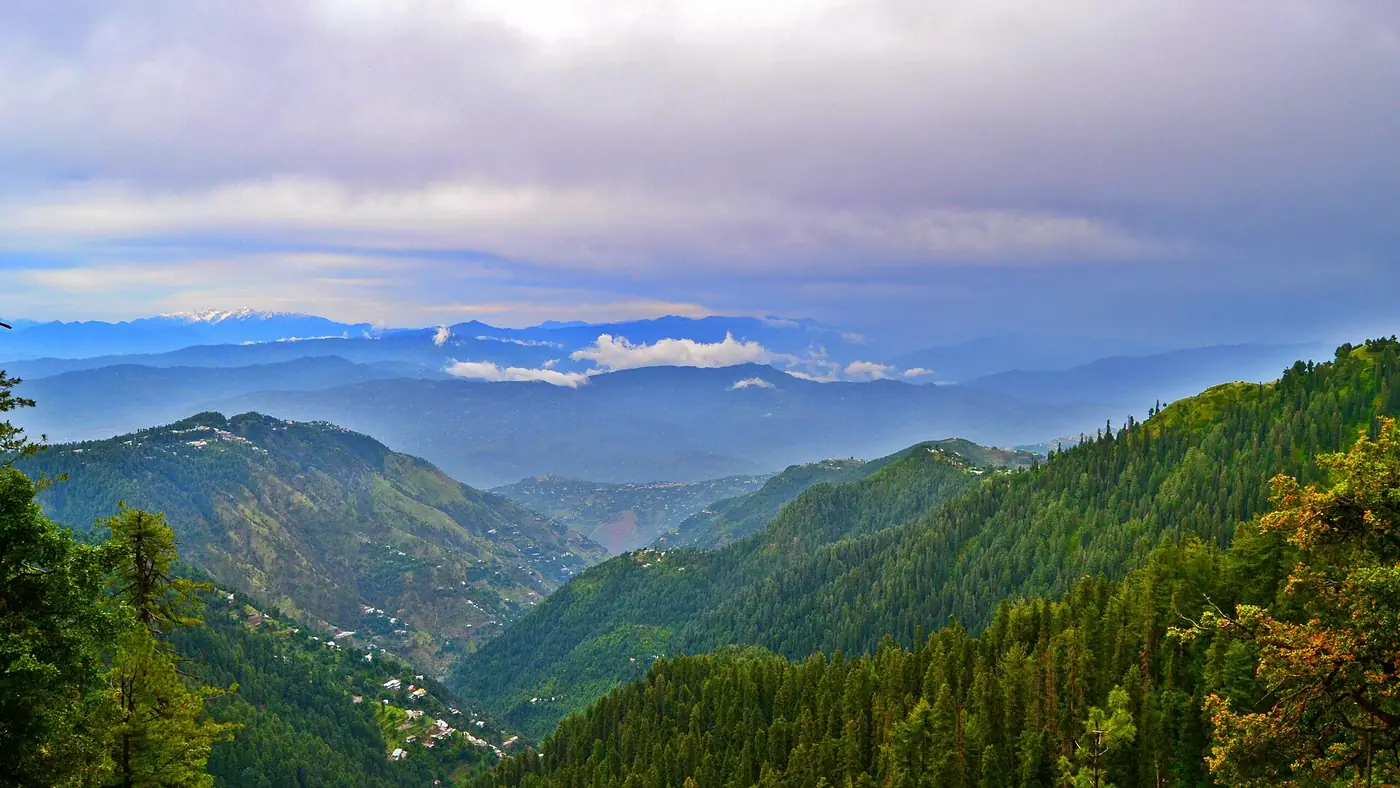
The Galiyat's forest, mostly deodar cedar, blue pine, silver fir and oak, sits at a height and in a climate that supports a wide range of western Himalayan forest birds, and Ayubia National Park is one of the more accessible places in Pakistan to see them: forest right up to the edge of towns, three marked trails, and a short drive from Islamabad. Ayubia is known in particular for holding some of the highest recorded populations of Kalij and Koklass pheasant anywhere in the country, alongside a long list of smaller forest species.
It is not, however, a managed birding reserve. There are no hides, no set observation points and no guided circuits laid on for visitors; what there is instead is genuinely wild forest that happens to be easy to reach on foot.
Species to look for
- Kalij pheasant. The bird most associated with Ayubia, with males glossy black and silver and a backward-pointing crest; females are a plainer greyish-brown. Look and listen along quieter, shaded stretches of trail, especially early morning.
- Koklass pheasant. Shyer and less often seen than the Kalij, usually heard as a sharp call from denser cover before it is spotted.
- Great barbet. A large, noisy bird whose repeated call carries through the forest and is one of the easiest ways to know it is nearby, even before you see it.
- Kashmir nuthatch and other small forest birds, including tits, warblers and woodpeckers, best picked up by ear as you walk slowly rather than by scanning ahead.
- Speckled wood pigeon and wedge-tailed green pigeon, both found in the forest canopy.
- Golden eagle and crested serpent eagle, seen overhead on clearer days, particularly from the more open ground near the summits.
None of these are guaranteed on any single visit. Forest birding rewards patience and repeat walks more than a single well-timed morning.
Where to go
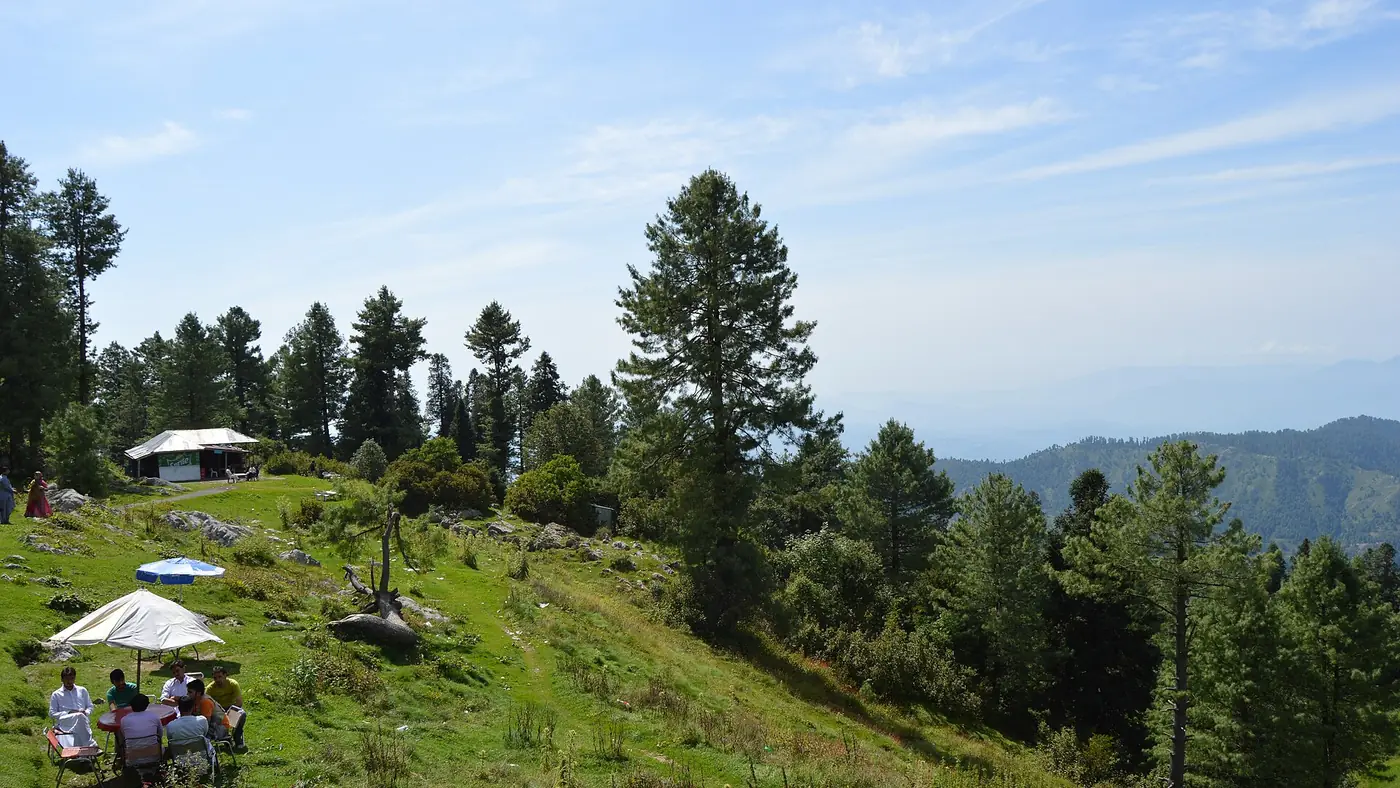
- The Pipeline Track, for an easy walk with a fair chance of smaller forest birds, best done at first light before the day's walkers arrive; by mid-morning at weekends it is too busy for good birding. Our Pipeline Track guide covers the walk itself.
- The higher, quieter stretches of the Mushkpuri trail, which passes closer to less-disturbed forest than the busier lower paths. Our Mushkpuri Top hike guide has the route.
- The Miranjani trail, longer and less crowded than the other two for most of its length, which suits birding as much as it suits the climb itself. See our Miranjani Top hike guide.
- The forest around Khanspur and Thandiani, away from the busiest trailheads, for anyone who wants to walk without the crowds that build on the marked paths in season. Our guides to Khanspur and Thandiani cover both.
When to go
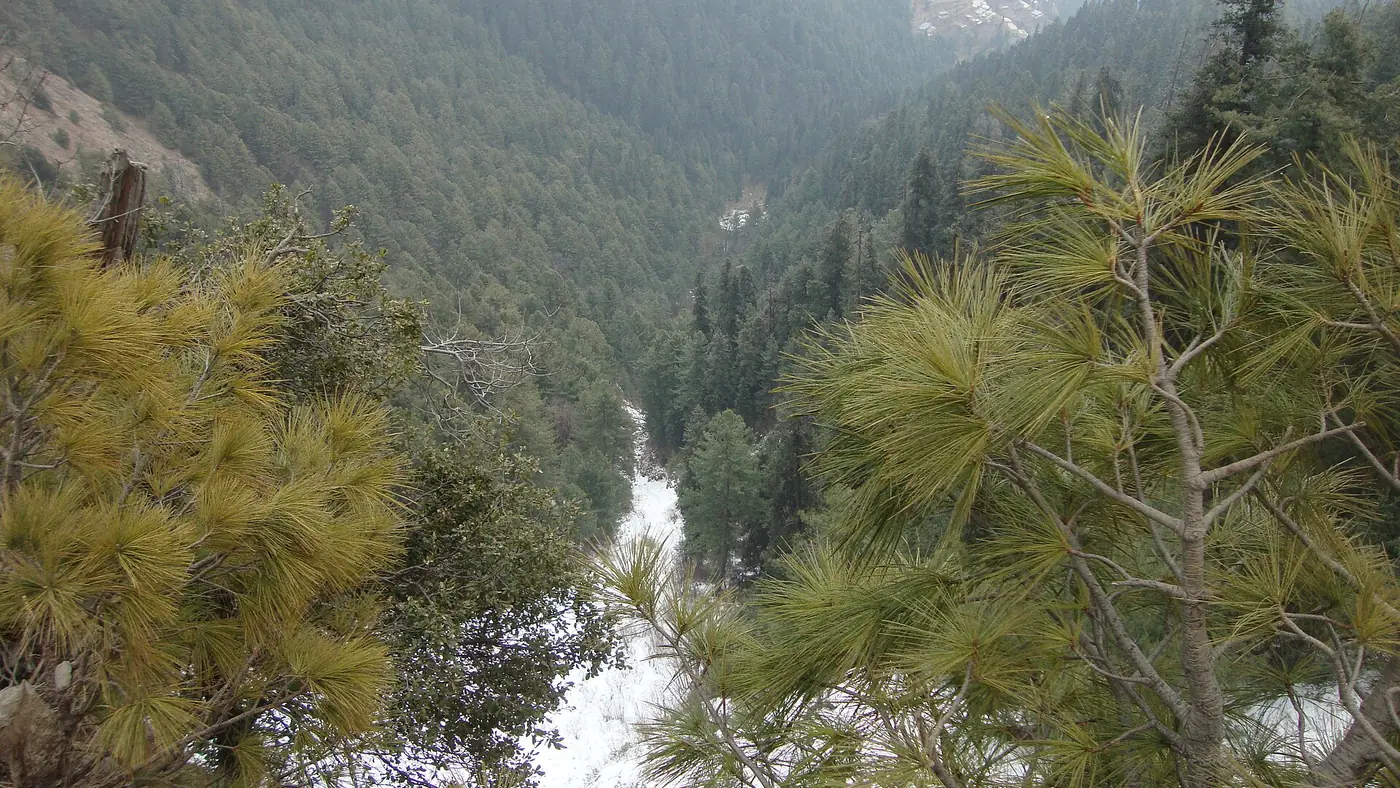
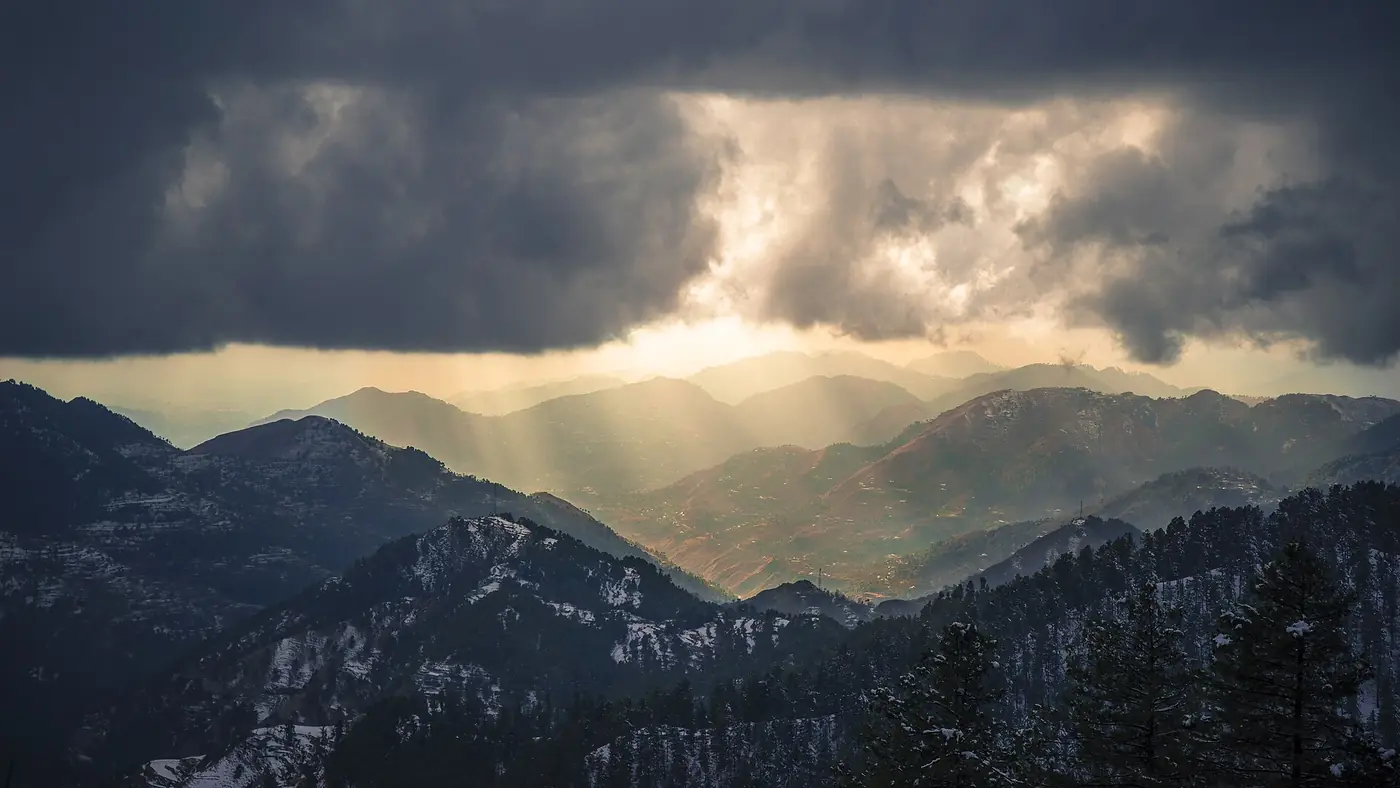
Spring and early summer, roughly April to June, is the liveliest period, when birds are breeding and singing and the forest is at its most active. Autumn, from September to November, is quieter for birdsong but gives the clearest skies for raptors overhead. The monsoon months of July and August bring the greenest forest of the year but also rain, mist and slippery trails, which make for harder walking and less rewarding birding. Winter, from December to March, is cold and often snowbound, and most birding is impractical until the trails clear.
Time of day matters as much as the season. Go out at first light, well before the Pipeline Track and the lower stretches of the other trails fill with day-trippers, and you will see and hear far more than on the same path at midday.
What to bring
- Binoculars. Most of what you see in this forest is at a distance or moving quickly through cover.
- A field guide or bird identification app covering western Himalayan species, since local signage is minimal.
- Quiet, neutral clothing, and a willingness to walk slowly and stop often rather than covering ground.
- The same basics as any Galiyat walk: water, a warm layer, and shoes with a good grip.
Is the Galiyat worth a trip for birding alone?
For a serious, checklist-driven birding trip, there are more specialised sites in Pakistan. For a general traveller who enjoys birds as part of a walk rather than the sole purpose of it, the Galiyat is one of the easiest places in the country to combine forest birding with an ordinary family trip: a morning on the Pipeline Track or the lower Mushkpuri trail will show far more to someone walking quietly than to someone simply passing through. Our Ayubia National Park guide covers the wider wildlife of the forest, including its leopards, and our Galiyat guide sets out how to plan a stay around it. Send us your dates if you would like help building a trip around the trails.
Frequently asked questions
What birds can you see in the Galiyat?
More than 200 species have been recorded in Ayubia National Park, with the Kalij and Koklass pheasants the best-known, alongside the great barbet, Kashmir nuthatch, golden eagle and crested serpent eagle.
Where is the best place to bird watch in the Galiyat?
The quieter, higher stretches of the Mushkpuri and Miranjani trails, and the Pipeline Track early in the morning before it becomes busy.
What is the best time of year for bird watching in the Galiyat?
Spring and early summer, roughly April to June, for the most active birdsong and breeding activity. Autumn gives clearer skies for raptors.
Do I need a guide for bird watching in the Galiyat?
Not for the marked trails in clear weather, though a local guide can improve your chances of finding pheasants and other shy forest species.
Is early morning really better for birding here?
Yes. The trails, especially the Pipeline Track, are quiet at first light and fill with walkers by mid-morning, particularly at weekends, which pushes birds away from the path.