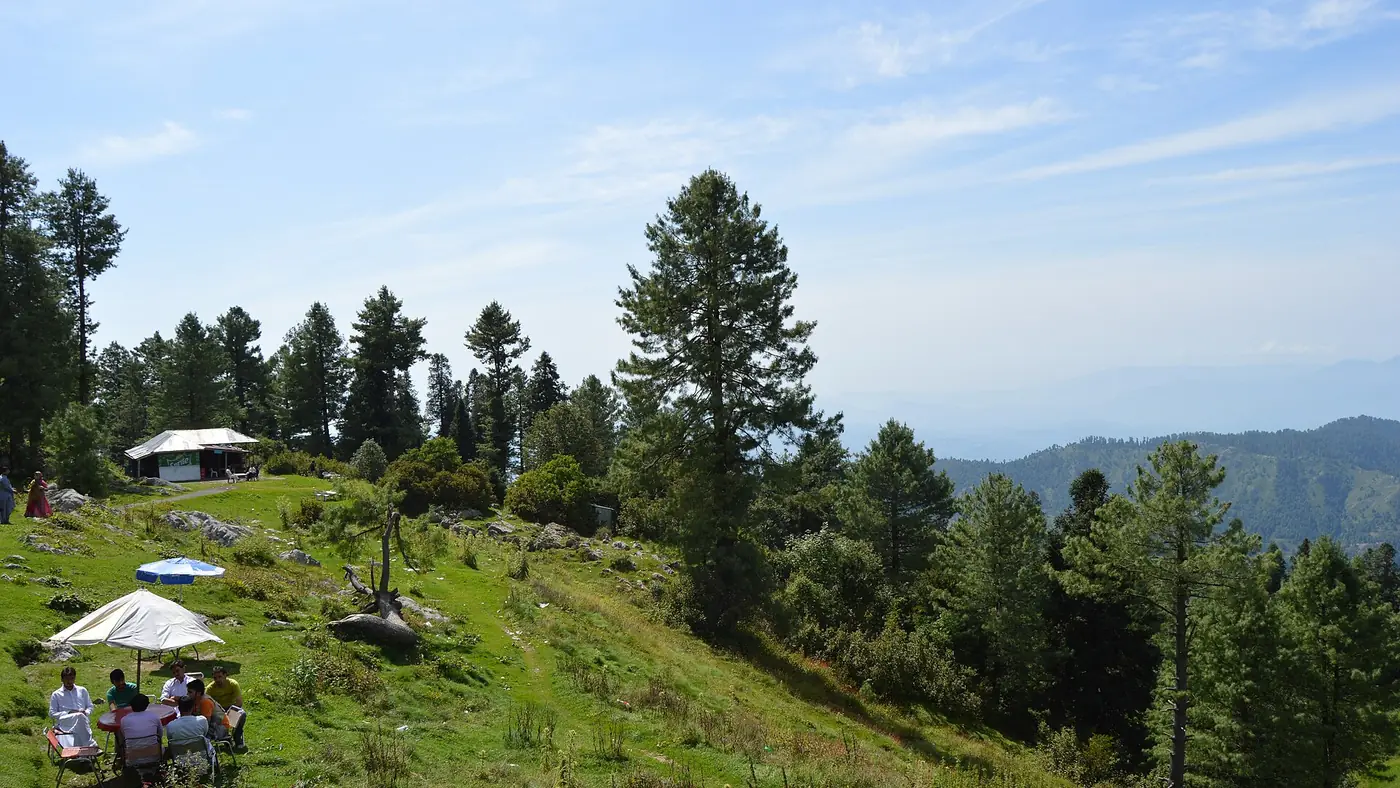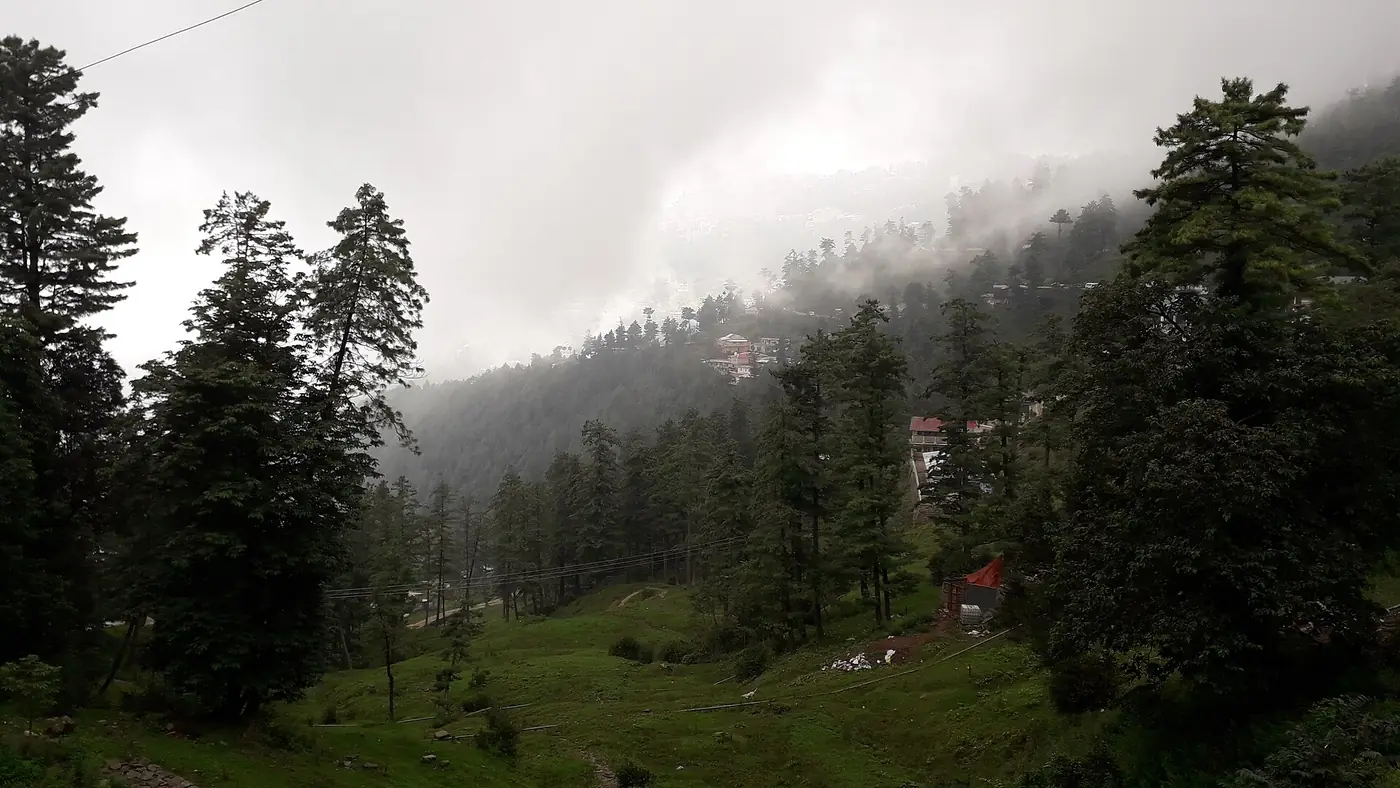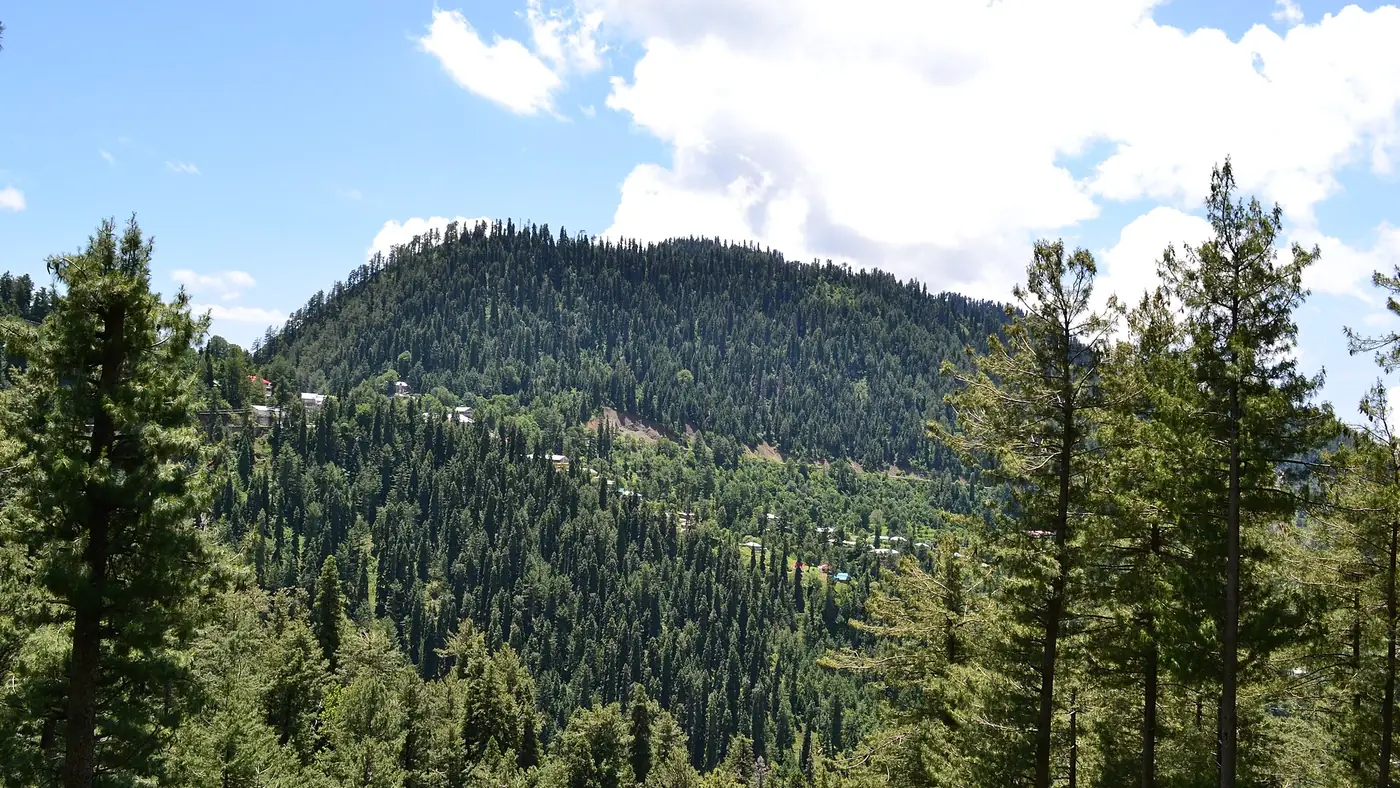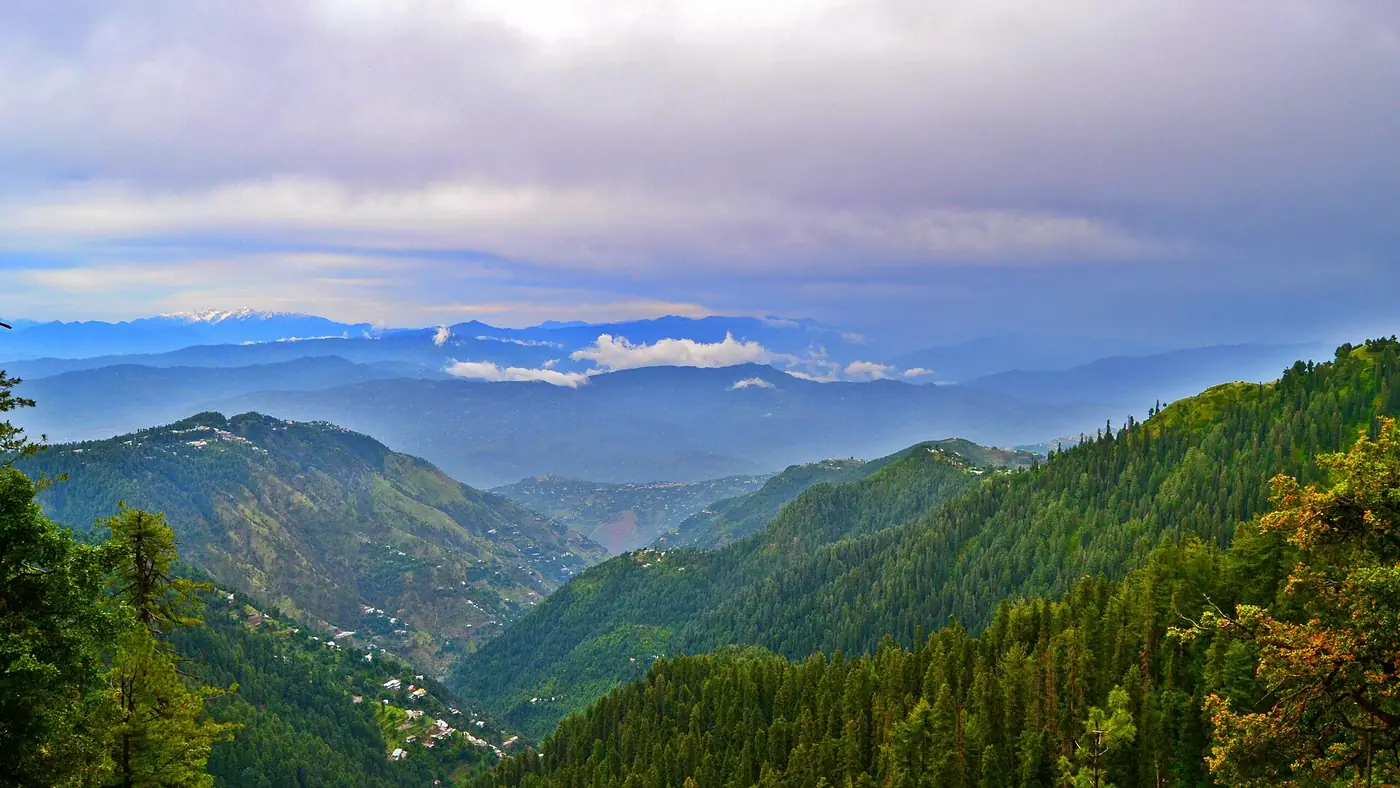
Ayubia National Park is the protected forest at the heart of the Galiyat, 3,312 hectares of deodar, pine, fir and oak around Nathia Gali, Dunga Gali and Ayubia, at an average of about 2,400 metres. It was declared a national park in 1984 and enlarged in 1998. Most visitors see it from its three marked trails, the Pipeline Track, Mushkpuri and Miranjani, and it is one of the best places in Pakistan to walk through old mountain forest within a morning's drive of Islamabad.
It is also home to common leopards, flying squirrels and more than 200 kinds of bird. This guide covers the trails, the wildlife you might see, how to walk safely in leopard country, and the rules the park expects you to follow.
| At a glance | |
|---|---|
| Area | 3,312 hectares |
| Declared | 1984; enlarged 1998 |
| Where | Abbottabad district, KP, around Nathia Gali, Dunga Gali and Ayubia |
| Altitude | Average about 2,400 m; Miranjani summit 2,992 m |
| Managed by | KP Wildlife Department; headquarters at Dunga Gali |
| Marked trails | Pipeline Track 4 km, Mushkpuri 4 km, Miranjani 4.7 km (one way) |
| Wildlife | Common leopard, yellow-throated marten, Kashmir flying squirrel, rhesus macaque; 203 bird species recorded |
| Best months for walking | May to June, mid-September to November |
What kind of park is it?
Ayubia is a forest park, not a mountain one. There are no glaciers or high passes: what you walk through is dense temperate forest on the steep slopes of the Galiyat ridge, with deodar cedar, blue pine, silver fir and yew on the higher ground and horse chestnut, oak and walnut mixed in. More than 100 plant species have been recorded, including many used locally as medicine. It is a wet forest by Pakistani standards, with around 1,600 mm of rain and snow a year.
The park is not fenced or gated as a whole. Towns, villages, roads and hotels sit right on its edges, and the main road through the Galiyat passes close by. That is what makes it so easy to visit, and also what puts it under pressure: in 2023 a proposal to de-notify the park was opposed by wildlife officials and conservationists, and in 2024 the Forest Department revoked an agreement that would have handed park land to a private company for a new Ayubia chairlift, citing the forest and wildlife laws.
The KP Wildlife Department runs the park from its headquarters in Dunga Gali, and it manages the three main trails. The Galiyat Development Authority looks after the towns and roads around it.
The trails
The three marked trails are the main way into the park, and they suit very different walkers. The lengths below are the Wildlife Department's own figures, one way.
Pipeline Track: 4 km, almost flat
The easiest walk in the park, from Dunga Gali to Ayubia along the line of an old water pipeline. It keeps to one level around the hillside under tall trees, with valley views where the forest opens. Almost anyone can walk it, and most families take an hour to an hour and a half one way. It is also the busiest trail, so for wildlife, walk it early. Our Pipeline Track guide covers the walk in detail.
Mushkpuri: 4 km to about 2,800 m
A steady climb from Dunga Gali, or a gentler route from the Nathia Gali side, through forest to an open, grassy summit with views over Murree and into Azad Kashmir. Allow two to three hours up for most people. The Dunga Gali route passes a bird sanctuary set up with European Union support.
Miranjani: 4.7 km to 2,992 m
The highest point in the Galiyat, reached by a trail from Nathia Gali. It is a longer, quieter walk, mostly under fir and pine. Carry plenty of water and a warm layer.
Our guides to the Mushkpuri Top hike and the Miranjani Top hike cover each climb step by step.
Leopards: what you need to know
Ayubia and the surrounding forests hold a healthy population of common leopards. A survey in August 2022 counted at least 40 pairs in the Galiyat, up from 35 pairs three years earlier. They are shy, mostly active at night, and very rarely seen by walkers.
They do come into conflict with people. Leopards take goats and other livestock from the villages around the park, and between 2000 and 2016 at least 15 people in the region were killed in leopard attacks, children among them. People, in turn, have killed more than 100 leopards here since 1993.
None of this should stop you walking the trails, which thousands of people use every day in summer. It does mean following a few simple rules:
- Walk in company, and keep children close and in sight, not running ahead.
- Be off the forest trails before dusk, and don't start out at first light.
- Stay on the marked paths.
- Don't leave food or rubbish behind, which draws animals towards people.
- If you ever do see a leopard, stay calm, keep children beside you, don't run, and back away slowly while facing it.
Birds and other wildlife
The park is a good introduction to Himalayan forest birds, with 203 species recorded. Among the ones birdwatchers look for are the Kalij and Koklass pheasants, the great barbet, the Kashmir nuthatch, the speckled wood pigeon and the wedge-tailed green pigeon, with golden eagles and crested serpent eagles overhead. Early morning, before the trails fill up, is by far the best time, and spring and early summer, when birds are breeding, bring the most song.
Of the 23 mammal species, the one you are almost sure to see is the rhesus macaque, which gathers wherever people eat. The Kashmir flying squirrel, yellow-throated marten, red fox, golden jackal, leopard cat and porcupine are here too, but most are active at night and you will be lucky to see them.
What helps:
- Go midweek and start early, when the trails are quiet.
- Walk slowly and stop often; most forest birds are heard before they are seen.
- Bring binoculars, and if you can, a field guide or bird app for the western Himalaya.
- Try the less busy stretches, such as the higher parts of the Mushkpuri and Miranjani trails, rather than the Pipeline Track at midday.
Park rules and how to behave
Ayubia is protected under the Khyber Pakhtunkhwa Wildlife and Biodiversity Act 2015, which puts the park under the Wildlife Department and bars activities inside it without the department's approval. Hunting and harming wildlife are offences. For a visitor, that comes down to a short list:
- Stay on the trails. Cutting corners on the slopes damages the ground and gets people lost.
- Don't feed the monkeys or any other animal. Monkeys that are fed learn to snatch, and can bite.
- Don't light fires, and don't drop cigarette ends. A dry forest burns quickly.
- Don't cut branches, dig up plants or pick flowers.
- Take all your rubbish back down, including fruit peel and tea cups.
- Keep noise down. Loud music drives away the wildlife everyone else came to see.
- Follow instructions from wildlife staff at the trailheads. You may be asked to register or pay a small fee at the gate, so carry some cash.
When to go
For walking, May and June and mid-September to November are the most comfortable months: dry trails, cool air and long views on clear days. July and August are green and misty, with rain on many afternoons, slippery paths and landslides on the roads. From December to February the trails are under snow and ice and suit only walkers with proper boots and someone who knows the route.
For birds, spring and early summer are the liveliest. Our guide to the best time to visit Nathia Gali covers the seasons across the Galiyat in more detail.
Is Ayubia National Park worth a visit?
Yes, if you come for the forest. It is one of the few places in Pakistan where you can walk for hours under old cedar and fir within a morning's drive of the capital, and the Pipeline Track makes that possible for almost anyone, from young children to grandparents.
It is not a safari. You will almost certainly not see a leopard, and on a summer weekend the Pipeline Track is more a crowded path than a wilderness. If wildlife is the point, go midweek, start early and choose the summit trails.
For a walking weekend, base yourself in Dunga Gali or Nathia Gali, or see our Galiyat guide for how the hill stations compare. If you would like help fitting the park into a longer trip, send us your dates.
Frequently asked questions
Where is Ayubia National Park?
In Abbottabad district, Khyber Pakhtunkhwa, on the Galiyat ridge between Murree and Abbottabad. It surrounds the hill stations of Nathia Gali, Dunga Gali and Ayubia, and is run from Dunga Gali.
Are there leopards in Ayubia National Park?
Yes. A 2022 survey counted at least 40 pairs of common leopards in the Galiyat. They are rarely seen, but walk in company, keep children close and be off the trails before dusk.
What are the main trails in Ayubia National Park?
The Pipeline Track from Dunga Gali to Ayubia (4 km, almost flat), the climb to Mushkpuri (4 km to about 2,800 m) and the climb to Miranjani (4.7 km to 2,992 m).
Is there an entry fee for Ayubia National Park?
There is no single park gate. You may be asked to register or pay a small fee at trailheads, and the amount has changed over time, so carry some cash.
Which is the easiest walk in Ayubia National Park?
The Pipeline Track, which is almost level for its whole length and shaded by forest. Most families walk one way in an hour to an hour and a half.
When was Ayubia National Park established?
It was declared a national park in 1984 and enlarged to its present 3,312 hectares in 1998.