The best time to visit Nathia Gali is May and June, and again from mid-September to November. Early summer brings days in the low to mid 20s °C while the plains bake, and autumn is the driest and clearest time of the year, with far fewer people. July and August are misty, green and wet, with landslides on the roads, and from December to February snow turns the town white and can close the roads for days.
Each season suits a different trip. This guide compares them, sets out the weeks when crowds and closures are most likely, and says which season fits families, couples, walkers and anyone going up for the snow.
| At a glance | |
|---|---|
| Best overall | May to June; mid-September to November |
| Summer days | Around 22 to 25 °C; nights 13 to 16 °C |
| Wettest months | July and August |
| Driest, clearest | October and November |
| Snow | Mainly December to February; some years into March |
| Winter nights | Around −4 to 0 °C |
| Busiest | Summer weekends, Eid, 14 August, the first snowfall |
Nathia Gali through the year
Nathia Gali sits at roughly 2,400 to 2,500 metres on the Galiyat ridge, a little higher than Murree, so it is always far cooler than Islamabad and slightly cooler than Murree town. It is also wet by Pakistani standards, with roughly 1,650 to 1,850 mm of rain and snow a year, most of it in two seasons: the winter storms and the summer monsoon.
Spring: March and April
March is still winter up here, and snow can fall well into the month, as it did in early March 2025. By April the snow has mostly gone from the town, but the forest trails are muddy, the higher slopes on Miranjani and Mushkpuri can hold snow, and the weather swings between warm sunshine and cold showers.
Spring is quiet and fine for a relaxed weekend with warm clothes, but it is not the season for long walks or reliable views.
Early summer: May and June
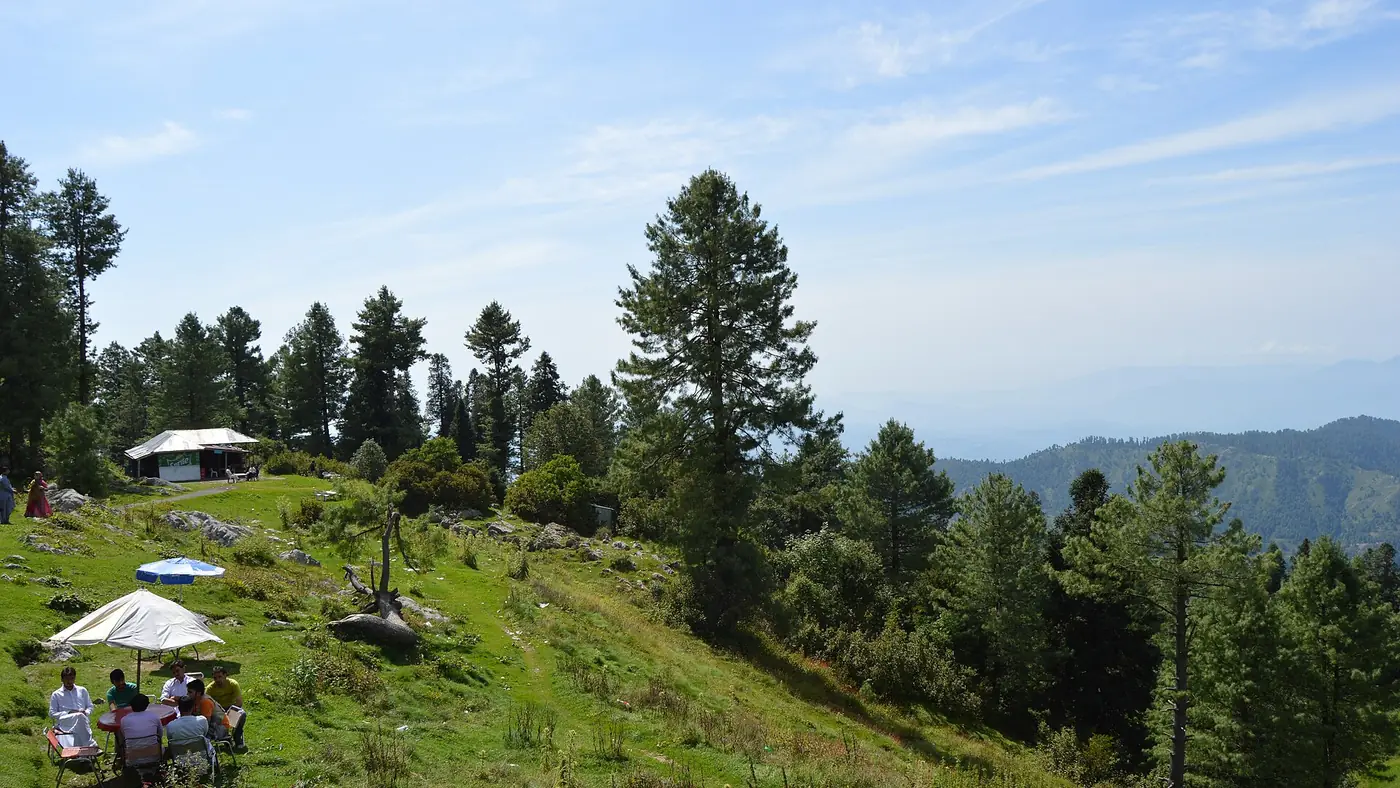
This is Nathia Gali at its most comfortable. Days are mild, around 22 to 25 °C, nights are cool enough for a jacket, and the forest is fresh after the thaw. Before the monsoon arrives, mornings are often clear, and all the walks are open, from the flat Pipeline Track to the summits of Miranjani and Mushkpuri.
It is also the start of the busy season. School holidays begin in June, weekends fill up as the plains heat up, and Eid al-Adha now falls in May: in 2027 it is expected around 16 May. Go midweek if you can, and book ahead for any weekend.
Monsoon: July to mid-September
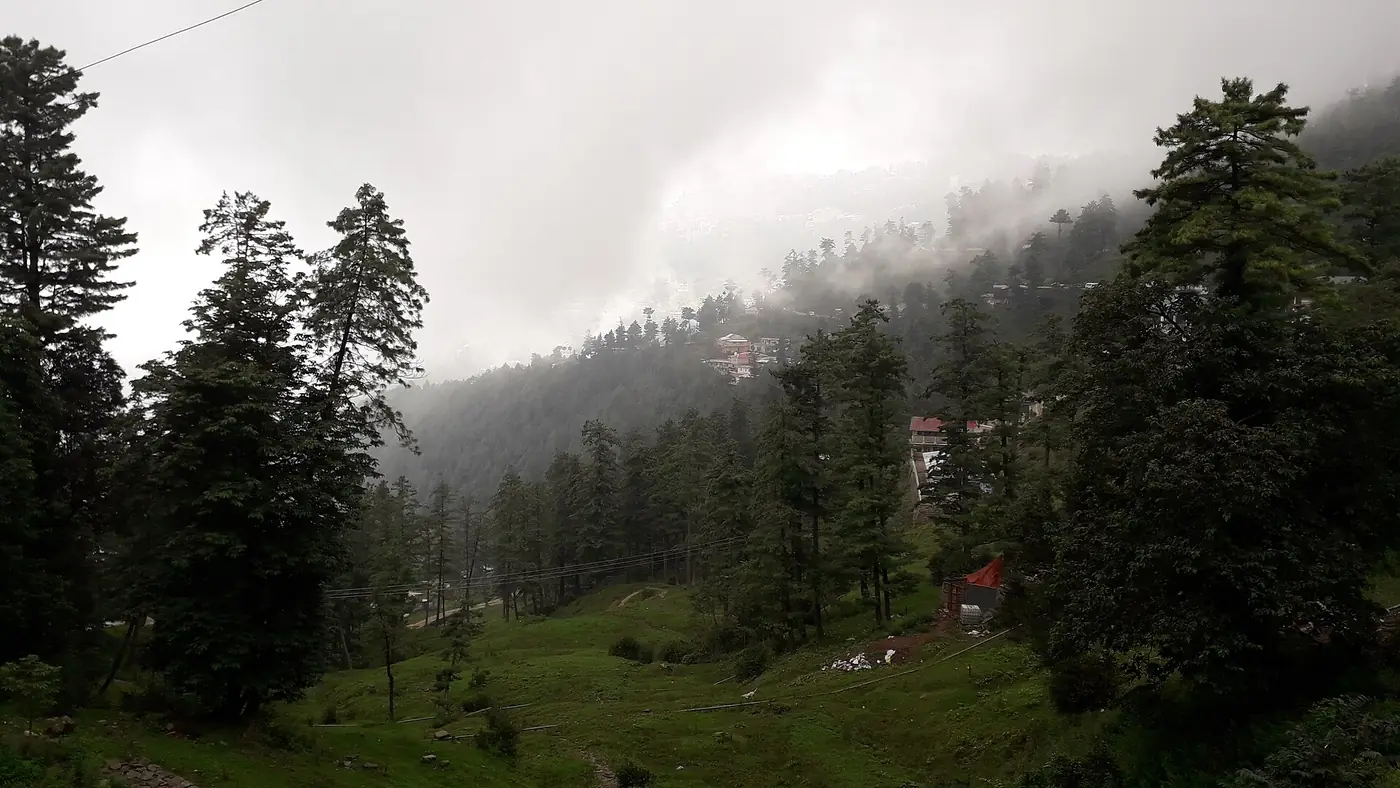
The monsoon changes the place. Cloud and mist sit on the ridge for hours or days at a time, the forest turns deep green, and rain falls on many afternoons. For a sense of scale, Murree, about 30 km away on the same ridge, averages about 420 mm of rain in July and about 340 mm in August, against about 90 mm in May.
Some people love Nathia Gali in the mist: it is cool, green and atmospheric, and a warm room with a view of cloud drifting through the pines is its own kind of holiday. The drawbacks are real, though:
- Views come and go, and a whole weekend can pass without a clear sight of the valley.
- Walks get slippery, and the higher trails are best left for another season after heavy rain.
- Landslides close the roads. They are the main risk of a monsoon trip, and more on them below.
- It is still busy. July and August are school-holiday months, and the 14 August weekend is one of the busiest of the year.
Autumn: mid-September to November
Once the monsoon ends, Nathia Gali has its best-kept season. November is the driest month of the year and October is nearly as dry; at Murree, October averages about 70 mm of rain and November about 30 mm. The air clears, the long views return, and the crowds thin sharply once the schools go back.
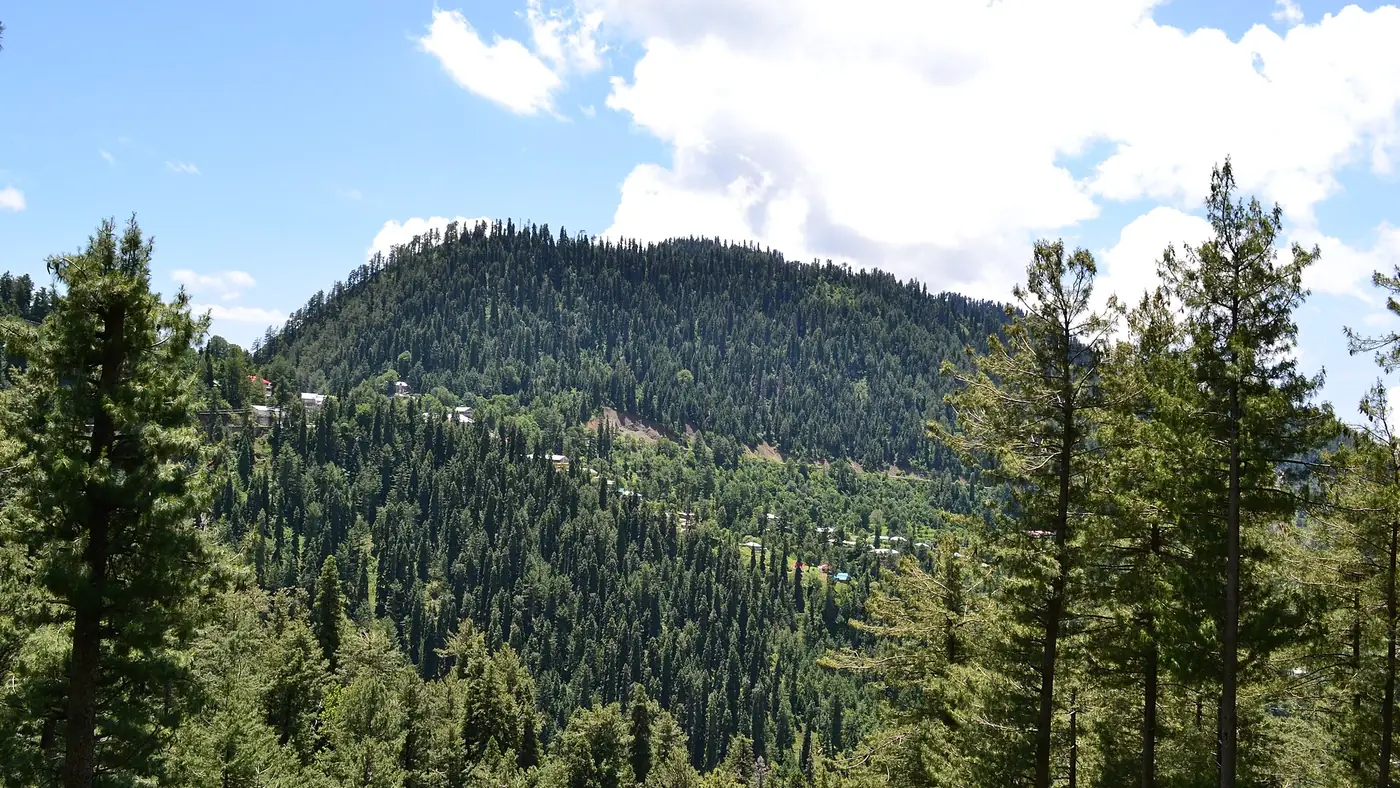
Days stay pleasant through October and turn crisp in November, when nights drop to a few degrees above freezing. The forest is mostly evergreen, so autumn colour is modest, but the horse chestnut and other broadleaf trees among the pines turn in late October and November. This is also the season with the best chance of the far horizon: on the clearest days after rain, the snow peaks of the north can be seen from the summits.
For walkers and anyone who wants the town quiet, this is the time to go.
Winter: December to February
Snow is the reason many people come in winter, and Nathia Gali gets plenty of it. Heavy falls used to come mainly in December and January, and in recent years the pattern has shifted later, towards February. In the winter of 2025–26 the season's first snow fell on New Year's night, with about eight inches in Nathia Gali, and three weeks later a heavier storm left three to four feet across Nathia Gali, Dunga Gali, Ayubia and Changla Gali.
Daytime highs are around 6 to 9 °C, and nights fall to freezing or a few degrees below. The town is beautiful under snow and quiet midweek, but a winter trip needs more planning than any other: heating, a spare day, and a hotel you can reach after a storm. The walks become snow treks, suitable only with proper boots and someone who knows the way.
The weeks to avoid
Nathia Gali is within a morning's drive of Islamabad, Rawalpindi, Peshawar and Abbottabad, and on certain days that shows. The busiest times are:
- Eid holidays, above all Eid al-Adha, which falls in mid-May in 2027 and moves about eleven days earlier each year
- The 14 August long weekend
- Summer weekends from late May to August, especially during school holidays
- The first weekend after a heavy snowfall, when day-trippers pour in from the cities
On these days the road through Murree and the Nathia Gali bazaar can jam for hours, and hotel prices rise. If your dates are fixed, leave very early and book your room well ahead. If they are not, go Sunday to Thursday; the same town on a Tuesday in October is a different place.
Rain, landslides and snow closures
Closures are the one thing that can turn a good trip into a wasted one, and they happen in both wet seasons.
In the monsoon, landslides block the ridge road after heavy rain, most often in July and August but sometimes into September. In early September 2025 the Pakistan Meteorological Department warned that torrential rain could trigger landslides and road closures across Murree and the Galiyat. Many closures are cleared within hours; some take longer, and none can be predicted a week ahead.
In winter, heavy snow closes the road, and in severe spells the authorities stop tourist traffic altogether. In March 2025 the district administration barred tourists from entering the Galiyat at Barian and Harno while snow and thick fog made the roads dangerous. Snow-related closures can come at any point from December to early March, and the first clear day after a storm is not always the day the road reopens.
Three rules for either season:
- Keep a spare day, especially in July, August and from December to March.
- Check the forecast and the road on the morning you drive up, and don't set off into a storm.
- Turn back when told. A closed road is closed for a reason.
Our guide to the drive from Islamabad to Nathia Gali covers what to carry in the car and how to handle the road in snow. The when to go page compares the seasons across the north if you are weighing Nathia Gali against a trip further up.
Which season suits which trip?
Families with young children or older parents: May, June and September to October, midweek. The walks are open, the roads are reliable and the nights are mild enough for everyone to sleep well.
Couples: October and November for quiet and clear air, or the monsoon if you like mist and don't mind staying in when it rains.
Walkers: late May and June, or late September and October. The summit trails are dry, and autumn gives the best views from the top. The places to visit in Nathia Gali guide sets out the walks and how long each takes.
Anyone going for the snow: January and February, midweek, with a hotel booked in advance. Choose one with proper heating on the main road; our guide to hotels in Nathia Gali explains what to ask.
Photographers: autumn and the clear days after winter storms, when the long views open up.
Don't go: on an Eid weekend or the first snow weekend without a booked room and a lot of patience, or in heavy monsoon rain with no spare day. If you would like us to suggest the right timing for your dates, send them to us.
Frequently asked questions
What is the best month to visit Nathia Gali?
June and October are the best all-round months: June for warm days and open trails, October for clear views and quiet. May and September are close behind.
When does it snow in Nathia Gali?
Mainly from December to February, with the heaviest falls now often in January and February. Snow can also fall in early March, and heavy storms can close the roads for a day or more.
Is Nathia Gali worth visiting in the monsoon?
Yes, if you enjoy mist and rain and keep a spare day. July and August are the wettest months, views come and go, and landslides can close the road for hours.
How cold is Nathia Gali in summer?
Pleasantly cool. Summer days are around 22 to 25 °C and nights 13 to 16 °C, so bring a jacket for the evenings even in June.
Is Nathia Gali open in winter?
Yes. The town is lived in all year and the hotels stay open, but heavy snow closes the roads at times, and tourist traffic has been stopped during severe storms. Keep a spare day and check the road before driving up.
When is Nathia Gali least crowded?
Midweek from mid-September to November, and midweek in winter between snowfalls. The busiest times are Eid, 14 August, summer weekends and the first weekend after heavy snow.