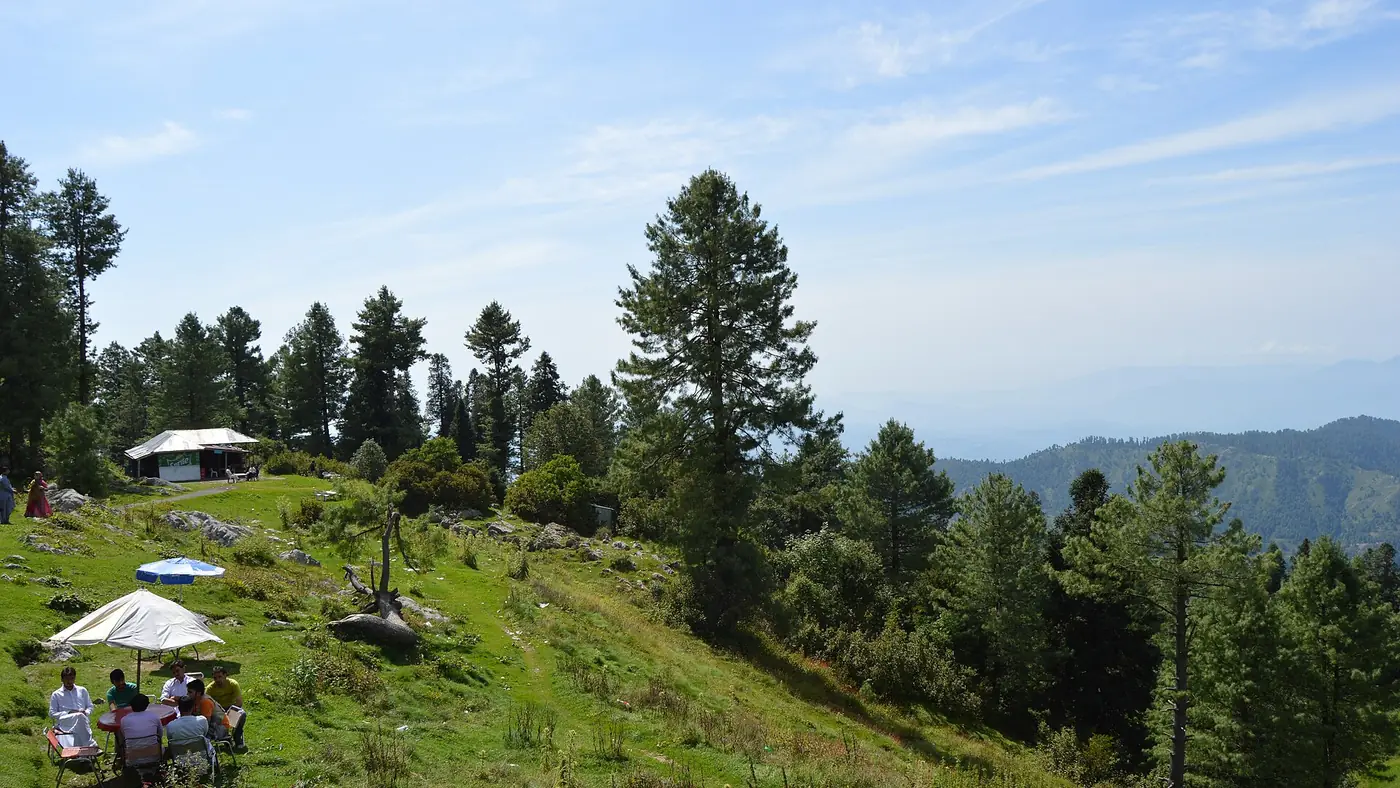
The Pipeline Track is a mostly level forest path of about 4 km between Dunga Gali and Ayubia in the Galiyat, following the line of an old water pipeline laid in the British period to carry water to Murree. At an easy pace it takes an hour to an hour and a half each way, with almost no climbing, which makes it the one proper forest walk in the area that suits small children and grandparents alike.
It runs through Ayubia National Park, so the forest along it is protected, old and thick. This guide covers where to start, what the path is actually like, the wildlife, when to walk it, and how to fit it into a day.
| At a glance | |
|---|---|
| Length | About 4 km one way; sources give 3.5 to 4.5 km |
| Time | 1 to 1.5 hours each way at an easy pace |
| Gradient | Almost level |
| Start points | Dunga Gali (main start) and Ayubia |
| Park | Ayubia National Park, run by the KP Wildlife Department |
| Ticket | A small entry fee at the start; foreign visitors pay more |
| Facilities | Tea and snack stalls at both ends; no toilets along the way |
| Best months | May to June and mid-September to November |
Where does the Pipeline Track start?
Most people start at Dunga Gali, on the main road 3 km from Nathia Gali towards Murree. Dunga Gali is also the headquarters of Ayubia National Park. The track leaves from near the small bazaar, where there are tea stalls and roadside parking, and where you pay the entry ticket.
The other end is at Ayubia, a resort area named after President Ayub Khan, which takes in several small hill stations along the ridge. There are tea and snack stalls at this end too.
There are two ways to do it:
- Out and back from Dunga Gali. Walk to Ayubia, have tea, and walk back. Allow two and a half to three hours in all, including stops.
- One way with a pick-up. Walk from Dunga Gali to Ayubia and have your driver meet you there. This halves the walking, and it is the easier plan with young children or older parents.
At weekends, parking near the start fills up early. Arrive by mid-morning, or park in Nathia Gali and take the short drive or a taxi to Dunga Gali.
What is the walk like?
The track is a natural forest path, not a paved promenade. It is broad enough for two or three people side by side, and it follows the contour of the hillside, so for most of its length it is close to flat. Expect roots, stones and a few uneven stretches, benches here and there, and some mud after rain.
It is one of the gentlest walks anywhere in the northern hills, and most people who can walk for an hour on level ground will manage it. That said:
- Wear proper shoes. Trainers are fine in dry weather; sandals and smart shoes are not.
- Carry small children rather than pushing them. A pram will struggle on the roots and stones.
- The path runs along a steep, forested hillside. Keep a hand on small children where the slope falls away beside it.
- Carry water. There are stalls at both ends, but you can't count on anything in between.
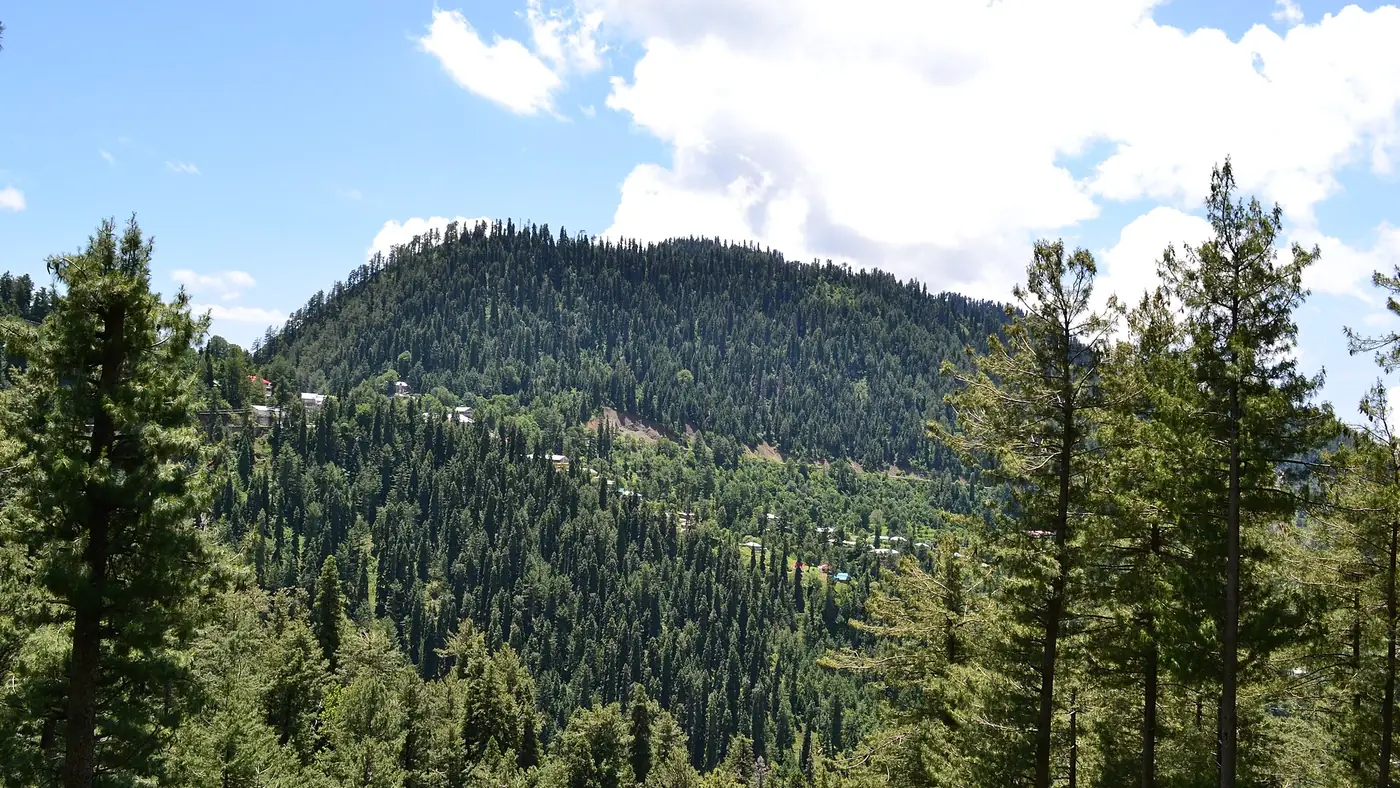
For most of the way the path is shaded by deodar, blue pine, yew and oak, with views opening out over the valleys where the trees thin. The Galiyat Development Authority dates the original pipeline to around 1892, when it carried water by gravity from Dunga Gali towards Murree; other accounts give later dates. Either way, the pipeline is what made the path so level.
What wildlife will you see?
Ayubia National Park was declared in 1984 and covers about 3,312 hectares. It has recorded 23 species of mammal, including the common leopard, the rhesus macaque and the Kashmir flying squirrel, and around 200 species of bird, among them the Kalij pheasant.
What you are likely to see:
- Rhesus macaques. The monkeys are the animals most people meet, often near the stalls, where visitors feed them. Please don't. Feeding has changed how the Galiyat's monkeys behave, and a monkey that expects food can turn aggressive.
- Birds. Early morning is best, before the crowds, when the forest is quiet enough to hear them. Bring binoculars if you have them.
The flying squirrels are there too, but they come out at night.
What you are very unlikely to see is a leopard. They live in these forests and have attacked people in the Galiyat and Murree hills over the years, but encounters on a busy daytime path are rare. Walk in daylight, keep children close and in sight, and finish the walk well before dusk.
When is the best time to walk it?
May and June are the most comfortable months, dry underfoot with cool air under the trees. Mid-September to November is just as good, and quieter, with the clearest views of the year.
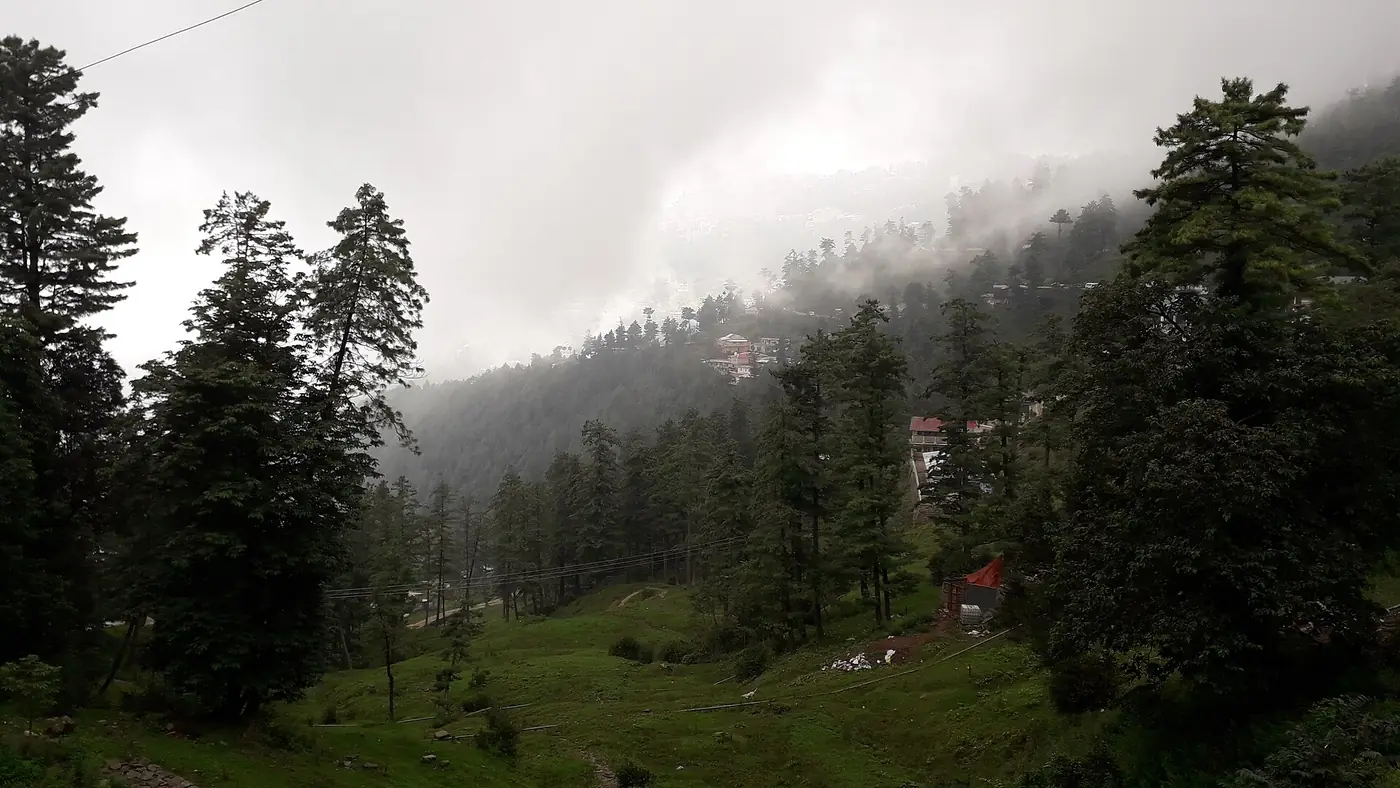
July and August bring the monsoon. The forest is at its greenest and the mist can be beautiful, but the path gets muddy and slippery, and rain often sets in after midday. Walk in the morning.
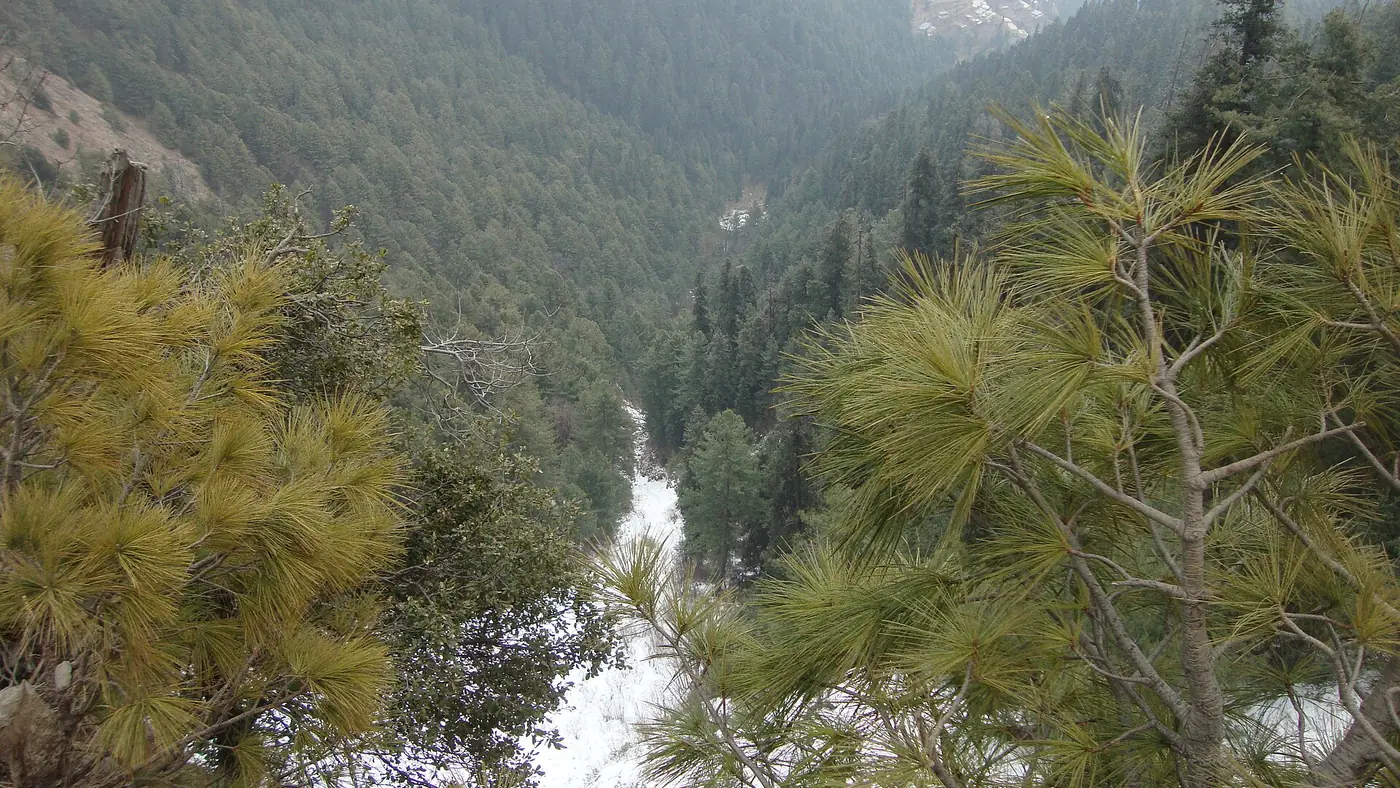
In winter the track is often under snow from about late December to early March. It becomes a snow walk: slower, slippery in places and very beautiful. Boots with a good grip are essential, and after heavy snow wait until the roads have been cleared before driving up. Our guide to Nathia Gali in winter covers road closures and how to plan around them.
Time of day matters as much as the month. At weekends the track fills up as the day-trippers arrive from the cities. Start by 9 am and you will have much of it to yourself.
Fitting it into a day
The Pipeline Track takes half a day at most, so it pairs well with something else:
- With lunch in Nathia Gali, 3 km away. This is the backbone of our Nathia Gali day trip from Islamabad.
- With a climb up Mushkpuri, which also starts from Dunga Gali. Do the climb first while you are fresh, then the Pipeline Track as a gentle finish, or save it for the next morning. Our Mushkpuri Top hike guide covers the trail.
- With the Ayubia chairlift, if it has reopened. It was shut in 2021 as unsafe, and in July 2026 the provincial government said its restoration was complete and it would reopen soon. Ask locally before you plan around it.
Over a weekend, our two-day Galiyat itinerary puts the Pipeline Track on the first afternoon and a summit on the second morning.
Is the Pipeline Track worth it?
For families, older travellers and anyone who wants the forest without a climb, yes. It is the easiest way to spend a couple of hours in real old-growth forest within a morning's drive of Islamabad.
Keen hikers will find it tame, and on a summer Sunday afternoon it is more crowd than forest. If you like a challenge, treat it as a warm-up or a rest-day stroll, and put your energy into Mushkpuri or Miranjani. If you would like help fitting the walk into a longer trip, send us your dates.
Frequently asked questions
How long is the Pipeline Track?
About 4 km one way between Dunga Gali and Ayubia; published figures range from 3.5 to 4.5 km. It takes an hour to an hour and a half each way at an easy pace.
Where does the Pipeline Track start?
At Dunga Gali, on the main road 3 km from Nathia Gali towards Murree. You can also start at the Ayubia end, but most people begin at Dunga Gali.
Is there an entry fee for the Pipeline Track?
A small entry ticket is charged at the start, with a higher rate for foreign visitors. The amount has changed over the years, so pay what is posted at the gate.
Is the Pipeline Track suitable for children and older people?
Yes. It is almost flat and shaded, with benches along the way. It is not suitable for prams, and small children need watching where the hillside drops away.
Can you walk the Pipeline Track in winter?
Yes, with boots that grip. It is often under snow from late December to early March, and it is slower and slippery in places.
Are there leopards on the Pipeline Track?
Leopards live in Ayubia National Park, but encounters on the busy daytime track are rare. Walk in daylight, stay in company and keep children close.