
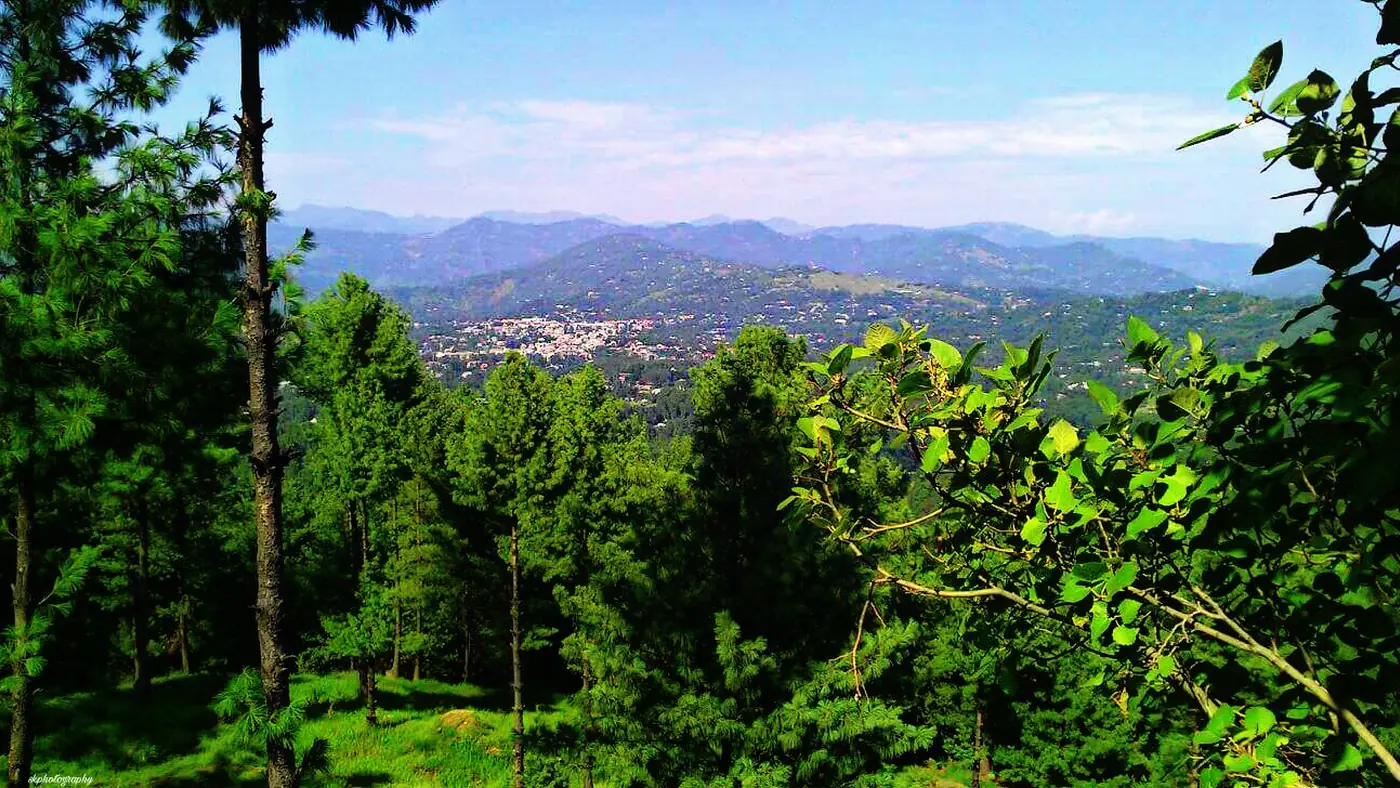

The best time to visit Rawalakot is May and June, and again from mid-September to October. Early summer brings days in the mid to high 20s °C while the plains bake, and autumn is dry, clear and quiet once the monsoon has gone. July and August are the wettest months, green but prone to landslides on the roads, and from December to February Rawalakot and Banjosa Lake get snow and nights below freezing.
Each season suits a different kind of trip. This guide compares them month by month, explains how much colder Banjosa and Toli Pir are than the town, and sets out the weeks when crowds and closures are most likely.
| At a glance | |
|---|---|
| Best overall | May to June; mid-September to October |
| Warmest month | June, with days around 28 to 30 °C in town |
| Wettest months | July and August |
| Driest, clearest | October and November |
| Snow | Mainly December to February, occasionally into March |
| Coldest nights | January, around −3 to 0 °C in town |
| Toli Pir reliably open | About May to October |
| Busiest | Eid holidays, summer weekends, 14 August |
Rawalakot weather month by month
Rawalakot sits at around 1,600 metres, so it is always much cooler than Islamabad and Lahore. The figures below are average daytime highs and night-time lows for the town, rounded, from two climate models (Weather Spark and Weather2Travel). No long official record for Rawalakot is published online, so treat them as a guide to what each month feels like rather than a forecast.
| Month | Day | Night | What to expect |
|---|---|---|---|
| January | 9 to 10 °C | −3 to 0 °C | The coldest month; snow likely |
| February | About 11 °C | −1 to 1 °C | Snow still likely, some years the heaviest |
| March | About 16 °C | 3 to 6 °C | Frequent showers; snow on Toli Pir |
| April | About 21 °C | 8 to 10 °C | Mild; the hills turning green |
| May | About 26 °C | 13 to 14 °C | Warm, settled, one of the best months |
| June | 28 to 30 °C | 16 to 18 °C | The warmest month; monsoon from late June |
| July | 27 to 28 °C | About 18 °C | The wettest month; landslide risk |
| August | 26 to 27 °C | 17 to 18 °C | Wet and very green |
| September | 25 to 26 °C | 14 to 15 °C | Rain easing in the first week or two |
| October | 22 to 23 °C | 7 to 10 °C | Dry, clear and quiet |
| November | 17 to 18 °C | 1 to 5 °C | The driest month; cold nights |
| December | About 12 °C | −3 to 2 °C | Winter sets in; first snow |
Spring: March to May
March is still close to winter. Nights hover a few degrees above freezing, showers are frequent, and Toli Pir usually still has snow. It is a quiet time to see the town, not a time for the high ground.
April is milder, with days around 21 °C, and the fields and hills around Rawalakot turn green again. Showers remain common, so pack a rain jacket, but it is a pleasant month for Banjosa if you don't mind a cool evening.
May is the start of the best season. Days are warm, nights are cool enough for a jacket, the roads are dry and settled, and Toli Pir becomes reliably reachable. It is also the month when the crowds begin to build.
Rawalakot does not have a blossom season to plan a trip around, in the way Hunza does with its apricot and cherry trees. If blossom is what you are after, our guide to Hunza in blossom season is the one to read.
Summer and the monsoon: June to mid-September
June is Rawalakot at its warmest, around 28 to 30 °C by day in town, which feels mild when Islamabad and the Punjab are in the high 30s and 40s. Banjosa is a little cooler again. This is when the town works best as an escape from the heat, and the long days leave plenty of time for Toli Pir and Devi Gali.
The monsoon usually arrives in the last week of June and lasts into early September. July and August are the wettest months of the year: the forest is at its greenest, but many afternoons are wet, views come and go, and the roads suffer. Landslides are the real risk. In July 2025 a slide at Thanda Pani closed the Kahuta to Azad Pattan road, the main route from Islamabad, and stranded hundreds of travellers.
If you go in the monsoon:
- Leave Islamabad early so you are not driving the hill roads in afternoon rain.
- Keep a spare day at the end of the trip.
- Check the road on the morning you drive, and turn back if you are told to.
Our Islamabad to Rawalakot route guide compares the Azad Pattan and Kohala roads, including which is better in wet weather and in snow.
Autumn: mid-September to November
Once the monsoon ends, Rawalakot has its most dependable weather. October and November are the driest months of the year, the air clears, and the crowds of the school holidays are gone. Days in October are still pleasant, in the low 20s °C, and nights turn cold.
The forests around Rawalakot and Banjosa are mostly pine, so autumn colour is limited compared with the poplar valleys of Gilgit-Baltistan. The appeal of autumn here is clear, settled weather, quiet roads and long views from Toli Pir.
By November, nights in town drop close to freezing and Toli Pir can see its first snow, so the high ground becomes less certain as the month goes on. For a calm weekend at Banjosa, late September and October are hard to beat.
Winter: December to February
Snow falls mainly between December and February, and occasionally into March. Nights in town are around freezing or a few degrees below, and colder at Banjosa, where temperatures fall to around −5 °C. In a cold winter the lake freezes over and people walk on the ice.
A snowy Rawalakot is beautiful, but a winter trip needs more planning than any other:
- Roads can close after heavy snow. In January 2026 the Pakistan Meteorological Department warned that heavy snow could close roads in Rawalakot, Poonch and Bagh, among other areas. Keep a spare day and check before driving.
- Toli Pir is usually off the table. Snow blocks the upper road for much of the winter.
- Heating matters. Ask your hotel or rest house how rooms are heated, and whether there is gas or a generator when the power goes.
- Boats stop at Banjosa when the lake is frozen.
- Drive in daylight only. Ice on shaded bends is a real hazard, especially in the early morning.
How Banjosa and Toli Pir differ from the town
As a rule of thumb, the air cools by about 6 °C for every 1,000 metres you climb, and that shapes a trip here.
Banjosa Lake, at about 1,980 metres, is roughly 350 metres higher than Rawalakot and typically a couple of degrees cooler. Summer days at the lake run roughly 16 to 25 °C, and winter nights fall to around −5 °C.
Toli Pir, at around 2,700 metres, is about 1,000 metres higher than the town, so expect it to be five to seven degrees colder, with a wind on the open top that makes it feel colder still. Take a warm layer even in June. Snow usually lies up here from late autumn into spring, and the dependable months are May to October.
Our guide to the places to visit in Rawalakot covers Toli Pir, Devi Gali and the other stops, and our Banjosa Lake guide covers the lake itself, from boating to where to stay.
Crowds: Eid, holidays and weekends
Banjosa fills up on certain days. During the Eid holidays in April 2025, the lake was packed with families from across Pakistan. The busiest times are:
- Eid holidays, especially Eid al-Adha, which is expected around 16 May in 2027, right at the start of the best season. Eid al-Fitr is expected around 10 March in 2027, when the hills are still cold.
- The 14 August long weekend and summer weekends during the school holidays.
On these days book your room well ahead and expect a crowd at the lake. If your dates are flexible, go Sunday to Thursday.
Which season suits your trip?
Families with young children or older parents: May, June and late September to October. The weather is mild, the roads are at their most reliable, and the nights are comfortable.
Escaping the heat: June, before the monsoon, is the classic month. Book ahead for weekends and Eid.
Couples and anyone after quiet: October, midweek. The clearest weather of the year and the fewest people.
Snow: January and February, with a heated room booked, a spare day, and no plans for Toli Pir.
Photographers: October and the clear days after winter snow, when the long views open up.
Not ideal: July and August if you have no spare day, and Eid weekends if you have not booked a room.
Our when to go page compares the seasons across the north if you are weighing Rawalakot against a trip further up. If you would like us to suggest the right timing for your dates, tell us what you have in mind.
Frequently asked questions
What is the best month to visit Rawalakot?
May and October are the best all-round months: May for warm days and open roads to Toli Pir, October for clear, dry weather and quiet. June and late September are close behind.
Does it snow in Rawalakot?
Yes. Snow falls mainly from December to February, sometimes into March, and Banjosa Lake can freeze in a cold winter. Heavy falls can close roads for a day or more.
How hot is Rawalakot in summer?
Pleasantly warm rather than hot. June, the warmest month, averages around 28 to 30 °C by day in town, with nights of 16 to 18 °C, and Banjosa is a little cooler.
Is it a good idea to visit Rawalakot in the monsoon?
Only with a spare day. July and August are the wettest months, and landslides can close the roads from Islamabad, especially between Kahuta and Azad Pattan.
When is Toli Pir accessible?
Most reliably from May to October. Snow usually lies on the top from late autumn into spring and can block the upper road.
When is Banjosa Lake least crowded?
Midweek, outside the Eid holidays and school summer holidays. Late September and October are the quietest good-weather months.