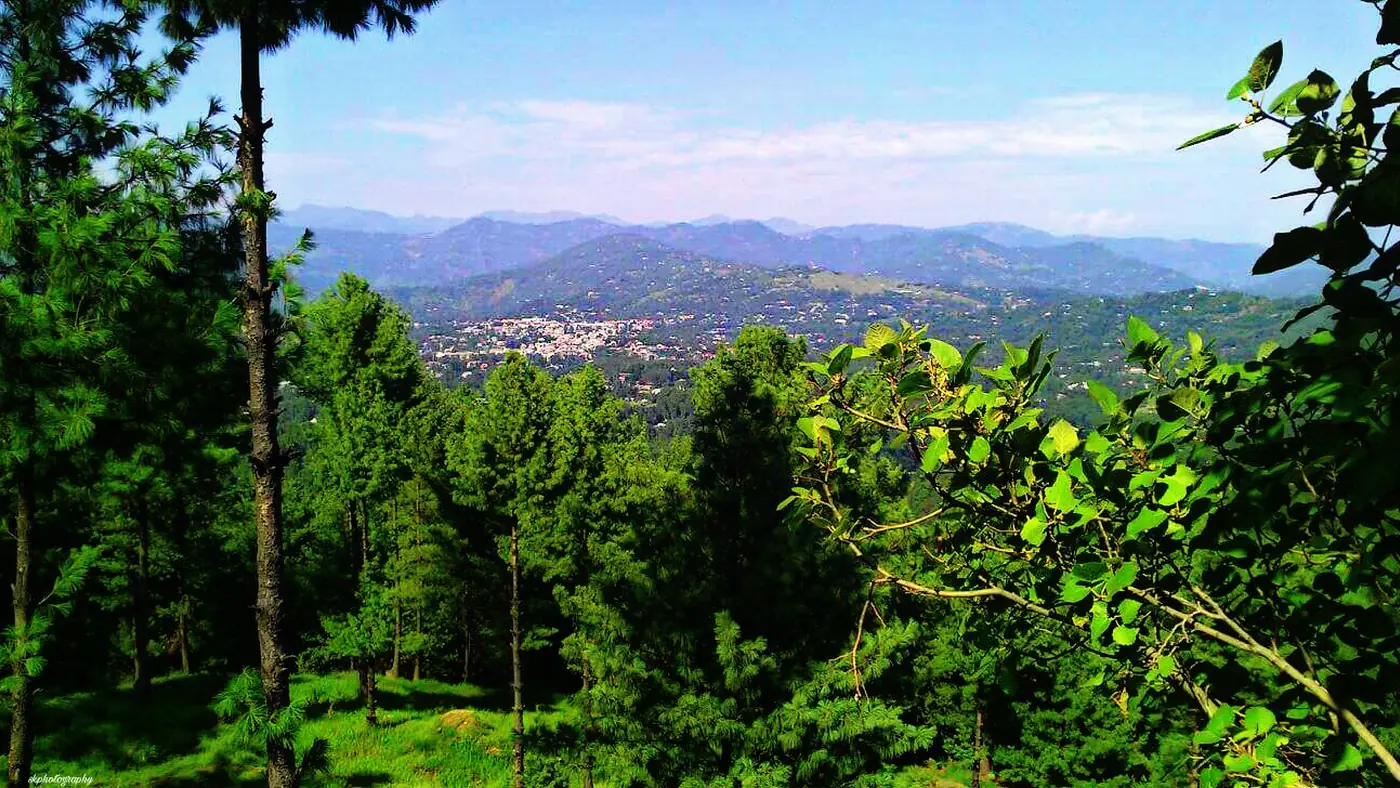
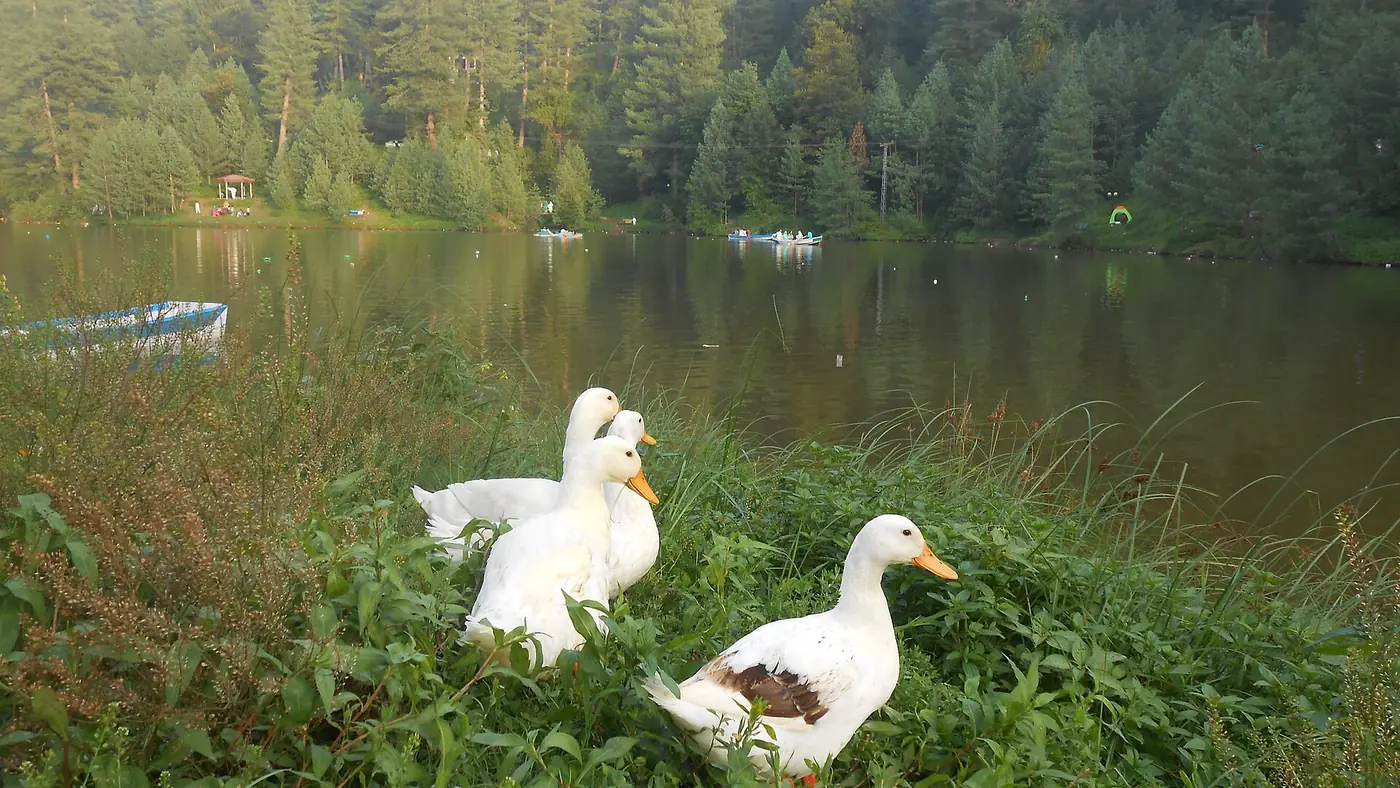
Banjosa Lake is a small man-made lake in the pine forest about 18 km from Rawalakot, in Poonch district of Azad Kashmir, at roughly 1,980 metres. A paved road reaches it from Rawalakot in 30 to 45 minutes, and from Islamabad the drive takes about four hours via Azad Pattan. People come for the boats, slow walks under the pines and a cool night away from the plains, and the best months are May, June, September and October.
It is not a big lake and it is not wild: there are rest houses, tea stalls and boats for hire, and on an Eid weekend it is full of families. This guide covers where it is, what there is to do, what the facilities are really like, where to stay and when to go. Separate guides cover the drive from Islamabad to Rawalakot and the seasons in Rawalakot and Banjosa.
| At a glance | |
|---|---|
| Where | Poonch district, Azad Kashmir, south-east of Rawalakot |
| Altitude | About 1,980 m |
| From Rawalakot | About 18 km via Khai Gala, 30 to 45 minutes |
| From Islamabad | About 130 km via Azad Pattan, around 4 hours |
| Best months | May to June and September to October |
| Summer days | Roughly 16 to 25 °C at the lake |
| Winter | Snow from about December to February; the lake can freeze |
| Busiest | Eid holidays and summer weekends |
| Stay | Government rest houses and a few hotels by the lake; more choice in Rawalakot |
Where is Banjosa Lake?
Banjosa sits in the hills south-east of Rawalakot, the headquarters of Poonch district. From the town the road runs east to Khai Gala, about 10 km, then turns south on the road towards Pallandri for another 8 km or so to the lake. The small bazaar at Chhota Gala, about a kilometre away, has basic shops if you need supplies.
The lake itself is small, roughly 300 metres from end to end, with pine forest on the slopes around it. It is man-made, and around it are rest houses, stalls, boats for hire and open ground where families spread out for picnics. At close to 2,000 metres it is about 350 metres higher than Rawalakot, so expect it to feel a couple of degrees cooler than the town, and noticeably cooler than Islamabad at any time of year.
The altitude is gentle. At under 2,000 metres it is rarely a problem for anyone, which makes Banjosa one of the easier places in the Kashmir hills for small children and older parents.
How do you get to Banjosa Lake?
From Rawalakot
Most people base themselves in Rawalakot or at the lake and treat the last 18 km as a short hop. The road through Khai Gala is paved, and any car in good order manages it. Allow 30 to 45 minutes, and more on an Eid afternoon.
If you arrive by public transport, taxis and local vans run between Rawalakot and Banjosa. Agree the fare before you get in, and if you hire a car for the day, agree the stops too.
From Islamabad
The usual route is via Kahuta and the bridge over the Jhelum at Azad Pattan to Rawalakot, then on to the lake: about 130 km and around four hours in normal traffic. The longer alternative runs through Murree and Kohala. The route guide linked above compares the two roads in detail, including where landslides are most likely.
A day trip from Islamabad is possible but long, with close to eight hours in the car for a few hours at the lake. One night at Banjosa or in Rawalakot turns it into a relaxed trip, and gives you the lake in the early morning, before the day visitors arrive.
What is there to do at Banjosa Lake?
Boating
Boating is the main activity. Small pedal boats and rowing boats are hired out by the ride, with life jackets. Pay in cash at the boats; rates change from season to season, so ask before you get in rather than relying on any figure you have read online. Boats are a warm-weather activity and won't run when the lake is frozen.
Put children in life jackets that actually fit them, and don't let anyone stand up in a pedal boat for a photograph.
Walking under the pines
The best thing at Banjosa costs nothing. You can walk along the shore and up into the forest on the slopes around the lake, which is always quieter than the shore. The ground is steep in places and covered with pine needles, which are slippery when dry and worse when wet, so wear shoes with grip rather than sandals.
A longer walk takes you towards Chhota Gala and the villages around the lake. Stay on obvious paths, keep children close near the water, and turn back well before dark.
Picnics, swings and rides
On busy days there are swings, horse rides for children, and tea and snack stalls around the shore. During the Eid holidays in April 2025, local reports described the lake packed with families, with boating, swings and even drummers and live music for visitors. If that sounds like fun, go at Eid. If it doesn't, go midweek.
What are the facilities like?
Banjosa is a developed resort by the standards of the Kashmir hills, but the facilities are basic and can struggle on busy days.
- Food: tea stalls and simple places to eat by the lake, and more choice in the Chhota Gala bazaar. For a proper meal, Rawalakot has far more.
- Toilets: there are public toilets, but visitors in 2025 were still asking for cleaner ones. Carry tissues and hand sanitiser.
- Litter: the same reports called for better waste management. Take your rubbish back with you, especially on busy days.
- Parking: there is parking a short walk from the water.
- Charges: we have not found a reliable, current figure for any entry or parking charge at Banjosa. Carry cash for whatever is asked and for the boats.
- Signal: in normal times all the main mobile networks work at the lake. During the 2026 unrest mobile internet in Poonch was cut for months, so check the current position and download an offline map before you leave Islamabad.
- Cash: bring enough for the whole trip. There are banks in Rawalakot, but the internet shutdowns of 2026 also disrupted ATMs and card payments.
Where to stay at Banjosa
You have two choices: stay by the lake or stay in Rawalakot.
By the lake, the AJK Tourism and Archaeology Department, the Public Works Department and the Pearl Development Authority all have rest houses and huts, and there are a few private hotels and guesthouses nearby. Staying here gives you the lake at its quietest, in the early morning and after the day visitors leave. Rooms are simple, and the few there are fill quickly over Eid and on summer weekends, so book ahead and confirm the booking by phone before you drive up.
In Rawalakot, 18 km away, there is more choice of hotels and places to eat, and the town makes a better base if you also plan to visit Toli Pir, which lies in a different direction.
Whichever you choose, ask about heating if you are going between November and March. Nights at the lake fall below freezing in winter.
Some visitors also camp in the forest around the lake. If you plan to, ask at the rest houses where camping is allowed, don't camp alone, and don't light fires under the pines.
When is the best time to visit Banjosa Lake?
May and June are the classic months: warm days, cool nights and the forest at its freshest. Summer days at the lake run roughly 16 to 25 °C, so you will want a light jacket in the evening even in June.
July and August are the monsoon months, the wettest of the year. The forest is at its greenest, but afternoons are often wet, and landslides can block the roads from Islamabad. Keep a spare day.
September and October are settled, clear and much quieter once the monsoon ends. For a calm weekend by the water, this is our pick.
December to February brings snow and temperatures down to around −5 °C. In a cold winter the lake freezes over, and people walk on the ice. Heavy snow can close the roads for a day or two, boats stop, and a winter visit needs warm clothes and a heated room.
The seasons guide linked at the top of this page goes through the months in more detail, with average temperatures.
A day at Banjosa, and what to combine it with
If you are staying in Rawalakot, a good day runs like this:
- Leave Rawalakot by 8 or 9. The drive through Khai Gala takes well under an hour.
- The lake in the morning. Walk the shore and the forest before it gets busy, then take a boat out.
- Lunch at the lake or in Chhota Gala.
- Afternoon at Devi Gali, a pine-fringed meadow further south-east, or back to Rawalakot and up to Toli Pir if the weather is clear.
- Back in Rawalakot before dark. The hill roads are narrow and unlit.
Our guide to the places to visit in Rawalakot sets out Toli Pir, Devi Gali and the other stops, with the distance to each and the time it needs.
Is Banjosa Lake worth the trip?
For the right trip, yes. Banjosa is one of the easiest places within reach of Islamabad to spend a cool, green night in pine forest, at an altitude that suits every age. For families with young children or older parents, or friends who want a short break without a long mountain drive, it works well, especially midweek or outside the Eid holidays.
It is not a big alpine lake, and if you arrive expecting one you will be disappointed. It is small, managed and on busy days crowded. If you have five days or more and want high mountains, fast rivers and villages far up a valley, the Neelum valley on the other side of Azad Kashmir is a bigger trip; our Kashmir page covers it.
The other reason to wait is the situation in Rawalakot itself. Until the unrest of 2026 has properly settled, go only when roads are open and there are no restrictions in force. If you would like help fitting Banjosa into a wider trip once things are calm, send us your dates.
Frequently asked questions
How far is Banjosa Lake from Rawalakot?
About 18 km by road, through Khai Gala. The drive takes 30 to 45 minutes, and taxis and local vans run between the town and the lake.
How far is Banjosa Lake from Islamabad?
About 130 km via Kahuta, Azad Pattan and Rawalakot, which takes around four hours in normal traffic. The route via Murree and Kohala is longer.
Is there boating at Banjosa Lake?
Yes. Pedal boats and rowing boats are hired out by the ride, with life jackets, from spring to autumn. Pay in cash, and check the rate at the boats because it changes.
Does Banjosa Lake freeze in winter?
In a cold winter, yes. Snow falls from about December to February and temperatures drop to around −5 °C, and in hard winters the lake freezes over. Boating stops and the roads can close for a day or two after heavy snow.
Can you stay overnight at Banjosa Lake?
Yes. There are government rest houses and huts by the lake and a few private hotels and guesthouses nearby, with more choice 18 km away in Rawalakot. Book ahead for Eid and summer weekends.
Is it safe to visit Banjosa Lake now?
The lake itself is a family picnic spot, but Rawalakot has been at the centre of protests since June 2026, with road closures and communication cuts. Check recent news and call your hotel before you go, and don't travel while restrictions are in force.