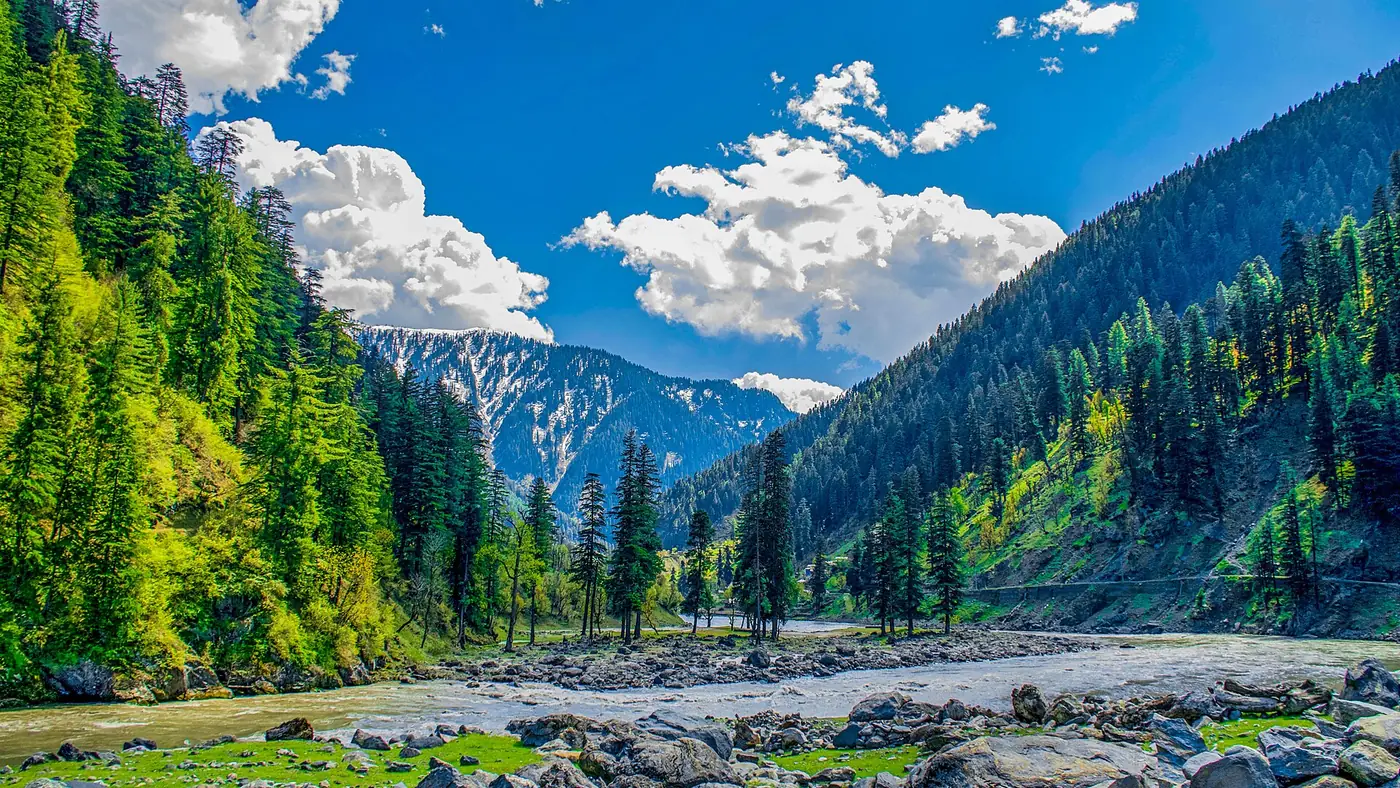
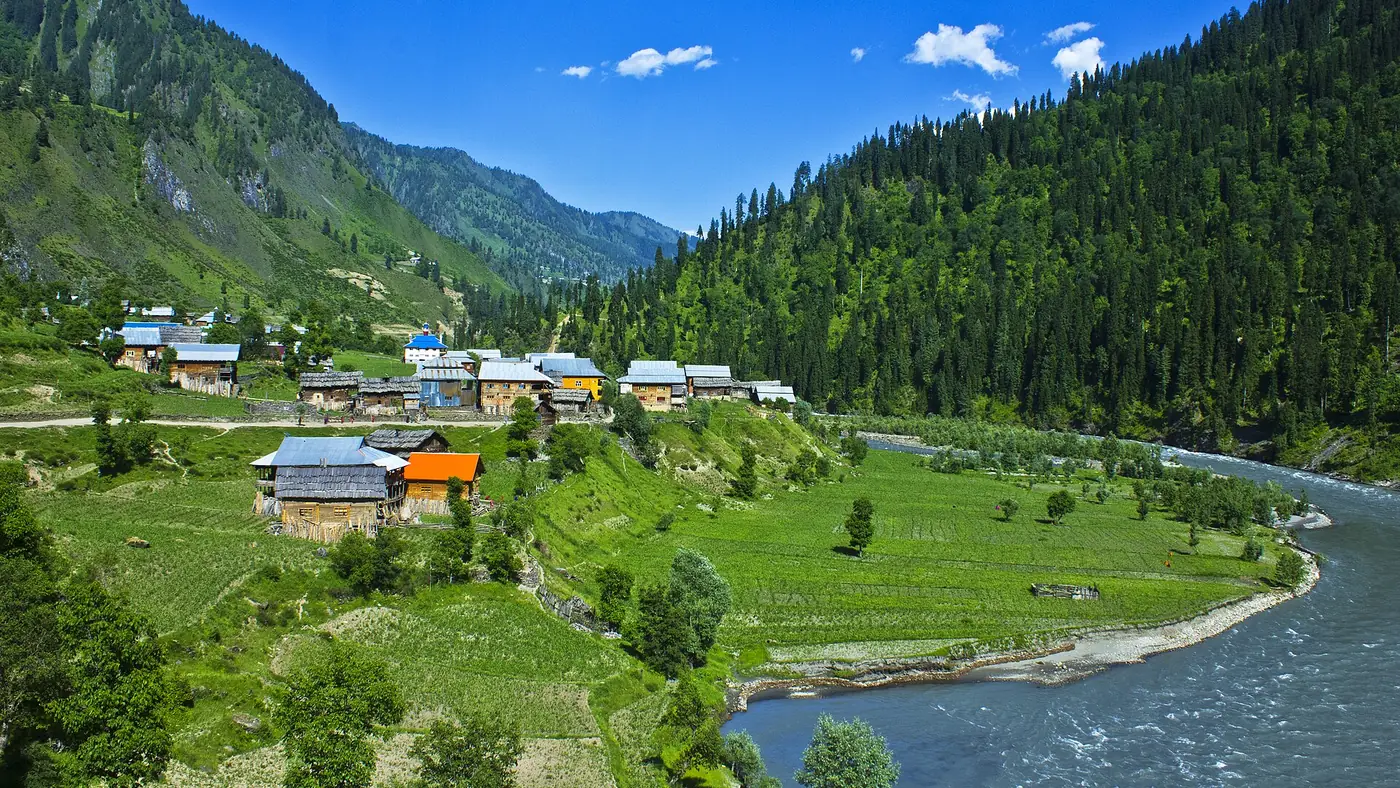
Azad Kashmir weather depends far more on height than on the date. In June, Mirpur on the plains averages about 40°C by day while Kel in the upper Neelum Valley is closer to 26°C. In January, Mirpur is a mild 19°C and Kel barely reaches 5°C, with nights below freezing. July and August are the wettest months almost everywhere, and snow falls from about December to February at Rawalakot and higher.
This guide puts four towns side by side: Mirpur at about 460 metres, Muzaffarabad at about 740, Rawalakot at about 1,640 and Kel at about 2,100. Between them they cover most of the places people actually visit, from Mangla Lake to Arang Kel.
| At a glance | |
|---|---|
| Hottest | Mirpur in May and June, about 38 to 40°C by day |
| Coldest | Kel from December to February, nights around −2 to −4°C |
| Wettest months | July and August, the monsoon |
| Second wet spell | February and March |
| Driest months | October and November |
| Snow | Rawalakot about December to February; Kel about December to March; Muzaffarabad city very rarely; Mirpur never |
| Most comfortable everywhere | Late September and October |
How height sets the weather in Azad Kashmir
Azad Kashmir climbs from the edge of the Punjab plain to valleys along the Line of Control that are snowbound for part of every winter. Temperatures drop by roughly 6 to 7°C for every thousand metres you climb, so the same day can be 36°C in Mirpur and 27°C in Kel.
That gives three weather zones:
- The south (Mirpur, Bhimber, Kotli) is hot, humid plains weather: very hot before the monsoon, mild and dry in winter.
- The middle hills (Muzaffarabad, Bagh, Rawalakot) are warm in summer, with cold winters that bring snow to the higher towns and ridges.
- The Neelum Valley gets colder the further up you drive. Keran at about 1,500 metres is mild in summer; Kel, Arang Kel and Taobat have real winters.
The Muzaffarabad figures below come from the Pakistan Meteorological Department's long-term record for the city. No long official record is published for Rawalakot or Kel, so their figures are rounded modelled averages, cross-checked against the Muzaffarabad record adjusted for height. The Mirpur figures are modelled too, checked against the long-term record for nearby Jhelum. Treat all of them as a guide to what to pack, not a forecast.
Month-by-month temperatures, four towns side by side
Typical daytime high and night-time low, in °C, rounded:
| Month | Mirpur | Muzaffarabad | Rawalakot | Kel |
|---|---|---|---|---|
| January | 19 / 5 | 16 / 3 | 10 / −2 | 5 / −4 |
| February | 21 / 7 | 18 / 5 | 11 / 0 | 7 / −2 |
| March | 27 / 12 | 23 / 10 | 16 / 5 | 12 / 2 |
| April | 33 / 17 | 28 / 14 | 21 / 9 | 18 / 6 |
| May | 38 / 22 | 34 / 18 | 26 / 14 | 22 / 11 |
| June | 40 / 25 | 37 / 22 | 29 / 17 | 26 / 14 |
| July | 36 / 26 | 35 / 23 | 28 / 18 | 27 / 17 |
| August | 34 / 26 | 34 / 23 | 27 / 18 | 27 / 16 |
| September | 34 / 24 | 33 / 19 | 26 / 15 | 25 / 13 |
| October | 31 / 17 | 30 / 14 | 23 / 9 | 20 / 7 |
| November | 26 / 10 | 24 / 8 | 18 / 3 | 14 / 2 |
| December | 21 / 5 | 18 / 4 | 12 / 0 | 9 / −2 |
A few things stand out:
- June is the hottest month in the lower towns, not July. The monsoon cloud takes a few degrees off the days from July onwards but makes the nights warmer and stickier.
- Muzaffarabad is hotter than people expect. At 740 metres it is a valley town, and a June afternoon there is not far off Islamabad.
- The gap between day and night is widest in spring and autumn. In October, Kel can be 20°C at lunchtime and near freezing before dawn.
- Arang Kel and the high lakes are colder than Kel. Arang Kel sits about 450 metres higher, so take a few more degrees off. For Keran, Sharda and the lakes, see our Neelum Valley weather guide.
When does it rain in Azad Kashmir?
There are two wet seasons, and they feel very different.
The monsoon: July and August
The monsoon usually arrives in late June or early July and eases through September. July is the wettest month of the year in Muzaffarabad, averaging close to 330 mm, and August brings about 230 mm more. Mirpur follows the same pattern. Rawalakot is wettest in July and August too, though March there can come close.
Monsoon rain comes in heavy bursts rather than all-day drizzle, and that is what causes the trouble: landslides on the Neelum and Kohala roads, and sudden floods in side streams. In August 2025, flash floods washed away part of the jeep road to Ratti Gali Lake, and the AJK disaster management authority had to bring more than 700 stranded tourists down. Plan a spare day in these months, and don't set off up a valley road in heavy rain.
Winter and spring rain: February and March
The second wet spell comes with western weather systems in late winter. In Muzaffarabad, February and March each average around 140 to 160 mm, more than any month except July and August. Up the Neelum Valley and on the ridges above Rawalakot, much of this falls as snow. Late-winter storms are the ones that close the high roads for days at a time.
The dry months
October and November are the driest months across Azad Kashmir, with Muzaffarabad averaging under 50 mm in each. Clear air, settled days and long views make October the most dependable month of the year for weather, even if the nights are cold in the hills.
When and where does it snow?
Snow follows height closely:
- Mirpur and the south: no snow.
- Muzaffarabad city: very rarely. A light fall in February 2016 was reported as the city's first in about ten years. The ridges above the city, including Pir Chinasi at about 2,900 metres, get snow most winters.
- Rawalakot: usually from December to February, and in some years into early March. Banjosa, a little higher, gets snow in December and January and its lake can freeze.
- Kel and the upper Neelum: heavy snow from about December to March. Roads in the upper valley are blocked for days after big falls; in late January 2026, snow closed the upper Neelum, Leepa, Pir Chinasi and Sudhan Gali roads together.
- The high peaks can see snow as early as October. In early October 2025 there was a light fall on Makra peak above Muzaffarabad.
If you want to see snow rather than just read about it, our guide to snowfall places in Azad Kashmir covers which snow spots you can reach by car and when.
What to pack for the weather
- Mirpur, April to September: light cotton, a hat and plenty of water. From November to February, a jumper for the evenings.
- Muzaffarabad: summer clothes from May to September, a light jacket for evenings in spring and autumn, and a warm layer in winter.
- Rawalakot and Banjosa: a warm layer even in summer, because evenings are cool. In winter, a proper coat, gloves and shoes with grip.
- Kel and Arang Kel: a fleece or jacket all year, a waterproof in July and August, and full winter clothing from November to March.
- Everywhere in the monsoon: a light rain jacket, and a plan for the day the road is closed.
Which weather suits which trip?
For a first trip to the Neelum Valley, late September and October give the most settled weather, with June a close second if you can live with the crowds. July and August are warm and green but carry the most rain and road risk. Our guide to the best time to visit Azad Kashmir weighs the seasons against crowds and road openings, and the when to go page shows how Kashmir fits with the rest of the north.
For snow, go to Pir Chinasi, Banjosa or Toli Pir from late December to February, a day or two after a fall has cleared, not while it is still snowing.
For a winter break without snow chains, Mirpur, Mangla Lake and the south are mild and mostly dry from November to January.
Avoid Mirpur and Muzaffarabad in late May and June unless you have to be there, and the upper Neelum from December to March unless you are prepared for closed roads.
The Pakistan Meteorological Department posts forecasts and heavy-rain alerts at pmd.gov.pk. Check them the day before you drive, especially in July, August and midwinter.
Frequently asked questions
What is the weather like in Azad Kashmir in July?
Warm to hot and wet. Days are around 35 to 36°C in Mirpur and Muzaffarabad, about 28°C in Rawalakot and 27°C in Kel, with heavy monsoon showers and a real risk of landslides on mountain roads.
Does it snow in Azad Kashmir?
Yes, in the hills. Rawalakot, Banjosa, Pir Chinasi, Toli Pir and the upper Neelum Valley get snow from about December to February or March. Muzaffarabad city very rarely sees any, and Mirpur none.
Which is the coldest month in Azad Kashmir?
January. Kel averages about 5°C by day and −4°C at night, and Rawalakot about 10°C and −2°C. Even Muzaffarabad drops to around 3°C on January nights.
When is the rainy season in Azad Kashmir?
The monsoon, from late June or July to early September, with July the wettest month. There is a second wet spell in February and March, which falls as snow in the higher areas.
Is Muzaffarabad hot in summer?
Yes. June days average about 37°C, and the record is above 46°C. For cooler summer weather, head up the Neelum Valley or to Rawalakot and Banjosa.
What is the best month for weather in Azad Kashmir?
October is the most reliable: dry, clear and mild by day across the region. September is nearly as good once the monsoon has cleared, and May is pleasant in the hills.