The famous food of Azad Kashmir comes mostly from its Kashmiri-speaking families, and you will find it in Muzaffarabad and the Neelum Valley: harissa on winter mornings, goshtaba and rista at weddings, and salted pink noon chai with bakarkhani and kulcha. Two local products are worth seeking out wherever you are: the red rice of the Leepa Valley, harvested in autumn, and trout from the farms and hatcheries of the Neelum and Jagran valleys. In the hill districts and the south, everyday food is much closer to what you eat in the Pothohar.
This guide explains each dish, where in Azad Kashmir you are likely to find it, and in which season, so you can plan a meal rather than hope to stumble on one.
| Food | What it is | Where to look | When |
|---|---|---|---|
| Harissa | Mutton and rice cooked for hours into a thick paste | Kashmiri cafés in Muzaffarabad's older bazaars | December to February, mornings |
| Goshtaba and rista | Pounded-mutton meatballs in yoghurt or red gravy | Kashmiri weddings; a few Muzaffarabad restaurants | All year, to order |
| Noon chai | Salted pink tea | Muzaffarabad bazaars, homes in Neelum | All year, most in winter |
| Bakarkhani and kulcha | Flaky and crisp breads for tea | Bakeries in Muzaffarabad | All year |
| Leepa red rice | Local red rice | Leepa Valley | Harvest around September and October |
| Trout | Farmed and hatchery fish | Kutton, Keran, Sharda, Kel, Leepa | Summer season |
Two kitchens: Kashmiri and Pahari
Azad Kashmir is not one food culture. Muzaffarabad and parts of the Neelum Valley have long-established Kashmiri-speaking communities, including many families whose roots are in the Kashmir Valley, and they keep its dishes: slow-cooked mutton, yoghurt gravies, fennel and dried ginger, salted tea.
Most of the rest of the region, from Bagh and Rawalakot down to Kotli and Mirpur, speaks Pahari or Pothwari, and the food is close to that of the neighbouring Punjab: roti, daal, saag in winter, rice, karahi and lassi. It is good home cooking, but it is not what people mean when they talk about Kashmiri food.
So if a Kashmiri meal is part of the reason for your trip, plan it around Muzaffarabad, where the choice is widest, and ask locally which kitchens are cooking the dishes you want that week.
Harissa: a winter breakfast in Muzaffarabad
Harissa is the dish most closely tied to the Kashmiri winter. Mutton is cooked with rice or wheat and spices, stirred for hours until it breaks down into a smooth, heavy paste, and finished with onions fried golden in oil or ghee. It is eaten at breakfast with bread and a cup of noon chai.
In Muzaffarabad it is a winter tradition among Kashmiri families, and Kashmiri cafés in the older bazaar areas start making it from around early December. Traditionally it is cooked through the night and sold in the morning, often only at weekends, until the pot is empty. If you are in Muzaffarabad between December and February, ask your hotel on your first evening which café is making it, and go early.
Outside winter you are unlikely to find it. It is a cold-weather dish.
Goshtaba, rista and the wazwan
Goshtaba is the famous final course of the Kashmiri wazwan, the multi-course wedding feast. Mutton is pounded until smooth, rolled into large meatballs and cooked slowly in a yoghurt gravy with fennel, cardamom, cloves and dried ginger. Rista is its red-gravy cousin, made from the same pounded meat.
At Kashmiri weddings in Azad Kashmir, these dishes are prepared by specialist cooks, and outside weddings they are not everyday restaurant food. A few restaurants in Muzaffarabad cook Kashmiri dishes, including goshtaba and rista. Ask your hotel which place is doing them, and order a day ahead if the kitchen asks.
Noon chai and Kashmiri breads
Noon chai is the salted pink tea of Kashmir, made with green tea, milk, a pinch of baking soda, which turns it pink, and salt. Across Pakistan it is usually served sweet, with pistachios and almonds, as "Kashmiri chai". The traditional version is salted, and many people from Lahore or Karachi are surprised by the first sip.
In Muzaffarabad it is drunk through the day, especially in cold weather, and visitors look for it in the Madina Market and Main Bazaar areas. It comes with Kashmiri breads: bakarkhani, a flaky layered bread, and crisp kulcha. Pick up a bag of either from a bakery for the drive up the valley.
Leepa red rice
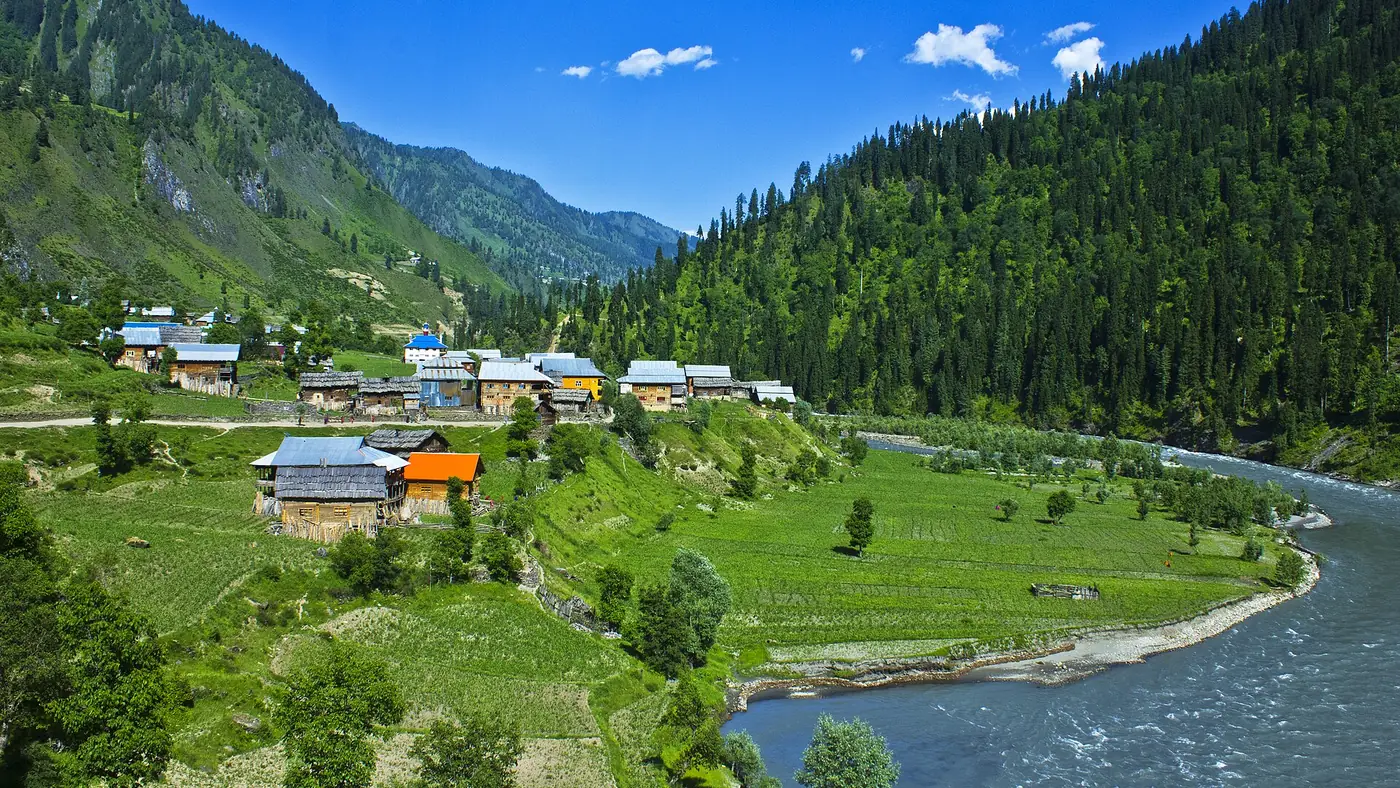
The Leepa Valley, east of Muzaffarabad in the Jhelum Valley district, is known for its red rice, grown on terraces between the wooden villages. The paddies are flooded in May and June, turn green through the summer, and are harvested around September and October, when the valley is at its most striking. Red rice is the everyday staple in Leepa, often eaten with red beans.
The best way to try it is in Leepa itself, at a guesthouse that cooks local food; ask for it when you book. Leepa is usually open to visitors from about late April or May to November and snowbound in winter, and it lies close to the Line of Control, so check the current situation before you go. Our Leepa Valley guide explains the road and the villages. Walnuts, apples and honey from Leepa are also good buys in autumn.
Trout from the Neelum and Jagran
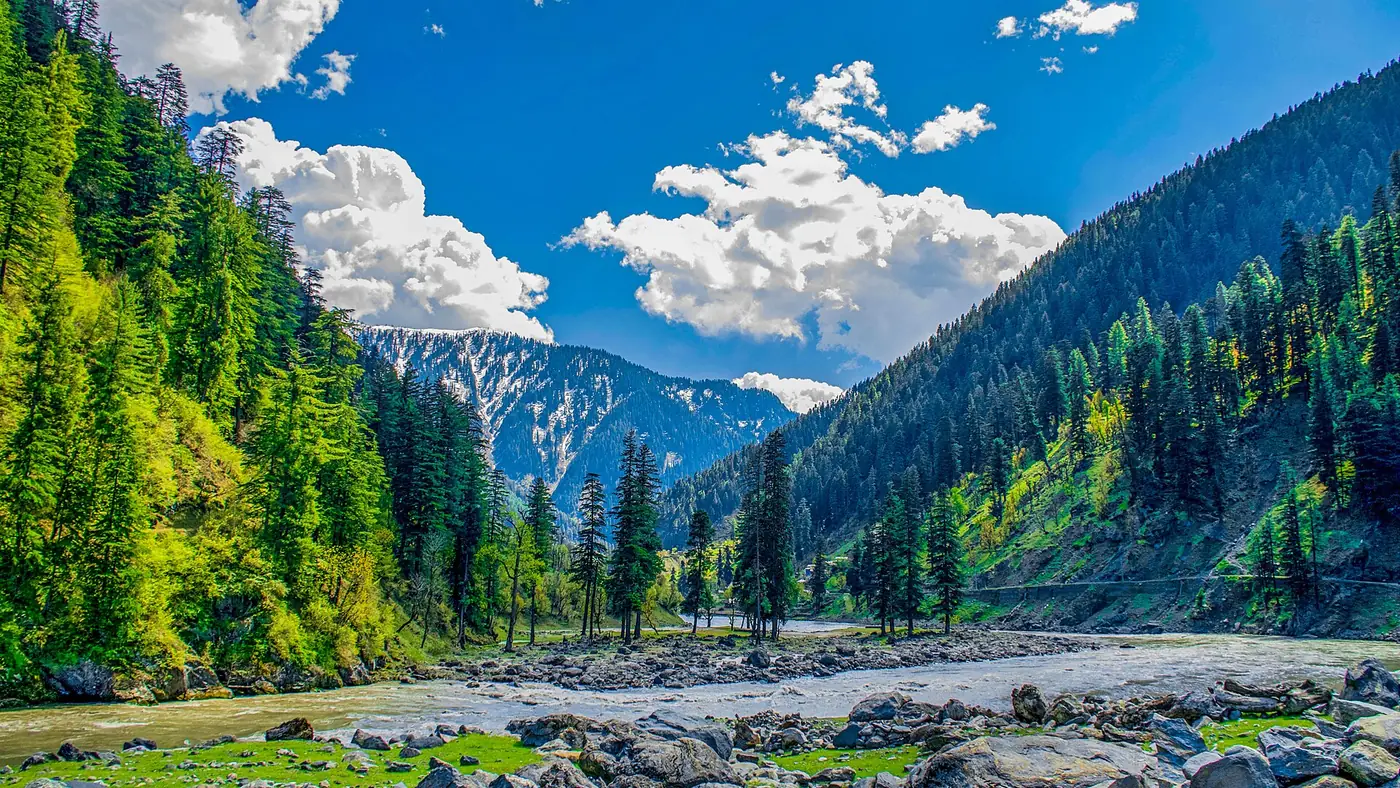
The cold streams of the Neelum Valley suit trout, and there are hatcheries and farms along the valley, including at Patika, Kutton, Dowarian, Kel Seri and Taobat, with farms in Leswa, Leepa and Haveli. The Jagran stream at Kutton is known for it.
In summer, some hotels and eateries in the valley serve it grilled or fried, but it is not on every menu, so ask when you arrive in Kutton, Keran, Sharda or Kel. Fish is usually priced by weight, so agree the price per kilo before it goes on the fire, and ask for it to be cooked simply: a little masala and lemon suits it better than a heavy karahi gravy.
What you will actually eat on the road
Be realistic about everyday meals. On the drive up the Neelum and around Rawalakot and Bagh, most roadside restaurants serve the familiar menu: chicken karahi, daal, rice, roti and tea. Food is fresh and filling, and it is what most tourists eat most of the time.
A few habits help:
- Eat in good time in small towns rather than counting on a late kitchen.
- Ask the price first for anything cooked to order, especially trout and mutton.
- Carry snacks for the jeep days to Ratti Gali or Taobat, where food is simple and limited.
- Bring cash. Card and mobile payments are unreliable outside the cities, and internet shutdowns in 2026 made them harder still.
Our five-day Neelum Valley Escape includes breakfast daily, and leaves lunch and dinner free so you can eat where you like.
Is it worth planning a trip around the food?
For most travellers, no: Azad Kashmir is a place you visit for its valleys, and the food is a pleasure along the way. The exception is winter. If you want to eat harissa where it is made in Pakistan, a December or January weekend in Muzaffarabad, with Pir Chinasi in the snow for the afternoon, is a trip in its own right.
In summer, a Neelum trip gives you trout and noon chai; in autumn, Leepa gives you red rice at harvest. Our guide to the best time to visit Azad Kashmir helps you match the season to the place, and our Kashmir destination page has the wider picture.
Whatever the season, check the news before you go. Since June 2026, protests across Azad Kashmir have left dozens dead and brought strikes that closed markets and stopped road traffic, most recently on 9 September; on a strike day, restaurants and bakeries may simply be shut. Pakistani visitors still travel here, but read local news and ask your hotel before setting out. Overseas visitors should know that the UK government advises against all but essential travel to Azad Kashmir, and against all travel within 10 miles of the Line of Control, which includes Leepa and most of the Neelum Valley.
Frequently asked questions
What is the famous food of Azad Kashmir?
Harissa in winter, goshtaba and rista at Kashmiri weddings, and noon chai with bakarkhani are the dishes most associated with Muzaffarabad. Leepa's red rice and Neelum Valley trout are the best-known local produce.
Where can I eat harissa in Muzaffarabad?
At Kashmiri cafés in the older bazaar areas, from around early December until the end of winter, usually in the morning and often only at weekends. Ask your hotel which ones are cooking it that season.
Is noon chai the same as Kashmiri chai?
It is the same pink tea, but noon chai is traditionally salted, while the Kashmiri chai sold across Pakistan is usually sweet with nuts. In Muzaffarabad you will find both.
When is Leepa red rice harvested?
Around September and October. The paddies are flooded in May and June and ripen through the summer, so autumn is the best time to see and taste it.
Can I eat trout in Neelum Valley?
Yes, in summer, at some hotels and eateries in the valley, supplied by local farms and hatcheries. Ask for it, and agree the price per kilo before it is cooked.