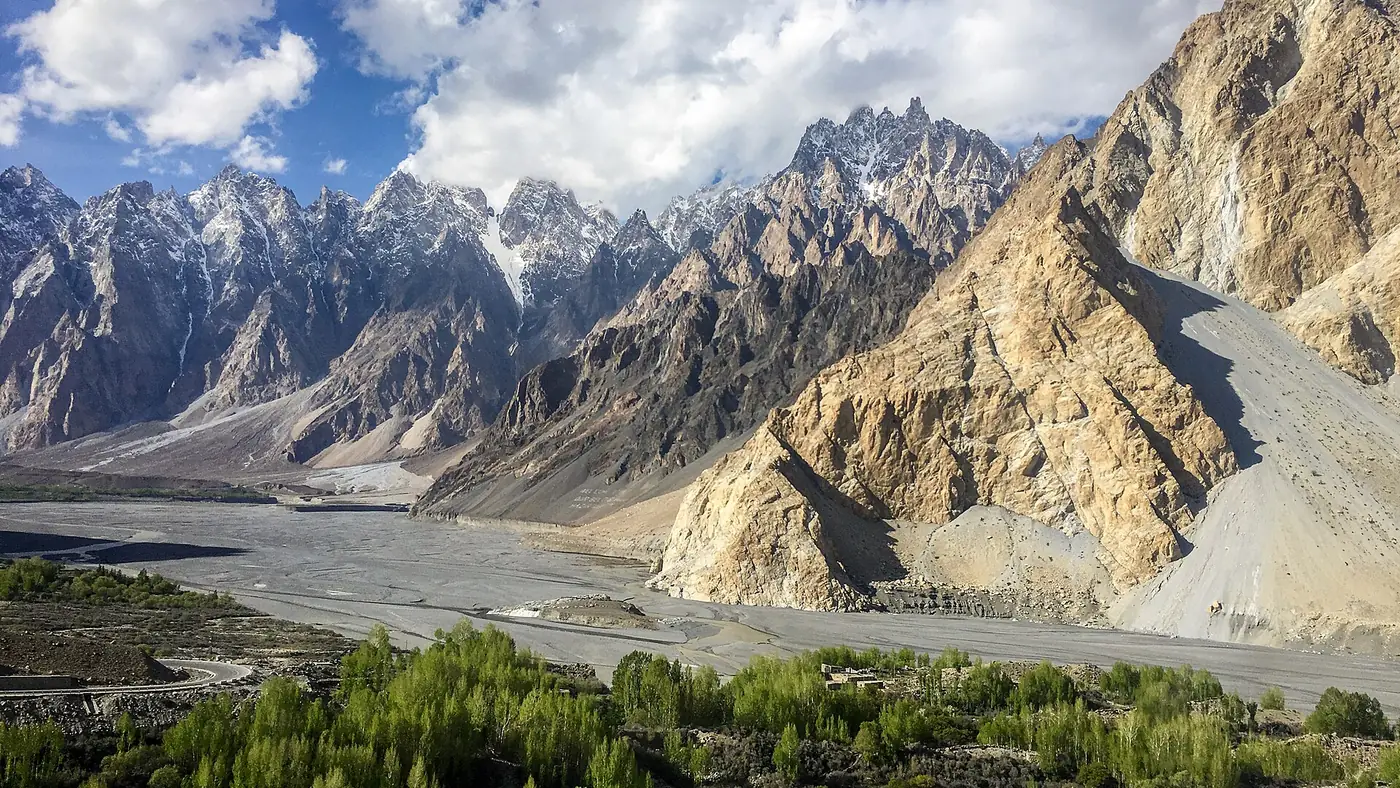
Autumn in Pakistan's north runs from mid-September to early November, and the best colours are usually in the second and third weeks of October. Hunza gets most of the attention, but Kaghan, Swat and Neelum all turn as well, each on a slightly different schedule tied to altitude and tree species.
This guide is a colour-spotting map: which valleys turn when, what to expect from each, and how to time a trip so you don't arrive a week early or a week late.
| At a glance | |
|---|---|
| Season | Mid-September to early November |
| Peak colour | Roughly 5–25 October, varies by valley and year |
| Trees to look for | Poplar, chinar, walnut, apricot, willow |
| Best regions | Hunza, Kaghan valley, Swat, Neelum valley |
| Crowds | Lighter than summer; heavier on weekends in October |
| Roads | Mostly open and in good condition; some high passes closing by late October |
Why autumn colour happens where it does
Pakistan's autumn colour comes mainly from four trees: poplar, chinar, walnut and apricot, plus willow along irrigation channels. These are planted trees, not natural forest cover, which is why the colour is concentrated in the terraced valleys where people farm and live, rather than on the bare mountainsides above them. Hunza, in particular, is lined with poplar avenues that were planted generations ago as windbreaks and timber, and it is these avenues that turn gold first.
Altitude sets the timing. Higher, colder valleys turn earlier; lower valleys hold their leaves longer. That is why a two-week trip in October can chase the colour from one valley to the next.
Hunza: the best-known autumn valley
Hunza's poplar and willow groves begin turning in the last ten days of September and are usually at their brightest between about 5 and 25 October, with the exact week shifting a little each year depending on temperature. Karimabad, Altit, Gulmit and the terraces around Passu are the places most people photograph, with the poplar avenues against the Karakoram peaks behind them.
By early November the leaves are mostly down. If you can only pick one week for Hunza, the second week of October is the safest bet in most years, but check locally before booking, since an early cold snap can bring the peak forward.
Our guide to the seasons has more on how Hunza changes through the year, including the spring blossom that book-ends this cycle.
Kaghan valley and Naran
The Kaghan valley turns a little earlier than Hunza. Golden foliage typically appears from late September, with September itself often cited as the best month for combining clear roads, comfortable weather and good colour, before the first snow closes the higher stretches. By late October the upper valley towards Babusar is usually cold and the crowds have thinned considerably.
Kaghan's colour is more about forest cover than avenue trees, with pine and deciduous stands turning alongside the river, which gives it a different character from Hunza's orderly poplar rows.
Swat and Neelum valley
Swat's forests around Kalam, Bahrain and Madyan turn through October in a similar window to Kaghan, and the valley is quieter than in summer once the school holidays end. Neelum valley, further south in Azad Kashmir, has its own autumn colour along the river from Muzaffarabad up towards Kel, with chinar trees a particular feature in the lower valley.
Is it safe? Parts of Khyber Pakhtunkhwa and Azad Kashmir carry current travel advisories. The UK government's Pakistan travel advice (updated September 2026) advises against all but essential travel to Malakand district, and against all travel to areas including Upper and Lower Dir and the Kalash valleys, and it advises against all travel within 10 miles of the Line of Control, which covers most of the Neelum valley. Pakistani visitors travel to Swat and Neelum regularly, but check current local news and police advice before setting out, and know that your own government's advice can affect your travel insurance if you are visiting from abroad.
When exactly to go, valley by valley
- Hunza: last week of September to the last week of October; brightest around 5–25 October.
- Kaghan and Naran: mid-September to mid-October, with September giving the most reliable roads.
- Swat: late September through October.
- Neelum valley: October, with the lower valley (Muzaffarabad to Kundal Shahi) holding its colour longer than the upper valley.
A two-week trip that starts in Kaghan or Swat in late September and finishes in Hunza in mid-October follows the colour reasonably well, though it is a long drive to combine both in one trip comfortably.
What autumn travel is actually like
Days are mild and often clear, which is part of the appeal after a hazy monsoon summer. Nights turn cold fast, especially above 2,000 metres, so pack for near-freezing temperatures even if the day is pleasant. Roads are generally in their best condition of the year, since summer's monsoon damage has usually been repaired and winter snow has not yet arrived, though the last week of October can bring an early snowfall to higher passes.
Hotels are less full than in July and August, and rates in Hunza and Naran often drop from peak summer levels, though October weekends still get busy with domestic tourists chasing the same colours.
Is autumn worth planning a trip around?
Yes, if your priority is scenery and comfortable weather over swimming rivers or high-altitude trekking. Autumn light is softer than summer's, the crowds are smaller, and the colour itself is a genuine draw rather than a consolation prize. It suits photographers, older travellers who find summer heat in the lower valleys uncomfortable, and anyone who has already done the standard summer circuit and wants to see the same places differently.
It suits it less well if you specifically want to trek at altitude, since many higher routes are already closing by mid-October, or if you want to see Deosai's wildflowers, which are strictly a summer sight. Our Gilgit, Hunza and Khunjerab tour runs through the autumn window and is a straightforward way to see Hunza's colour without planning the timing yourself.
Frequently asked questions
What month has the best autumn colours in Pakistan's north?
October, generally. Hunza tends to peak in the second half of the month, while Kaghan and Swat often look their best a little earlier, from late September into early-to-mid October.
Is Hunza or Kaghan better for autumn colours?
Hunza has the more distinctive look, with orderly poplar and willow avenues against a backdrop of high peaks. Kaghan's colour comes more from forest cover and is a different, wilder scene. Both are worth seeing; they simply photograph differently.
Do I need to book far in advance for an autumn trip?
Less than for summer, but weekends in October still fill up in Karimabad and Naran. Booking two to three weeks ahead is usually enough on weekdays; book earlier for an October weekend.
Is it cold in Hunza in October?
Days are mild, often in the high teens Celsius, but nights and mornings can be close to freezing by late October. Bring a proper jacket even if the daytime forecast looks comfortable.
Can I combine autumn colours with trekking?
To some extent in September, less so by October, when higher trekking routes are closing for the season. For pure trekking at altitude, summer is the safer choice; autumn suits valley-floor sightseeing and shorter walks.