Islamabad's weather is hot from April to September, wet in July and August when the monsoon arrives, and mild and dry from October to March. Daytime highs pass 35°C from May onward and stay there until September, while January nights drop close to freezing. The most comfortable months to visit are October, November, February and March.
Compared with Lahore or Karachi, Islamabad runs a few degrees cooler in summer thanks to the hills behind it, and noticeably cooler at night in winter. It is not a hill station, though: expect plains heat from May to September, just slightly softened.
This guide gives the average temperature and rainfall for every month, explains the monsoon, the spring pollen season and winter fog, and lists what to pack.
| At a glance | |
|---|---|
| Hottest months | May to July, highs above 35°C |
| Coldest month | January, highs around 18°C, nights near 4°C |
| Wettest months | July and August, over 300mm of rain each |
| Driest months | November and October |
| Pollen peak | Mid-March to April |
| Most comfortable | October, November, February, March |
Temperatures month by month
Islamabad sits at the foot of the Margalla Hills, which keeps it a few degrees cooler than Lahore or Multan but still firmly in the plains' heat by early summer. Average daily highs and lows, based on long-term climate records:
| Month | Avg high | Avg low |
|---|---|---|
| January | 18°C | 4°C |
| February | 20°C | 7°C |
| March | 25°C | 11°C |
| April | 31°C | 17°C |
| May | 36°C | 22°C |
| June | 38°C | 25°C |
| July | 35°C | 25°C |
| August | 34°C | 24°C |
| September | 33°C | 22°C |
| October | 31°C | 16°C |
| November | 25°C | 9°C |
| December | 20°C | 5°C |
June is the hottest month on paper, but July and August feel more oppressive because they combine heat with high humidity, which peaks in August. Overnight lows only fall below 10°C from late November to February, so winter here is mild by northern Pakistan's standards, not bitter; it is a different climate from Murree or the mountains a few hours north, where the same weeks bring snow.
Winter fog and travel
Islamabad and the wider Punjab plain get spells of dense winter fog, most often in late December and January, when visibility can drop to a few hundred metres for hours at a stretch. It closes stretches of motorway and regularly delays or cancels morning flights at Islamabad International Airport. If you are flying in or out during this window, book an early-morning flight where you can, keep a day's buffer if the trip is tight, and check your airline's status before you leave for the airport.
The monsoon: July and August
Islamabad's rain is heavily front-loaded into two months. July and August each average over 300mm of rain, together accounting for roughly half the city's annual total. Rain tends to arrive as short, heavy evening downpours with thunder rather than all-day drizzle, and flash flooding on low-lying roads and nullahs is a real risk during a heavy spell.
Outside the monsoon, rainfall is much lighter and more spread out: February and March get a moderate share from winter weather systems, while October and November are the driest months of the year. If your trip depends on clear roads and dry trails, July and August are the two months to plan around rather than into.
Rain does not make Islamabad unpleasant, and the city is genuinely green in July and August, but plan indoor backups for the afternoon and keep an eye on the sky if you are heading up to Daman-e-Koh or one of the Margalla Hills trails, where paths turn slippery fast once heavy rain starts.
Spring pollen: mid-March to April
Spring in Islamabad brings a genuine health issue that catches visitors off guard: airborne pollen from paper mulberry trees, planted widely across the city decades ago for quick shade. The main pollen season typically starts in early March, peaks in the second half of the month, and tapers off through April. Hospitals in Islamabad and Rawalpindi see a real rise in asthma and allergy cases during this window.
The Capital Development Authority has been removing paper mulberry trees from high-pollen sectors and replacing them with non-allergenic species, but the trees are widespread and the programme is gradual, so the problem has not gone away. If you or anyone travelling with you has asthma or a pollen allergy, carry the usual medication and consider a mask on high-pollen days in March. It does not affect everyone, and plenty of visitors come through in spring without trouble, but it is worth knowing about before you go.
What to pack, season by season
- December to February: a warm jacket for the evenings and early mornings, layers for daytime, closed shoes, and a little slack in your schedule in case winter fog delays a flight.
- March and April: light layers, sunscreen, and allergy medication if pollen affects you. Evenings can still be cool, especially up at Daman-e-Koh or on the trails.
- May to September: breathable, light-coloured clothing, sun protection, and an umbrella or light raincoat for July and August. Humidity makes the heat feel worse than the number on the thermometer, so keep outdoor sightseeing to morning and evening in these months.
- October and November: the easiest months to pack for; light layers by day, a jacket for the evening, and the best conditions of the year for walking the trails or spending a full day outdoors.
Whatever the season, carry water. The heat months make this obvious, but even in a mild Islamabad winter, a day of walking between Faisal Mosque, Daman-e-Koh and Saidpur Village adds up to more sun and distance than it looks on a map.
Our guide to when to go covers seasons across the whole country if Islamabad is one stop on a longer trip, and our best time to visit Islamabad guide turns this weather data into month-by-month verdicts for hiking, gardens and events.
Frequently asked questions
What is the hottest month in Islamabad?
June, with average highs around 38°C, though July and August feel more uncomfortable because of the added humidity.
When does it rain most in Islamabad?
July and August, which together bring roughly half the year's rainfall as heavy evening downpours. Expect occasional flash flooding on low roads during a strong spell.
Is Islamabad cold in winter?
Mild rather than cold. January days reach around 18°C, though nights drop close to freezing, so mornings and evenings need a jacket.
When is pollen worst in Islamabad?
Mid-March into April, driven mainly by paper mulberry trees. It affects people with asthma or pollen allergies most; carry medication if that applies to you.
What is the best month for weather in Islamabad?
October and November for dry, mild conditions, with February and March a close second before the pollen season builds.
Does it snow in Islamabad?
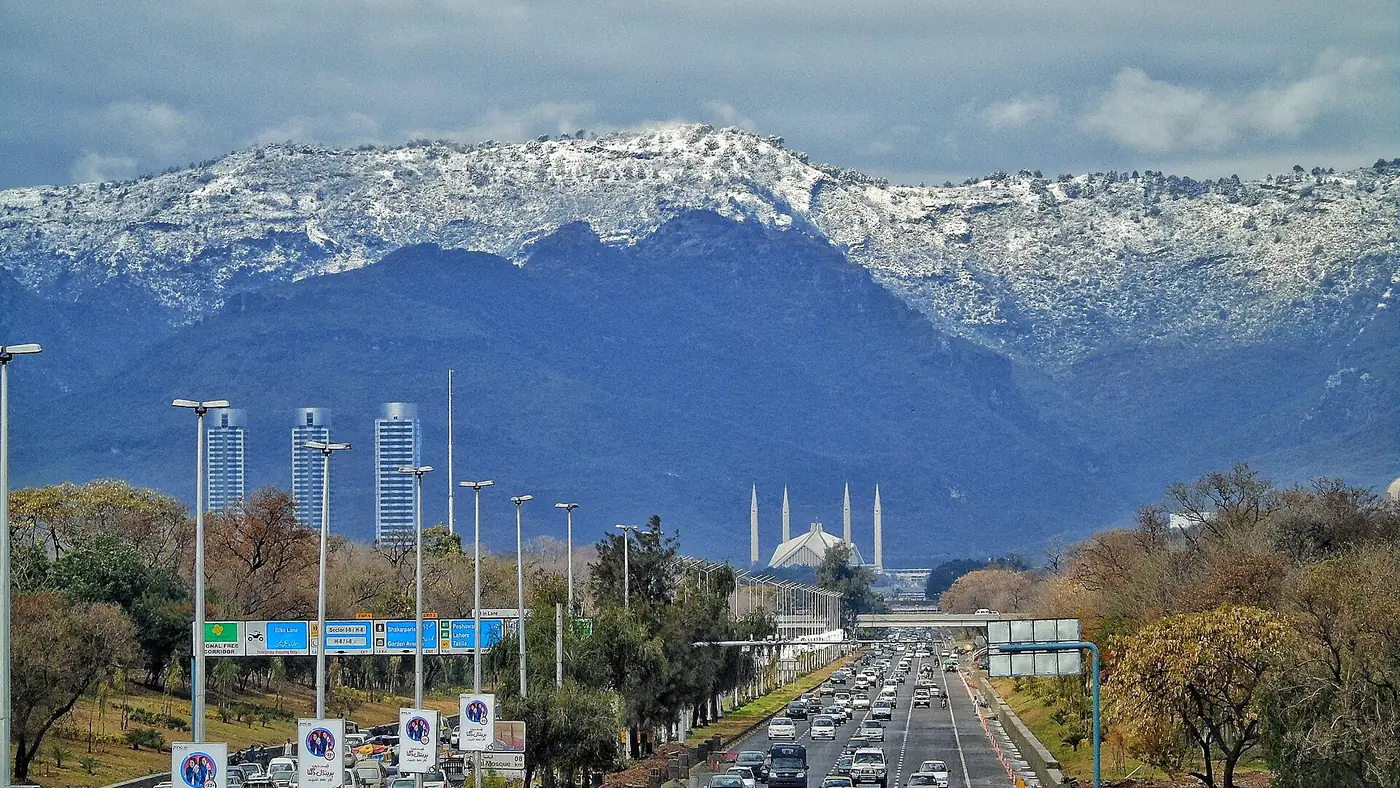
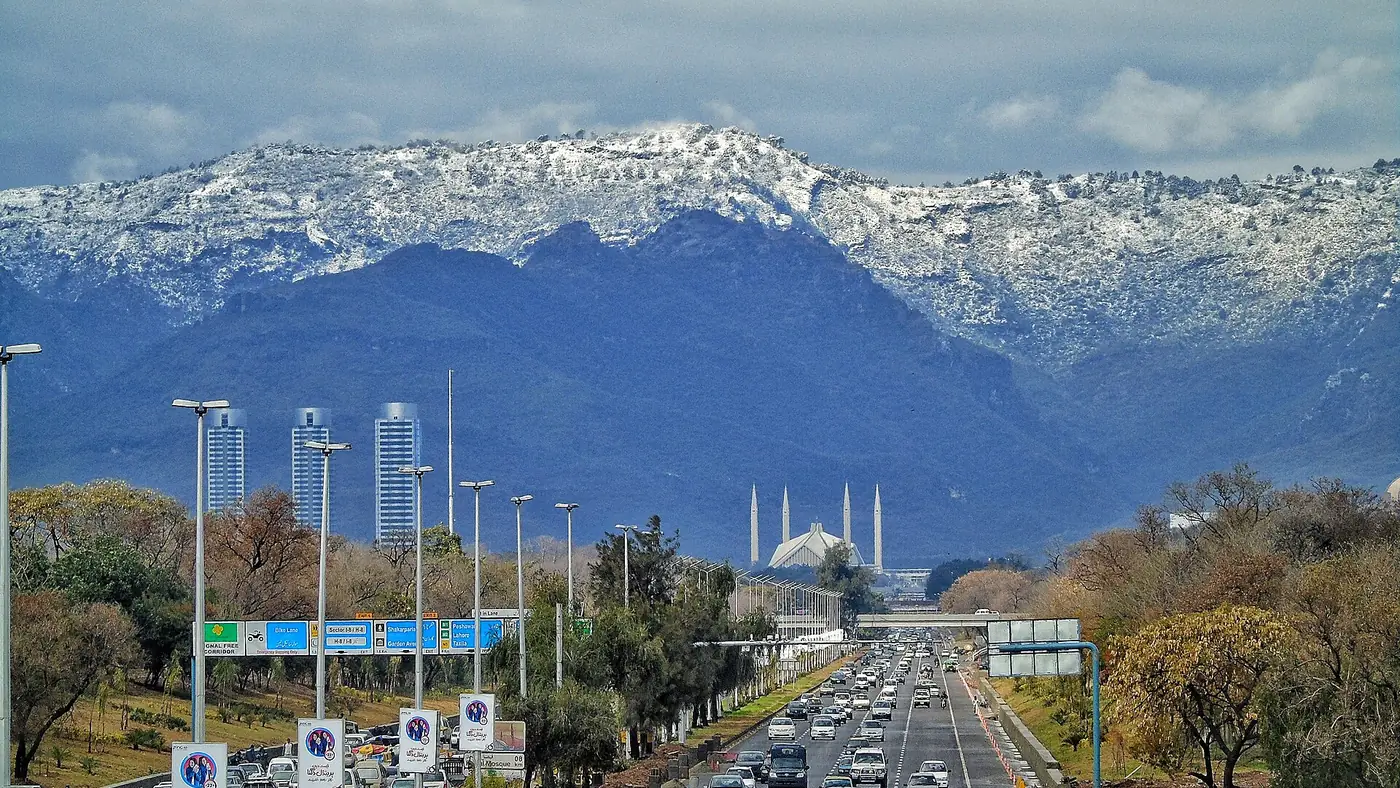
Not on the city floor. The Margalla Hills above the city occasionally get a light dusting in a cold winter, but real snow is a drive away, in Murree or the mountains further north.
How humid is Islamabad?
Humidity is lowest in May, often under 45%, and highest in August, when it can sit above 75% alongside the monsoon rain. That combination is what makes August feel heavier than the drier heat of May or June.