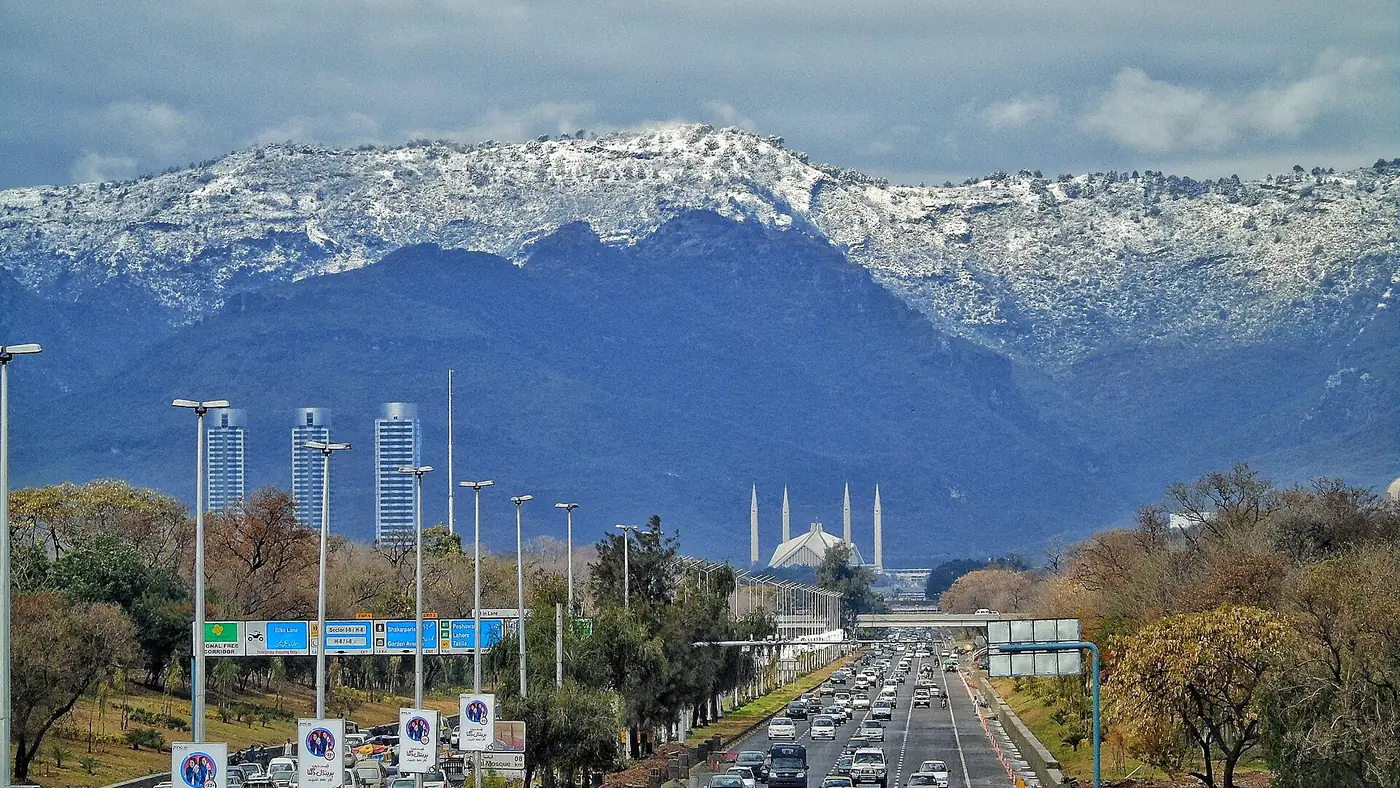
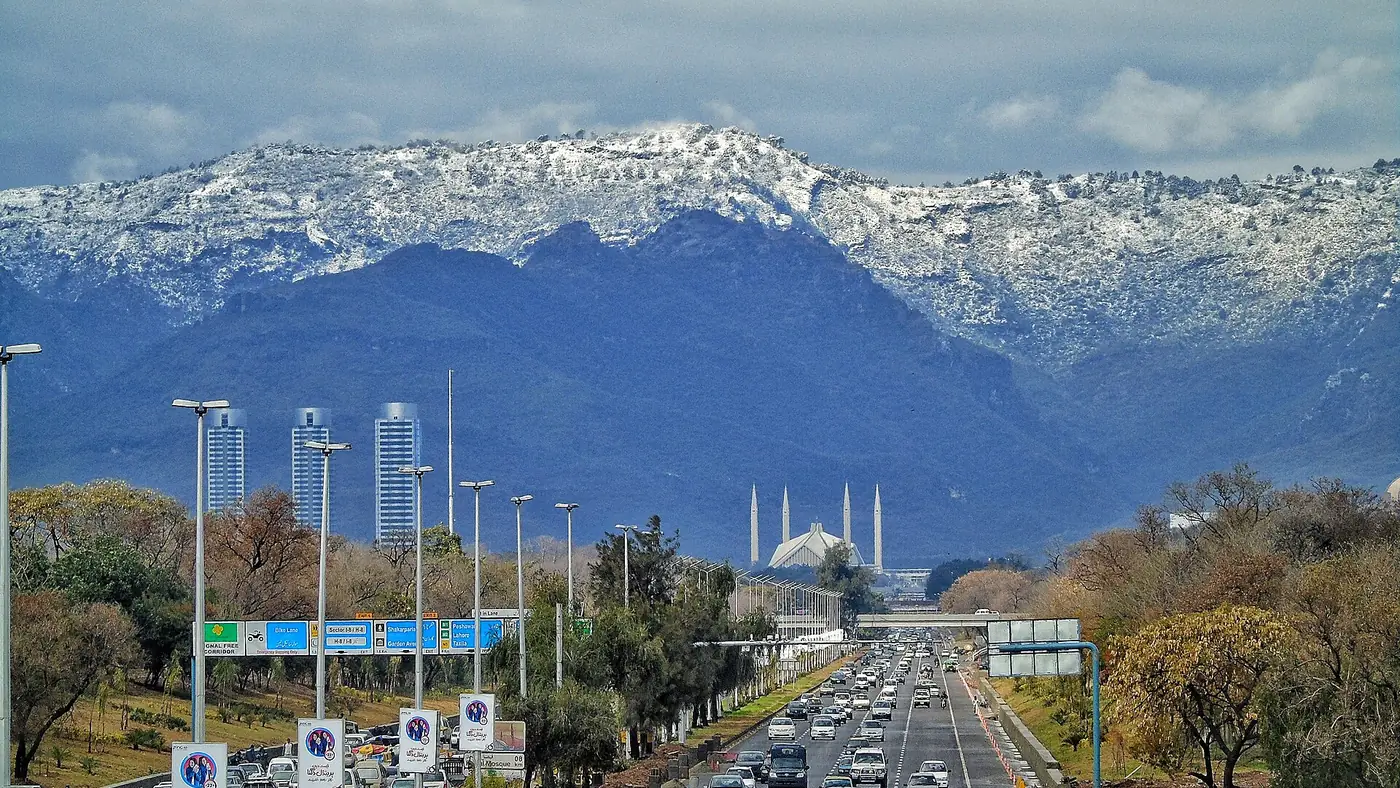
The best time to visit Islamabad is October to March, when the weather is mild, the Margalla Hills trails are at their best, and the city's outdoor sights are comfortable at any hour. Spring (March and April) brings flowers and mild days but also the city's pollen season, and summer (May to September) is hot, then humid and wet once the monsoon arrives in July.
This guide goes month by month for the things visitors actually do here: hiking, the gardens and parks, and Islamabad's calendar of events, and tells you which months to avoid and why.
| At a glance | |
|---|---|
| Best overall | October to March |
| Best for hiking | November to February, early mornings |
| Avoid for heat | May and June |
| Avoid for pollen | Mid-March to April |
| Avoid for rain | July and August |
| Spring flowers | Late February to April |
Autumn and winter: the best months (October to February)
This stretch is Islamabad at its most comfortable. Days are warm enough for shirtsleeves, nights are cool rather than cold, and rainfall is at its lowest all year. It is the best window for walking any of the Margalla Hills trails, for a morning at Daman-e-Koh with clear views over the city, and for a day spent outdoors without needing to plan around the heat.
December and January are the coolest of these months, mild by day but genuinely chilly after dark, and prone to spells of dense fog that can delay flights, so build in a little slack if you are flying in for a short trip. If you want warmth without the crowds or the pollen, aim for October, November or February.
This is also the season that suits a longer visit to the capital best, if Islamabad is one stop on a bigger trip. Two days is enough to cover the main sights comfortably; our Islamabad itinerary lays out a sensible order, and the mild weather in this window means you are not racing the heat to fit everything in.
Spring: flowers, but check the pollen (March and April)
Spring brings the city's gardens and green spaces into flower, and Islamabad usually holds its Jashn-e-Baharan spring festival around late February, with folk dance, a food festival and cultural performances at the Sports Complex. Dates move slightly each year, so check closer to the time if the festival itself is the draw.
The catch is pollen. Paper mulberry trees, planted widely across the city, release heavy pollen from around early March through April, peaking in the second half of March, and hospitals see a real rise in allergy and asthma cases during this window. If you or anyone travelling with you reacts to pollen, either avoid this stretch or come prepared with medication. Our Islamabad weather by month guide has the detail on temperatures and the pollen season.
Summer: heat, then the monsoon (May to September)
May and June are the hottest months, with daytime highs regularly above 35°C and little rain to cool things down. It is not the season for a full day outdoors; keep the Margalla trails and Faisal Mosque visits to early morning or the hour before sunset, and plan indoor time, air-conditioned transport and enough water for the rest of the day.
July and August add the monsoon: heavy, often sudden evening downpours, high humidity, and the two wettest months of the year by a wide margin. The Margalla trails get slippery and streams can rise fast after rain, so hike with more caution, or not at all after a heavy spell. September is transitional, still warm and occasionally wet early on, settling toward the cooler months by its end.
None of this makes summer a bad time to be in Islamabad specifically; it makes it a bad time for a hiking-and-outdoors trip. If your plans are really about visiting family, a work trip with sightseeing on the side, or a stopover before flying north, the city functions normally through summer. Just shift outdoor plans to early morning or evening, and lean on air-conditioned options such as the museums or the malls around the Blue Area and Centaurus during the hottest hours.
Best months for specific things
- Hiking the trails: October to March, walked early in the morning. Summer heat and monsoon mud both work against a good hike.
- Faisal Mosque and Daman-e-Koh: comfortable at any time of year, since both are short visits, but avoid the exposed courtyard and terrace during the hottest midday hours from May to September.
- The museums (Lok Virsa, Pakistan Monument): indoor and air-conditioned, so a reasonable choice whatever the weather, including as a break from summer heat or monsoon rain.
- Gardens and parks: best from late February through April for flowers, and October to March for comfortable time outdoors.
Who should avoid which months
Families with young children or older relatives are better off skipping the peak of May and June, when heat makes daytime sightseeing genuinely hard going. Anyone with asthma or a pollen allergy should think carefully about mid-March to April, or travel with their usual medication if the dates cannot move. If your plan depends on clear trails and dry weather, work around July and August rather than into them.
None of this rules Islamabad out at other times of year: the museums, malls and restaurants work in any season, and a short city stop between longer northern trips is fine even in the warmer months, provided you keep outdoor time to the cooler hours. If Islamabad is the start or end of a longer trip into the mountains, tell us your dates and we can help fit the capital around the rest of the itinerary.
Frequently asked questions
What is the coolest time to visit Islamabad?
December and January, with mild days and genuinely cool nights. This is also when winter fog occasionally delays flights, so keep a buffer if your trip is tight.
Is Islamabad hot in summer?
Yes. May and June bring highs above 35°C, and July and August add heavy monsoon rain and humidity on top of the heat.
When should I avoid Islamabad because of pollen?
Roughly mid-March to the end of April, when paper mulberry trees release heavy pollen. It particularly affects people with asthma or existing pollen allergies.
Is October a good time to visit Islamabad?
Yes, one of the best months: warm days, cool evenings, low rainfall and good conditions for hiking the Margalla trails.
Does Islamabad have a festival season?
The main one is Jashn-e-Baharan, a spring festival usually held in late February with folk performances and food stalls. Dates vary year to year.
Can I visit Islamabad and Murree in the same trip regardless of season?
Yes, but remember they run on different climates. Islamabad is mild in winter and hot in summer; Murree, less than two hours away, is noticeably cooler year-round and can see snow in winter when Islamabad has none. Plan the mountain leg of the trip around Murree's weather, not the capital's.
Is Islamabad worth visiting in the monsoon?
It is workable rather than ideal. The city is at its greenest, but expect sudden heavy rain, humid afternoons, and the trails and hillside viewpoints at their least pleasant. Keep plans flexible and lean on indoor options when a downpour hits.