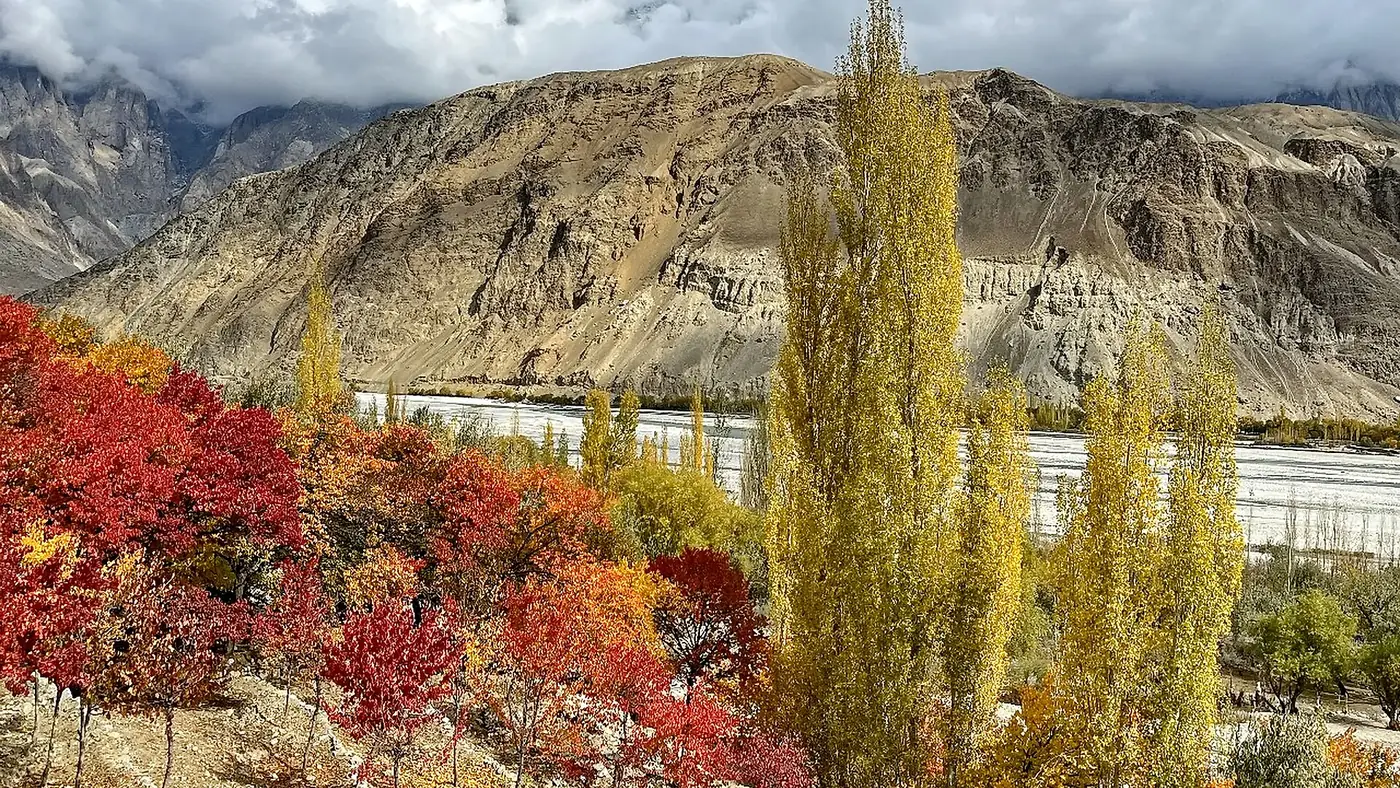
Skardu is famous above all as the gateway to K2, the world's second-highest mountain, and the town most expeditions and trekkers pass through on the way to it. Beyond the mountaineering, it is known for a landscape that surprises most first-time visitors: turquoise lakes set against bare brown peaks, and a genuine sand desert at over 2,000 metres, all inside a valley that is culturally closer to Tibet than to the rest of Pakistan.
This is a quick answer to what Skardu is known for, in brief, rather than a full list of where to go. For that, our guide to places to visit in Skardu sets out distances and how long to allow at each.
The gateway to K2 and the Karakoram's biggest mountains
K2, at 8,611 metres, is the world's second-highest peak after Everest and is generally reckoned the hardest of the fourteen 8,000-metre mountains to climb. Almost every expedition to it, along with Broad Peak, Gasherbrum I and II, and the trekking route to Concordia, sets out from Skardu, which sits at about 2,230 metres and is the last town of any size before the road ends and the walking begins.
You do not need to trek to feel that connection. Skardu's bazaar has outfitters and porters who work the K2 season every summer, and climbers passing through in June and July are part of the town's rhythm. For most visitors the mountain itself stays out of sight, hidden behind closer peaks, but the sense of being at the edge of the world's most serious mountaineering is part of what people come for. Our guide to the K2 base camp trek covers what that route actually involves.
Cold deserts on the valley floor
Skardu is one of the few places in the world where you can stand on sand dunes at over 2,000 metres with snow peaks behind them. The Katpana cold desert, beside the airport, is the best known: a stretch of pale dunes that turns gold at sunset and, after a winter snowfall, lies white under a dusting of snow, a combination that has made it one of the most photographed spots in Gilgit-Baltistan. A second, quieter desert, Sarfaranga, sits across the Indus on the way to Shigar. Our Katpana desert guide covers getting there and the best time of day.
The lakes: Kachura, Satpara and beyond
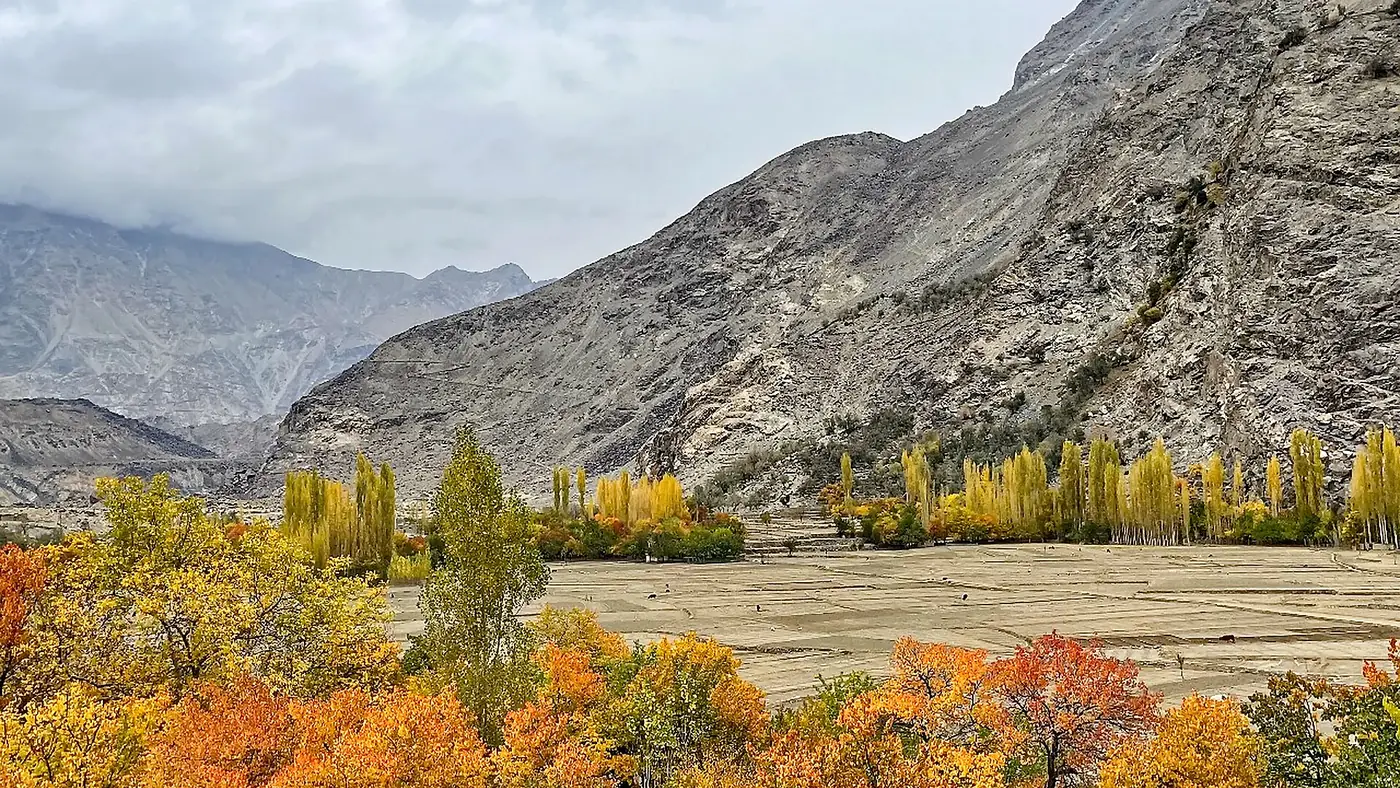
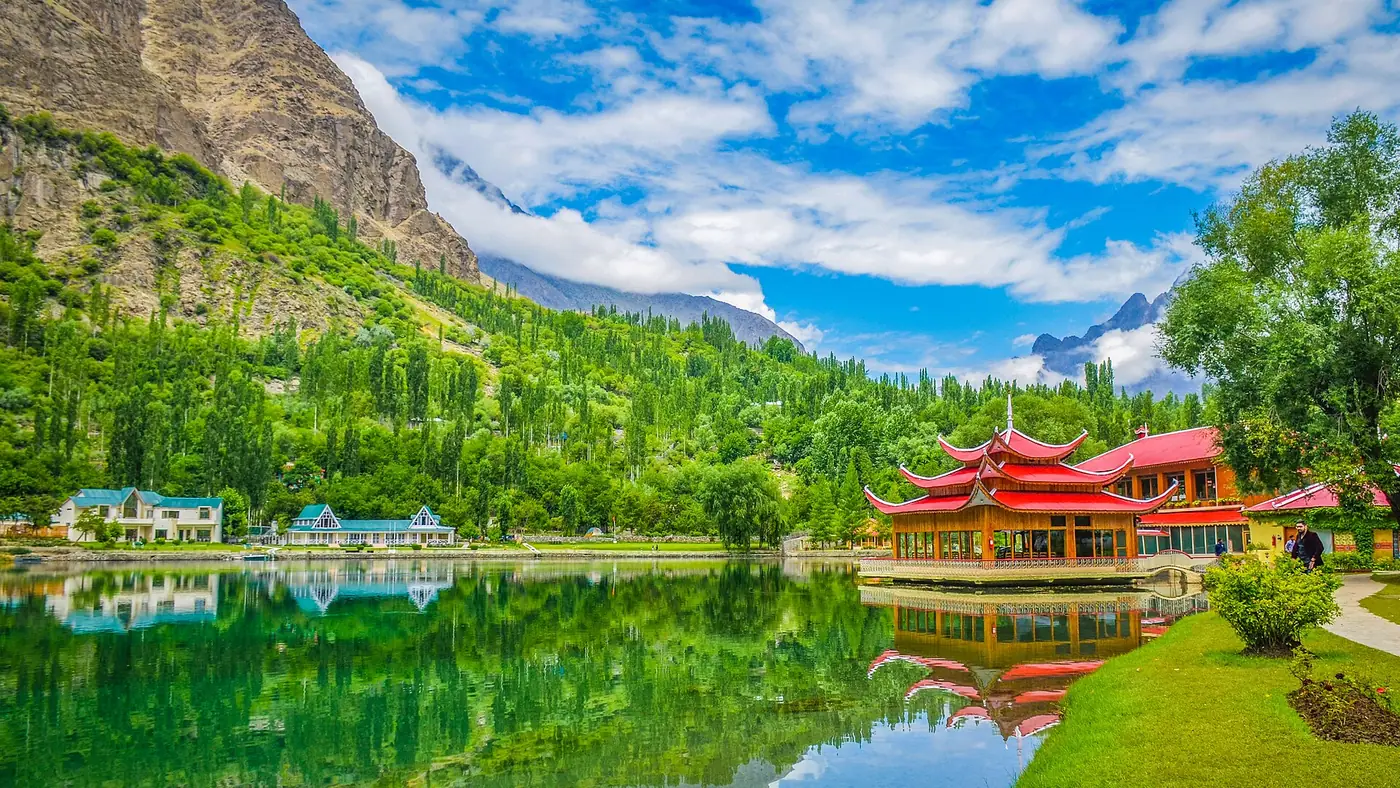
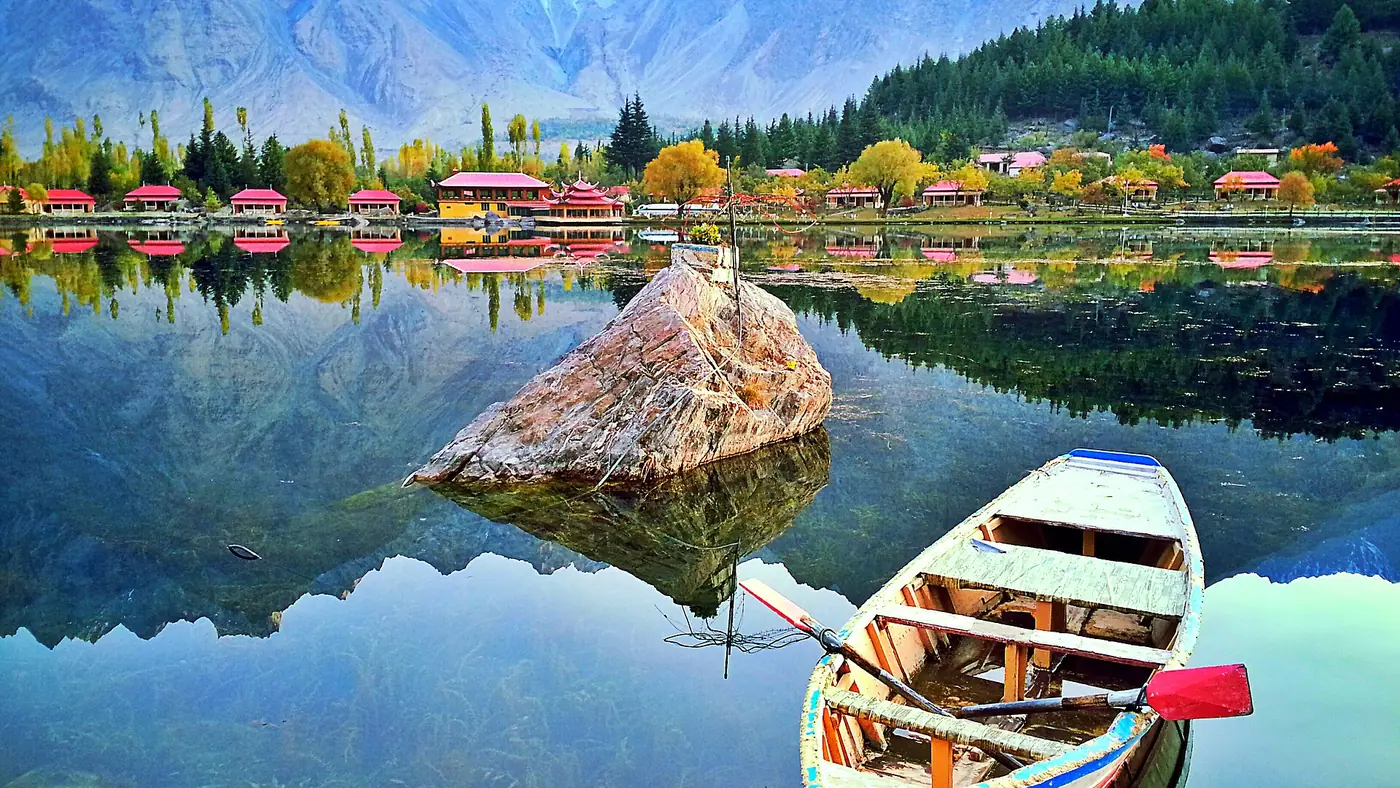
The lakes are the other image most people carry away from Skardu. Upper and Lower Kachura, a short drive west of town, are the classic postcard: still, deep-blue water ringed by orchards and bare mountains. Lower Kachura sits inside Shangrila Resort, Skardu's oldest hotel, while Upper Kachura is deeper, clearer and quieter. Closer to town, Satpara Lake, held back by a dam that supplies Skardu's water and power, sits on the road up to the Deosai plateau. Further out, Sheosar Lake on Deosai itself and the smaller lakes around Shigar and Khaplu extend the same idea across the valley.
Deosai, the "land of giants"
Above Skardu, reached by a rough road past Satpara, the Deosai plateau opens out at an average of about 4,114 metres, one of the highest plateaus in the world open to ordinary visitors. It is known for its size, its summer wildflowers, and for being one of the last strongholds of the Himalayan brown bear in Pakistan. It is only accessible from around June to September, and it is a full day trip from Skardu rather than something you glimpse in passing.
Balti culture and a history apart
Skardu is the centre of Baltistan, and Baltistan has always felt somewhat apart from the rest of northern Pakistan. Its people, the Balti, speak an old form of Tibetan and were part of the Tibetan Buddhist world before Islam reached the valley, which is why the region was long called Little Tibet. For nearly seven centuries it was ruled by its own line of kings, the Maqpon dynasty, whose ruined fort, Kharpocho, still stands on the rock above Skardu's bazaar, and whose descendants' restored palaces at Shigar and Khaplu are now among the most distinctive places to stay in the valley. Our guide to the history of Baltistan covers that story in full.
That history shows up in daily life too, in a cuisine built around apricots, walnuts, buckwheat and butter tea rather than the wheat and spice of the plains; our Balti food guide covers the local dishes worth trying.
What Skardu is not famous for
It is worth being clear about what Skardu isn't. It has no ski resort, no major shrine or mosque of the kind found in Lahore or Multan, and little in the way of nightlife or shopping beyond a working bazaar. People come for the landscape, the mountaineering connection and, increasingly, for Deosai and the lakes rather than for the town itself, which is a practical base more than a destination in its own right.
Frequently asked questions
Is Skardu known for K2?
Yes. Skardu is the last major town before the routes to K2, Broad Peak and the other giant peaks of the Karakoram, and it is the starting point for almost every expedition and trek towards them, even though K2 itself is not visible from the town.
What is Skardu's desert called?
Katpana, sometimes called the Skardu cold desert, beside the town's airport. A second, quieter desert, Sarfaranga, lies on the road to Shigar.
What lake is Skardu most famous for?
Kachura, particularly Lower Kachura inside Shangrila Resort, is the most photographed. Satpara Lake, on the road to Deosai, and Sheosar Lake, up on the plateau itself, are also well known.
Is Skardu part of Tibet?
No, but it was historically called Little Tibet because its people, the Balti, are of Tibetan descent and speak an old form of the Tibetan language. Skardu has been part of Pakistan-administered Gilgit-Baltistan since 1948.
What is Deosai famous for?
Deosai, above Skardu, is known as one of the highest plateaus in the world open to visitors, for its summer wildflowers, and for being a stronghold of the Himalayan brown bear. It is open only from around June to September.