The history of Baltistan runs from a Tibetan-speaking Buddhist kingdom, through nearly seven centuries under one ruling family, to a Dogra conquest in 1840 and a war in 1948 that put it inside Pakistan. Baltistan was never simply an extension of Kashmir or of Gilgit: it had its own language, its own royal line and its own name for itself, and a lot of that is still visible in Skardu today, from the ruins on the hill above the bazaar to the villages people still call by their old Tibetan-sounding names.
This guide goes through that history in order: where the Balti people came from, the Maqpon dynasty and its most famous king, the Dogra invasion, the 1948 war, and how Baltistan is governed now.
| At a glance | |
|---|---|
| Old name | Little Tibet |
| People | Balti, whose language is an archaic form of Tibetan |
| Main dynasty | Maqpon, ruling from around 1500 |
| Most famous ruler | Ali Sher Khan Anchan (reigned 1595–1633) |
| Conquered by | The Dogras of Jammu, winter of 1839–40 |
| Joined Pakistan | 1948, after the siege of Skardu |
| Status today | Part of Gilgit-Baltistan, self-governing since 2009 |
Where did the Balti people come from?
Baltistan sits on the western edge of the Tibetan plateau, and its people are descended from Tibetans who moved into the region as the Tibetan empire pushed west, with Tibetan control reaching the area by the early 8th century. That is why the Balti language is a form of Tibetan, one old enough that it keeps sounds and words that have since disappeared from Tibetan spoken in Tibet itself, and why early travellers and historians called the region Little Tibet.
Buddhism came with that Tibetan influence, and it is the reason Baltistan has carvings like the Manthal Buddha rock near Skardu and the Buddha rock at Satpara. Islam arrived later, spreading through the region between roughly the 14th and 16th centuries, mostly peacefully through Sufi missionaries, and Baltistan has been overwhelmingly Muslim ever since, while keeping a language and many customs from its Tibetan past.
The Maqpon dynasty and Ali Sher Khan Anchan
Around 1500, a ruling line known as the Maqpon dynasty took power in Skardu, and it went on to govern Baltistan for close to seven centuries. "Maqpon" meant something like general or military chief, which says something about how the family came to rule.
The dynasty's high point came under Ali Sher Khan Anchan, who reigned from 1595 to 1633 and is generally reckoned the greatest of the Balti kings. He took Ladakh, Purig around Kargil, and pushed his authority west into Gilgit, Hunza-Nagar, Chilas and towards Chitral, so that for a while Skardu ruled a swathe of the western Himalaya and Karakoram far larger than modern Baltistan. He is also credited with building Kharpocho Fort above Skardu and damming the stream at Satpara to bring water to the town, both still there today. His campaigns brought him into contact with the Mughal court in Delhi, and after his death in 1633 a succession dispute drew a Mughal army into Baltistan, after which later Maqpon rulers, still descended from Anchan, governed as Mughal tributaries.
The Dogra conquest, 1839–40
The Maqpon kingdom's independence ended in the winter of 1839–40, when a Dogra army from Jammu, led by the general Zorawar Singh under Raja Gulab Singh, marched on Baltistan after a succession dispute among the local rulers. The Dogras besieged Skardu and, after scaling the mountain behind the fort to bombard it from above, forced the surrender of the ruling raja, who was kept on as a tributary under Dogra, and later Kashmir state, control.
That defeat is why the fort above Skardu bazaar, Kharpocho, is a ruin rather than a working palace today. It marks the end of Baltistan as an independent kingdom and the start of nearly a century as part of the princely state of Jammu and Kashmir. Our guide to Kharpocho Fort covers what is still standing on the hill, and the legend that goes with it.
1948: Baltistan becomes part of Pakistan
Baltistan's link to Kashmir broke again a century later. After the Gilgit Scouts rose against the Dogra governor of Gilgit in November 1947 and Gilgit acceded to Pakistan, fighting spread east into Baltistan as part of the first war between India and Pakistan. Skardu itself held out under siege from February to August 1948, defended by state forces loyal to Jammu and Kashmir, before falling to pro-Pakistan forces on 14 August 1948. With that, Baltistan became part of the territory Pakistan has administered ever since, alongside Gilgit and the smaller districts to its west.
Baltistan today: part of Gilgit-Baltistan
Modern Baltistan is not a province in its own right. It forms part of Gilgit-Baltistan, the larger territory that Pakistan has administered since 1948 but which, unlike Punjab or Sindh, has never been formally made a province under the constitution, a status tied up in the wider, unresolved Kashmir dispute. Since the Gilgit-Baltistan Empowerment and Self-Governance Order of 2009, the territory has had its own elected assembly and a degree of self-rule, and it is usually divided for administration into the Baltistan and Diamer-Gilgit regions, with Skardu as Baltistan's main town.
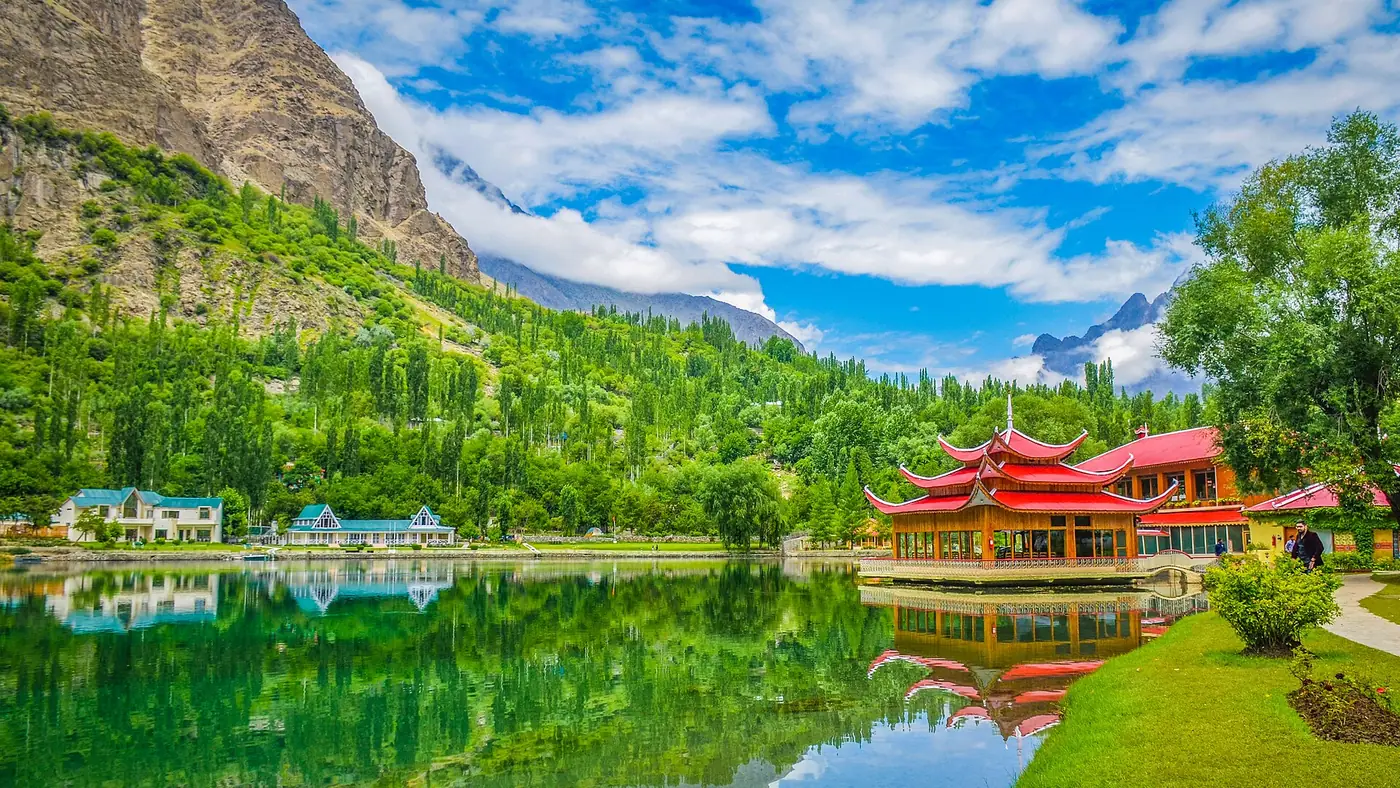
What survives from the older history is visible rather than theoretical. Balti is still spoken across the valley, the ruins of Kharpocho still stand over the bazaar, and the restored palace forts at Shigar and Khaplu, both built by branches of the old ruling families, are now heritage hotels rather than seats of government. Our Skardu destination page covers what is left to see, and the wider picture of visiting Baltistan today.
Frequently asked questions
Why is Baltistan called Little Tibet?
Because its people, the Balti, are descended from Tibetans who settled the region as Tibetan influence spread west by the early 8th century, and their language is an old form of Tibetan. Early travellers and historians used the name Little Tibet for the whole area.
Who ruled Baltistan before Pakistan?
The Maqpon dynasty, based in Skardu, ruled Baltistan for around seven centuries from about 1500. Its most powerful king was Ali Sher Khan Anchan, who reigned from 1595 to 1633 and extended Baltistan's control into Ladakh, Gilgit and beyond.
When did Baltistan become part of Pakistan?
In 1948, after Skardu, held by forces loyal to the princely state of Jammu and Kashmir, was besieged for six months and fell to pro-Pakistan forces on 14 August 1948, during the first Kashmir war.
Is Baltistan a province of Pakistan?
No. It is part of Gilgit-Baltistan, which Pakistan administers but which is not a constitutional province, a status connected to the unresolved status of the wider Kashmir region. Gilgit-Baltistan has had its own elected assembly and self-governance since 2009.
What is left of the Maqpon dynasty today?
Mostly buildings and language rather than living rule. Kharpocho Fort above Skardu, though ruined, was their stronghold, and the restored palace forts at Shigar and Khaplu belonged to branches of the same royal families before the Dogra conquest ended their independence.