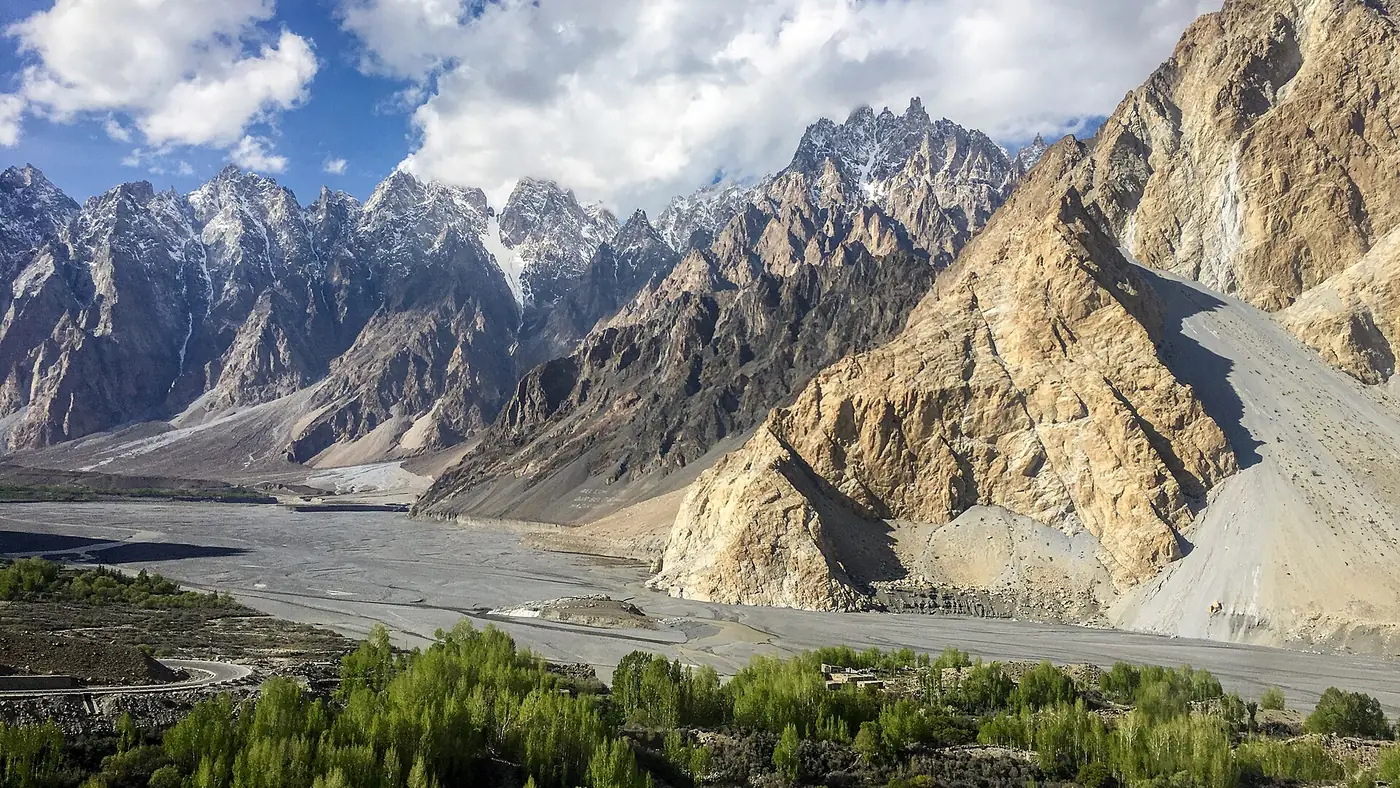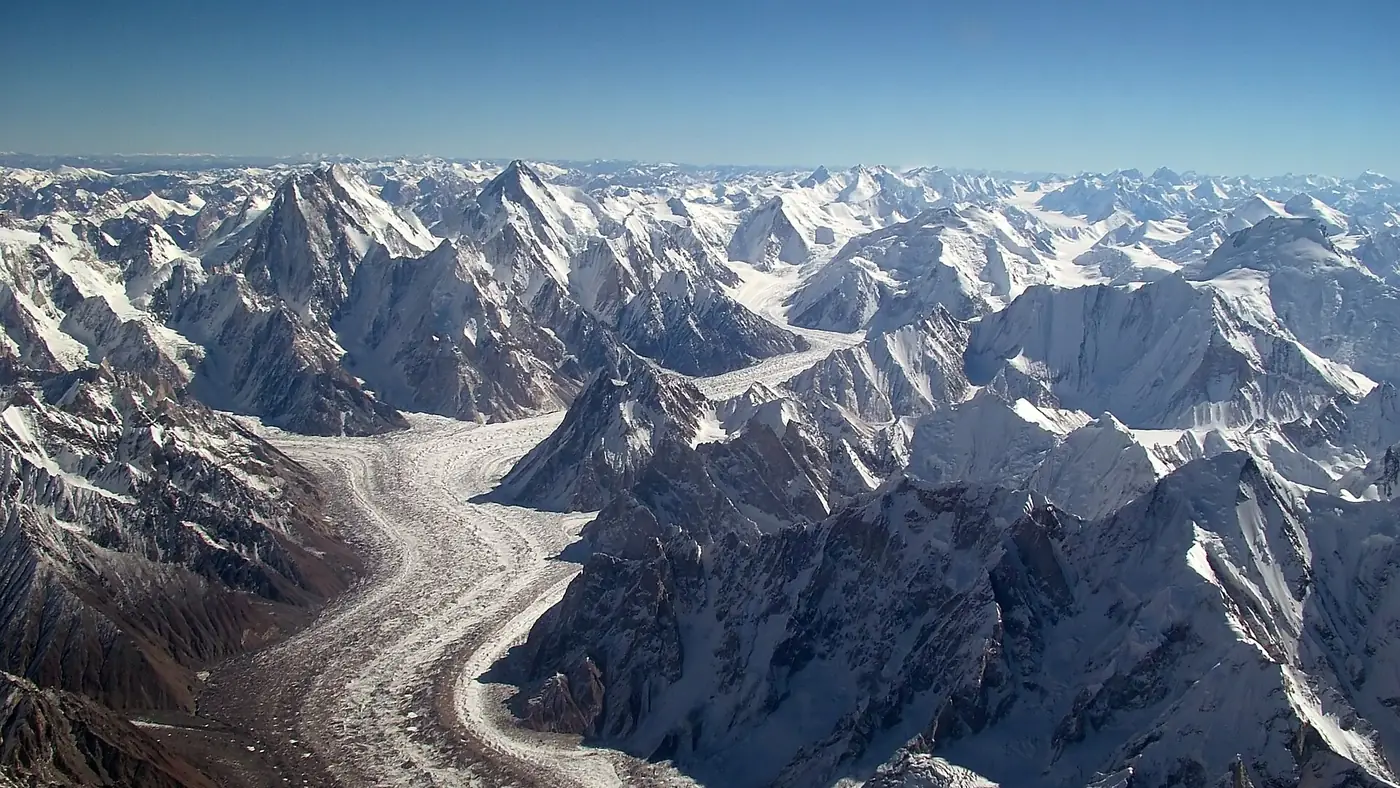
The Patundas trek is a two- to three-day walk from Passu, in upper Hunza, that crosses the Passu glacier and climbs to Patundas meadows at around 4,300 to 4,500 metres, a ridge camp with the Batura glacier and its wall of peaks on one side and the Passu glacier on the other. It is one of the more direct ways to get above the Karakoram Highway and into proper high-altitude Karakoram scenery in only a few days.
| At a glance | |
|---|---|
| Start | Passu, Hunza |
| Patundas meadows | About 4,300–4,500 m, on the ridge between the Passu and Batura glaciers |
| Days | 2 to 3 |
| Difficulty | Moderate to strenuous, one roped glacier crossing |
| Season | June to September |
| Camps | On the ridge, no lodges |
The route
The trek starts at Passu village, just off the Karakoram Highway in upper Hunza. From the village, the path climbs onto the Passu glacier and crosses it, the one technically involved section of the trek, where a short stretch is roped at each end because of crevasses. Beyond the glacier the trail climbs a long ridge to Patundas camp, a set of high pastures used by local herders in summer.
- Passu to the Passu glacier crossing. A climb from the village up to the glacier, then across it, watching for crevasses on the moving ice.
- The climb to Patundas. Beyond the glacier, the trail switches onto the ridge separating the Passu and Batura glaciers, gaining height steadily to the meadow camp.
- Patundas meadows. A high pasture at around 4,300 to 4,500 metres, with wide views over both glaciers and the peaks along the Batura wall.
- Return to Passu. Most trekkers retrace the same route back down, either in one long day or split over two.
There are no lodges on this route. Trekkers camp at Patundas and sometimes at an intermediate point, so tents, sleeping bags and a cook set are needed, normally arranged through a guide based in Passu, Gulmit or Karimabad.
What you see from Patundas
Patundas sits on the ridge between two of the Karakoram's major glaciers. To one side is the Passu glacier, the one crossed on the way up; to the other is the Batura glacier, one of the longest glaciers in the Karakoram, and the camp looks directly across it at the Batura wall, a line of peaks above 7,000 metres that forms one of the more dramatic mountain skylines visible from a trek this short. It is a similar high-altitude reward to the much longer Batura glacier trek, reached in a fraction of the time.
Because the terrain shifts with the glacier's movement and melt, the exact line of the trail can change from one season to the next, which is another reason to go with a guide who has walked it recently rather than relying only on an old map or GPS track.
How hard is it?
This is a moderate to strenuous trek rather than a beginner walk. The glacier crossing needs care, even where it is roped, because crevasses on the Passu glacier are a real hazard and the trail across the ice is not fixed. The climb from the glacier up to Patundas is also a sustained, steep pull, and camp sits above 4,300 metres with no chance to descend quickly if altitude symptoms appear. Reasonable trekking fitness and, ideally, some previous experience with glacier terrain make the trip considerably more comfortable.
It is not, however, a technical mountaineering route. No rope work beyond the short crossing is needed, and it suits a strong, well-prepared trekker rather than only specialists.
When to go
June to September is the season, matching the rest of the high routes covered in our trekking season guide. July and August give the clearest weather and the most stable glacier crossing; outside these months snow cover and cold make the trip harder and less predictable.
Is it worth it?
Yes, for anyone with two or three spare days in Hunza who wants a genuine high-altitude trek rather than a valley walk. It is shorter and more accessible than the multi-week glacier routes further into the Karakoram, but it still involves a real glacier crossing and a camp above 4,300 metres, so it suits fit, well-prepared travellers rather than families with young children. For a comparison with the other multi-day routes out of Hunza, see our trekking in Hunza guide.
Frequently asked questions
How many days does the Patundas trek take?
Two to three days from Passu: a day up including the glacier crossing, a night at Patundas, and a day back down, sometimes split over an extra day.
How high is Patundas meadows?
Around 4,300 to 4,500 metres, on the ridge between the Passu and Batura glaciers.
Is the Passu glacier crossing dangerous?
It needs care because of crevasses, and a short section is normally roped at each end. It is not a technical climb, but it should not be attempted without a guide familiar with the current state of the ice.
Do I need a guide for the Patundas trek?
Yes. There is no marked trail across the glacier, the route shifts with glacial melt, and camping gear has to be carried, so a local guide from Passu or Gulmit is the practical way to do it.
What is the best time for the Patundas trek?
July and August, when the weather is most stable and the glacier crossing is most predictable. June and September are possible but colder, with more snow on the higher ground.