
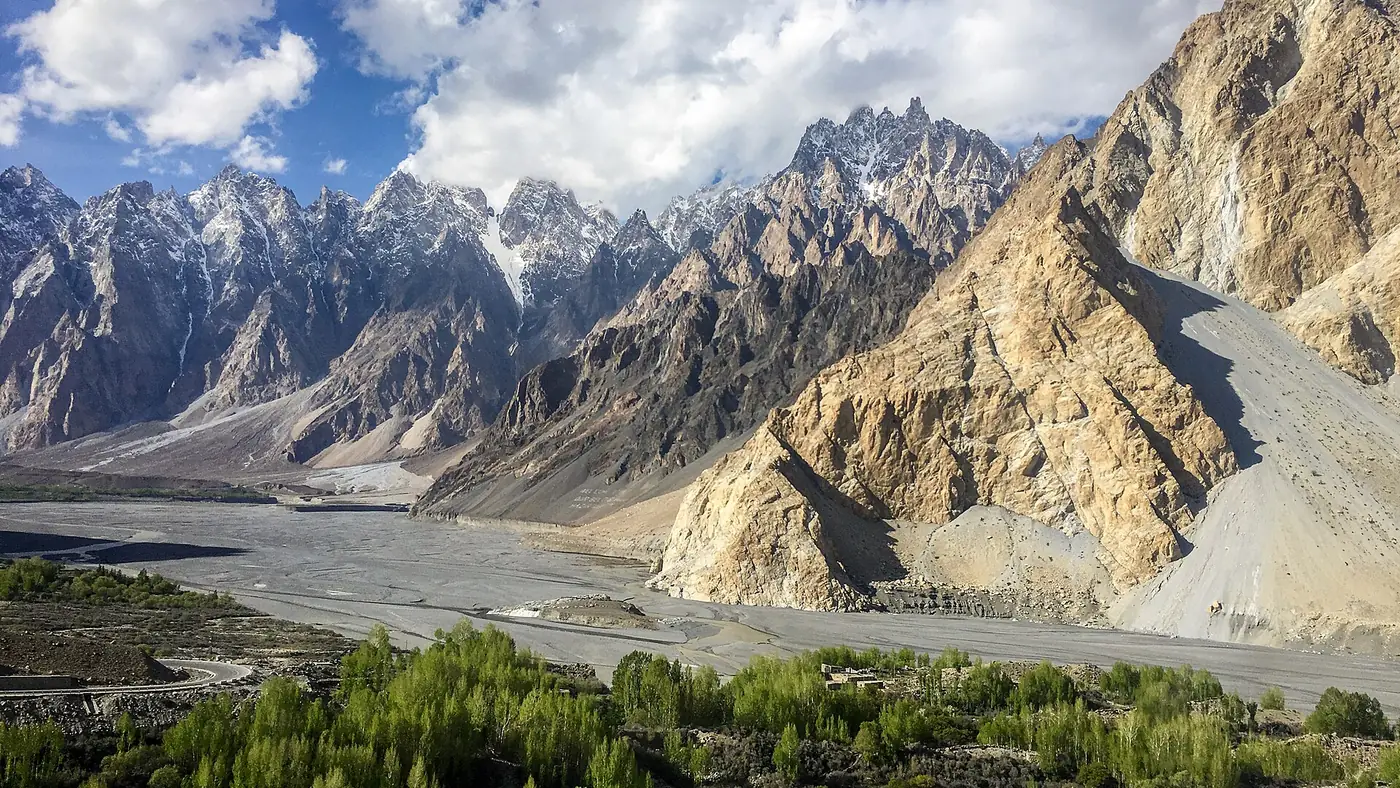

September is one of the two best months to visit the northern areas, alongside June. The monsoon has cleared from the approach roads, the passes and high plateaus are all still open, the crowds of July and August have thinned as Punjab's schools reopen, and the orchards are heavy with the last of the apricots and the first walnuts and apples. Nights are noticeably cooler than August, but days are still comfortable almost everywhere.
This guide covers the weather, why the air clears up so much, what's still open, and the harvest that gives September its particular character.
| At a glance | September |
|---|---|
| Everything open | Babusar, Deosai, Fairy Meadows, Khunjerab, most of the month |
| Skardu | Around 24 °C by day, 11 °C at night |
| Gilgit | Cooling from the summer peak |
| Fairy Meadows | Around 14 °C by day, 6 °C at night |
| Crowds | Much lighter after Punjab schools reopen on 25 August 2026 |
| Harvest | Walnuts and apples through the month |
What is the weather like in September?
September is the month the region's weather settles after the monsoon.
- Skardu cools from its summer peak, averaging around 24 °C by day and 11 °C at night, with clear, dry air.
- Gilgit and the lower valleys ease down from the mid-30s of July and August, though afternoons stay warm.
- Hunza is comfortable, mild by day and cool at night, one of the most pleasant months in Karimabad.
- Fairy Meadows turns crisp, averaging around 14 °C by day and 6 °C at night, with the monsoon cloud that often obscures Nanga Parbat in summer largely gone.
With the monsoon retreating from Khyber Pakhtunkhwa and the approach roads by September, this is typically one of the clearest, calmest months for mountain views and photography anywhere in the region. For the full seasonal picture, see our guide to the seasons.
What is still open
By September, everything opened earlier in the summer is still running, though the season is visibly winding down by the end of the month.
- Khunjerab Pass remains open for visitors through September and typically well into October or November, depending on snow.
- Deosai is usually still accessible through most of September, though nights on the plateau are colder than in July or August and the first snow can arrive at any point from later in the month.
- The Fairy Meadows jeep track and lodges are open, and September is widely considered one of the best months to go, with clearer skies than the monsoon months.
- Babusar Pass is normally open through September, though as with any month it can close for a day after early snow.
Check locally in the days before you travel, since September marks the start of the window when any of these can close with the first real cold snap of autumn.
Fewer crowds, better value
Punjab's schools reopen on 25 August in 2026, and the drop in domestic travel is noticeable within days. Hotels in Hunza, Skardu and Naran that were full through July and August have rooms again, often at lower rates, and the roads and checkpoints that queued in peak season move more freely.
This makes September a good month for travellers who found the idea of August's crowds off-putting but still want every major spot open: Khunjerab, Deosai and Fairy Meadows together, without the same competition for hotel rooms or space at a viewpoint.
The harvest
September is harvest season in the orchards of Hunza, Skardu and the Kaghan valley. The apricot crop, picked and dried through the summer, is largely finished by now, and the fruit trees turn to walnuts and apples, which reach maturity through September and October. Roadside stalls sell fresh and dried fruit through the valley, and it is a good month to see the working side of these villages rather than just the scenery.
If you visit family orchards or buy dried fruit locally, September and October are when the season's dried apricots, walnuts and mulberries are freshest, rather than stock that has been stored since the previous year. It is a small thing, but it is part of what makes an autumn visit feel different from a summer one.
Getting there in September
The Karakoram Highway through Besham, Dasu and Chilas, and the Babusar route through Naran, are both normally open through September. Landslide risk on the Kohistan stretch of the highway drops off noticeably once the monsoon eases, though repairs to any damage from July or August can still cause short delays into early September. Flights from Islamabad to Gilgit and Skardu also run more reliably once the summer's heaviest weather has passed.
What to pack for September
- A warm layer for the evenings in Hunza, Skardu and Gilgit, where nights are cooler than in August.
- A proper jacket, hat and gloves for Deosai and Fairy Meadows, where nights can already be close to freezing.
- Layers for the day, since afternoons can still be warm in the lower valleys even as mornings turn crisp.
- A camera with a polarising filter, if photography matters to you; the clear post-monsoon air is one of September's real advantages.
- A little extra flexibility late in the month, in case an early cold snap brings snow to Deosai or the high passes sooner than usual.
Who September suits
September suits almost everyone: families who want a calmer version of the summer season, couples wanting good weather without the July and August crowds, and photographers who want clear skies over Nanga Parbat and the Karakoram peaks. It is, alongside June, the month we would recommend first to anyone asking when to go.
It suits slightly less well anyone who specifically wants Deosai's wildflowers, which peak earlier in the summer, or anyone travelling right at the end of the month without a flexible plan, since early snow becomes a real possibility from late September. Our Gilgit, Hunza and Khunjerab tour and Skardu and Deosai tour both run through September.
Frequently asked questions
Is September a good month to visit the northern areas?
Yes, one of the two best of the year alongside June. The monsoon has cleared, everything is still open, and the summer crowds have thinned considerably.
Is Deosai still open in September?
Usually, for most of the month, though nights are colder than in summer and the plateau can close with the first snow, which is possible from late September.
Is September better than August for the northern areas?
For most travellers, yes. The weather is similar or slightly cooler, the air is clearer once the monsoon has passed, and hotels and roads are much less crowded once Punjab's schools reopen in late August.
What's the weather like at Fairy Meadows in September?
Crisp and clear, averaging around 14 °C by day and 6 °C at night, with better chances of an unobstructed view of Nanga Parbat than in the cloudier summer months.
Is it safe to travel to the northern areas in September?
Gilgit-Baltistan itself carries no current UK government advisory against travel, but the Karakoram Highway between Mansehra and Chilas does. The monsoon risk on that stretch eases through September, though landslide-damaged sections can take time to fully clear. Check current advice and road status before you travel.