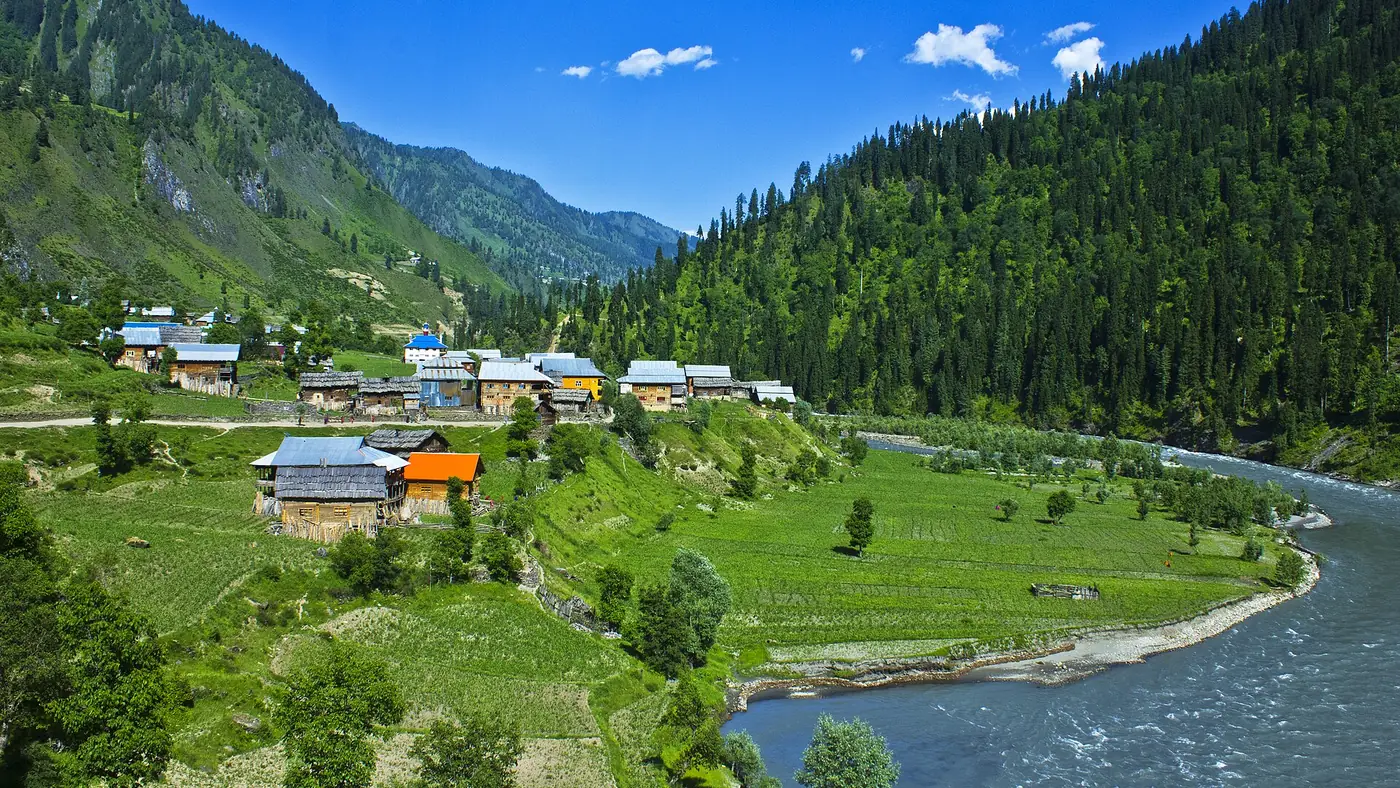
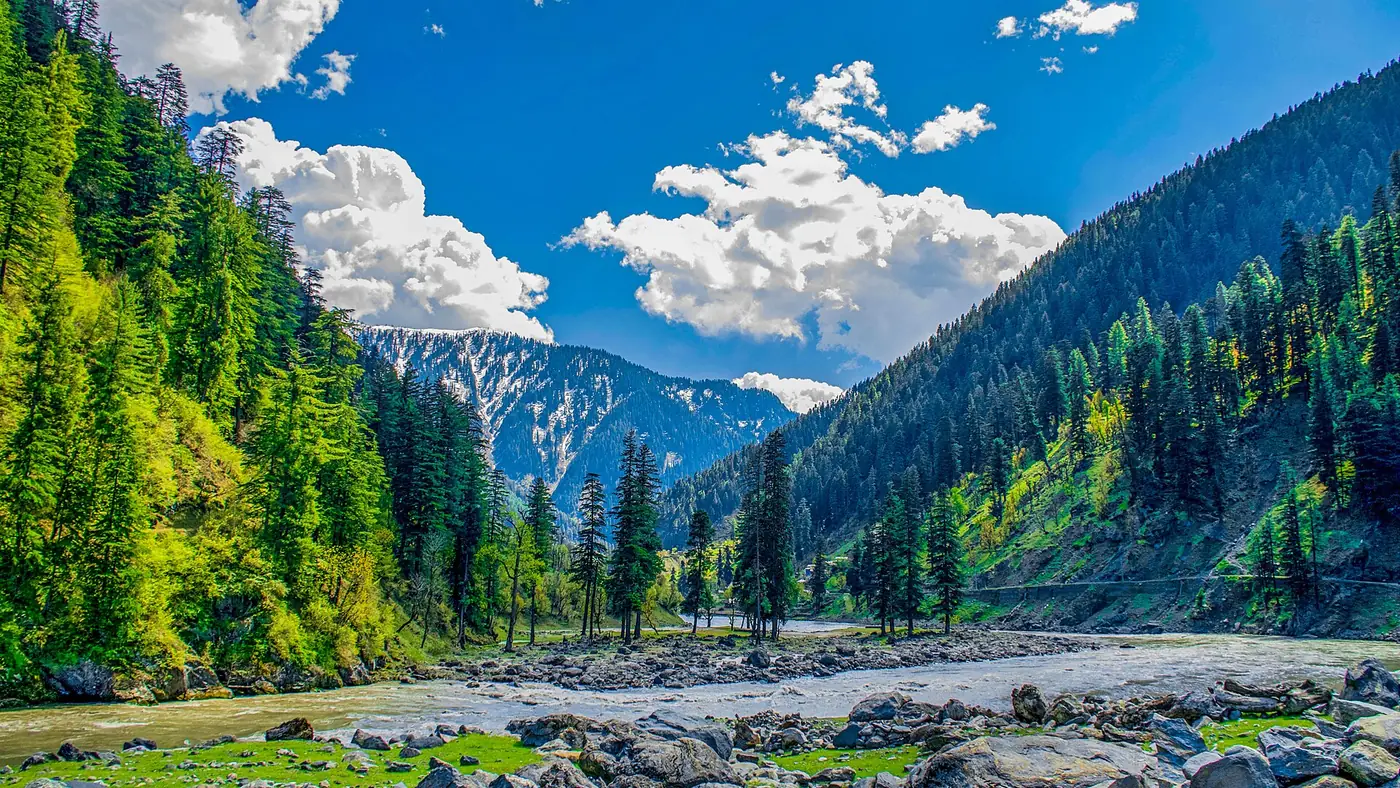
Azad Kashmir's national parks sit almost entirely in its high country, from the Neelum valley to the Pir Panjal range above Bagh and Rawalakot. None has the infrastructure of Deosai or Khunjerab further north, so a visit here is closer to a trek or a jeep trip into wilderness than a managed wildlife park. This guide covers the five main parks: Machiara, Ghamot, Musk Deer (also called Gurez), Tolipir and Panjal Mastan.
| At a glance | |
|---|---|
| Largest by area | Machiara National Park, Neelum district |
| Highest terrain | Tolipir National Park, up to peaks over 6,000 m |
| Flagship species | Musk Deer National Park, for the Himalayan musk deer |
| Best for birdwatching | Machiara, for the Himalayan monal |
| Season | Roughly June to September for all five |
Machiara National Park
Machiara lies on the right bank of the Neelum River, about 35 kilometres from Muzaffarabad, and was notified as a national park in 1996. It covers around 138 square kilometres between roughly 1,600 and 4,450 metres, running from mixed temperate forest at the lower end up to alpine scrub near the ridgelines.
It holds some of the most significant wildlife in Azad Kashmir, including snow leopard, common leopard and musk deer, along with good numbers of the Himalayan monal, a pheasant prized for its colour. Visitors are unlikely to see the big cats, but birdwatching and forest walks are realistic, and local guides operating in the park can point you toward the areas where sightings are more likely.
Musk Deer National Park (Gurez / Guraiz)
Set in the Neelum valley in Neelum district, Musk Deer National Park was established in 2007 and covers a large area of high Himalayan and Pir Panjal terrain. As the name suggests, it exists to protect the Himalayan musk deer, whose priority habitat here is birch and mixed coniferous forest; surveys have put the local population at around 120 animals, though poaching, grazing and deforestation have fragmented it into smaller pockets.
The park also has a healthy population of black and brown bears, along with wolves, snow leopards, common leopards and lynx. It sits deep in the Neelum valley, and much of the valley falls within the area the UK government currently advises against travelling to because of its closeness to the Line of Control, so check the current picture before planning a visit here specifically for the wildlife.
Ghamot National Park
Ghamot (also spelt Gumot), also in Neelum district, was established in 2004 and forms part of a chain of protected areas, alongside Deosai and Musk Deer National Park, that supports a connected population of the Himalayan brown bear across northern Pakistan. Like its neighbour, it lies within the Neelum valley and carries the same access and safety considerations.
Tolipir National Park
Tolipir sits in Rawalakot tehsil, Poonch district, and is one of the more accessible parks on this list because Toli Pir itself, a hill station at around 2,700 to 2,900 metres, is already a well-established day trip from Rawalakot. The wider park extends into much higher and more rugged terrain, with numerous peaks well above the pir itself, and is home to Himalayan black bear, leopard and snow leopard among at least 28 recorded mammal species.
Most visitors see only the accessible lower section around Toli Pir; the high peaks and interior of the park are for trekkers, not day-trippers. Our guide to Toli Pir covers the hill station side of a visit in more detail.
Panjal Mastan National Park
Panjal Mastan lies in Bagh district, at an average elevation of around 2,800 metres, and covers roughly 300 square kilometres of the Pir Panjal ecoregion. It is less visited than Tolipir, with fewer formal trails and less tourist infrastructure, which makes it a genuinely quiet option if you already have a base in Bagh.
How to actually see these parks
None of the five has a visitor centre, marked trail network or ticketed entry in the way Deosai does. In practice, a visit means:
- A local guide or driver who knows the park boundaries and current tracks, arranged through your hotel in Muzaffarabad, Rawalakot or Bagh.
- Realistic expectations on wildlife. Birds, ibex-like ungulates on distant slopes and forest scenery are likely; snow leopards and bears are not something to plan around seeing.
- A June to September visit. Snow closes the higher ground outside this window, and access tracks into Machiara, Ghamot and Musk Deer National Park can be difficult even in season after rain.
- No expectation of facilities. Carry your own water, food and any camping gear; none of these parks has hotels inside its boundaries.
Which park suits which trip
If you want the easiest outing, Tolipir from Rawalakot is the practical choice, since the hill station itself needs no special arrangement. If birdwatching is the goal, Machiara is the strongest option. If you specifically want to understand musk deer and brown bear conservation in the region, Ghamot and Musk Deer National Park are the relevant parks, but they sit deepest in the Neelum valley and need the most care around current safety advice.
Frequently asked questions
Is there an entry fee for Azad Kashmir's national parks?
None of these five parks has a standard ticketed entry system in the way Deosai in Gilgit-Baltistan does. Any fee, where one applies, is best confirmed locally rather than assumed in advance.
Can I see a snow leopard in these parks?
It is possible but very unlikely. Snow leopards are present in Machiara, Ghamot and Musk Deer National Park, but they are elusive and rarely seen even by researchers working in the parks.
When is the best time to visit?
June to September, when the higher ground is clear of snow and access tracks are passable. Outside this window most of the high-altitude terrain in all five parks is difficult or impossible to reach.
Do I need a guide to visit?
It isn't compulsory at any of these parks, but a local guide familiar with current track conditions makes the visit far more workable, particularly in Machiara, Ghamot and Musk Deer National Park, where marked infrastructure is minimal.
Is it safe to visit these national parks?
Tolipir and Panjal Mastan, around Rawalakot and Bagh, see regular domestic visitors. Machiara, Ghamot and Musk Deer National Park sit in the Neelum valley, where current UK government advice warns against travel to areas within about 10 miles of the Line of Control. See our guide on is Azad Kashmir safe to travel and check local advice before planning a trip into this part of the valley.