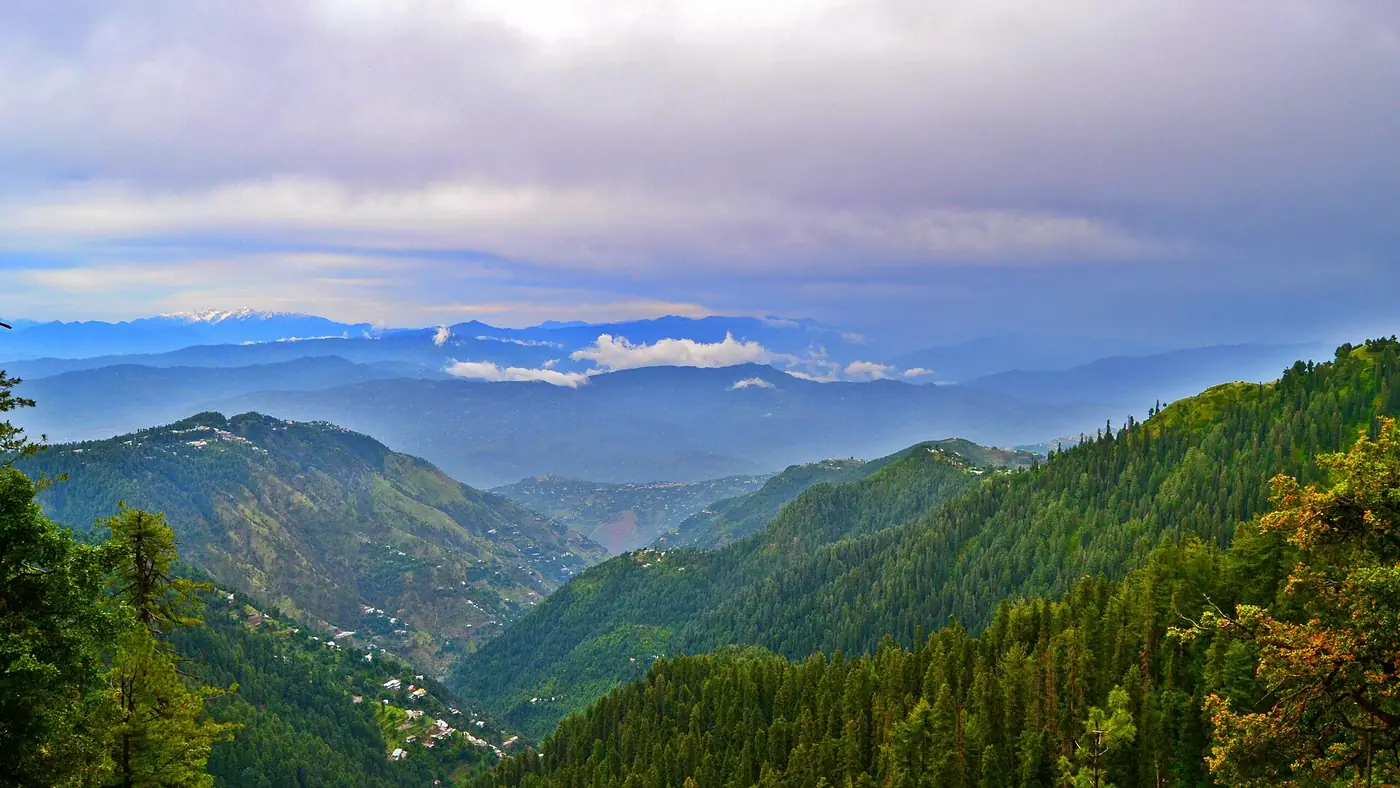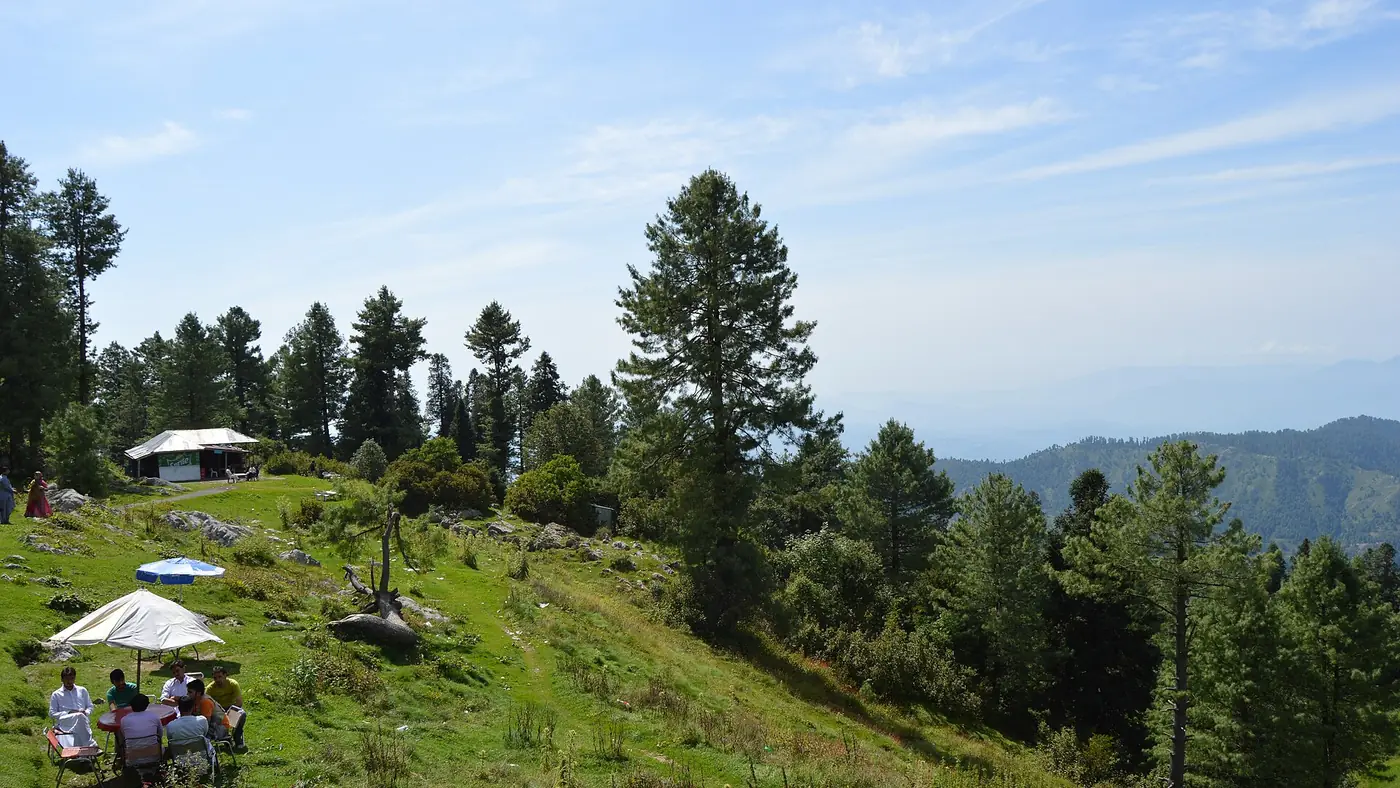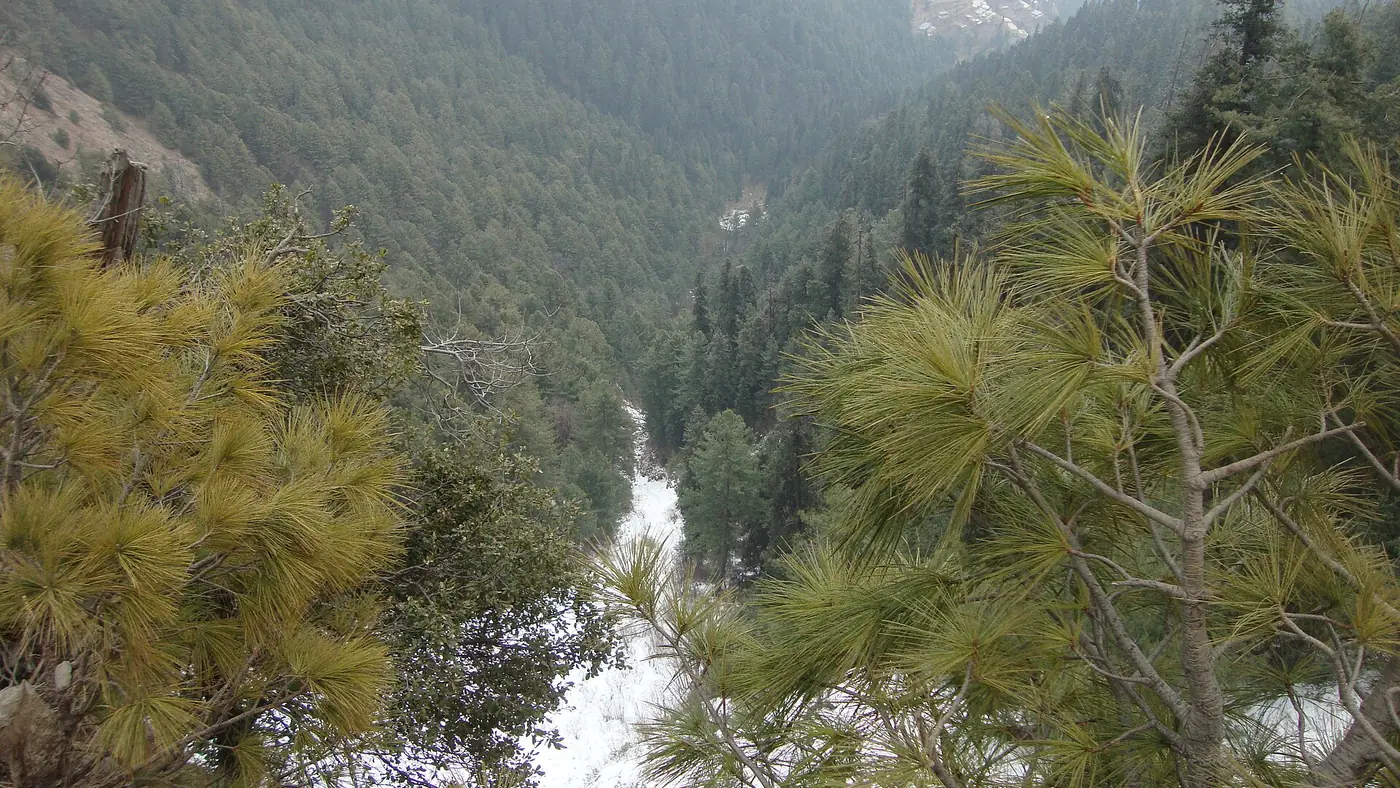
Nathia Gali in monsoon, from July into early September, is cool, soaked and often hidden in cloud, with the forest at its greenest and the views at their least reliable. Rain falls on many afternoons, mist can sit on the ridge for hours, and the roads carry a real risk of a landslide closure. It suits people who like mist and rain and can build a spare day into the plan; it is a poor choice if clear mountain views are the point of the trip.
This guide covers what the monsoon actually does to the town, the trails and the roads, and how to get the best of it without losing days to weather.
| At a glance | |
|---|---|
| Monsoon months | July to early September |
| Rainfall | Nathia Gali gets roughly 124 mm in July and 163 mm on average; nearby Murree averages around 8.7 mm on a typical August day |
| Temperature | Days around 18 to 22 °C, nights cooler; take a jacket even in August |
| Main hazards | Landslides on the road, slippery trails, leeches after rain |
| Visibility | Cloud and mist common; a clear valley view is not guaranteed on any given day |
| Busiest dates | School-holiday weekends and 14 August |
What the monsoon does to Nathia Gali
The Galiyat ridge catches the summer monsoon hard. Cloud rolls up from the plains most afternoons and can sit over the town for hours or days rather than clearing by evening. Nathia Gali gets on the order of 124 mm of rain in a typical July and around 163 mm in August, and the Galiyat and Murree hills see some of the highest rainfall totals in Pakistan's hill country. Rain tends to fall as short, heavy downpours rather than steady all-day drizzle, so a morning can stay dry and workable even in a wet week.
The upside is the forest, a deeper green than in the dry months, with mist drifting through the deodar and pine. The downside is that a whole visit can pass without a clear sight of the valley, and anyone hoping for the long views from Miranjani or Mushkpuri may not get them.
Fog and how it changes the day
Fog and low cloud are the defining feature of a Galiyat monsoon trip. It tends to build through the morning and is often thickest in the afternoon and evening, then can clear overnight or at first light. Practically, that means:
- Walk and travel early. A morning that starts clear can close in by midday, especially on the higher trails.
- Don't rely on the evening for photographs or the view; mornings, right after a night of rain, are more often clear.
- Drive slowly and use headlights on the ridge road even during the day, since visibility on the Kuldana–Barian stretch can drop sharply in thick fog.
Trails in the wet: mud and leeches
The three main walks, the Pipeline Track, Mushkpuri and Miranjani, all stay open through the monsoon, but the experience changes. Packed earth becomes soft mud, exposed roots and stones get slick, and the going is slower and more tiring than in the dry season.
Wet leaf litter on the forest floor also brings out leeches after heavy rain, as in other monsoon-soaked hill forests across the region. They are a nuisance rather than a danger: wear closed shoes with a good tread, tuck trousers into your socks, check your legs at rest stops, and carry salt or a repellent, as walkers use elsewhere. Skip the summit push in heavy rain; the flat, shaded Pipeline Track copes with wet weather far better than the steeper climbs to Miranjani and Mushkpuri.
Our Pipeline Track guide and the Ayubia National Park guide cover the trails and their usual conditions in more detail.
Landslides and road closures
This is the real risk of a monsoon trip. Heavy rain triggers landslides on the ridge road between Murree and Abbottabad, most often in July and August and occasionally into September. A closure can last a few hours or considerably longer, and none can be predicted a week in advance; local authorities have issued landslide warnings for the Murree and Galiyat roads during heavy monsoon spells in recent years.
Three rules matter for driving up in this season:
- Build in a spare day, especially if your dates fall in July or August.
- Check the road and the forecast the morning you travel, rather than trusting a plan made a week earlier.
- Turn back if the road is closed. It is not worth pushing through a blocked or unstable stretch.
Our Islamabad to Nathia Gali guide covers the route and what to carry in the car, and the best time to visit Nathia Gali guide compares the monsoon with the rest of the year.
What to pack for a monsoon trip
- A proper rain jacket or poncho, not just an umbrella, for the trails
- Waterproof, grippy shoes, plus a dry spare pair for the evening
- A dry bag or plastic covers for phones and cameras
- A warm layer for the evenings, which stay cool even in August
- Salt or repellent if you plan to walk the forest trails
Is Nathia Gali worth visiting in the monsoon?
For couples and travellers who enjoy mist, rain on the roof and quieter hotels, yes. Crowds outside the August school holidays are generally lighter than peak summer weekends, and the forest at its greenest is a different place from the dry months.
It is not the season for clear mountain views, a big summit walk, or a tight schedule with no room for a delay. Families wanting reliable outdoor time and walkers chasing the views from Miranjani are better served by May, June or the autumn from mid-September. If your dates are fixed for July or August, plan around the rain, keep a spare day, and treat any clear morning as a bonus. Send us your dates for help fitting a Galiyat trip around the season.
Frequently asked questions
Is Nathia Gali good to visit in monsoon season?
It suits people who like mist and green forest and can allow for a spare day. Views are unreliable, trails get muddy, and landslides can close the road, so it is not the season for a tight schedule or guaranteed views.
How much does it rain in Nathia Gali in July and August?
Roughly 124 mm in a typical July and 163 mm in August, falling mostly as short, heavy afternoon downpours rather than steady all-day rain.
Are there leeches on the trails in monsoon?
Wet leaf litter on the forest trails can bring them out after heavy rain, as in other monsoon hill forests. Wear closed shoes tucked into socks and check yourself after a walk.
Can the road to Nathia Gali close in monsoon?
Yes. Landslides on the Murree–Abbottabad ridge road are the main risk in July and August, and closures can last from a few hours to considerably longer.
Is it cold in Nathia Gali during monsoon?
Cooler than the plains but not cold. Days are typically around 18 to 22 °C, and evenings need a jacket even in August.
Which trail is best to walk during monsoon?
The Pipeline Track, since it is flat, shaded and copes with wet weather better than the steeper climbs to Miranjani and Mushkpuri.