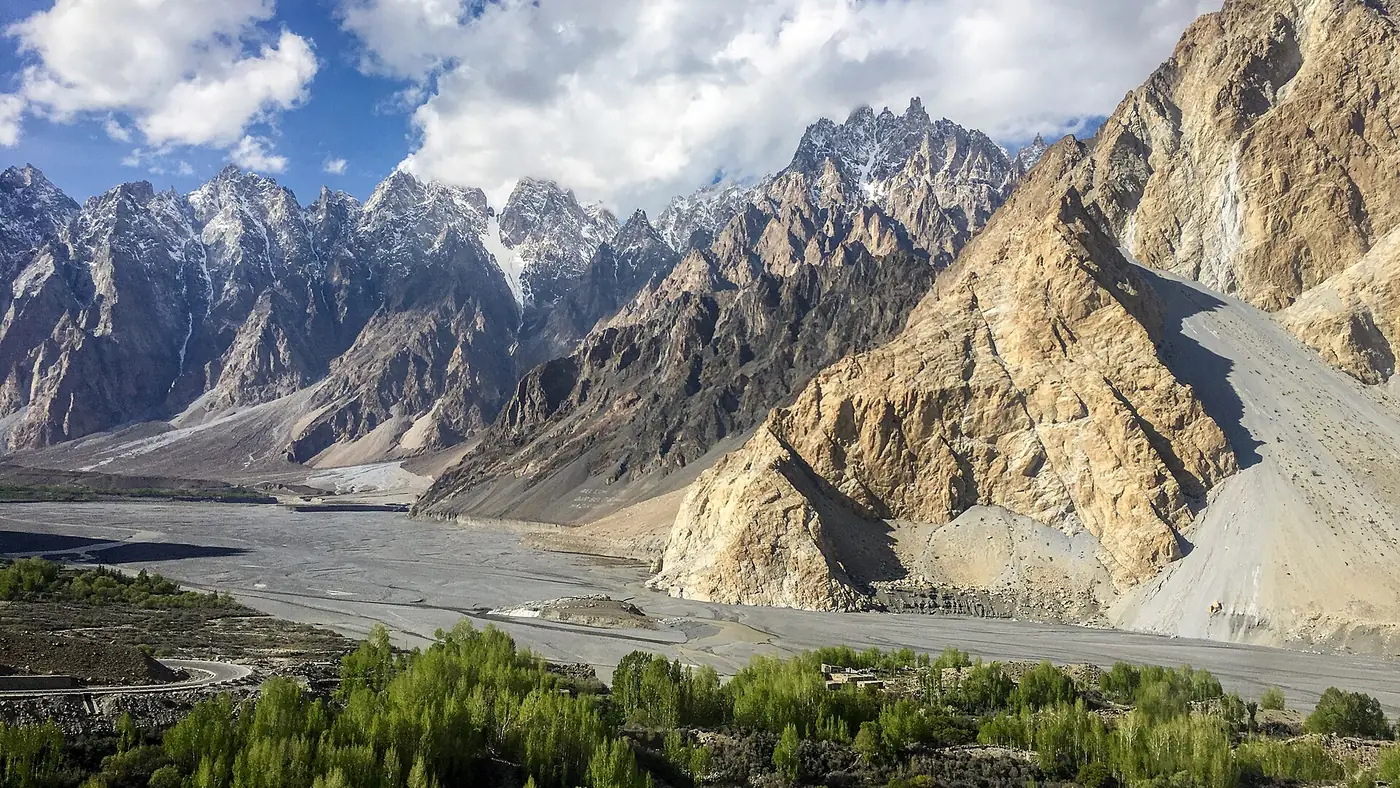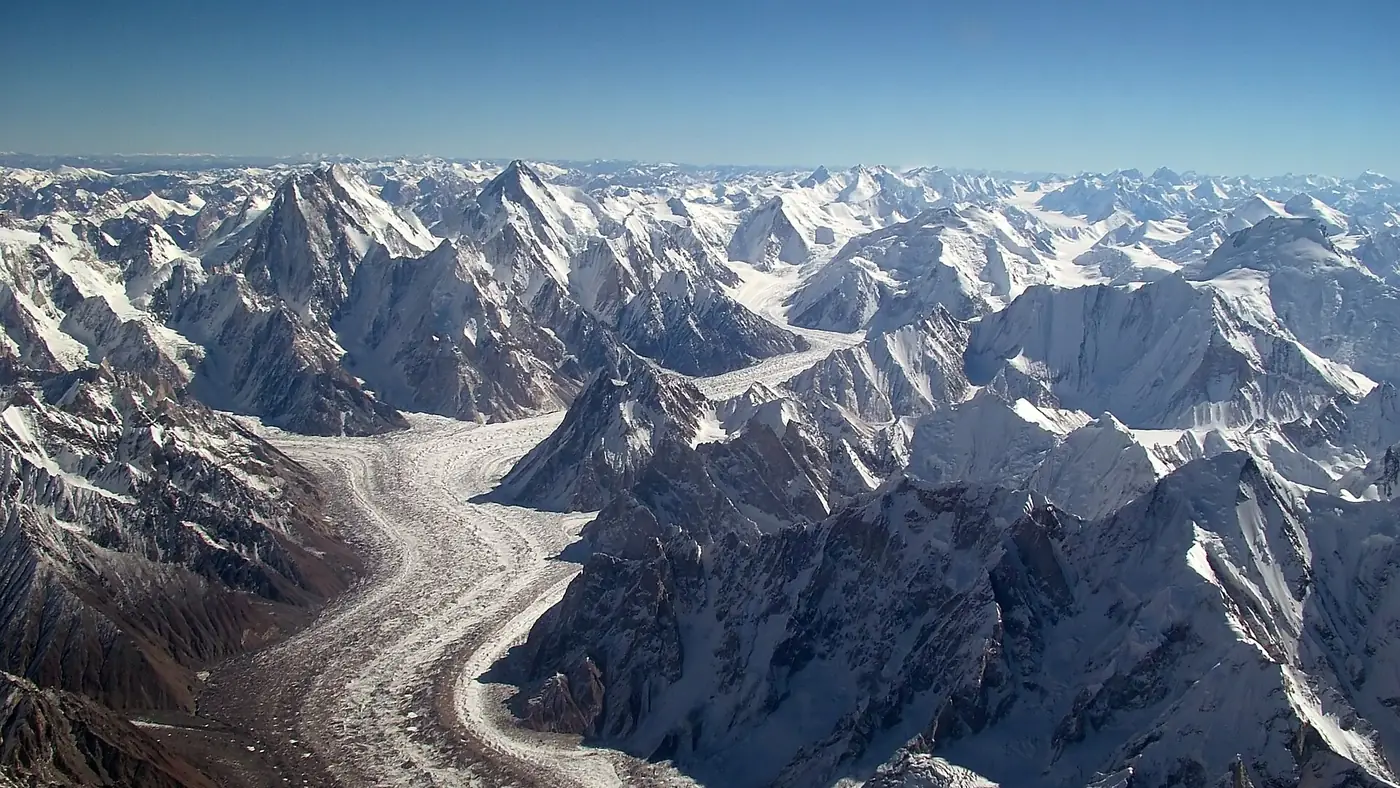
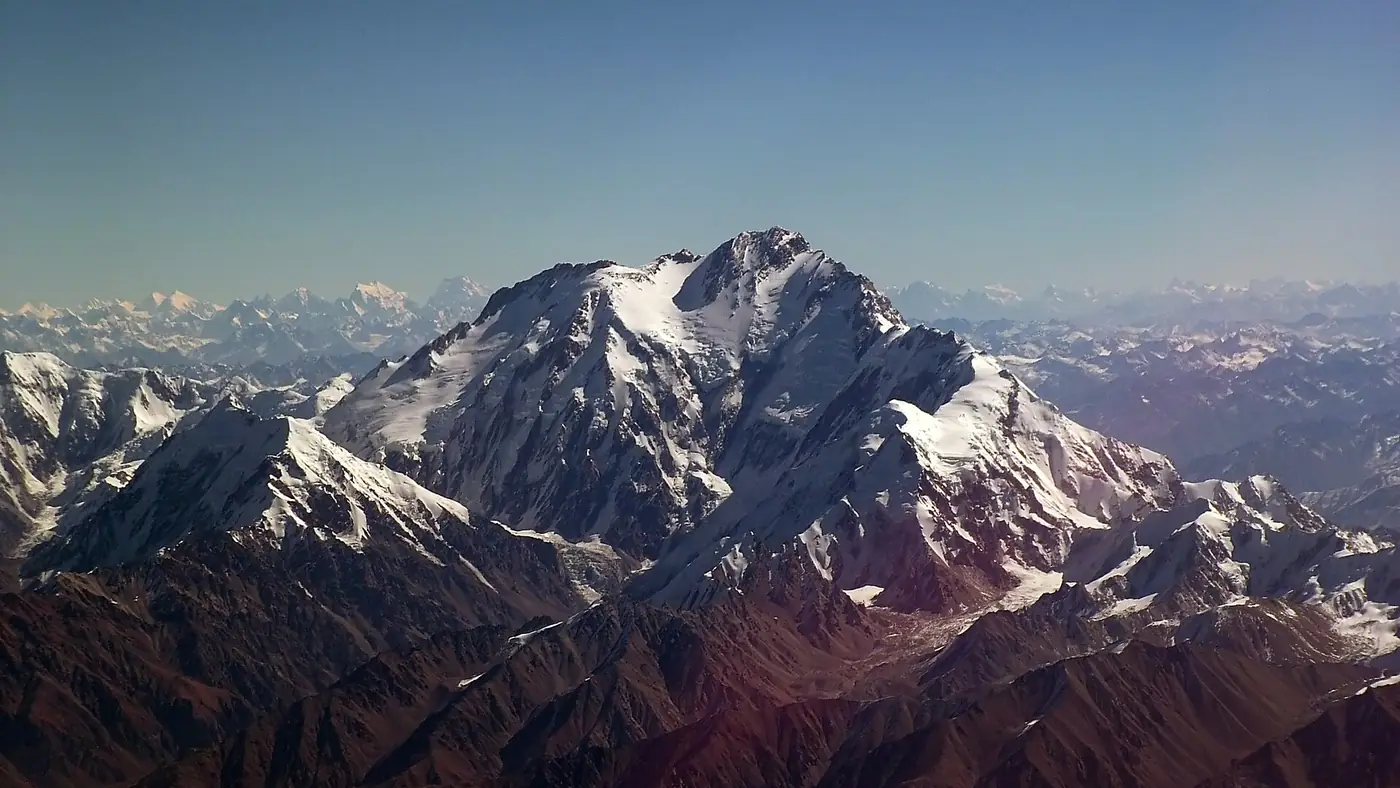
The Mazeno Pass trek circles the south and west sides of Nanga Parbat, crossing from the Rupal valley to the Diamir valley over the Mazeno La, a technical pass at around 5,400 metres. It is one of the longest and hardest treks in Pakistan, typically taking around three weeks for the full circuit, and the descent from the pass needs rope work, not just fitness.
This guide covers the route, why the crossing is technical, and who it genuinely suits.
| At a glance | |
|---|---|
| Route | Rupal valley to Diamir valley, around Nanga Parbat |
| Mazeno La altitude | About 5,400 m |
| Full circuit | Around 3 weeks |
| Best months | July to August |
| Difficulty | Technical; rope, ice axe and crampons needed for the pass |
| Guide | Essential, with mountaineering experience, not just trekking |
What the trek covers
Nanga Parbat has three great faces, and the Mazeno Pass trek is the only route that takes you past all three on foot. It starts in the Rupal valley below the Rupal Face, the highest mountain wall in the world, follows the long Mazeno Ridge around the south-west side of the mountain, crosses the Mazeno La onto the Diamir side, and finishes in the Diamir valley below the west face, the route most modern expeditions use to climb the mountain. Our guide to the Rupal valley covers the approach to the start of the trek and short walks there if the full circuit is more than you want.
It is a genuinely remote route. For much of the middle section you are on glaciated, high-altitude ground with no villages, no phone signal and no way out except forward or back the way you came.
Why the Mazeno La is technical
The climb up to the pass is not the hard part; it crosses a glacier on snow and ice but is not unusually steep. The problem is the descent on the Diamir side, which drops steeply over around 250 metres and is normally protected with a fixed rope. Crossing it safely needs an ice axe, crampons, a harness and the experience to rappel on a fixed line at over 5,000 metres, not simply the fitness to walk a long day.
This is what separates the Mazeno Pass trek from every other route in this guide. It is not a hard trek; it is closer to a mountaineering expedition that happens to avoid a summit, and it should be planned and guided as one.
Route and timing
The full circuit runs to around three weeks, including the approach through the Rupal valley, several days following the Mazeno Ridge past the base camps used for climbing the mountain's different faces, the crossing itself, and the descent through the Diamir valley to the road. Exact timing depends heavily on the weather, since the ridge sections offer few places to shelter and a spell of bad weather can hold a group for days.
July and August is the only realistic window, when the pass has the best chance of being clear of fresh snow and the rope-protected descent is at its safest.
Who it suits, and who it doesn't
This is not a trek for anyone without prior high-altitude mountaineering experience. Guides who take clients over the Mazeno La expect competence with crampons, an ice axe and abseiling before the trip starts, not skills learned on the way. It also demands three weeks, a serious level of fitness sustained over many consecutive days, and comfort with real remoteness and unpredictable weather.
For trekkers who want to see Nanga Parbat's scale without this level of commitment, the shorter walks from Fairy Meadows to the Nanga Parbat base camp on the Rakhiot side, or the short walks from Tarishing described in our Rupal valley guide, give a genuine sense of the mountain in a few days rather than three weeks.
Is it safe to travel to?
The Diamir side of the trek finishes near Chilas, on the stretch of the Karakoram Highway between Mansehra and Chilas that the UK government's Pakistan travel advice, updated in September 2026, currently advises against travelling on at all. Pakistani trekkers and mountaineers still use this area and the routes around it, but check current news and local police advice before you commit, and be aware that going against your own government's advice can void travel insurance for overseas visitors. This is on top of the trek's own technical and remoteness risks, and a rescue from the Mazeno Ridge or the pass itself is difficult and slow.
Is it worth it?
For an experienced, well-prepared mountaineering party, yes: it is one of the great remote circuits in the Karakoram, taking in all three faces of one of the world's most dramatic mountains. For anyone without that background, it is not the trek to build up to on a single trip; the risk on the pass's descent is real and not forgiving of inexperience.
Frequently asked questions
How long does the Mazeno Pass trek take?
Around three weeks for the full circuit from the Rupal valley to the Diamir valley, weather permitting.
Is the Mazeno Pass trek technical?
Yes. The pass itself is a glacier crossing, and the descent on the Diamir side is steep and normally protected with a fixed rope, needing crampons, an ice axe and rope skills.
Do I need mountaineering experience for the Mazeno Pass trek?
Yes. This is closer to a mountaineering expedition than a trek, and guides expect clients to already be competent with crampons, an ice axe and abseiling.
When is the best time for the Mazeno Pass trek?
July and August, when the pass has the best chance of being clear of fresh snow.
Is the route to the Mazeno Pass trek safe to travel?
The Diamir side finishes near Chilas, an area the UK government currently advises against all travel to. Pakistani travellers still use it, but check current advice before setting out, and note that overseas visitors' own government advice can affect their travel insurance.