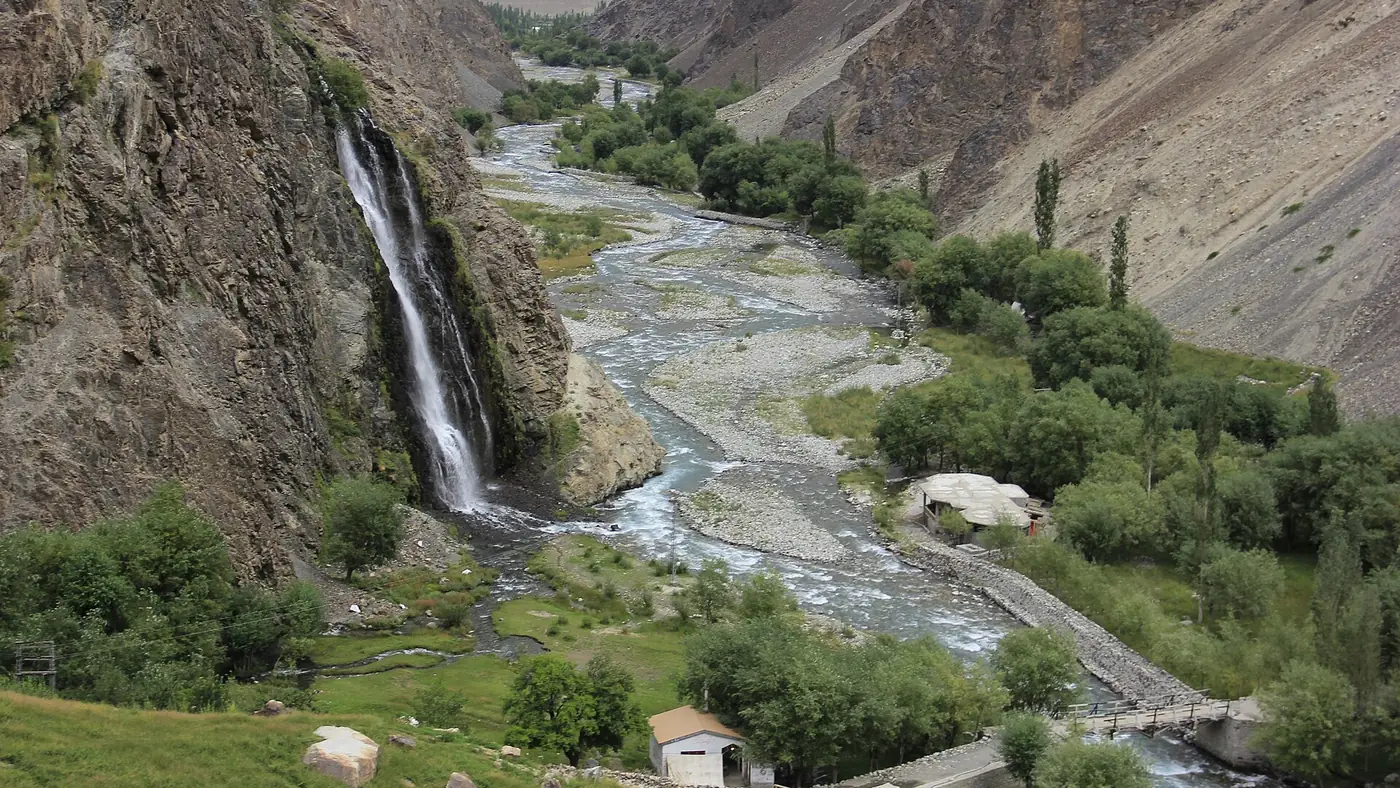
Manthokha waterfall is a 55-metre (180-foot) fall in Kharmang district, about two hours' drive east of Skardu up the Indus on the road towards Kargil. The Gilgit-Baltistan tourism department puts it at about 80 km from Skardu. Most people see it as a day trip, with a short walk to the foot of the falls and a trout lunch beside them, and the best months are May to September, when the water is high and the road is open.
This guide covers the drive, the walk, the trout, where to stay if you want a night out of Skardu, and when to go.
| At a glance | |
|---|---|
| Where | Above Manthokha village, Kharmang district, Baltistan |
| From Skardu | About 80 km, roughly 2 hours each way |
| Height | About 55 m (180 ft) |
| Road | East up the Indus on the Kargil road, then a short side road |
| The walk | Short, but rocky and wet near the falls |
| Food | Trout from local fish farms, at restaurants near the falls |
| Best months | May to September |
| Winter | Very cold; the falls freeze and snow can close the road |
Where is Manthokha waterfall?
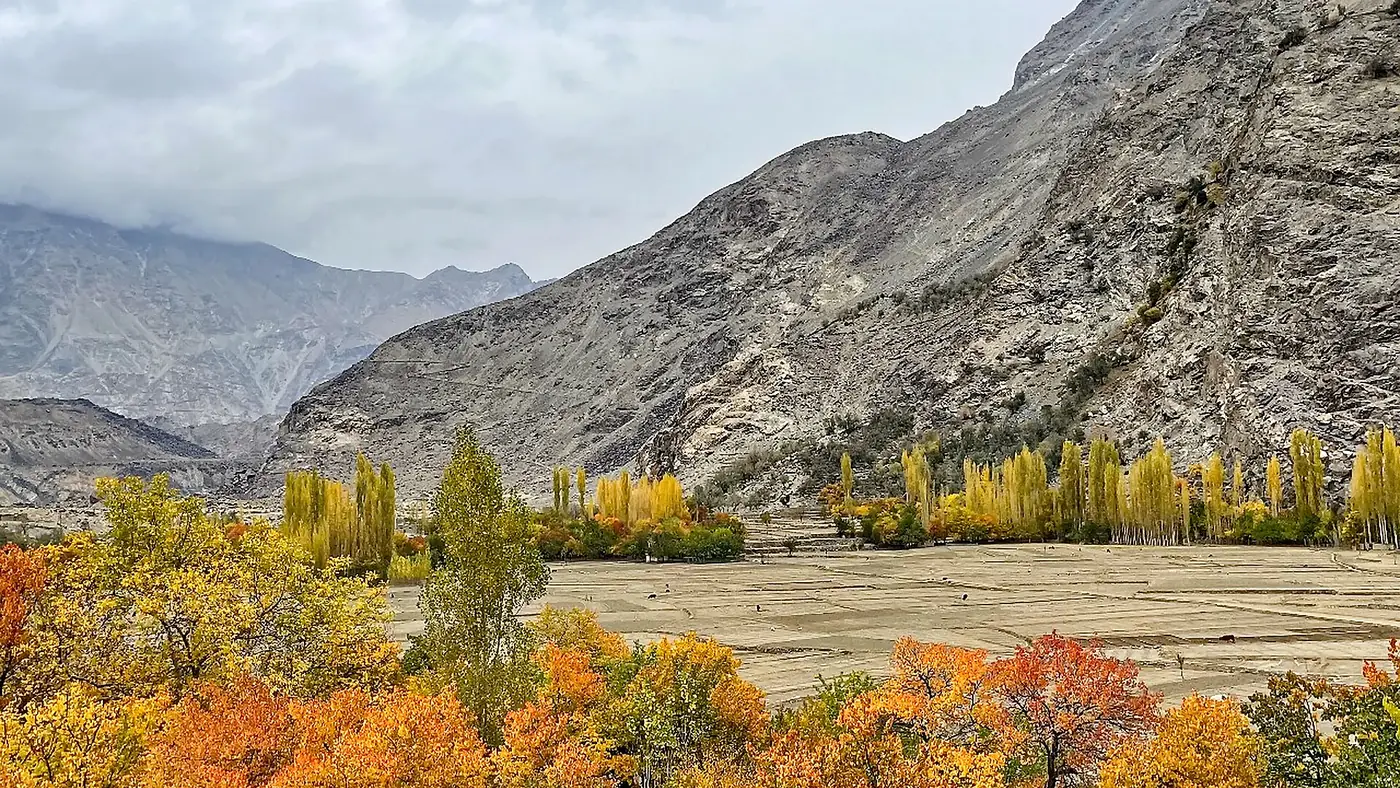
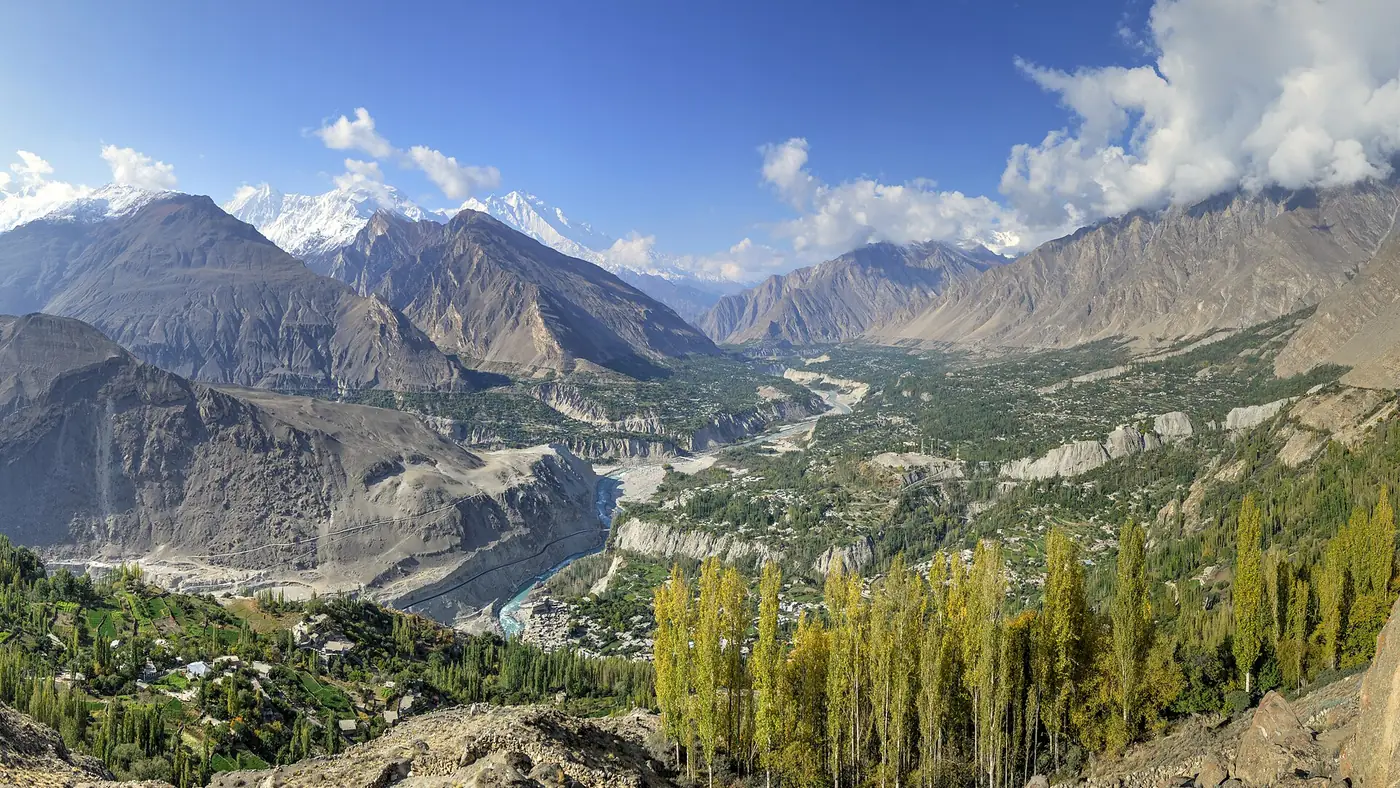
Kharmang is the least visited of Baltistan's districts. It was part of Skardu district until 2015, its headquarters is at Tolti, and its name means "valley of forts" in Balti. It runs east from Skardu along the Indus towards the Line of Control, a narrow valley of villages, apricot and apple orchards and side streams coming down from the snow.
Manthokha village sits on the main road up the valley, just beyond Mehdiabad. The waterfall is a few kilometres south of the village, up a side road through the hamlet of Madhupur, where a stream drops over a rock wall into green pastures below the mountains.
The drive from Skardu
Allow about two hours each way, a little more with photo stops.
- Leave Skardu heading east on the road along the Indus. The first stretch is shared with the road to Khaplu; our guide to the Skardu to Khaplu drive describes it.
- Stay on the Indus where the Khaplu road turns off up the Shyok. The Kargil road carries on upstream into Kharmang, past Gol and Sermik.
- Mehdiabad, about 68 km from Skardu on the tourism department's chart. Formerly called Parkuta, it is one of the main villages of the valley.
- Manthokha, a short way beyond. Turn off the main road and follow the side road up to the falls.
The tourism department describes the roads as challenging in places, and recommends a local driver and a vehicle suited to rough stretches. Ordinary cars do make the trip in summer, but a driver who knows the road makes the day easier, and hotels in Skardu can arrange one. Carry your CNIC, and fill the tank in Skardu before you set off.
The walk to the falls
From where you park, the last part is on foot: a short walk over rocky ground towards the spray, including a small suspension bridge. It is not a hike, but the rocks near the falls are wet and slippery, and the stream is cold and fast.
- Wear shoes with grip, not sandals.
- Keep children by the hand near the water and on the bridge.
- Expect to get damp close to the fall, and keep phones and cameras covered.
- Don't climb on the wet rocks beside the fall for photographs.
The fall carries the most water in early summer, when the snow above is melting. For photographs, go in the morning, before the crowds.
Trout, and where to stay
Trout by the waterfall
Kharmang is trout country. The tourism department lists trout fishing among the valley's main activities, and there are fish farms near the falls. Small restaurants near the waterfall serve fresh trout, and for many visitors this lunch is half the reason to make the trip.
Prices depend on the size of the fish and the place, so agree the price, and ask how the fish is sold, before it goes in the pan. On a busy summer weekend, order as soon as you arrive rather than after your walk.
Where to stay
Most people stay in Skardu and see Manthokha as a day trip, which is the easiest plan. Skardu has by far the widest choice of rooms, and our guide to where to stay in Skardu compares the areas.
If you want to stay out in the valley, there are a few guesthouses and hotels in Kharmang, and camping is possible near the falls. They are simple, and the tourism department advises booking ahead in the summer season. A night here suits people who want to see more of Kharmang rather than rush back to Skardu: the tourism department also lists the Khamosh (Khamush) waterfall and the Olding, Tolti and Mehdiabad valleys among the district's sights.
When is the best time to visit?
May to September is the season. The road is open, the fields are green, and the falls carry the most water in June and July.
July and August are the busiest months, especially on weekends and around Eid, when the area around the falls can be crowded. Go on a weekday and arrive by mid-morning.
September and October are quieter and cooler, usually with less water in the fall. Check that the restaurants are still open before you set off in late autumn.
Winter is a different trip. The tourism department notes that snow can restrict access, and in a cold spell the falls freeze. If you want to see the ice, go only in a settled spell, by 4x4 with a local driver, after checking the road in Skardu. Our list of places to visit in Skardu covers the sights closer to town.
A day trip from Skardu
- Leave Skardu at 8, after breakfast.
- Reach Manthokha around 10, before the day visitors, and walk to the falls.
- Trout lunch by the water around midday.
- An hour in the valley: a walk through the village fields at Manthokha or Mehdiabad.
- Back in Skardu by late afternoon, before dark.
Kharmang, the Line of Control and checkposts
Kharmang runs up to the Line of Control with Indian-administered Kargil, so expect checkposts on the road. Carry your CNIC, stop when asked, and don't photograph military posts.
The UK government advises against all travel within 10 miles of the Line of Control, so overseas visitors should check their own government's advice and how close their route runs to the line before planning a trip up the valley, and ask the police in Skardu whether any permission is needed. Going against official advice can void travel insurance.
Is Manthokha worth the drive?
It is worth it if you have four or more days in Skardu, and especially if Deosai is closed and you want a different kind of day out. The drive up the Indus is a good one, the falls are genuinely impressive in early summer, and trout by the water makes a relaxed lunch.
It is less worth it on a short trip. Four hours in the car for a waterfall and a meal is a lot when Shangrila, Upper Kachura, Shigar and the Katpana desert are all closer to Skardu. With two or three days, see those first. Our Skardu itinerary for five days shows where Manthokha fits, and our Skardu page covers the valley as a whole.
Frequently asked questions
How far is Manthokha waterfall from Skardu?
About 80 km by the tourism department's figure, roughly two hours each way on the road east up the Indus towards Kargil. Allow a full day with lunch and the walk.
How high is Manthokha waterfall?
About 55 metres, or 180 feet. It is at its fullest in June and July, when snowmelt feeds the stream.
What is the best time to visit Manthokha waterfall?
May to September, when the road is open and the water is high. Go on a weekday in July and August to avoid the busiest times.
Can you eat trout at Manthokha waterfall?
Yes. Restaurants near the falls serve fresh trout from local fish farms. Agree the price before it is cooked.
Is there accommodation near Manthokha waterfall?
There are a few simple guesthouses and hotels in Kharmang, and camping near the falls. Most visitors stay in Skardu and make it a day trip.
Does Manthokha waterfall freeze in winter?
Yes, in a cold spell in midwinter. Snow can also restrict access, so go only in settled weather with a 4x4 and a local driver.