
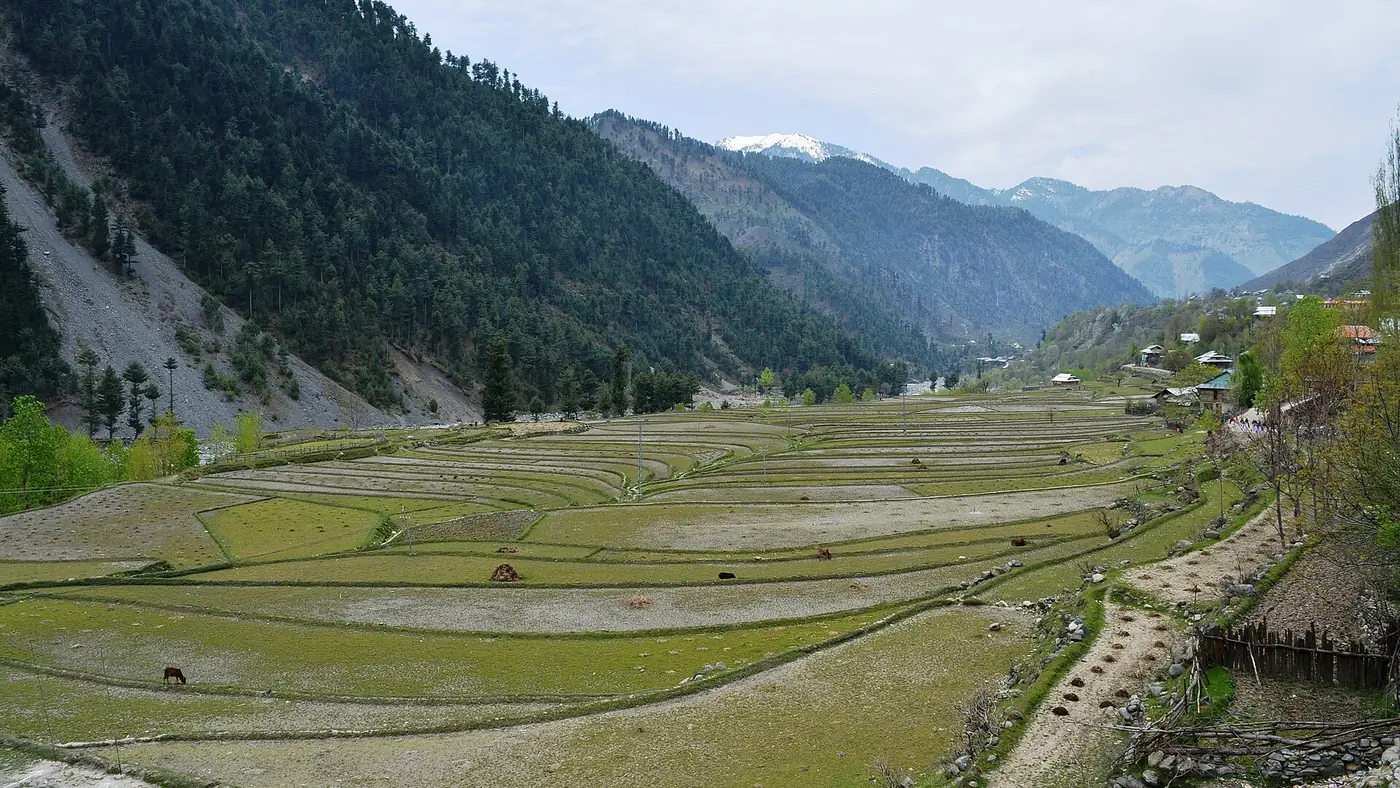

Leepa Valley's wooden houses, tall timber-and-mud structures rising three storeys or more with metal-sheet roofs, are one of the two things the valley is best known for, alongside its rice terraces. They stand in clusters across the valley's sectors, most strikingly at Nokot, and they are still lived in, not preserved as a museum piece.
This guide covers what the houses are built like, why they take this form, and how to see them without treating someone's home as a photo backdrop.
What the houses look like
The traditional Leepa house is built mainly of timber, with mud used as fill and insulation between the wooden framing, and is commonly three to five storeys high. Roofs are covered in metal sheeting rather than the flat mud or slate roofs seen elsewhere in the region, giving the houses a distinctive silhouette from a distance. Many have carved wooden balconies, window frames and doors, worked by local carpenters rather than mass produced, and the houses are usually set among walnut, apple, apricot and other fruit trees, so a cluster of them on a hillside above the rice terraces is the image most people carry away from Leepa.
Why they are built this way
The design answers the valley's climate directly. Leepa sits under heavy winter snow, and steep metal roofs shed that snow rather than letting it build up and load the structure, the way a flat roof would. Timber framing is also more forgiving than masonry in an area exposed to seismic activity; the 2005 Kashmir earthquake affected this wider region severely, and wood-framed construction generally performs better than rigid stone or brick in strong shaking. Building upward in multiple storeys, rather than spreading out, also makes sense on a valley floor where flat, farmable land is scarce and every level piece of ground is more useful as a rice terrace than as a house site.
Where to see them
Nokot is generally regarded as the sector with the most striking concentration of traditional wooden houses, often photographed alongside the terraces below them. Leepa village itself has a mix of older wooden houses and newer construction around its small bazaar, giving a sense of how the style is changing as building materials become easier to bring in. Other sectors, including Kasirkot and parts of Moji, have scattered examples as well, though in smaller numbers.
None of these are open as heritage sites; they are private homes in a working valley. Our Leepa Valley guide covers the sectors in more detail if you are planning which parts of the valley to prioritise.
Seeing them respectfully
- Treat every house as someone's home, because it is. Don't walk into a courtyard or up to a house uninvited.
- Ask before photographing a house closely, and always before photographing people. A distant shot of a hillside is different from a close-up of someone's front door.
- Keep to paths and the jeep road rather than cutting across terraces or gardens to get a better angle.
- Expect a genuine welcome if you are polite about it. Leepa is not set up for tourism in the way better-known valleys are, and a respectful approach goes further here than almost anywhere else in Azad Kashmir.
Are they at risk of disappearing?
New construction in Leepa, as in much of rural Azad Kashmir, increasingly uses concrete blocks and corrugated sheet in place of full timber framing, which is cheaper and faster to build with. Older wooden houses remain in use across the valley, particularly at Nokot, but the style is not being replicated at the same rate it once was. If seeing this specific architecture matters to your trip, it is worth doing sooner rather than assuming it will look the same in ten years.
Is this worth building a trip around?
For anyone interested in vernacular architecture, or simply in what makes Leepa look different from anywhere else in Azad Kashmir, yes, and it costs nothing extra: the houses are visible from the same jeep road and village walks that any Leepa itinerary already includes. It is not, on its own, a reason to make the long drive if the rest of the valley doesn't appeal to you. Our Kashmir destination guide has more on the wider region's traditional buildings and villages.
Frequently asked questions
What are Leepa Valley's traditional houses made of?
Mainly timber framing with mud infill, commonly three to five storeys high, with metal-sheet roofs. Many have carved wooden balconies and window frames.
Why are Leepa Valley's houses built so tall and in wood?
Timber sheds snow load well with a steep metal roof, performs better than masonry in an earthquake-prone region, and building upward saves the flat, fertile land for rice terraces rather than housing.
Where can I see the best examples of Leepa's wooden houses?
Nokot has the most striking concentration, often seen together with the terraces below. Leepa village and parts of Kasirkot and Moji have further examples.
Can visitors go inside these houses?
No, they are private homes, not heritage sites open to the public. Admire and photograph them respectfully from the road or path, and ask first if you want a closer look.
Are Leepa's traditional wooden houses disappearing?
Newer construction increasingly uses concrete and sheet materials, which is cheaper and easier to build with, so the older timber style is not being replaced at the rate it was built. Many original houses remain in use, especially around Nokot.