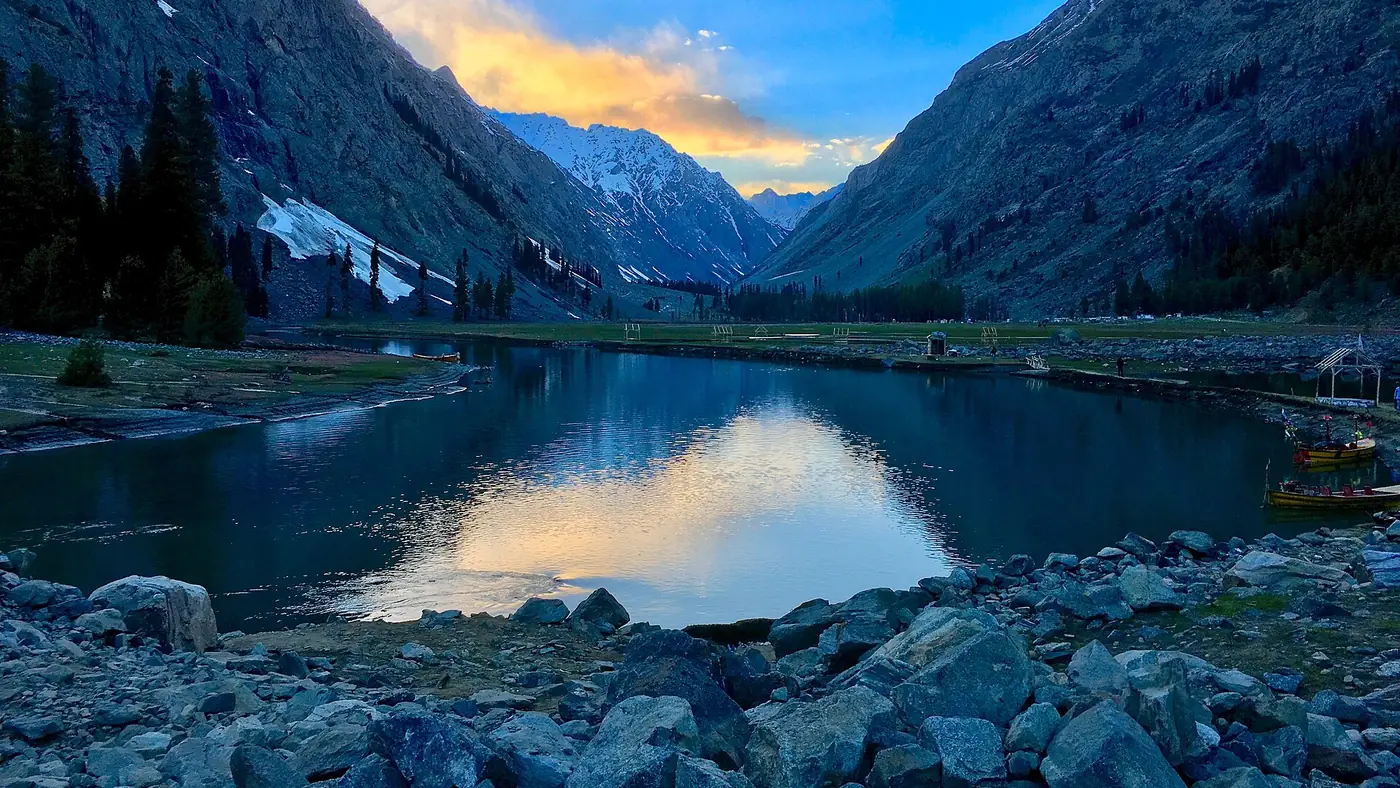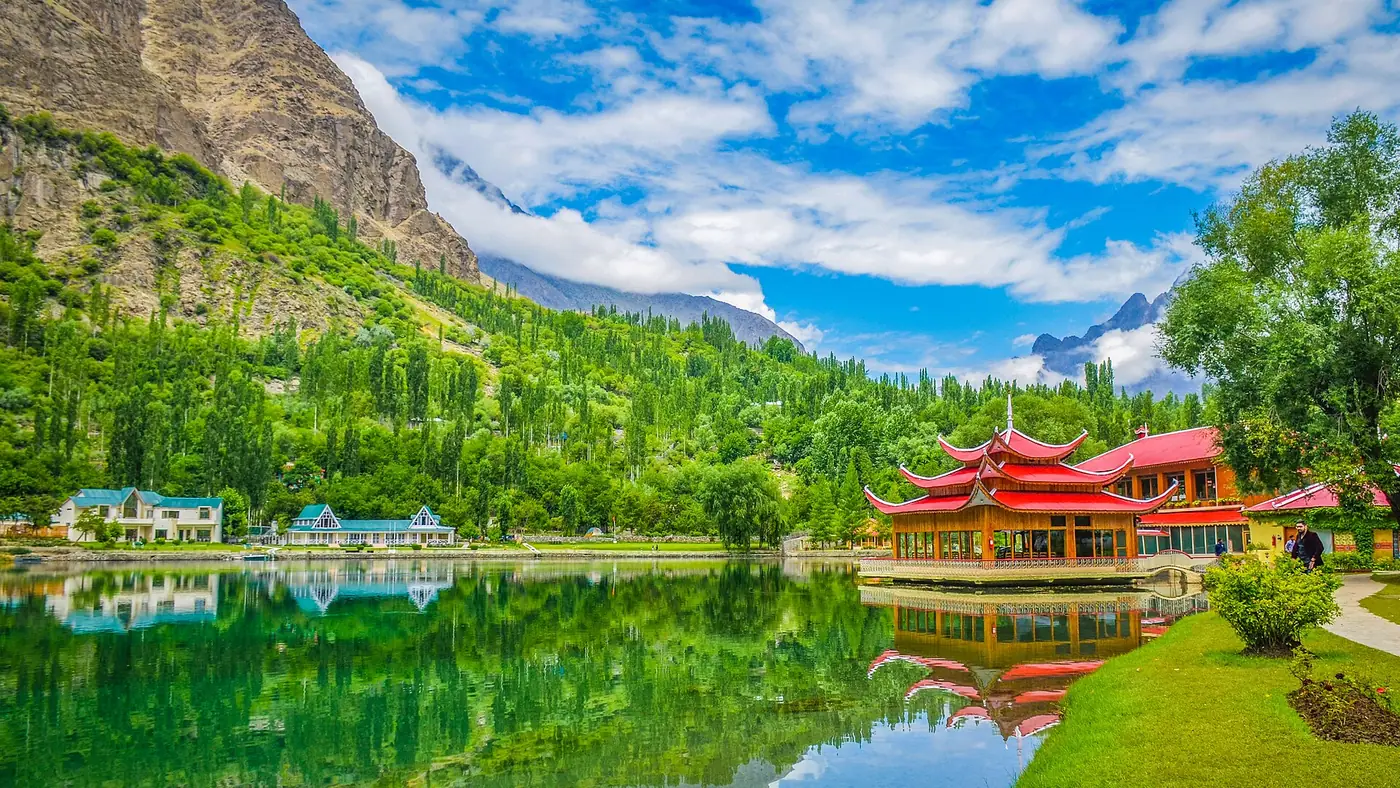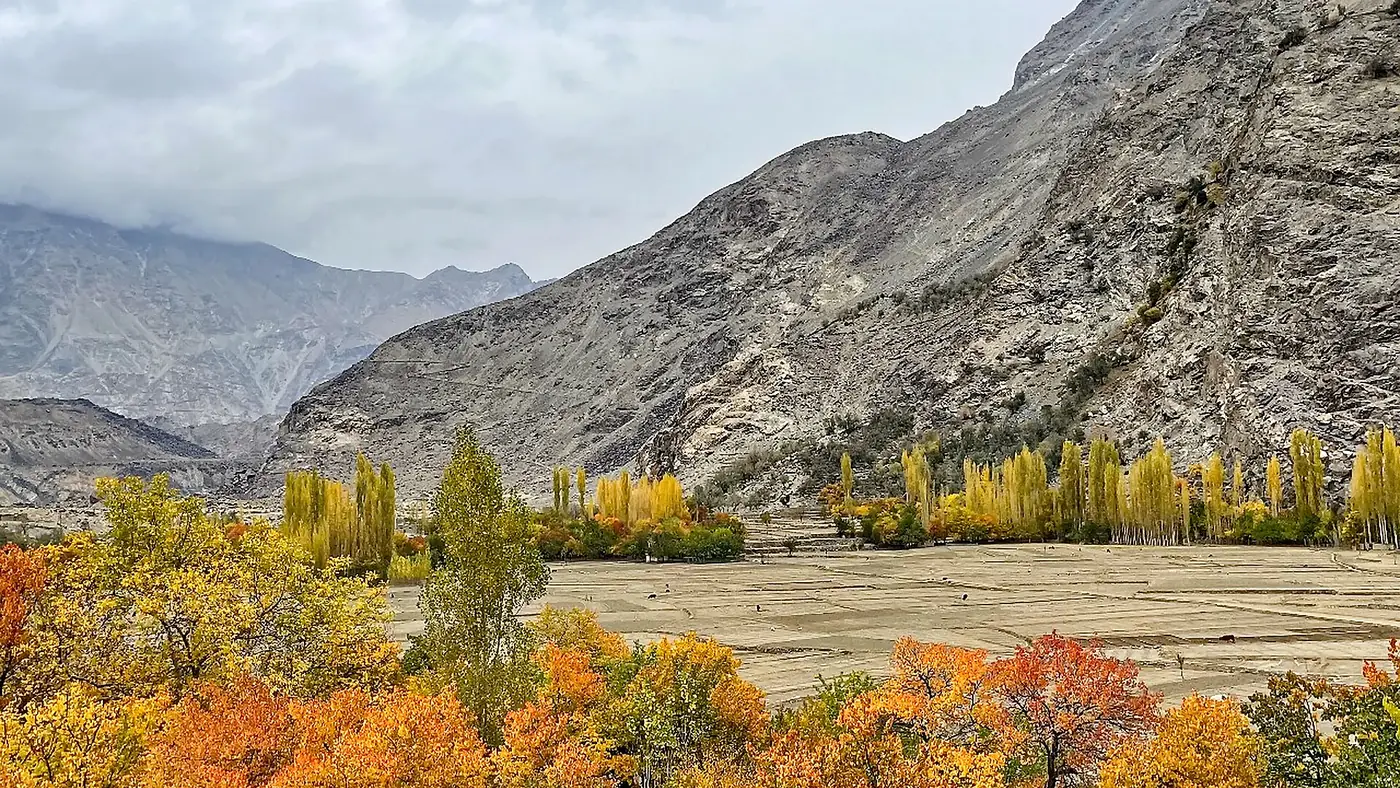
Kashmir vs Northern Areas is really a choice between a shorter, gentler trip and a bigger one. Azad Kashmir, which for most travellers means the Neelum Valley, is green, forested and lower, with the main stops between about 1,200 and 2,600 metres, and five days from Islamabad is enough. The Northern Areas, meaning Gilgit-Baltistan with Hunza and Skardu, bring the high Karakoram, 7,000 and 8,000-metre peaks and a week or more of travel. The north of Khyber Pakhtunkhwa, with Naran and Swat, sits in between. With five days and a family, go to Kashmir or Naran; with eight days or more and a wish to see the big mountains, go to Gilgit-Baltistan.
This guide compares them on the things that decide a trip: how far each is, what you see, what it costs, how safe it is and how well it suits children and older parents.
| At a glance | Neelum Valley (Azad Kashmir) | KP north (Naran, Swat) | Gilgit-Baltistan (Hunza, Skardu) |
|---|---|---|---|
| From Islamabad | Keran 6 to 7 hours; Kel a day further | Naran 6 to 7 hours; Mingora 4 to 5 | Two days by road; about 1 hour by air |
| Days for a first trip | 5 | 3 to 5 | 7 to 9 |
| Typical altitude | About 1,200 to 2,600 m | About 1,000 to 2,400 m in the towns | About 2,200 to 2,500 m in the towns |
| Highest easy day trip | Ratti Gali Lake, 3,683 m, jeep and walk | Babusar Top, 4,173 m | Khunjerab Pass, 4,693 m; Deosai, about 4,100 m |
| Scenery | River, forest, wooden villages | Lakes, meadows, forest | High peaks, glaciers, orchards, forts |
| Flights | None | None to rely on | Gilgit and Skardu |
| Main safety concern | The Line of Control | Security in Swat; monsoon floods | Landslides; the Kohistan road |
| Our tours | 5 days, from PKR 70,000 | None | 7 or 9 days, from PKR 90,000 |
What do "Kashmir" and "Northern Areas" mean?
People use both words loosely, so it helps to be precise.
Kashmir, for a trip from Islamabad or Lahore, usually means Azad Jammu and Kashmir, and above all the Neelum Valley: a river valley of about 150 km running north-east from Muzaffarabad through Keran, Sharda and Kel to Taobat. Other parts of AJK, such as Rawalakot and the Banjosa lake near it, make shorter weekend trips.
Northern Areas is the old name for Gilgit-Baltistan, and people still use it for the whole mountain north. In practice it covers Hunza, Skardu, Fairy Meadows and Astore in GB, and, in everyday speech, the mountain valleys of Khyber Pakhtunkhwa as well: Naran and the Kaghan valley, Swat and Kalam, Kumrat and Chitral.
So the real comparison is three-way: Neelum, the KP valleys, and Gilgit-Baltistan.
How far is each from Islamabad?
Neelum. There is no motorway. You go through Murree to Kohala and Muzaffarabad, about three to four hours, then up the Neelum road. Keran is roughly six to seven hours from Islamabad, Sharda about two hours more and Kel another hour or so. Above Athmuqam the road is narrow and broken in places, so the valley rewards slow driving and short daily stages.
The KP north. Motorways do most of the work. Mingora in lower Swat is four to five hours away, and Naran six to seven, with the Hazara Motorway taking you as far as Mansehra. Kalam and Kumrat are longer, at seven to ten hours.
Gilgit-Baltistan. Hunza and Skardu are each about two days by road, 650 to 700 km, usually with a night in Chilas. The alternative is to fly: Skardu has flights from Islamabad on PIA, Airblue and AirSial, and Gilgit on PIA, both about an hour and both cancelled often in bad weather.
The practical difference: in Neelum and the KP valleys you lose about a day each way to the road. In Gilgit-Baltistan you lose two each way by road, or you pay for flights and keep a spare day for cancellations.
Scenery: forest and river, or the high mountains?
Neelum is about water and trees. The road follows the river for its whole length, past deodar and pine forest, waterfalls and orchards, through villages of wood and stone. The mountains are there, but the valley feels enclosed and green rather than vast. The best-known sights are the riverside at Keran, the ruins of Sharada Peeth at Sharda, and the meadow village of Arang Kel above Kel, reached by a small cable car and a steep walk.
The KP north mixes the two. Naran has open alpine country above the tree line, with Lake Saif-ul-Malook, Lulusar Lake and the Babusar Pass. Swat has orchards, Buddhist sites and, in its upper reaches around Kalam, deodar forest very like Neelum's.
Gilgit-Baltistan is on another scale. Rakaposhi rises almost 6,000 metres from its base beside the Karakoram Highway, K2 and three other 8,000-metre peaks lie beyond Skardu, and the valleys are dry, rocky and huge, with green only where there is irrigation. Hunza adds centuries-old forts and terraced villages; Skardu adds cold desert and the Deosai plateau. For comparing the two main GB bases, see our Hunza vs Skardu guide.
If the picture in your head is pine trees and a river, Neelum will give you more of it than GB. If it is snow peaks and glaciers, only GB will do.
What does each cost?
The biggest cost difference is the length of the trip and how you get there.
- Neelum and Naran by car. From Islamabad the return drive plus local running is roughly 600 to 700 km for either, so fuel for a family car is a modest cost, shared across the group. Rooms are broadly similar in price at each level, and both get more expensive at Eid. Neelum usually needs a night or two more than Naran because the road is slower.
- Gilgit-Baltistan by car. A five-day Hunza trip from Islamabad covers about 1,800 km. At around PKR 390 a litre in September 2026, that was PKR 60,000 to 70,000 of petrol for one car, before tolls. Add two nights in Chilas on the way.
- Gilgit-Baltistan by air. A return flight from Islamabad to Skardu cost roughly PKR 30,000 to 90,000 per person in 2026, depending on the airline and how early you booked. That is the single largest item on a short trip.
For a sense of the difference in packaged form, our own tours start at PKR 70,000 per person for the five-day Neelum Valley Escape, and PKR 90,000 per person for either the seven-day Skardu and Deosai trip or the nine-day Gilgit, Hunza and Khunjerab tour. All prices change, so treat them as a guide.
Is it safe?
Each region has its own issue, and it is worth knowing which applies to your trip.
Neelum and the Line of Control. The valley runs along the LoC, which in places follows the river itself. In May 2025, during the confrontation between Pakistan and India, police and soldiers turned tourists back and the valley's hotels stood empty until the ceasefire. Protests in Azad Kashmir have also disrupted travel at times. The valley reopened after the ceasefire, but check the news before leaving, carry your CNIC and follow instructions at checkpoints. Foreign governments, including the UK, advise their citizens against all travel within 10 miles of the LoC, so foreign nationals should check their own advice and the NOC rules.
The KP north. The Kaghan valley and Naran see huge numbers of visitors with few problems beyond traffic and weather. Swat is a harder call in 2026: on 2 August a suicide bombing outside the police station at Kabal, across the river from Mingora, killed 17 people, and the UK advises its nationals against all travel to Swat and Dir. Pakistani tourists still go in large numbers, but read the news in the week before you travel.
Gilgit-Baltistan. The valleys themselves are among the calmest places in the country for visitors. The concern is the road in: the Karakoram Highway through Kohistan and Diamer is slow and prone to landslides, and in December 2023 gunmen attacked a passenger bus near Chilas. Flying in to Skardu or Gilgit avoids that stretch.
Everywhere: July and August bring monsoon landslides and flash floods, and the rivers are fast and cold all summer. Keep a spare day, and keep children well back from the water.
Which suits families and older parents?
Neelum is kindest on the body. The altitude stays low enough that almost no one has trouble, the evenings are cool rather than cold in summer, and there are no 4,000-metre passes unless you choose Ratti Gali. The difficulties are the long, bumpy hours on the valley road and simpler hotels higher up. The Arang Kel walk is steep, so allow time for grandparents, or have them stay in Kel.
The KP north is the easiest to reach. Swat's lower valley is low and has towns, shops and pharmacies all along it; Naran is higher and colder at night, and Babusar Top is a big jump in a few hours, but it is easy to skip.
Gilgit-Baltistan needs the most thought. The towns sit at 2,200 to 2,500 metres, which most families manage well, but the headline day trips go to 4,000 metres and more: Khunjerab in Hunza, Deosai above Skardu. The two days of driving each way are hard on small children. Flying to Skardu solves the drive, and a Skardu or Hunza trip without the high day trips is still very good.
For anyone with a heart or lung condition, Neelum is the safest choice of the three. Ask a doctor before any trip that includes Khunjerab, Deosai or Babusar.
When can you go?
- Neelum: roughly April to October, with May to September best. Ratti Gali's jeep track is open only in high summer, about July to September. The lower valley can be reached in winter, but snow often closes or limits the road beyond Kel.
- KP north: Naran is open from about May to November; Swat works in every month, with snow at Malam Jabba and Kalam in winter.
- Gilgit-Baltistan: Hunza and Skardu are open all year. April brings the blossom, June to September opens Deosai and the high passes, and late October brings autumn colour.
Which trip suits you?
- Five days, young children or grandparents, first trip north: Neelum, or Naran if you want lakes.
- A long weekend: lower Swat or Naran. Neelum really needs five days.
- A week or more, and you want the high mountains: Gilgit-Baltistan, Hunza for a road trip, Skardu if you are flying.
- Travelling in April or late October: Gilgit-Baltistan for blossom or autumn colour.
- Anyone with a heart or lung condition: Neelum.
- Forest and river over peaks and glaciers: Neelum.
- You have been to Neelum and Naran already: Gilgit-Baltistan is the next step.
If you are weighing Neelum against Naran specifically, our Neelum Valley vs Naran comparison goes into the roads, hotels and lakes in detail, and our Kashmir page has more on the valley itself.
Frequently asked questions
Which is better, Kashmir or the Northern Areas?
Neither is better outright. Kashmir, meaning the Neelum Valley, is the better short, green and low-altitude trip. Gilgit-Baltistan is the better choice for high mountains and a longer trip of a week or more.
Which is closer to Islamabad, Neelum or Hunza?
Neelum. Keran is about six to seven hours from Islamabad by road, while Hunza is two days' drive. Skardu is an hour's flight, but flights are often cancelled for weather.
Is Azad Kashmir safe for tourists?
Pakistani tourists visit the Neelum Valley in large numbers, but it lies on the Line of Control and was closed to visitors for a time in May 2025. Check the news before you go and follow instructions at checkpoints.
Is Kashmir cheaper than the Northern Areas?
Usually. A Neelum trip is shorter and needs no flights, so it costs less in total than a week in Hunza or Skardu. Night for night, hotels and food cost about the same.
Can you see snow in Kashmir in summer?
Only on the high ground. The peaks above the upper Neelum keep their snow into summer, and there is often snow around Ratti Gali Lake when its track opens, but the valley floor is green from May onwards.
How many days do you need for Kashmir and the Northern Areas together?
At least twelve days for Neelum and one region of Gilgit-Baltistan, because there is no quick link between them. Most people do them as separate trips.