Driving the Karakoram Highway at night is best avoided, and the Gilgit-Baltistan tourism department advises against it directly. Rockfall is harder to see, unlit trucks and broken road edges catch tired drivers out, and if something goes wrong, help is further away than it would be in daylight. Bus companies still run overnight services on the route, but that is a different kind of risk, spread across an experienced driver and a large vehicle, not something to copy in a private car.
This guide looks at what actually makes the KKH more dangerous after dark, how checkposts and night buses handle it, and the situations where an evening or early-morning stretch of driving is hard to avoid.
| At a glance | |
|---|---|
| Road | N-35, Hasan Abdal to Khunjerab |
| Official advice | Avoid night travel, especially in bad weather |
| Highest risk after dark | Kohistan (Besham to Chilas) and any landslide-prone section |
| Night buses | NATCO runs overnight services from Rawalpindi to Gilgit and Skardu |
| Checkposts | Open around the clock; ID needed at each one |
| Emergency | Rescue 1122; Tourist Police 1422 inside Gilgit-Baltistan |
Why night driving is riskier here
The specific hazards of the KKH don't go away after dark, they just get harder to see and react to in time.
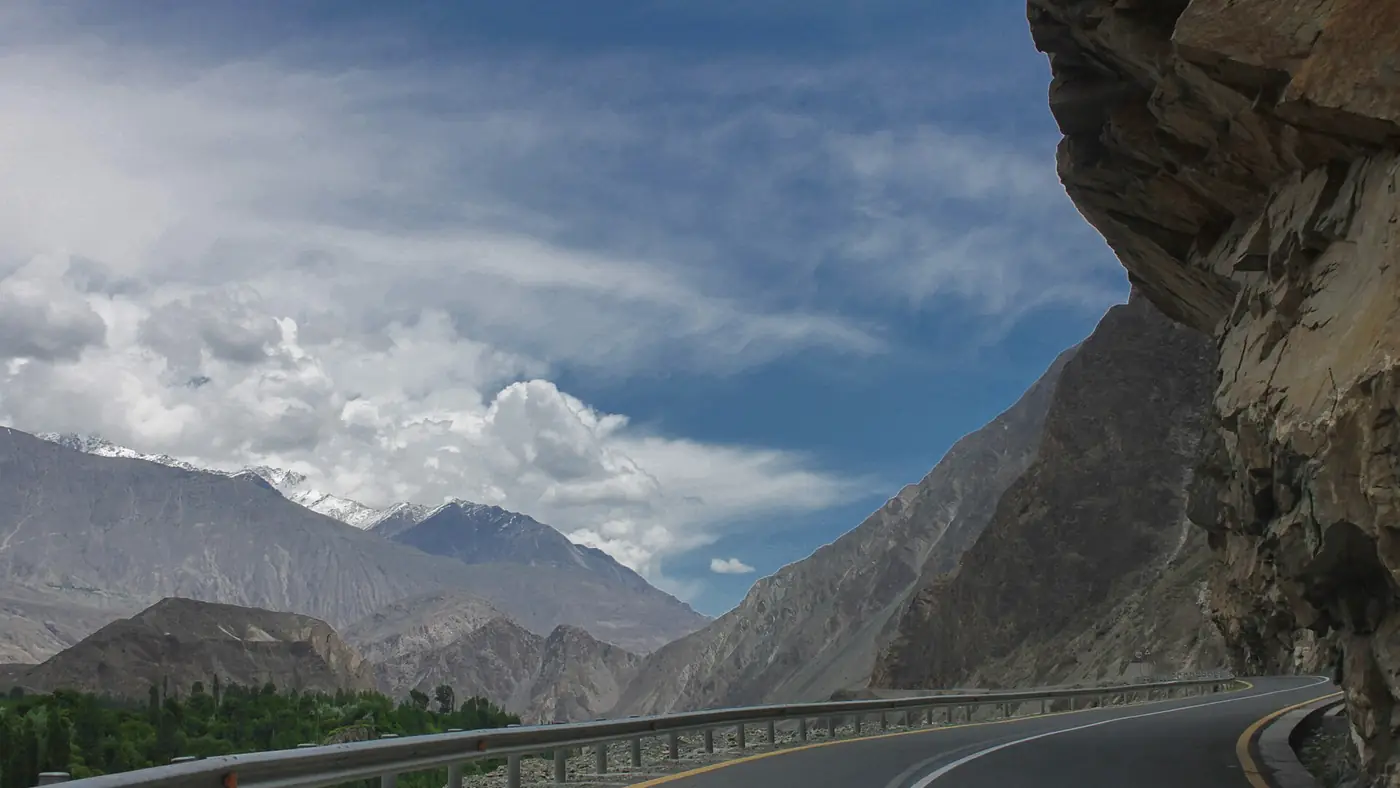
- Rockfall and debris. A scatter of fresh stones on the tarmac is an obvious warning sign in daylight and easy to miss in headlights, especially on the blind bends that make up much of the road.
- Unlit or broken-down trucks. The highway carries heavy goods traffic to and from the border, and trucks stop where they break down, often without proper lights or a warning triangle out.
- Edges without barriers. Long stretches run above the Indus or Gilgit river gorges with a drop and no barrier. A moment's misjudgement that would be a scare in daylight can be much worse at night.
- Tiredness. Most serious KKH accidents are single vehicles leaving the road, and fatigue after a long day's drive is a common factor. Night driving usually comes at the end of a day that started early, when a driver is already tired.
- Slower help. Rescue and police response is slower after dark on a road with patchy phone signal for much of its length.
What checkposts do at night
Police and army checkposts along the KKH operate around the clock; they do not close at night. Every vehicle stops, and you show CNIC (or passport and visa for foreign nationals) at each one. This applies whether you are driving during the day or after dark, and it is one reason night driving does not save as much time as the distance on the map suggests.
Checkpost staff are used to buses passing through at night, since the scheduled services run then, but a private car arriving after dark, especially through Kohistan, will usually be asked more questions than one passing through in daylight. It is a routine safety check, not a sign that you are doing anything wrong, but expect it to add time.
Night buses: how they manage it
NATCO, the government-owned bus operator, runs services from Rawalpindi's Pirwadhai terminal to Gilgit and Skardu that depart in the evening and travel through the night, arriving the following day. These are long-established routes with drivers who know the road, and the buses travel in convoy-like patterns past the checkposts that register every passenger.
That is a different proposition from a private car making the same drive after dark. A bus driver on this route has typically done the trip hundreds of times, drives to a fixed schedule rather than pushing to make up time, and is one of a rotating crew rather than someone who has already been awake since 6 am. None of those things are true for most private travellers, which is the real reason the advice differs.
When night travel is hard to avoid
A few situations come up in practice:
- A landslide clears late. If a blockage at Tatta Pani or elsewhere is cleared in the evening, traffic that has been waiting all day moves through after dark because there is no other choice. This is the road catching up with itself, not a plan, and it happens most in July and August.
- A flight is cancelled. Flights to Gilgit and Skardu are weather-dependent, and if yours is grounded and you still need to reach Hunza or Skardu for a fixed date, a night drive can end up being the only way to keep to it.
- The last stretch into a town after dusk. Arriving at your hotel an hour after sunset, having started early and been slowed by a stop or a queue, is different from choosing to drive for hours in full darkness. It is worth avoiding, but it is not the same risk as a long night drive through Kohistan.
If you have no choice
- Go slower than you think you need to. Speed is the biggest factor turning a manageable road into a dangerous one.
- Use full beam whenever there is no oncoming traffic, and dip early on bends.
- Keep more distance from the vehicle ahead than in daylight; braking distances and reaction time both suffer.
- Stop somewhere safe rather than push through tiredness, at a hotel or even a checkpost, rather than drive on while struggling to concentrate.
- Tell someone your route and expected arrival time, since phone signal is unreliable for long stretches.
Every itinerary we build ends the day's driving before dark, with a buffer for the delay, a checkpost queue, a slow truck, a short closure, that is normal on this road. Our guide to driving on the Karakoram Highway covers the daytime hazards in detail, and our travel guide has more on planning safely across the north.
Frequently asked questions
Is it legal to drive the Karakoram Highway at night?
Yes, there is no blanket ban on private vehicles. Checkposts operate around the clock and process night traffic, including the scheduled bus services, but the tourism department advises against it for safety reasons rather than legal ones.
Do buses travel the KKH at night?
Yes. NATCO runs overnight services from Rawalpindi's Pirwadhai terminal to Gilgit and Skardu, departing in the evening and arriving the next day, with experienced drivers who know the route.
Which part of the KKH is most dangerous at night?
Kohistan, between Besham and Chilas, where the road is narrowest and landslides are most frequent. Any section prone to rockfall carries more risk after dark, since debris on the road is harder to spot.
What should I do if a landslide clears after dark and I have been waiting all day?
If you must move at night, drive slowly, keep well back from other vehicles, and consider waiting until first light if you have anywhere safe to stop rather than pushing on through Kohistan in full darkness.
Are checkposts open at night on the KKH?
Yes, they operate around the clock. Carry your CNIC, or passport and visa if you are a foreign national, since you will stop at each one regardless of the hour.
Is the Karakoram Highway route safe for overseas visitors?
Pakistani travellers use it all year, but as of September 2026 the UK government advises against all travel on the Karakoram Highway between Mansehra and Chilas, through Besham and Dasu. In summer the road over the Babusar Pass avoids that stretch. If you hold a foreign passport, check your own government's advice before you go, because travelling against it can void your insurance. Everyone should check local news and road conditions before setting out.