The Islamabad to Hunza bus actually leaves from Rawalpindi. Most coaches go from the Pir Wadhai terminal in the afternoon or evening and run overnight up the Karakoram Highway. NATCO, the Gilgit-Baltistan government's transport company, runs direct coaches to Aliabad in central Hunza, and Mashabrum Tours also sells seats through to Hunza. Allow roughly 18 to 22 hours when the road is clear. The other way is to take one of the more frequent Gilgit coaches and cover the last 100 km by shared van.
This guide compares the two, then covers fares, booking, the ride itself, arriving in Aliabad and getting home again.
| At a glance | |
|---|---|
| Direct operators | NATCO and Mashabrum Tours; Faisal Movers in some summers |
| Leaves from | Pir Wadhai bus terminal, Rawalpindi |
| Departures | Afternoon and evening; NATCO was listing around 4 pm and 9 pm in 2026 |
| Arrives | Aliabad, on the KKH just below Karimabad |
| Journey time | Roughly 18 to 22 hours, longer if the road is blocked |
| Via Gilgit | Overnight coach to Gilgit, then 2 to 3 hours by shared van |
| Booking | NATCO through Bookme; any operator at the terminal or by phone |
| Papers | CNIC; foreign nationals a passport, visa and photocopies |
Direct coach or change in Gilgit?
Both follow the same road through Besham, Dasu and Chilas. The difference is what happens at Gilgit.
| Direct to Hunza | Change in Gilgit | |
|---|---|---|
| Departures | Fewer, so seats sell out first | More, from several operators |
| Changes | None; you stay on to Aliabad | Coach to Gilgit, then a shared van |
| Luggage | Stays in the hold | Moved from coach to van roof |
| Cost | One ticket | Coach fare plus the van fare |
| Best for | Getting there in one go | Flexibility, or a night's rest in Gilgit |
Go direct if you can get a seat. Go via Gilgit when the direct coaches are full, when you want a particular departure time, or when you would rather break the journey. The Gilgit coaches are compared in our Rawalpindi to Gilgit bus guide.
From Gilgit, shared vans run up the highway to Aliabad in about two to three hours. They leave when every seat is full rather than to a timetable, and departures thin out after early afternoon, so if your coach reaches Gilgit late, stay the night and take a morning van. Our guide to public transport in Gilgit-Baltistan explains how the vans and stands work.
Who runs buses from Rawalpindi to Hunza?
NATCO, the Northern Areas Transport Corporation, was set up in 1974 and is owned by the government. Its network runs from Rawalpindi through Gilgit to Hunza and on towards Sost, and it has a sub-office in Hunza. Its Hunza coaches were listed leaving Pir Wadhai at around 4 pm and 9 pm in 2026, but timings change with the season. NATCO has long been the operator foreign nationals are directed to on this route, so check with it first if you are booking for overseas guests.
Mashabrum Tours, a private Gilgit-Baltistan company, runs Daewoo coaches from Pir Wadhai to Gilgit, Hunza, Gahkuch and Skardu. Book at its Pir Wadhai counter or by phone.
Faisal Movers launched an Islamabad to Hunza service by way of Naran and the Babusar Pass in 2019. Whether it runs in a given summer, from which terminal and at what fare has varied, so check with the company before planning around it. A route over Babusar can only run while the pass is open, roughly June to October.
Fares and how to book
Fares on this road rise with fuel prices, and the figures online disagree, so treat any number as a guide. NATCO's Rawalpindi to Gilgit seat was listed at about PKR 5,500 one way in August 2026, and a through seat to Hunza costs more on the same operator. Via Gilgit, add the van fare. Hunza fares of PKR 3,000 to 4,000 still appear on booking sites and blogs, but they predate the latest rises.
Ways to book:
- Bookme, online or in the app. NATCO sells its seats through Bookme, paid by card, JazzCash, Easypaisa or bank transfer, and you choose your seat.
- At Pir Wadhai. You can often buy on the day, but in summer, before Eid and on long weekends the Hunza coaches can sell out, so book a day or two ahead.
- By phone. NATCO lists its Rawalpindi, Gilgit and Hunza office numbers on the NATCO website.
When you book, ask which coach is running that night and whether it goes all the way to Aliabad. If you are staying in Gulmit or Passu, ask too whether it carries on towards Sost, which saves a change.
The overnight ride
An afternoon departure takes the Hazara Motorway in daylight, crosses Kohistan in the dark and reaches Gilgit and the Hunza valley the next day. If all goes well you are in Aliabad around the middle of the day. Meal stops, tea breaks and police checkposts break the night up, so sleep comes in short pieces.
- Sit in the front half. The back rides roughest on the Kohistan bends and is the worst place for anyone prone to travel sickness.
- Keep a warm layer with you. Between the air conditioning and the mountain air, the coach is cold by the early hours.
- Carry water and snacks, since stops are at the driver's pace.
- Charge everything before you leave. Don't count on a working socket, and expect no signal for long stretches between Besham and Chilas.
Our travel guide covers the rest of planning a trip north.
Arriving in Aliabad
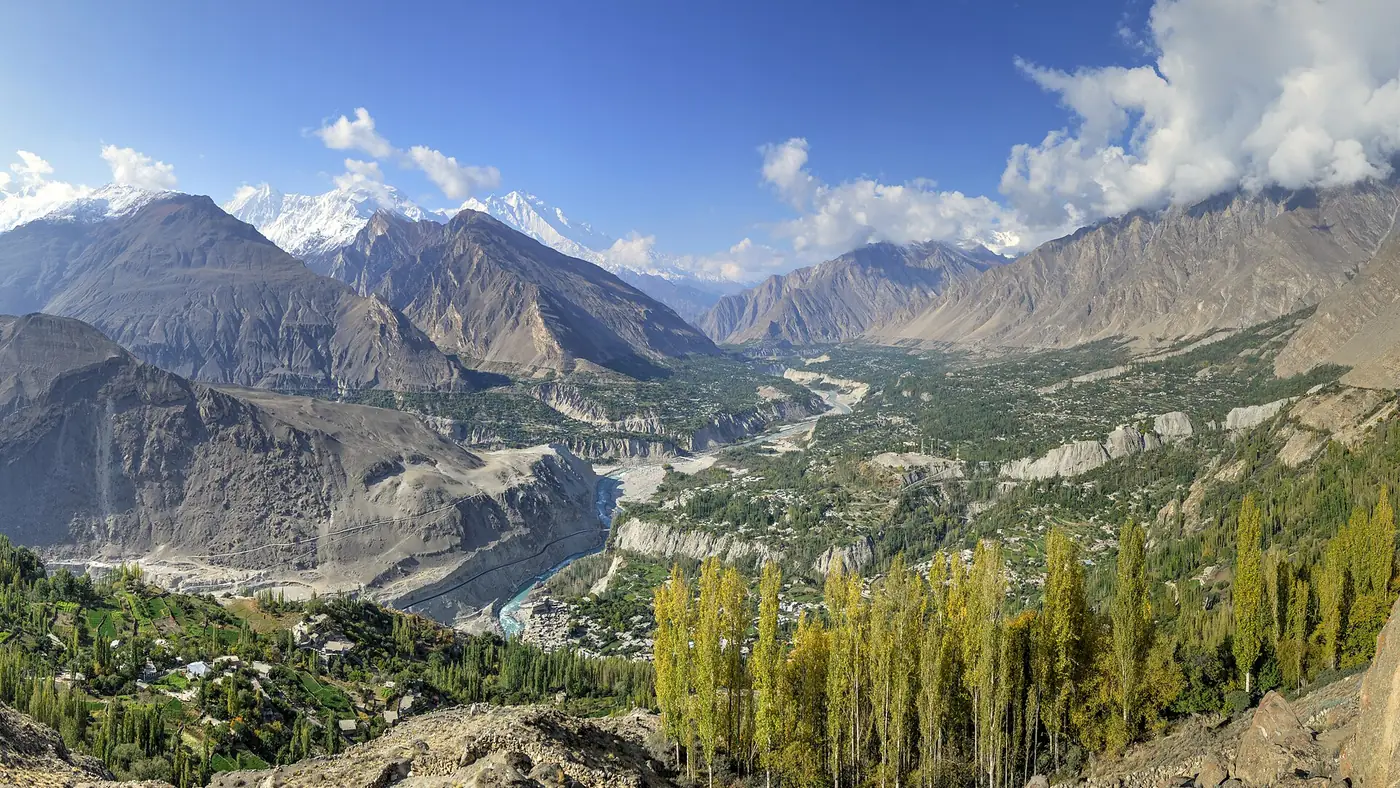
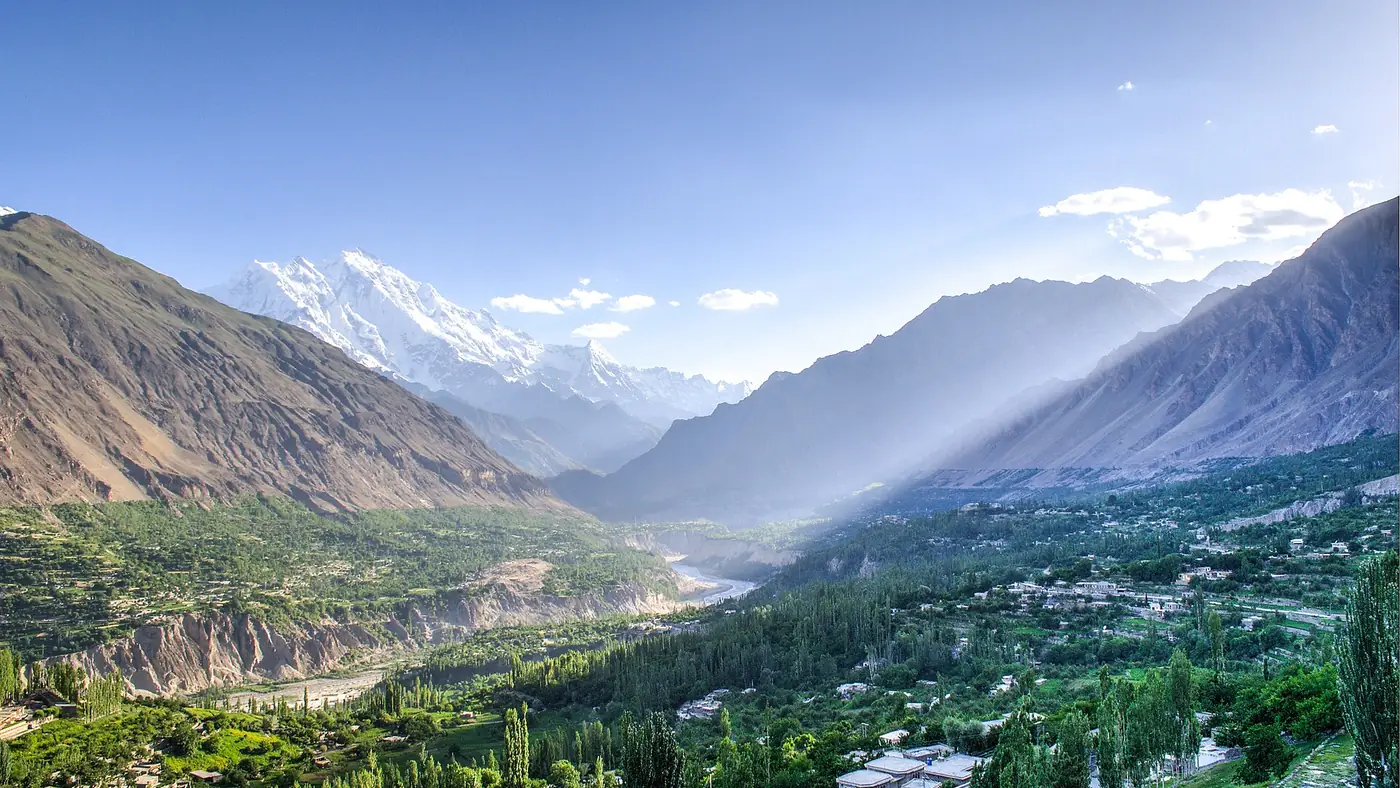
Aliabad is the market town on the highway in central Hunza, at about 2,200 metres, and it is where the long-distance coaches stop. Karimabad, where most hotels are, is a short, steep drive up the hill by local pickup or taxi; ask your hotel in advance whether it can send a car. For Gulmit or Passu, carry on up the highway through the Attabad tunnels by van or taxi, about an hour or a little more. Our guide to where to stay in Hunza compares the bases.
Give yourself an easy first afternoon. After a night without real sleep and a climb from Rawalpindi's 500 metres to over 2,000, most people feel flat and a little breathless. A walk through the bazaar and an early night is enough.
The journey back
Book your return seat as soon as you know your dates, on Bookme or at the operator's office in Hunza, and ask there for the day's departure time. If the direct coaches are full, take a morning van down to Gilgit and board an evening coach from there.
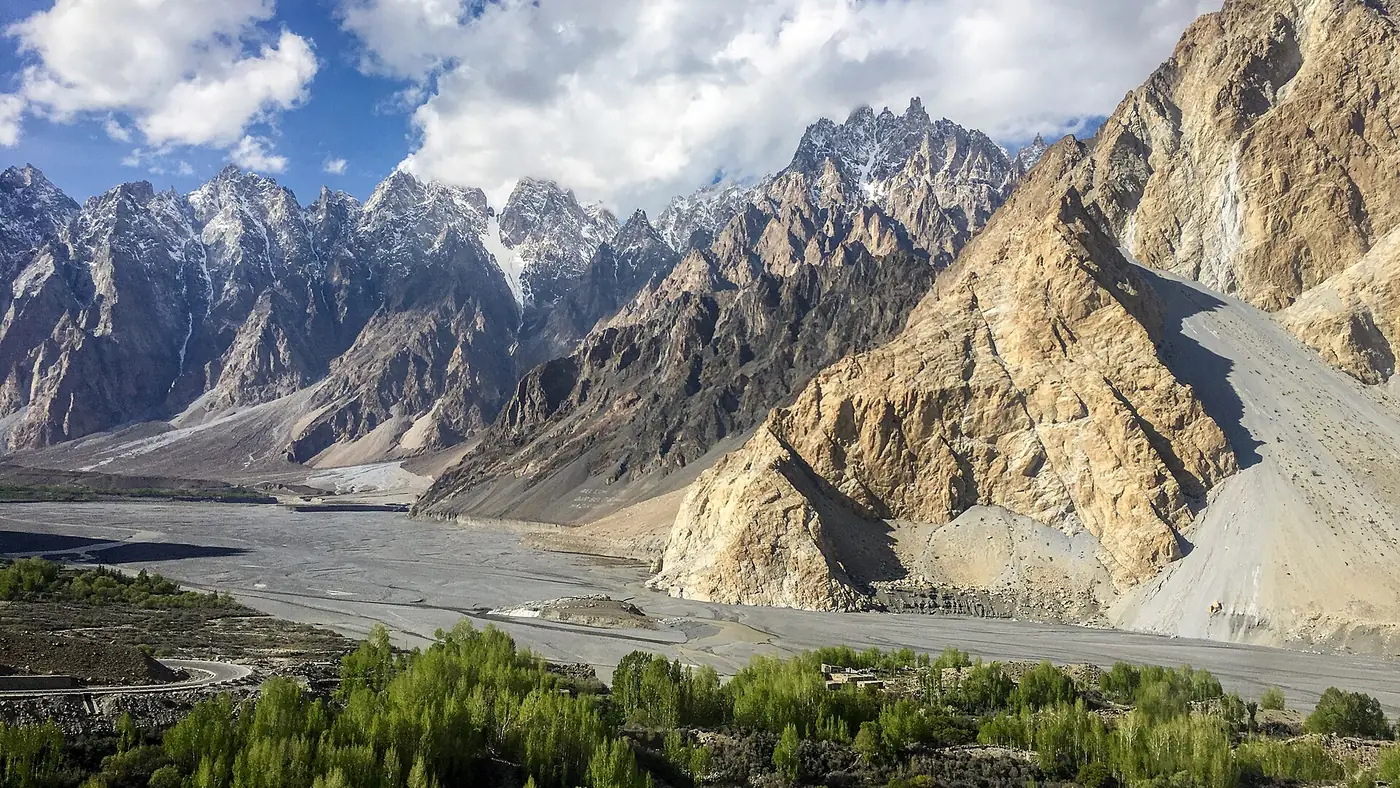
Keep a spare day before anything fixed at the other end, such as work, school or a flight abroad. The Karakoram Highway closes for landslides several times a year, usually for hours and sometimes for longer, and not only for weather: in April 2026 a protest by people affected by the Diamer-Bhasha dam blocked it near Chilas for about two days, stranding passengers on both sides. Our Islamabad to Hunza road guide explains what to do when the road closes.
Is the bus safe?
Most journeys are simply long and tiring. The UK government currently advises against all travel on the Karakoram Highway between Mansehra and Chilas, the stretch the coaches cross overnight. In December 2023 gunmen attacked a passenger coach near Chilas and killed ten people. Pakistani travellers still use the route every day; check local news and the road situation before you leave, and follow what the police say at checkposts. Overseas visitors should know that their government's advice may say not to go, and that travelling against it can void their insurance.
Choose an established operator, wear a seatbelt where there is one, and avoid 9 and 10 Muharram, when roads and mobile service in Gilgit-Baltistan are often restricted.
Should you take the bus?
The bus suits solo travellers, students and couples on a budget. For one or two people it costs far less than fuel, tolls and two nights on the road, and nobody has to drive Kohistan.
It suits families much less. Twenty hours in a coach seat is hard on small children and older parents, and in Hunza you still need transport for Attabad, Passu and Khunjerab. A car with a driver, or a flight to Gilgit and a hired car from there, is usually worth the extra.
A sensible middle way is to take the bus up and hire a car and driver in Karimabad for day trips. Our nine-day Gilgit, Hunza and Khunjerab tour begins in Gilgit, so you can arrive off the overnight coach and leave the driving in the valley to us.
Frequently asked questions
Is there a direct bus from Islamabad to Hunza?
Yes. NATCO and Mashabrum Tours run direct overnight coaches from the Pir Wadhai terminal in Rawalpindi to Aliabad in central Hunza. There are fewer departures than to Gilgit, so book ahead in summer.
How long does the bus take from Islamabad to Hunza?
Roughly 18 to 22 hours to Aliabad when the Karakoram Highway is clear. Landslides and road closures can add hours or, occasionally, days.
What is the bus fare from Islamabad to Hunza?
Fares change with fuel prices. NATCO's seat to Gilgit was about PKR 5,500 in August 2026 and a seat through to Hunza costs more, so check the live fare on Bookme or with the operator.
Where does the bus stop in Hunza?
In Aliabad, on the Karakoram Highway. Karimabad is a short ride up the hill, and Gulmit and Passu are about an hour further up the highway.
Can I book the Hunza bus online?
NATCO seats can be booked on Bookme's website and app, paid by card or mobile wallet. Other operators mostly sell at their Pir Wadhai counters and by phone.
Is it better to take the bus to Gilgit or straight to Hunza?
Straight to Hunza if a seat is available, because it saves a change and a van ride. Go via Gilgit when the direct coaches are full, or when you want a night's rest before the last leg.