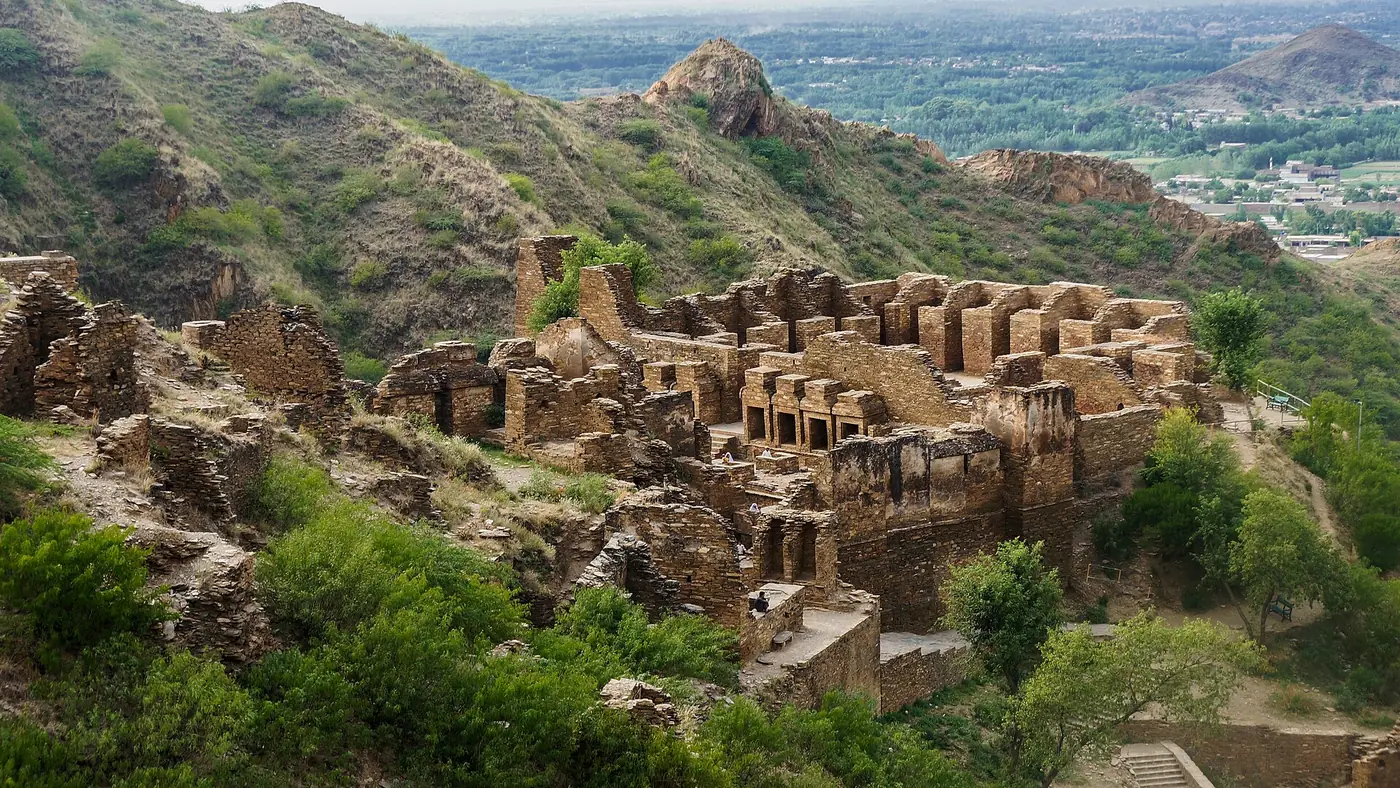
The Hund Museum stands on the bank of the Indus River in Swabi district, in the village where Alexander the Great is said to have crossed the river in 327 BC on his way into the subcontinent. Opened in 2009, it displays around 800 artefacts recovered from the ruins of the old town beside it, spanning the Kushan, Hindu Shahi and early Islamic periods, and a Corinthian column near the entrance marks Alexander's stay. Allow about an hour for the museum, and a little longer if you also want to see the riverbank and the fort ruins.
This guide covers what is on display, the Alexander story, the site around it, and how to get there from Swabi and Mardan.
| At a glance | |
|---|---|
| What it is | Archaeology museum on the Indus, with ruins of the old town of Hund beside it |
| Where | Hund village, Swabi district, on the right bank of the Indus |
| Opened | 2009 |
| Collection | About 800 artefacts, late Kushan to Mughal period |
| Time needed | About an hour for the museum; longer with the riverbank and fort |
| From Swabi | About 35 minutes by road |
Why Hund matters
Hund sits roughly halfway between Attock and the Tarbela Dam, at one of the traditional crossing points of the Indus. Alexander the Great is recorded as having passed through and spent a night here in 327 BC before crossing into the plains beyond, and a Corinthian column has been put up next to the museum to mark the spot. The Chinese Buddhist pilgrim Xuanzang also passed through Hund in the 7th century, on his long journey recording Buddhist sites across the subcontinent.
Hund's biggest role in history came later. In the 9th century it became the capital of the Hindu Shahi dynasty, which ruled this part of Gandhara until 1026, when the town was taken by Mahmud of Ghazni. That long span, from the Kushans through the Hindu Shahis and into the Mughal period, is what the museum's collection covers.
What is in the museum
The museum's roughly 800 artefacts come from excavations of the old town of Hund itself, and include coins, jewellery and household objects from the Indo-Greek, Kushan, Hindu Shahi and Islamic periods. The excavated remains uncovered alongside these finds include rooms and halls, rows of pillars, floor levels and ovens, along with gateways and planned streets, giving a picture of a working riverside town rather than a single monument.
The fort and the riverbank
Beside the museum, on the right bank of the Indus, are the ruins of a fort. Hund's position as a river crossing gave it lasting military importance, and the Mughal emperor Akbar had a fort built here to help control the crossing; its remains are still visible today, though much reduced.
The riverbank itself is a popular local picnic spot, particularly in summer, and gives a sense of the scale of the Indus at this point, wide and slow compared with its gorge-bound stretches further north. It is worth combining a museum visit with half an hour by the water if the weather allows.
Getting there
Hund is about 35 minutes from Swabi city by the Swabi–Jehangira road, and it sits within a reasonable drive of Mardan and the Shahbaz Garhi rock edicts if you are combining a day of Gandhara sites with a stop on the Indus. There is no train or scheduled public transport directly to Hund; a car, your own or hired with a driver in Swabi, is the practical way to reach it.
Our places to visit in Swabi guide covers Hund alongside Swabi's other sites, and our Shahbaz Garhi guide covers the Ashokan edicts nearer Mardan if you are combining the two in one day.
Who Hund Museum suits
Hund suits anyone with an interest in the history of the Indus as a route rather than just a river: this is a crossing point that mattered to Alexander, to Buddhist pilgrims, to the Hindu Shahi dynasty and to the Mughals in turn, and the museum's collection reflects that long, layered use. It also works well as a stop for families wanting a riverside break alongside the history, since the bank itself is an easy, open spot to sit for a while.
It suits less well anyone expecting a large national museum. The collection is modest and specific to Hund's own excavations, and the fort ruins are fragmentary rather than a walkable structure. Come for the story and the setting rather than for scale.
Is it safe to visit?
Swabi district lies within the area covered by the UK government's travel advice, updated 22 September 2026, which advises against all but essential travel to Swabi. Pakistani visitors continue to travel to Hund, including as a summer picnic spot, but check current local news and conditions before setting out. If you hold a foreign passport, check your own government's advice as well, since travelling against it can affect your travel insurance.
Frequently asked questions
What is the Hund Museum known for?
It marks the spot on the Indus where Alexander the Great is recorded to have crossed in 327 BC, and it displays around 800 artefacts from the ruins of the old riverside town, spanning the Kushan to Mughal periods.
How do I get to the Hund Museum from Swabi?
By road via the Swabi–Jehangira route, about 35 minutes by car. There is no direct scheduled public transport, so use your own car or one hired with a driver.
Is there a fort at Hund?
Yes, ruins of a fort built during the Mughal period under Akbar stand on the riverbank beside the museum, reflecting Hund's long-standing importance as a crossing point on the Indus.
How long should I spend at Hund?
About an hour for the museum itself, and longer if you also want to walk the riverbank and see the fort ruins. It combines well with a stop at the Shahbaz Garhi rock edicts on the way to or from Mardan.
Is Hund safe to visit?
Check current local advice before going. Swabi district is covered by the UK's "all but essential travel" advisory, and while Pakistani visitors do still travel to Hund, you should check the situation locally, especially if travelling from overseas.