
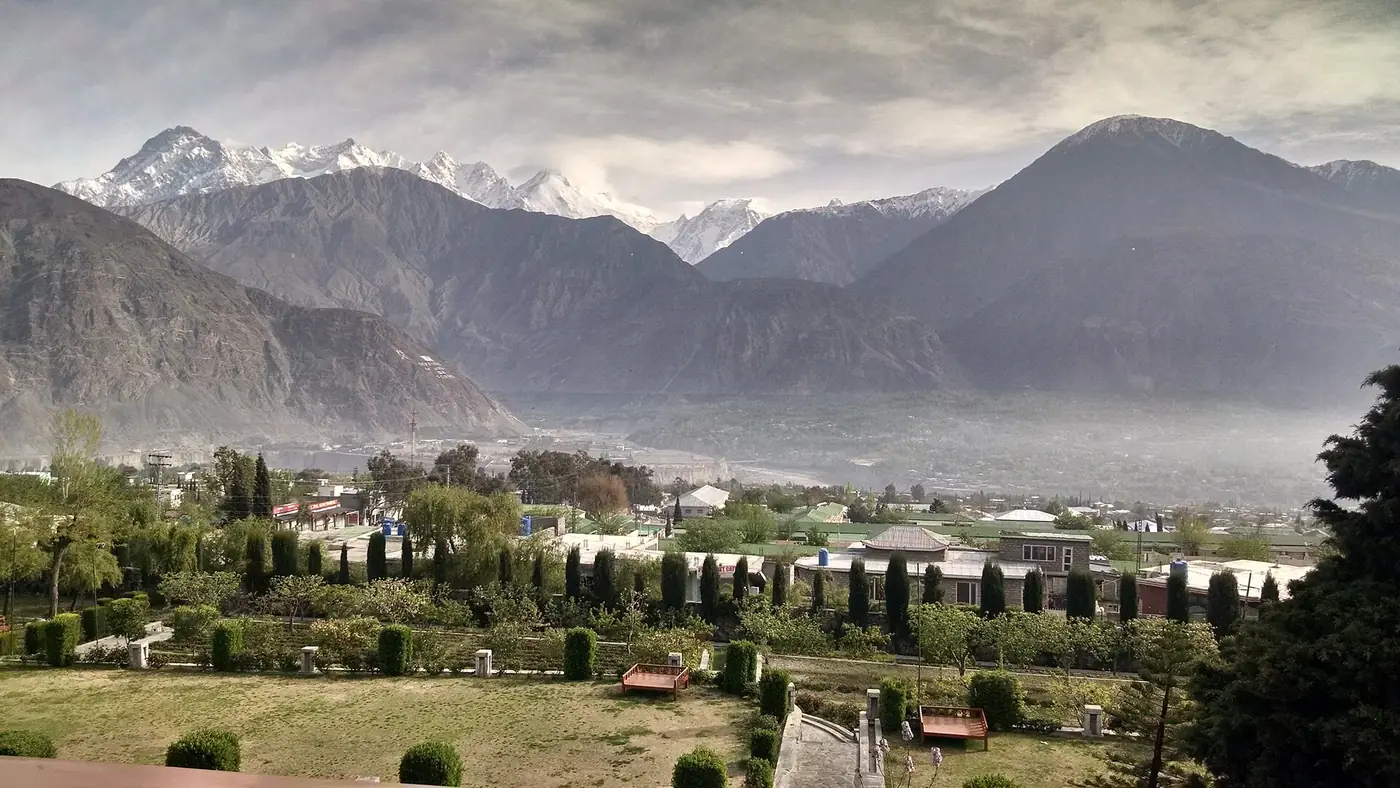

Gilgit airport is small, close to the city, and flown under visual flight rules, which means clear weather matters more here than at almost any other airport in Pakistan. It sits about 2 km east of central Gilgit, at roughly 1,460 metres, and PIA is the only airline that flies here, on turboprop aircraft from Islamabad.
This guide covers what the airport itself is like, why delays and cancellations happen so often, how to get from the terminal into Gilgit city, and what to do if the weather grounds you.
| At a glance | |
|---|---|
| Location | About 2 km east of central Gilgit |
| Elevation | About 1,460 m |
| Airline | PIA only, ATR turboprops from Islamabad |
| Rules | Visual flight rules; weather-dependent |
| Runway | A single runway, not aligned with the valley, which limits how it can be used |
| Terminal | Small; a 2014 building with basic facilities |
| To the city centre | 10 to 15 minutes by taxi |
| To Hunza | About 2 to 3 hours by road |
Why Gilgit flights are cancelled so often
Gilgit's runway sits in a narrow mountain valley and is not aligned with the length of that valley, which makes takeoffs and landings harder from both directions in poor conditions. Because the airport operates under visual flight rules rather than instrument approaches, pilots need clear visibility of the terrain around them to land safely. Cloud, fog or poor visibility anywhere along the route, not only at Gilgit itself, is enough to delay or cancel a flight.
This is most common in winter, when low cloud and fog are more persistent, but it can happen at any time of year. Flights typically operate once or twice a day, so a single cancellation usually means the next attempt is the following morning, not later the same day.
What the terminal is like
The current terminal building dates from 2014 and is modest by the standards of Pakistan's larger airports: a single hall for check-in, security and the departure lounge, with basic seating and a small snack counter. There is no dedicated arrivals lounge to speak of, and no customs or immigration facilities, since the airport handles only domestic flights.
Don't expect much beyond the essentials. If you have a long wait, whether before departure or because of a delay, it is more comfortable to wait in the city than in the terminal itself once you know the new timing.
Getting from the airport into Gilgit city
The airport is close enough to the centre that transport is simple. Taxis wait outside the terminal for arriving flights, and the ride into central Gilgit takes 10 to 15 minutes. There is no fixed fare or taxi counter, so agree the price before you get in.
If you are staying in the city for the night, most hotels can arrange a pickup if you send your flight details in advance, which is worth doing in case your flight lands earlier or later than scheduled.
Getting from the airport to Hunza
Many visitors fly into Gilgit only to continue straight on to Hunza the same day. The drive to Karimabad takes about two to three hours on the Karakoram Highway, and there are several ways to arrange it: a car with a driver booked in advance, a taxi negotiated at the terminal, or a shared van from the bus stand in the city. Our guide to getting from Gilgit airport to Hunza covers each option, what it costs and how to time the day around your flight.
Waiting out a delay or cancellation
Because delays are common rather than exceptional, it helps to have a plan for them rather than treating each one as a crisis.
- Confirm your flight status before leaving for the airport, either through PIA directly or by asking your hotel to check, since a flight can be delayed or cancelled with little notice.
- If you are delayed by a few hours, use the time in Gilgit city rather than sitting in the terminal. The Kargah Buddha, Danyor and the bazaar are all close by; see our guide to one day in Gilgit for a plan built around exactly this situation.
- If your flight is cancelled outright, settle into a hotel in the city for the night rather than trying to force a same-day alternative. The road to Islamabad is a long drive and not a realistic fallback for most travellers on short notice.
- Keep a buffer day in your overall itinerary if your travel dates are tight, particularly if you are travelling in winter or flying at either end of your trip.
Is flying into Gilgit worth the risk of delay?
For most travellers heading to Hunza or on to Skardu, yes: flying saves a full day or more of driving compared with the road from Islamabad, and the scenic flight over Nanga Parbat, when it runs, is one of the more memorable ways to arrive. The trade-off is unpredictability, and anyone on a tight schedule, particularly in winter, should build in at least one spare day around the flight rather than booking connections tightly against it.
If your dates cannot move, the road is the more reliable, if slower, alternative. Our Islamabad to Gilgit by road guide covers that option.
Frequently asked questions
How far is Gilgit airport from the city?
About 2 km, a 10 to 15 minute taxi ride into central Gilgit.
Which airline flies to Gilgit?
PIA is the only carrier, operating ATR turboprop aircraft on the route from Islamabad.
Why are Gilgit flights so often delayed or cancelled?
The airport is flown under visual flight rules in a narrow valley, so clear weather is needed along the whole route, not only at Gilgit. Cloud or poor visibility, especially in winter, frequently delays or cancels flights.
How do I get from Gilgit airport to Hunza?
By car, taxi or shared van, taking about two to three hours to Karimabad. See our guide to getting from Gilgit airport to Hunza for the full comparison.
What should I do if my Gilgit flight is cancelled?
Book a hotel in Gilgit for the night rather than trying to arrange a same-day alternative, and check the next morning's flight status with PIA or your hotel before heading back to the airport.