

Fruit season in Gilgit-Baltistan runs from late May to October. Cherries come first, in June; apricots, three quarters of everything the region grows, ripen from late June and are picked and dried through July and August; apples, grapes, pears and walnuts follow from August into October. The dates move with altitude: the same fruit ripens several weeks later in upper Hunza than it does around Gilgit town.
This is a planning calendar, not a farming schedule. It tells you what you can expect to eat fresh in each month, where in the valleys to find it, and which trip dates suit which fruit.
| Fruit | Roughly in season | Notes |
|---|---|---|
| Blossom | Mid-March to mid-April | Apricot first, then cherry, apple and pear |
| Mulberry | Late May to June | Eaten fresh from the tree, dried for winter |
| Cherry | Late May to mid-July, peak in June | Earliest in the lower valleys |
| Apricot | Late June to August | Drying on roofs and trays in July and August |
| Pear | August to September | General pattern; varies by village |
| Grape | August to September | General pattern; varies by village |
| Apple | Late August to October | Best in September and October |
| Walnut | September to October | Sold shelled all year |
The months for cherries and apricots are confirmed by growers' and trade reports. Those for the other fruit are the general pattern and shift by a couple of weeks either way with the winter and the height of the orchard.
How much fruit does Gilgit-Baltistan grow?
More than its small population would suggest, and nearly all of it one fruit. Official figures for 2020 put the region's harvest at 81,416 tonnes.
| Fruit | Production, 2020 (tonnes) | Share |
|---|---|---|
| Apricot | 61,188 | 75% |
| Apple | 6,606 | 8% |
| Cherry | 4,500 | 6% |
| Walnut | 4,178 | 5% |
| Mulberry | 1,937 | 2% |
| Grape | 1,367 | 2% |
Orchards are part of every farm here: apricot, mulberry and walnut trees stand along the irrigation channels and between the terraced fields, so in season you are never far from fruit on any village road in Hunza, Nagar, Ghizer, Shigar or Khaplu.
Why altitude decides the date
The valleys climb steeply, and ripening follows the climb. Gilgit town is at about 1,500 metres. Aliabad in central Hunza is at 2,206 metres and Karimabad about 2,500. Gulmit in upper Hunza is at 2,465 metres and Sost about 2,800. In Baltistan, Skardu and Shigar are at about 2,230 metres and Khaplu about 2,600.
In practice that means the season moves up the road. A fruit that is finishing around Gilgit will be at its best in central Hunza and still to come in Gojal. If you arrive a little late for a fruit in one place, drive an hour up the valley; if early, look lower down.
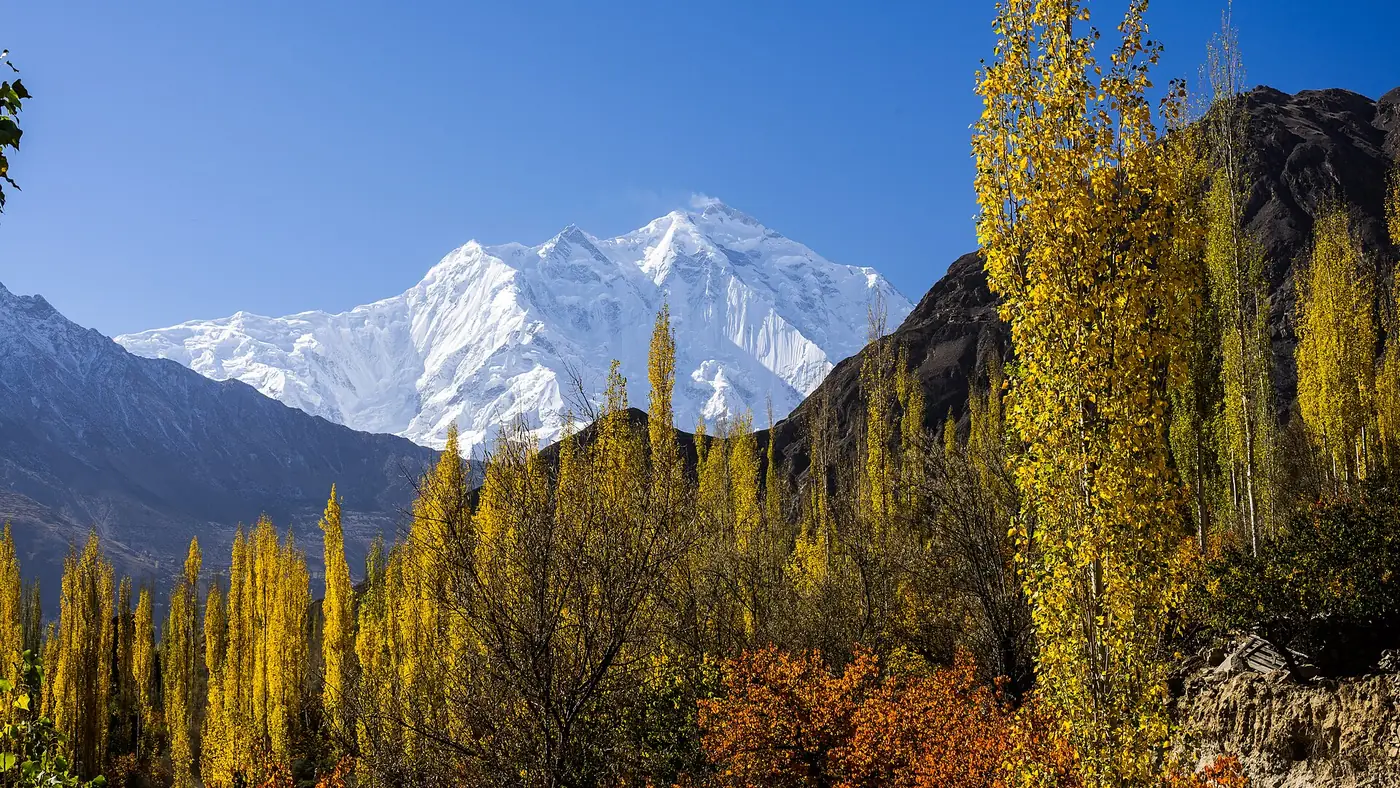
Blossom: March and April
Before any fruit there is the flowering, apricot first, with cherry, almond, apple and pear behind it. It begins in the lower valleys in mid-March and reaches upper Hunza by mid-April. Each village is in flower only briefly, and the timing depends on how hard the winter was. Our guides to apricot blossom in Skardu and Khaplu and cherry blossom in Pakistan cover where and when in detail.
Cherries and mulberries: late May and June
Cherries are the first fruit most visitors meet, sold by the box on the roadside from Gilgit up through Hunza and Nagar in June. The Gilgit-Baltistan agriculture department counts 14 varieties and puts the crop at about 5,000 tonnes a season, grown mainly in Hunza, Nagar, Gilgit, Ghizer, Skardu and Ghanche.
Cherries are also the region's newest export. After a plant-health agreement with China in 2022, more than 100 orchards and a cold store and packing house at Rahimabad, near Gilgit, were registered with Chinese customs, and the first refrigerated consignment left for China in the first week of June 2024. Exporters say the difficulty is time: the fruit keeps for only a short while, and the required cold treatment uses up 18 days of it.
Mulberries ripen at about the same time. They are soft and do not travel, so most are eaten on the spot or dried for winter. For more, see our pages on Hunza cherry season and Skardu cherry season.
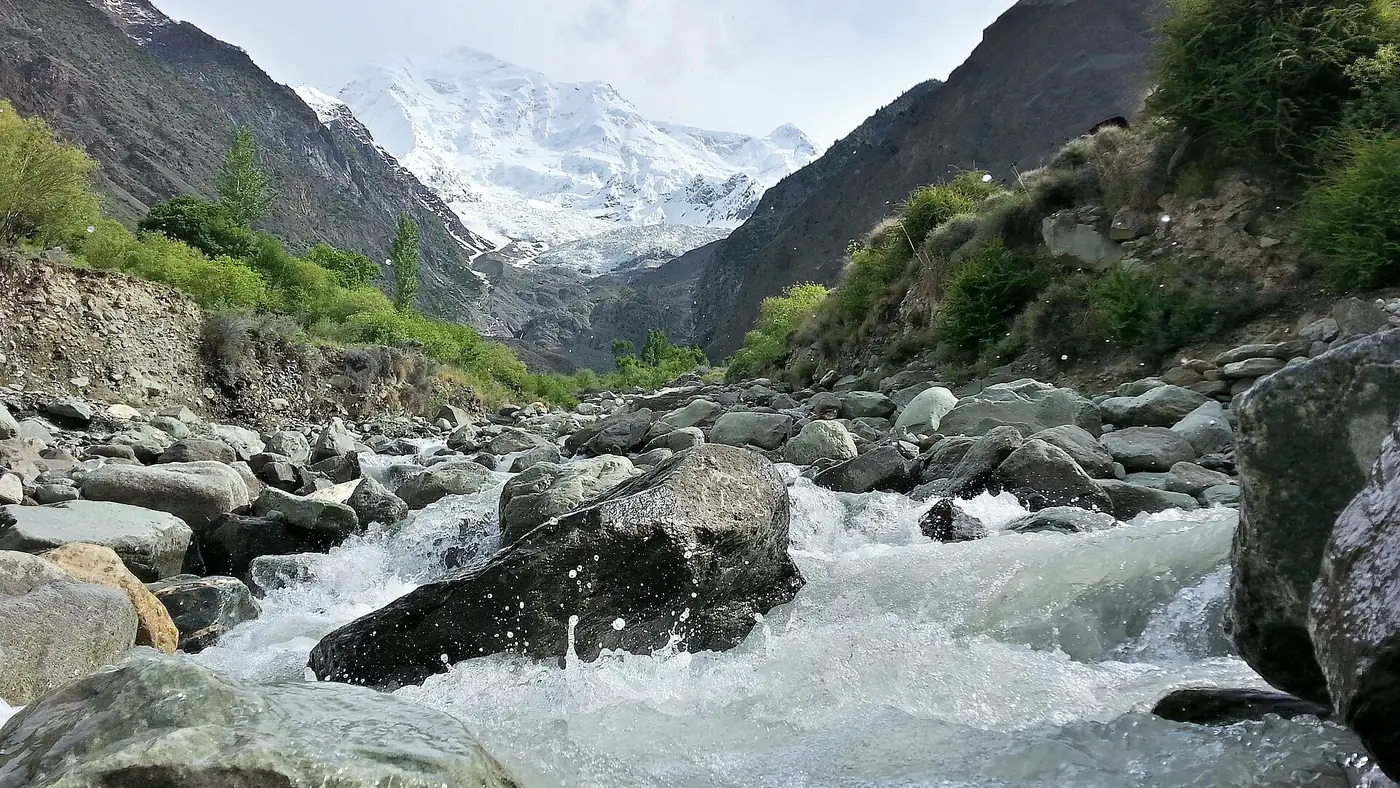
Apricots: late June to August
This is the fruit the region lives on. In central Hunza the orchards ripen from late June to mid-July; around Gilgit a little earlier, and in the higher villages into August. There are many local varieties, some for eating fresh and some for drying.
Picking is done by hand, from ladders, into woven baskets so the fruit does not bruise. For drying, each apricot is split and stoned, laid out in a single layer on trays in full sun for a couple of days, and then finished slowly in shade. In July and August flat roofs, boulders and courtyards across Hunza and Baltistan are orange with them. If that sight is what you are coming for, plan for mid to late July.
Nothing is wasted. The dried fruit goes into a winter soup and a drink called chamus; the kernels go into traditional dishes and are pressed for an oil that tastes much like almond oil. Our dry fruits of Gilgit-Baltistan guide explains the grades and what to buy.
Apples, grapes, pears and walnuts: August to October
Early apples appear in August, but the main crop is picked in September and October, when the nights turn cold. Grapes and pears ripen through August and September. Walnuts are harvested in September and October and dried in their shells.
This is also when the poplars and apricot trees turn yellow and orange, usually in the second half of October in Hunza. A trip in the first half of October gets apples, walnuts, the start of the colour and settled weather, with fewer people than summer.
Where and how to buy
- Roadside stalls on the Karakoram Highway through Nagar and Hunza, and on the Skardu to Shigar and Khaplu roads, sell whatever is ripe that week. This is the freshest and cheapest fruit.
- Karimabad and Aliabad bazaars carry fresh fruit in season and dried apricots, mulberries, walnuts, kernels and apricot oil all year. See shopping in Karimabad.
- Gilgit and Skardu bazaars sell the same dried fruit and nuts if you miss the valley shops.
Prices vary with the year's crop and the week, so we do not quote them. Buy cherries and fresh apricots in small quantities: both bruise within a day in a hot car. Dried apricots, walnuts and kernels travel well, and are the sensible thing to carry home. Wash fresh fruit in clean water before eating, and go easy on the first day, because a stomach used to city fruit can object to a kilo of apricots.
Planning a trip around fruit
- Blossom: late March to mid-April.
- Cherries: the first three weeks of June.
- Apricots on the tree and drying on the roofs: mid to late July.
- Apples, walnuts and autumn colour: the first three weeks of October.
- The widest choice at once: late July into August, when apricots are finishing, early apples, pears and grapes are starting, and dried mulberries from June are already in the shops.
June to August is also peak tourist season, so fruit does not change hotel prices; it simply comes with the crowds. October is quieter. Our when to go page sets the weather, road openings and crowds for each month beside each other, and the Gilgit and Hunza guide covers the valley itself.
Frequently asked questions
When is apricot season in Hunza?
Apricots ripen from late June to mid-July in central Hunza and into August higher up. Drying on roofs and trays goes on through July and August.
When is cherry season in Gilgit-Baltistan?
From late May around Gilgit to mid-July in the higher valleys, with June the main month. The crop is about 5,000 tonnes a season.
Which month has the most fruit in Gilgit-Baltistan?
Late July and August, when apricots are still being picked and dried and the first apples, pears and grapes are arriving.
Is there fresh fruit in winter?
Stored apples and walnuts, but little else. Dried apricots, mulberries, kernels and apricot oil are sold all year.
Which fruit is Gilgit-Baltistan most famous for?
The apricot. It made up about three quarters of the region's 81,416 tonnes of fruit in 2020.
When do apples ripen in Hunza and Skardu?
The main apple harvest is in September and October, with early varieties from late August.


