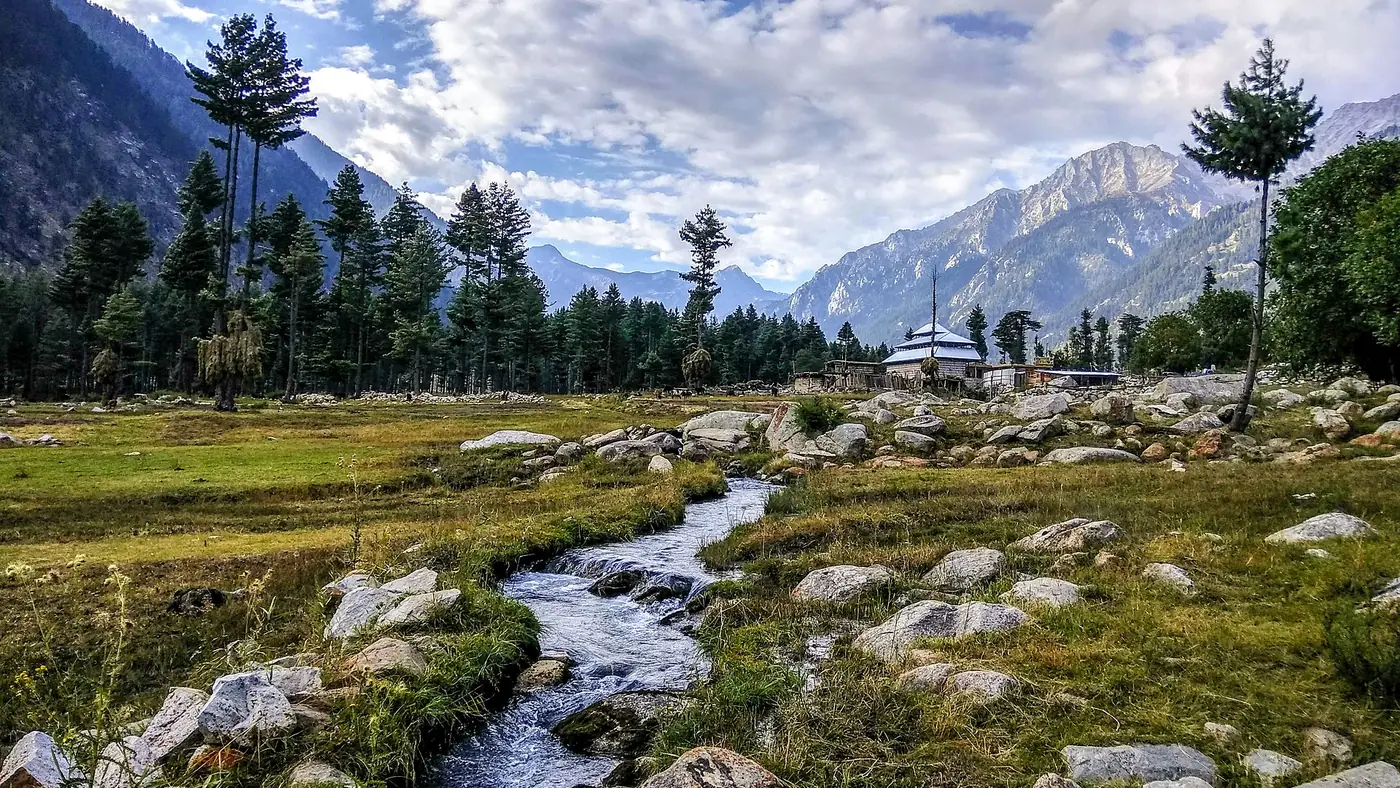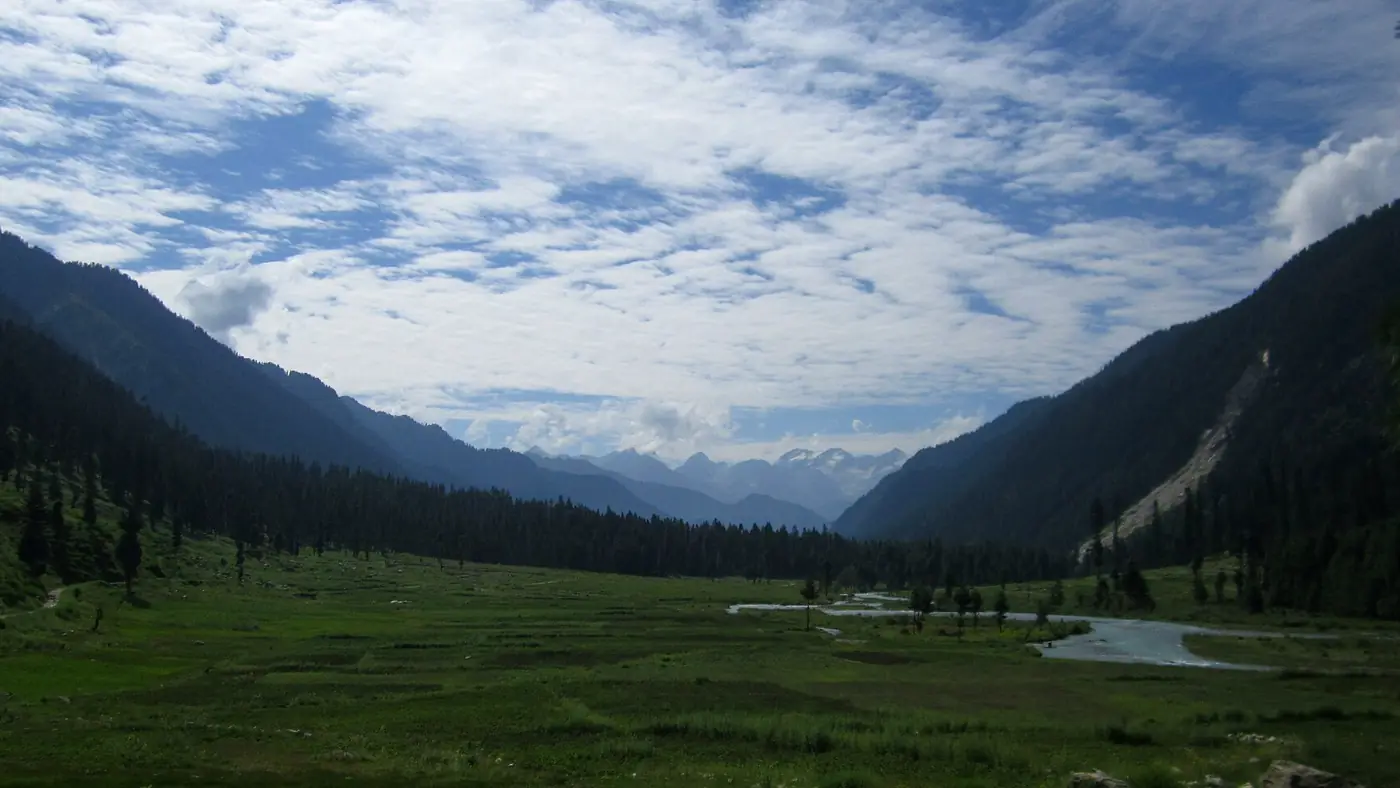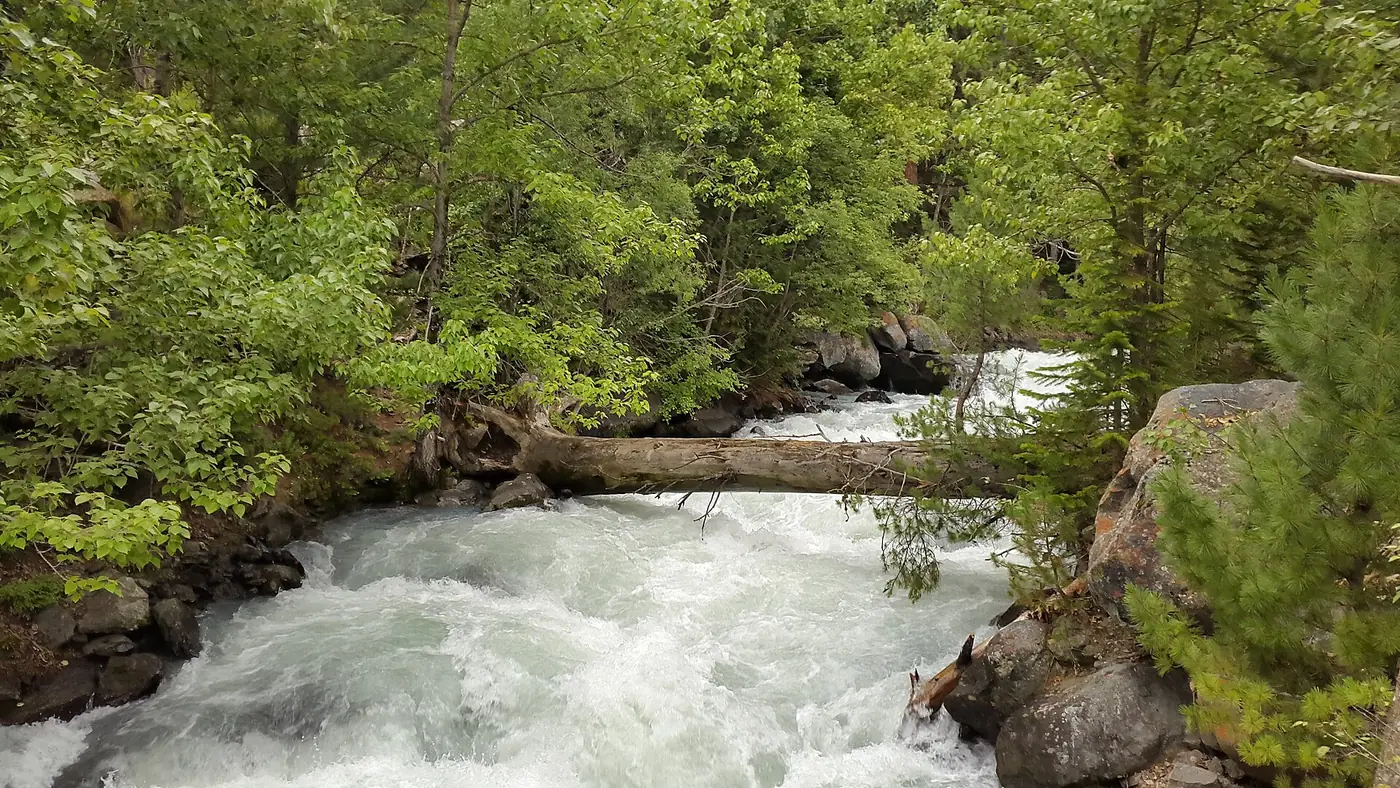
Dojanga meadows sit at the far end of the Kumrat forest, beyond Kala Chashma, where two streams meet: one coming down from the Thalo Pass and one from Shahzore Banda. The meadow marks the point where the jeep track effectively runs out and the thicker, quieter part of the forest begins. For most visitors it is a second day in the valley rather than part of the standard jeep round of the waterfall and Kala Chashma.
| At a glance | |
|---|---|
| Where | Head of the Kumrat forest, beyond Kala Chashma |
| Beyond it | The main jeep track ends; a wooden footbridge crosses to the far bank |
| From Thal | A full day, jeep plus walking |
| Best for | Camping, quiet forest, a second day in the valley |
| Season | Roughly late May to October, with the rest of the valley |
Where Dojanga sits
Kumrat's forest runs as one long stretch above Thal: the main camping area and waterfall first, then Kala Chashma, the "black spring," where most day-trip jeeps turn round. Dojanga lies beyond that, at the point where the valley narrows and two streams come together, one from the direction of the Thalo Pass and one from Shahzore Banda. Our Kumrat Valley guide shows how these points line up along the track.
A small wooden footbridge crosses the river at Dojanga, giving access to the far bank and into the denser forest beyond it. This is effectively the last easy point in the valley reachable without a proper trek; beyond it the ground becomes rougher and route-finding matters more.
Getting there
There is no separate road to Dojanga. You reach it the same way as the rest of upper Kumrat: hire a jeep in Thal, ride up through the camping area, the waterfall and Kala Chashma, and continue as far as the track allows before finishing on foot. The last stretch beyond Kala Chashma is rougher than what comes before it, so agree with your driver in advance whether Dojanga is included in the hire or whether you will need to walk the final part.
Because it sits at the end of a long jeep ride plus a walk, Dojanga is best treated as its own day rather than an add-on to a waterfall-and-Kala-Chashma round trip. Allow a full day from Thal if you are going and coming back, or plan to camp overnight and return the following day.
What to expect
Dojanga is quieter and greener than the busier camping areas closer to Thal, with the forest pressing in more closely on both banks and less traffic through it. The meeting of the two streams gives it a natural focal point, and the wooden footbridge is as far as most casual visitors go before turning back.
It is also the jumping-off point for longer routes further into the mountains, including trails that eventually connect towards Shahzore Banda and, for well-prepared trekkers, routes over the Thalo Pass towards Chitral. Those are serious multi-day treks in their own right and not something to attempt without proper planning, a guide and the right season; treat any mention of them here as context for where Dojanga sits, not as a route to follow casually.
Camping at Dojanga
Camping is the main reason to make the trip. The setting, at the head of the forest with the streams running close by, is less crowded than the main camping area near Thal, and the deeper tree cover gives more shelter than open ground further down. There are no fixed huts or run camps at Dojanga in the way there are lower in the valley, so a trip here means bringing your own tent and gear, or arranging it through a guide or outfitter based in Thal. Our guide to camping in Kumrat covers tents, bedding and what to pack for a night in the forest generally.
Nights are cold at this elevation even in high summer, and there is no signal once you are this far up the valley. Tell someone in Thal your plan and expected return before you go.
Is Dojanga worth the trip?
For visitors who have already done the standard Kumrat day, or who want more forest and fewer people than the main camping area offers, yes. It rewards those with an extra day to spare and a taste for a quieter camp rather than a full itinerary of sights. It is not worth forcing into a single busy day alongside the waterfall and Kala Chashma; the ride alone eats most of a day if you go all the way.
Families with young children or anyone short on time are better served stopping at the waterfall and Kala Chashma, both closer to Thal and easier to reach. If Dojanga and a second day of camping fit your plans, tell us your dates and we can help build it into a longer Kumrat trip.
Frequently asked questions
How far is Dojanga from Thal?
It sits beyond Kala Chashma, at the far end of the Kumrat forest, and takes most of a day to reach by jeep and a final stretch on foot from Thal.
Can you drive all the way to Dojanga?
Not entirely. The jeep track becomes rougher beyond Kala Chashma, and the last part to Dojanga itself is typically finished on foot.
Can you camp at Dojanga?
Yes, and it is one of the main reasons to go there. There are no fixed camps at Dojanga itself, so bring your own tent or arrange one through a guide in Thal.
Is Dojanga part of the standard Kumrat day trip?
Not usually. Most day trips from Thal cover the camping area, the waterfall and Kala Chashma. Dojanga needs its own day, or an overnight camp.
Is Dir safe for overseas visitors?
Pakistani visitors still travel to Upper and Lower Dir, including Kumrat, but as of September 2026 the UK government advises against all travel to both districts. If you hold a foreign passport, check your own government's advice before you go, because travelling against it can void your insurance. Everyone should check local news and current police advice before setting out.