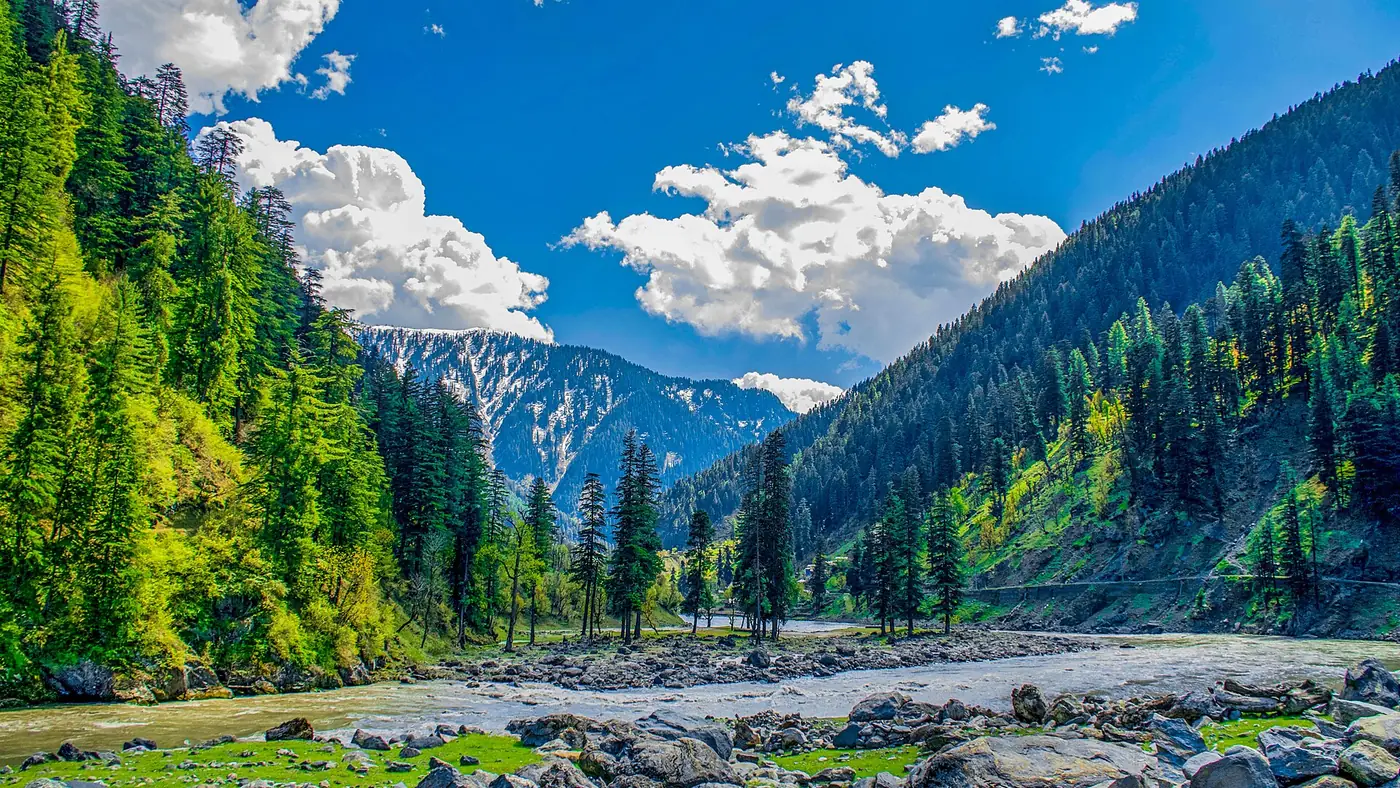
Dhani Waterfall is a roadside fall on the main Neelum Valley road, about 38 km from Muzaffarabad and well before you reach Kundal Shahi. At 15 metres, it is the highest waterfall directly on the valley road, and most people see it from the car window before deciding whether it is worth stopping for. It is.
This is a short guide: where the waterfall sits on the drive, what there is to do once you stop, and how long to give it.
| At a glance | |
|---|---|
| Distance from Muzaffarabad | About 38 km, on the main Neelum road |
| Position | Well before Kundal Shahi (about 74 km from Muzaffarabad) |
| Height | About 15 metres |
| Elevation | About 1,092 metres |
| Time needed | 10 to 20 minutes |
| Facilities | Roadside parking and a tea stall in season; nothing formal |
Where is Dhani Waterfall?
Dhani Waterfall, also known locally as Dhani Noseri, falls in Nasirabad tehsil of Neelum district, on the Muzaffarabad-to-Kel road. It sits close enough to the tarmac that you feel the spray on a warm afternoon without leaving the car park, which is exactly why it has become a standard stop on the way north.
It is not on the Jagran side road with Kutton and its own waterfall further up the valley; Dhani is on the main road itself, roughly halfway between Muzaffarabad and Kundal Shahi. If you are driving straight through, you will pass it in the first hour or so out of Muzaffarabad, well before the valley narrows and the drive slows down.
The drive from Muzaffarabad
The road out of Muzaffarabad follows the Neelum River from the start, climbing gently through Patika, about 19 km out, where the AJK Tourism Department runs a rest house that is a popular first pause for people leaving the city late. From there the road continues through smaller villages before reaching the Dhani stretch, where the waterfall sits beside the road.
This is a two-lane mountain road rather than a highway, and it is worth building in time for slow-moving trucks and the occasional stretch under repair, particularly in the monsoon months. Treat Dhani as the second natural stop after Patika rather than the first thing you see out of the city.
What is there to see?
The fall drops over a broad rock face into the Neelum River side of the road, fed by streams higher on the ridge above. It runs strongest from spring through the summer monsoon, when snowmelt and rain keep the volume up, and thins noticeably by late autumn. It is described locally as the tallest waterfall directly beside the Neelum road, which is part of why it draws a crowd of stopped cars on a summer weekend.
There is no walking route or viewing platform to speak of. You pull off, stand as close as the spray and the rocks allow, and get back in the car. It is a five-minute photo stop rather than a destination in its own right, and that is the honest way to plan around it.
Parking and facilities
Space to pull off is limited and informal, on the road shoulder rather than a proper car park. On a July or August weekend, expect other cars doing the same thing, and be patient finding a gap.
In season there is usually a small tea stall or two nearby, selling tea, cold drinks and snacks, run by locals rather than any formal operator. Don't expect toilets or anything beyond the basics. If you need a proper break, Kundal Shahi, about 35 km further on, has shops, food and fuel.
How long should you stop for?
Ten to twenty minutes covers it: pull off, take photographs, feel the spray if the kids want to, and move on. This is not a place to build a schedule around, and trying to linger longer than that mostly means standing in a car park.
If you are driving from Islamabad to Keran or further up the valley in a single day, treat Dhani as one of several short stops rather than the reason for the trip. Our guide to driving from Islamabad to Neelum Valley covers the whole route and where the other worthwhile pauses are.
When to visit
Spring and the early monsoon, roughly April to July, give the fullest flow, when the spray reaches furthest from the rock face. By September and October the water thins, and it is a gentler, quieter sight rather than a dramatic one. Either way, it is a five-minute stop rather than a weather-dependent trip, so there is no wrong month to pass by.
Is it worth stopping for?
Yes, briefly. It costs you almost nothing in time on a drive that already has plenty of stops in it, and it is a natural place to stretch your legs an hour or so out of Muzaffarabad. Don't plan a special trip around it, and don't expect facilities beyond a tea stall.
If you are building a longer Neelum Valley trip and want the stops, the driving days and the nights in Keran and Sharda planned for you, our Neelum Valley Escape covers this same road as its first day.
Frequently asked questions
How far is Dhani Waterfall from Muzaffarabad?
About 38 km by road, on the main route to Kel, well before Kundal Shahi.
Is Dhani Waterfall on the way to Kundal Shahi?
Yes. It is on the main Neelum road roughly halfway between Muzaffarabad and Kundal Shahi, so anyone driving to Kundal Shahi, Kutton or further up the valley passes it.
Do you need to pay to see Dhani Waterfall?
No. It is a roadside stop with no entry fee. Any spending is optional, at a tea stall nearby.
Is there parking at Dhani Waterfall?
Only informal roadside space, which fills up on summer weekends. There is no dedicated car park.
How long does the stop take?
Ten to twenty minutes is enough for most people: a short walk to the rocks, photographs, and back on the road.
Is Dhani Waterfall safe to visit?
The stop itself is straightforward. As with the rest of the Neelum Valley, check current road and security advice before you travel, since parts of Azad Kashmir near the Line of Control carry travel advisories for foreign visitors. Pakistani travellers visit this stretch of road throughout the season.