
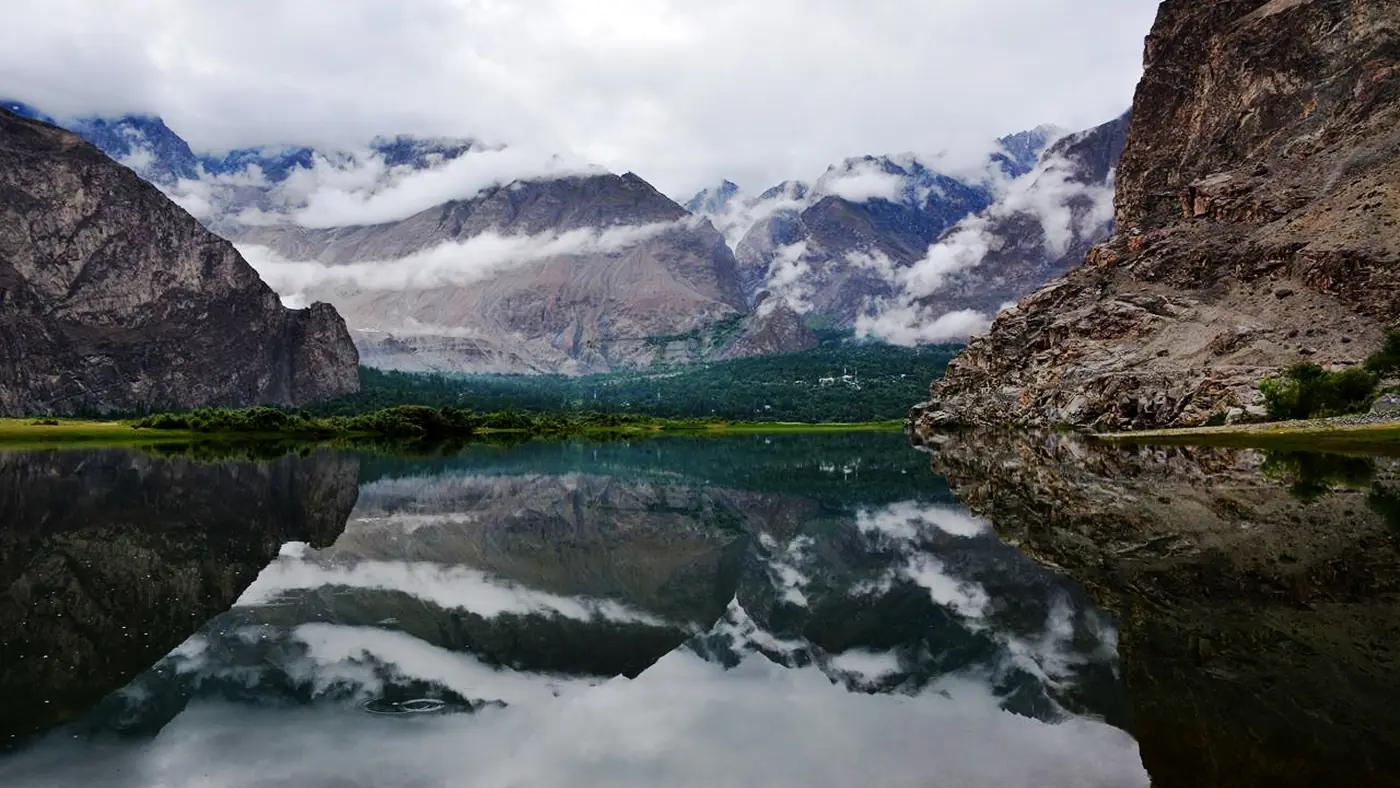

The Chaqchan Mosque in Khaplu is one of the oldest mosques in Gilgit-Baltistan, traditionally dated to 1370 and linked to the Sufi preacher Mir Sayyid Ali Hamadani, who is credited with bringing Islam to Baltistan. It is a working mosque, built of timber, stone and mud in a mix of Tibetan, Kashmiri and Persian styles. Visitors are welcome outside prayer times if they dress modestly and take their shoes off, and it sits a short walk from Khaplu Palace.
This guide covers the mosque's history, what to look at in the building, and the practical side of a visit: when to go, what to wear, and what non-Muslim and women visitors should know.
| At a glance | |
|---|---|
| Where | Khaplu town, Ghanche district, about 15 minutes' walk from Khaplu Palace |
| Dated | Traditionally 1370 |
| Associated with | Mir Sayyid Ali Hamadani; the Noorbakhshi Sufi tradition |
| Status | A working mosque, listed as a heritage site |
| Entry | Free; a donation is welcome |
| Time needed | 30 to 45 minutes |
| Dress | Modest; head covered for women; shoes off at the door |
| From Skardu | 103 km, about 3 hours |
A short history of the Chaqchan Mosque
According to local tradition, Mir Sayyid Ali Hamadani, the fourteenth-century Sufi from Hamadan who preached across Kashmir, came to Khaplu in the late 1300s and the ruler and his people turned from Buddhism to Islam. The mosque is said to have been built at that time, on the site of an older Buddhist place of worship, and 1370 is the date usually given.
Historians are less certain. Some accounts connect it instead with Syed Muhammad Nurbakhsh, whose Sufi order took root in Baltistan, and others describe several building phases under later preachers. What is not in doubt is that it is among the oldest mosque buildings in the region, and that it is still used for daily prayers.
The name is usually translated as "the miraculous mosque". The mosque is associated with the Noorbakhshi tradition, and the Government of Pakistan has listed it as a heritage site.
What to look for in the building
From outside, Chaqchan looks less like a mosque than a large Balti house or a Himalayan monastery. There are no domes and no tall minarets. What there is instead is wood, and a great deal of it.
- The structure. The mosque is a two-storey block. The lower level held the winter prayer area; the main prayer hall is on the upper floor, with a verandah running round all four sides and a small turret on top.
- The walls. Timber beams are laid in frames with stone, mud and clay packed between them, a way of building suited to the long, hard winters here.
- The carving. Look at the window screens, the columns of the verandah and the doors. The latticework and geometric carving are the best reason to visit.
- Inside the hall. The ceilings are painted, and the mihrab, the prayer niche facing Makkah, is richly decorated. The hall holds around 500 worshippers when the verandah is included.
The mix of Tibetan, Kashmiri, Persian and Mughal influence tells the story of the place. Like the Amburiq mosque in Shigar, it shows Islam arriving from Kashmir and taking on the local way of building rather than replacing it.
Visiting: what to wear and how to behave
Chaqchan is a place of worship first and a monument second. Most Pakistani visitors will know the basics, but a few points are specific to it.
What to wear
- Men: shalwar kameez or long trousers. No shorts.
- Women: loose clothing, with arms and legs covered, and a dupatta or scarf over the head before you reach the door.
- Shoes: off before you step onto the verandah or into the hall. Wear something easy to take off, and socks if the floor is cold.
How to behave
- Avoid prayer times, especially the midday prayer and Friday prayers. Mid-morning is usually quietest; check the day's prayer times before you go.
- Keep your voice down, and don't walk in front of anyone who is praying.
- Ask before photographing people. Photographing the building is generally fine; a camera pointed at worshippers is not.
- Speak to the caretaker if one is there. He can tell you what is open to visitors that day, and a donation for the mosque's upkeep is appreciated.
For women visitors. Ask the caretaker whether women visitors may go into the prayer hall itself, since practice can vary, and accept the answer gracefully if it is the verandah only.
For non-Muslim visitors. Non-Muslims have generally been asked not to enter the mosque and to see it from outside. The exterior, including the carved verandah that wraps round the upper floor, and the setting are well worth the visit on their own.
How to get there
The mosque sits on a rise in the old part of Khaplu town, reached by a steep flight of steps. Most people walk from Khaplu Palace in about 15 minutes, or ask their driver to drop them as close as the lanes allow. Wear comfortable shoes for the steps, and take it slowly: Khaplu is at about 2,600 metres, and a steep climb soon after arriving from lower down can leave you short of breath.
Khaplu itself is 103 km east of Skardu, about three hours by road along the Indus and the Shyok. Our Skardu to Khaplu guide covers the drive and whether to make it a day trip.
Combining it with Khaplu Palace and the rest of Khaplu
Almost everyone sees Chaqchan with Khaplu Palace, the restored royal residence of the Yabgo rajas. The two together take two to three hours at an easy pace, which leaves time for lunch before the drive back to Skardu.
If you are staying the night, add Thoqsikhar, the hilltop above the town where the rajas' earlier fort stood and where there is now a small mosque. The walk up through the village and orchards takes about an hour. Our guide to places to visit in Khaplu covers it along with Saling and the Hushe road.
If you would rather have the day arranged, our Skardu and Deosai trip includes Khaplu Palace and the Chaqchan Mosque as a full day from Skardu. For the wider valley, see our Skardu destination page.
Is Chaqchan worth the detour?
If you are already in Khaplu, yes, without question. It takes under an hour, it costs nothing, and it is one of the few buildings in Gilgit-Baltistan that goes back to the arrival of Islam in the mountains.
It is not a reason on its own to drive six hours from Skardu and back. Pair it with the palace, or better, with a night in Khaplu. If you have already seen Amburiq in Shigar, Chaqchan is still worth the time: it is in daily use, and its setting over the Khaplu valley is quite different.
The Gilgit-Baltistan tourism department's page on the mosque has a short official history.
Frequently asked questions
How old is the Chaqchan Mosque?
It is traditionally dated to 1370, which would make it more than 650 years old. The exact date and builder are debated, but it is among the oldest mosques in Gilgit-Baltistan.
Who built the Chaqchan Mosque?
Local tradition credits Mir Sayyid Ali Hamadani, the Sufi preacher who is said to have brought Islam to Baltistan. Some historians link it instead to the followers of Syed Muhammad Nurbakhsh.
Can non-Muslims enter the Chaqchan Mosque?
Non-Muslims have generally been asked to view the mosque from outside rather than enter. The exterior, including the carved upper verandah, can be seen from outside.
Can women visit the Chaqchan Mosque?
Women visitors should dress modestly, cover their heads and ask the caretaker whether they may enter the prayer hall itself, since practice can vary.
Is there an entry fee for the Chaqchan Mosque?
No. Entry is free, and a small donation towards the mosque's upkeep is welcome.
What does Chaqchan mean?
The name is usually translated as "the miraculous mosque".