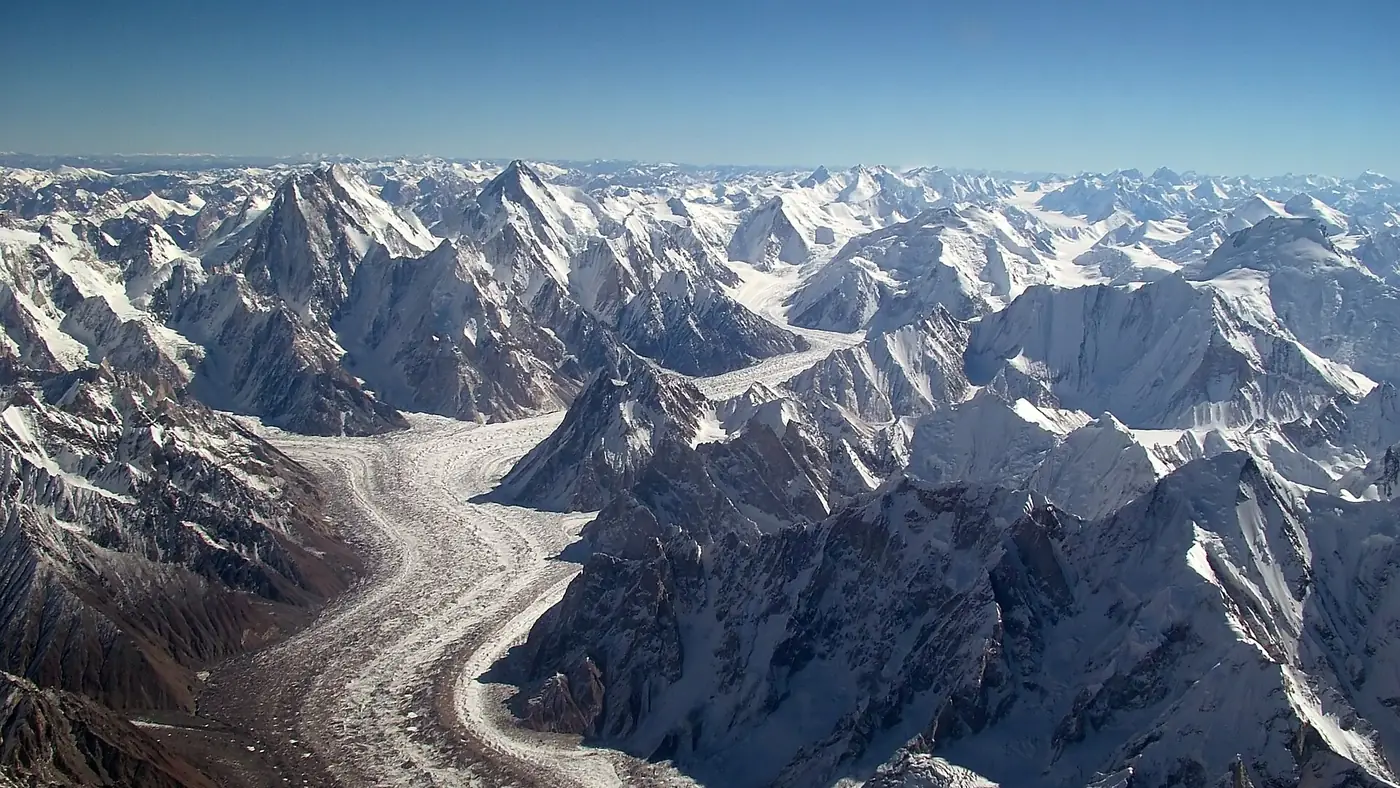
The Biafo glacier is 67 kilometres long, the third-longest glacier outside the polar regions after the Fedchenko in Tajikistan and the disputed Siachen. It flows through the Shigar district of Baltistan from the high snow basin known as Snow Lake down to Askole, the last village on the road to K2, and it is one half of the longest glacial traverse outside the poles: the Biafo-Hispar system, which links Baltistan to Nagar over roughly 120 kilometres of ice.
This guide covers the glacier's size and setting, what Snow Lake actually is, and how it is reached and trekked. Our K2 base camp trek guide covers the neighbouring Baltoro glacier and the trek most visitors to Askole actually do.
| At a glance | |
|---|---|
| Length | About 67 km |
| Basin area | About 853 km² |
| Ranking | Third-longest glacier outside the polar regions |
| Connects to | Snow Lake, then the Hispar glacier via Hispar La (about 5,128 m) |
| Combined Biafo-Hispar traverse | About 120 km |
| Nearest village | Askole, Shigar district |
| Trekking season | July and August mainly; June and September possible |
Where is the Biafo glacier?
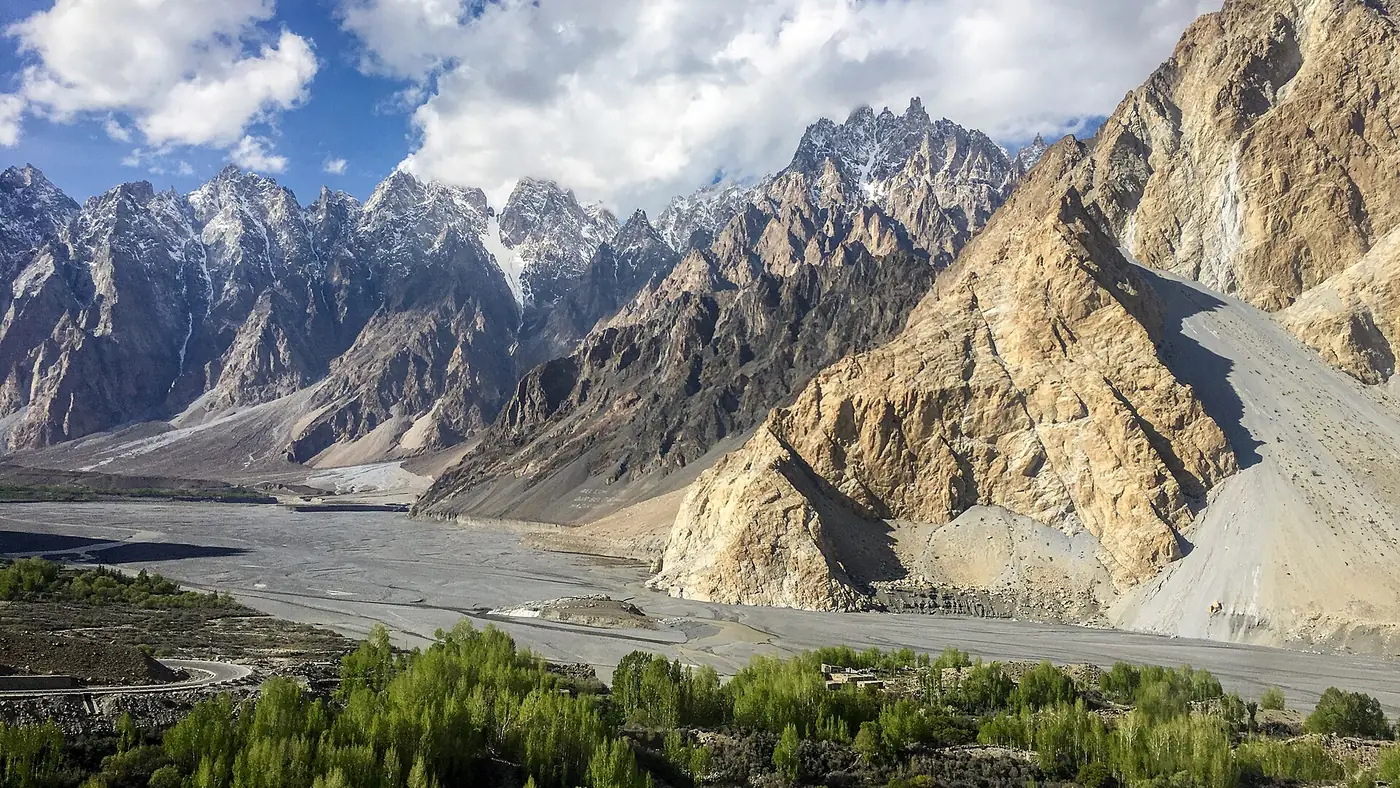
The Biafo lies in the Shigar valley system of Baltistan, immediately west of the Baltoro glacier that leads to K2 and Concordia. It begins in a high snow basin near the Karakoram watershed and flows south-east, fed by ice from peaks including Latok and the Ogre (Baintha Brakk), before its meltwater reaches the Braldu river close to Askole.
Askole, at about 3,050 metres, is the last village on the jeep road from Skardu and the starting point for both the Biafo and the Baltoro treks. It is reached by a drive of around six hours from Skardu through the Shigar and Braldu valleys.
How big is it?
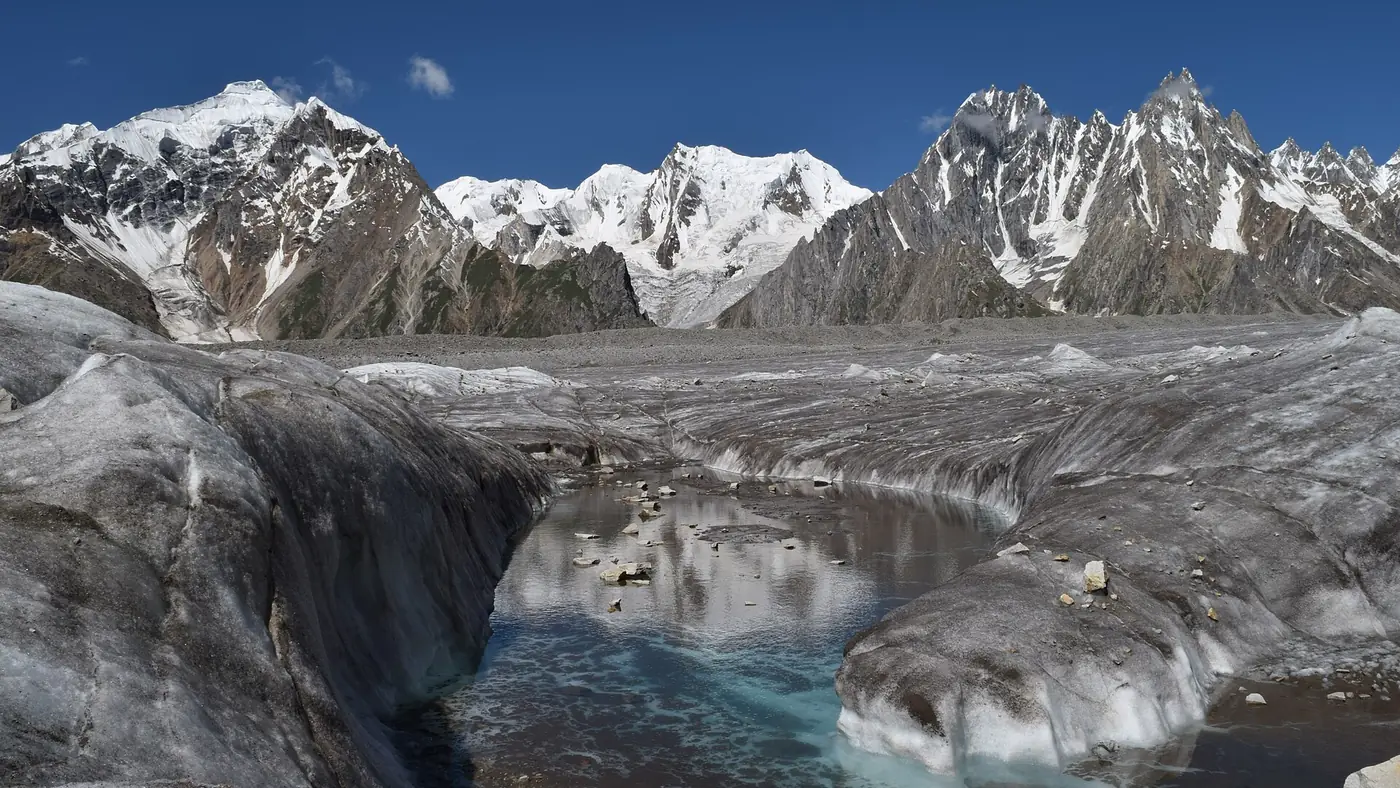
At 67 kilometres, the Biafo is the third-longest glacier on earth outside the polar regions, behind the 77 km Fedchenko glacier in Tajikistan and the roughly 70 km Siachen glacier, which lies in the disputed territory between Pakistan and India. Its drainage basin covers about 853 square kilometres. Like its neighbour the Baltoro, most of its lower surface is covered in rock debris rather than clean ice, which is what trekkers actually walk on for much of the route.
What is Snow Lake?
Snow Lake, known locally as Lukpe Lawo, is not a body of water but a vast snow and ice basin at the head of the Biafo glacier, at around 4,800 to 4,900 metres. It is one of the largest such basins outside the polar regions, and its snow depth has been measured at well over a kilometre in places. Several glaciers feed into it, and it is from here that a route continues over the Hispar La, a pass of about 5,128 metres, and down the Hispar glacier into Nagar.
Crossing from Askole over the Biafo, through Snow Lake and down the Hispar to Hispar village links Baltistan and Hunza-Nagar entirely on foot, over a combined distance of roughly 120 kilometres of glacier: one of the longest continuous glacial traverses anywhere outside the polar regions.
Trekking the Biafo glacier
Two trips use the Biafo, and they are very different undertakings.
A short taste of the glacier is possible on the first days of the K2 base camp trek, which crosses the toe of the Biafo on the walk from Askole towards Jhola and Paiju. This gives a sense of the ice and the moraine without committing to the full glacier.
The full Biafo-Hispar (Snow Lake) traverse is a serious multi-week trek, typically around two to three weeks from Askole to Hispar village, entirely on foot, with several nights camping on the ice or beside it, no villages along the way, and a genuine crossing of the Hispar La at over 5,100 metres. It needs an experienced guide, full glacier travel gear, and a support team of porters carrying everything in, since there is no resupply once you leave Askole.
Both routes lie inside the Central Karakoram National Park, and trekking permits and park fees apply, arranged in advance through a registered operator in Skardu. Rules and fees have changed more than once in recent years, so confirm what currently applies before committing.
When to trek here
July and August are the main months, when the glacier is at its clearest of fresh snow and the passes are most likely to be open. June can still have deep snow on the higher ground, and September brings colder nights and a shorter weather window as the season winds down. For how this fits the wider calendar, see our trekking season in Gilgit-Baltistan guide.
Is the Biafo glacier worth trekking?
For most visitors to Pakistan, the honest answer is that the full Biafo-Hispar traverse is a specialist trip: remote, physically demanding, and only sensible for experienced high-altitude trekkers with three weeks to spare and a guide who has crossed the Hispar La before. It is not a first Karakoram trek.
If you want to see the Biafo without that commitment, a night or two in Askole and a walk along its lower edge, arranged with a local guide, gives a genuine sense of the ice and the scale of the Karakoram's glaciers without the full crossing. If you would like help planning a Biafo or Snow Lake trek, send us your dates and experience through our trip planning page.
Frequently asked questions
How long is the Biafo glacier?
About 67 kilometres, making it the third-longest glacier outside the polar regions, after the Fedchenko glacier in Tajikistan and the Siachen glacier.
What is Snow Lake?
A large snow and ice basin at the head of the Biafo glacier, at around 4,800 to 4,900 metres, not an actual lake. It links the Biafo to the Hispar glacier via the Hispar La.
How do you get to the Biafo glacier?
From Skardu, a jeep drive of around six hours reaches Askole in the Shigar valley, the last village and the starting point for treks onto the glacier.
How long does the Biafo-Hispar traverse take?
Typically two to three weeks from Askole to Hispar village in Nagar, entirely on foot and mostly on glacier, with no villages along the way.
Do you need a guide to trek the Biafo glacier?
Yes, for anything beyond the first day or two near Askole. The full traverse crosses remote, crevassed ice and the Hispar La pass, and needs an experienced guide and a full support team.