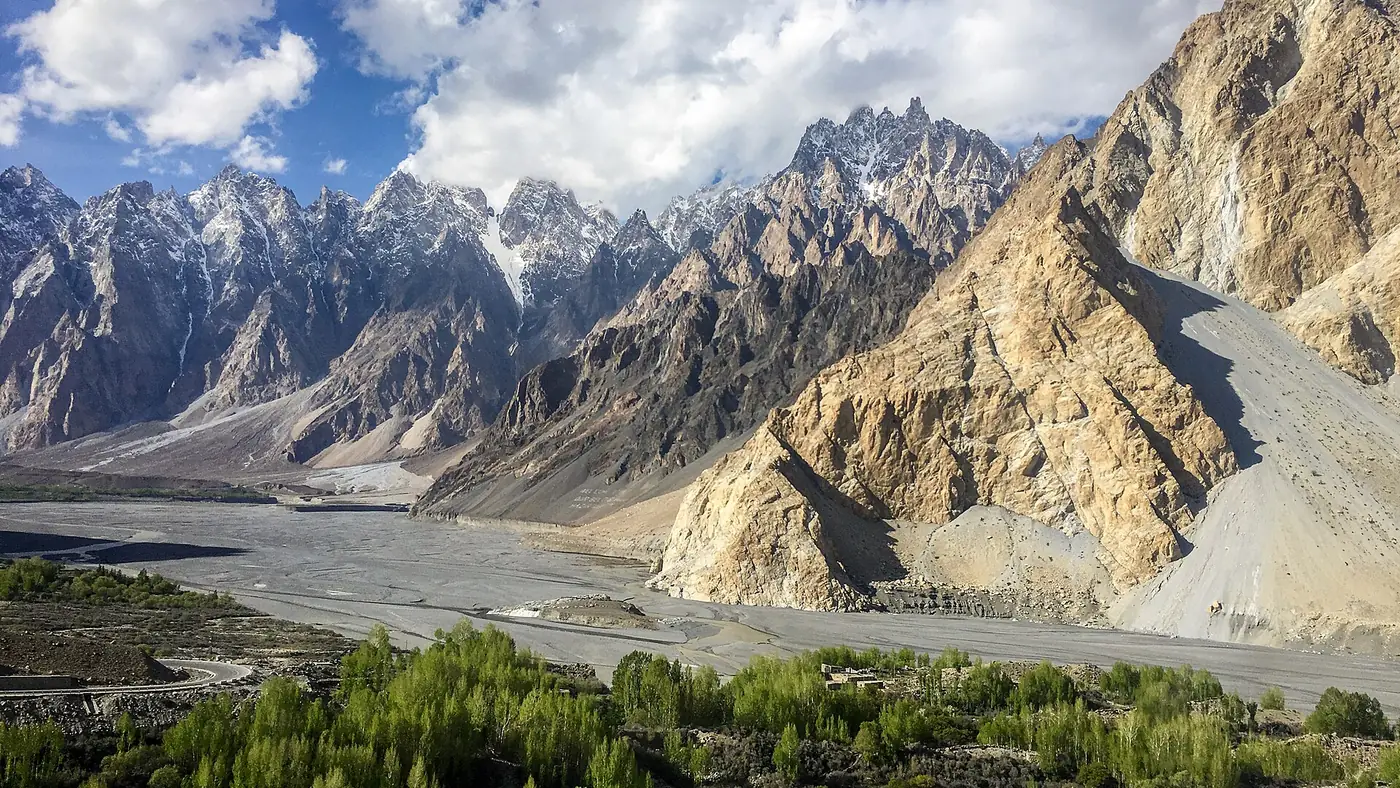
The best time for trekking in Pakistan is late June to early September for high routes in the Karakoram, and a slightly longer April-to-October window for lower treks like Fairy Meadows. The exact window shifts by mountain range: the Karakoram's glacier-heavy routes need a short, stable weather season, while Chitral's Hindu Kush valleys and the Kashmir side of the Himalaya open a little earlier and close a little later.
This guide breaks the trekking season down by region, so you can match a specific route to the months that actually suit it, rather than applying one blanket "summer" answer to very different terrain.
| At a glance | |
|---|---|
| Karakoram (K2, Baltoro, Rakaposhi) | Late June to early September |
| Fairy Meadows / Nanga Parbat side | April to October, best April-May and September-October |
| Hindu Kush (Chitral, Kalash valleys) | June to September |
| Kashmir side (Ratti Gali and similar) | July to September |
| Peak trekking crowds | July and August |
| Shoulder months | June and September, quieter with a smaller weather margin |
Karakoram: the shortest, highest window
Routes into the Karakoram's high glacial terrain, the K2 base camp and Concordia trek, the approach to Rakaposhi base camp, and similar high routes, have the tightest season of anywhere in the country. Late June to early September is the reliable window, with July and August offering the most stable weather, the clearest views of K2, Broad Peak and the surrounding peaks, and the least risk of an early or late snowstorm closing a pass along the route.
Outside that window, river crossings on glacial meltwater become more dangerous, camps at altitude are colder and less comfortable, and the short daylight hours in shoulder months leave less margin for a bad day. This is not a region to stretch the season in; the routes are remote and rescue is slow, so a tight, well-chosen window matters more here than anywhere else on this list.
Fairy Meadows and the Nanga Parbat side
Fairy Meadows has the most forgiving season of the major trekking destinations, open from April through October. June to October gives the clearest views of Nanga Parbat and the most comfortable daytime temperatures, but it's also when the trail and the meadow itself are busiest with domestic tourists, since this is the most accessible high-altitude trek from the Karakoram Highway. April, May, September and October are quieter shoulder months with fewer crowds and lower prices, and still workable weather, though nights are colder and there's more chance of a wet or cloudy day.
For a trek that combines Nanga Parbat's base camp with the meadow itself, the same broad window applies, but push towards the July-August core of it for a more reliable multi-day weather run at altitude.
Hindu Kush: Chitral and the Kalash valleys
Trekking in Chitral district and the surrounding Hindu Kush, including routes near the Kalash valleys and toward Shandur, runs on a similar June-to-September window to the Karakoram, opening slightly earlier in lower valleys and staying open a little later into September in good years. The terrain here tends to be a little less glacier-dominated than the high Karakoram routes, which gives a bit more flexibility at the edges of the season, but the access roads, including Shandur Pass, are themselves seasonal, so check pass status alongside trail conditions. Our guide to when Pakistan's mountain passes open covers Shandur's typical dates.
Is it safe? The Kalash valleys and the N45 road to Chitral currently carry a UK government advisory against all travel (updated September 2026). Pakistani trekkers use this region regularly; check current local advice and police guidance before travelling, and be aware that an overseas government's advice against travel can affect your travel insurance.
Kashmir side: Neelum valley routes
Treks on the Azad Kashmir side of the Himalaya, including routes to high lakes above the Neelum valley, run on a shorter window than the Karakoram or Hindu Kush, roughly July to September, since these routes sit at a similar altitude but see a wetter climate that keeps snow around longer into early summer and brings it back sooner in autumn. Trails can be muddy and river crossings higher after rain, so this region rewards checking recent conditions rather than just the calendar month.
Is it safe? Most of the Neelum valley currently falls within a UK government advisory against all travel within 10 miles of the Line of Control (updated September 2026). Pakistani visitors do trek and travel here; check current local advice, and know that overseas visitors should weigh their own government's guidance and its effect on travel insurance before planning a trip.
Choosing between July, August and the shoulder months
July and August are the safest, busiest choice everywhere on this list: the most stable weather, the longest daylight, and the highest chance that a multi-day route stays passable start to finish. The cost is crowding on the more accessible routes, particularly Fairy Meadows, and higher prices for guides, porters and transport at the peak of demand.
June and September trade some of that weather margin for quieter trails and, in September particularly, the start of autumn colour at lower elevations on the way in or out. They suit experienced trekkers or shorter, lower-altitude routes better than a first attempt at a high multi-day trek, where an unexpected early or late snowfall has more consequences.
Is trekking season worth building a whole trip around?
For the Karakoram's big routes, yes, this is essentially the only way to do them safely, and the short season is part of the plan rather than a constraint to work around. For Fairy Meadows and similar lower routes, the wider window means you can build trekking into a broader spring or autumn trip rather than dedicating the whole visit to it. For families or first-time trekkers, a shoulder-season lower route, rather than a peak-season high one, is usually the more sensible starting point. Our Gilgit, Hunza and Khunjerab tour and Skardu and Deosai tour both run in the core June-to-September window and can be combined with a shorter trek on either route.
Frequently asked questions
What is the best month to trek to K2 base camp?
July and August, when weather is most stable and river crossings are at their safest. The wider window is late June to early September; outside it, the route is not recommended.
Can I trek to Fairy Meadows outside summer?
Yes. April, May, September and October are workable, quieter and cheaper than the June-to-August peak, though nights are colder and there's a slightly higher chance of a cloudy or wet day.
Is trekking in Pakistan possible in winter?
Not on the major high-altitude routes covered here; they are closed by snow. Some lower-altitude winter walks exist in valleys that stay accessible, but they are a different kind of trip from summer trekking.
Which trekking region has the shortest season?
The high Karakoram routes, including K2 base camp and Concordia, have the tightest window, reliably open only from late June to early September because of glacier terrain and river crossing conditions.
Do I need a guide for trekking in Pakistan?
For any multi-day route into the Karakoram, Hindu Kush or high Kashmir routes, yes, a local guide or an organised trek is strongly recommended given the remoteness, river crossings and the need for local knowledge of current trail and weather conditions.