
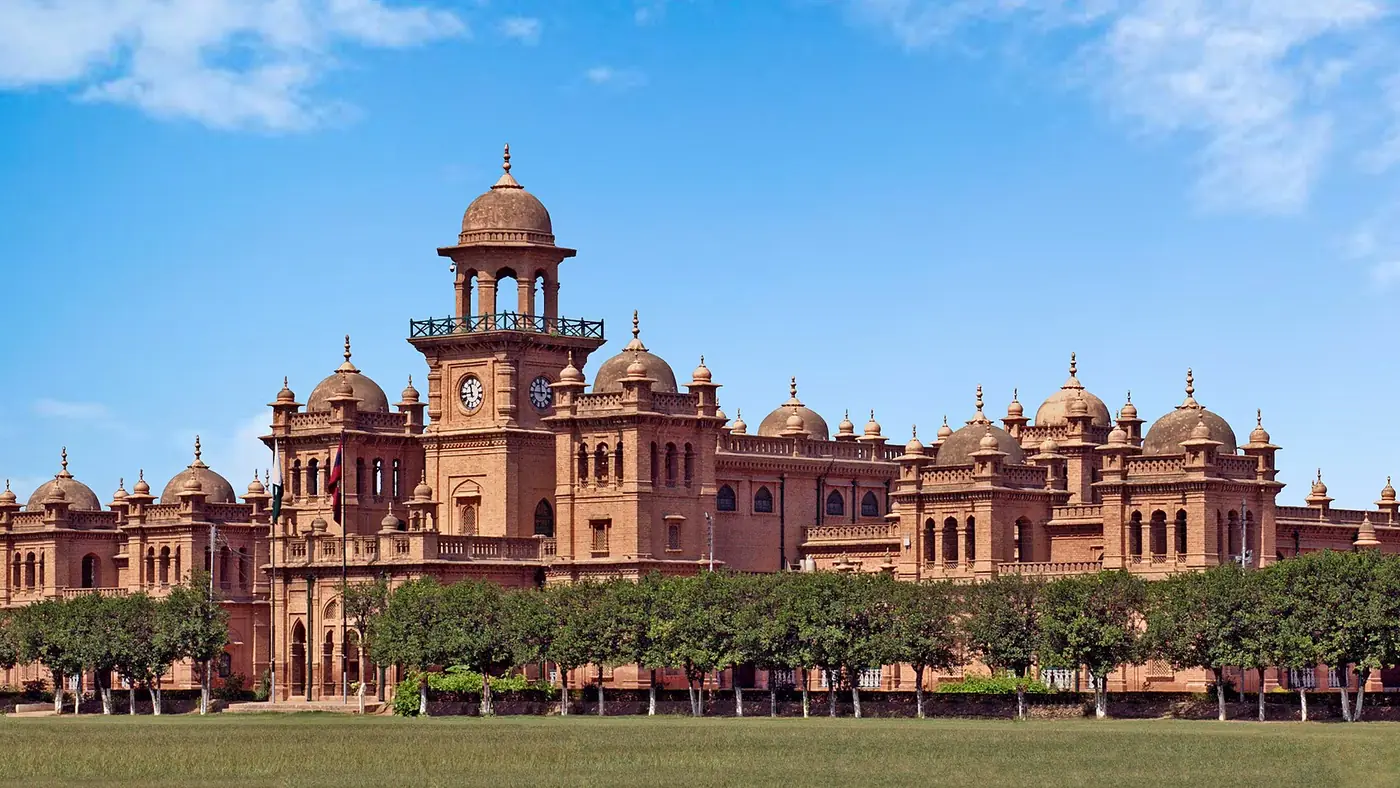
,_Khyber_Pakhtunkhwa,_Pakistan_cropped.jpg)
Bala Hisar Fort rises on a mound at the edge of Peshawar's old city and is the headquarters of Pakistan's Frontier Corps, so it is not open to the public in the ordinary sense. Access has varied over the years between limited weekend openings with ID and no public access at all, so most visitors see it from the road rather than from inside. Even so, it is worth knowing what it is and why it matters to Peshawar's history.
This guide covers the fort's long history, what stands there today, its small museum, and what to do if you want to try to see inside.
| At a glance | |
|---|---|
| Location | Edge of the old city, on raised ground |
| Current use | Headquarters of the Frontier Corps |
| Public access | Not guaranteed; has varied between limited weekend openings and none |
| What to bring if attempting a visit | CNIC (Pakistanis), passport (foreign nationals) |
| Best view without entering | From the surrounding road and the old city walls nearby |
A long history
A fortified site on this mound has been described for well over a thousand years. The 7th-century Chinese Buddhist pilgrim Xuanzang wrote of a royal residence in Peshawar that historians associate with this location. Under Mughal and earlier rule the site was known as Bagram Fort.
Its modern shape dates mostly from the last three centuries:
- Durrani period (1747–1823): Ahmad Shah Durrani took Peshawar in 1747 and used the fort as a royal residence; his successor Timur Shah later made the city, and the fort with it, a winter capital for the Durrani empire.
- Sikh period (1823 onward): after the Sikh victory at the Battle of Nowshera in 1823, Sikh forces destroyed the existing structure and rebuilt it, under the command of Hari Singh Nalwa.
- British period (from 1849): following the First Anglo-Sikh War, the East India Company rebuilt the fort's outer walls in 1849, largely the walls that stand today.
The name Bala Hisar, meaning "high fort" in Persian, reflects its position on raised ground overlooking the old city, which was its military value for centuries: control of the fort meant control of Peshawar.
What is there today
The fort today is a working military installation, run by the Frontier Corps, a paramilitary force under the command of the Pakistan Army responsible for security along the border areas. Its walls and gates, largely as rebuilt by the British in the 19th century, are visible from the surrounding roads, and the mound gives it a commanding view over the old city that is part of why it was built here in the first place.
Inside, a small Bala Hisar Museum has been set up to tell the history and role of the Frontier Corps, alongside displays connected to the fort's own past. Because access to the fort as a whole is restricted, the museum is only seen by visitors who manage to get inside on one of the occasions it is open.
Can you visit?
This is the part to be honest about: access is not reliable. At times the fort has opened to visitors on weekends, with Saturdays kept for families and Sundays open more generally, visitors asked to bring a CNIC or, for foreign nationals, a passport. At other times, including for extended periods, it has not been open to the public at all, and it functions purely as a military headquarters.
If you would like to try to see inside, ask locally in Peshawar, through your hotel or a guide, what the current situation is, since it changes without much public notice. Do not expect to simply turn up and be let in, and do not photograph the fort's gates, walls or personnel without asking, as with any military site in Pakistan.
For most visitors, the realistic plan is to see Bala Hisar from the road, as an impressive backdrop to the old city rather than a place to walk through.
Getting there
Bala Hisar sits on the edge of the old city, within a reasonable walk or short rickshaw ride of Qissa Khwani Bazaar and the other old city sights. It is not far from Peshawar's cantonment area either, making it easy to combine with a wider day out. Our guide to places to visit in Peshawar sets it alongside the old city's other sights and the Peshawar Museum, and our one-day Peshawar itinerary shows where it fits in a single day.
Is it worth the trip?
For most visitors, seeing Bala Hisar from outside, alongside a day in the old city, is worth the short detour: the walls and the site's position over the city give a real sense of why it mattered strategically for centuries. Planning a visit specifically to get inside is a gamble, since access is not guaranteed and can change at short notice.
If forts and military history particularly interest you, it is worth asking locally whether the fort happens to be open during your visit. If not, the old city's other historic buildings, including Sethi House and Gor Khuttree, are reliably open and reward the same interest in Peshawar's past.
Frequently asked questions
Can tourists visit Bala Hisar Fort?
Sometimes. It is the headquarters of the Frontier Corps and is not consistently open to the public; access has varied from limited weekend openings with ID to none at all. Ask locally before planning around it.
What does Bala Hisar mean?
"High fort" in Persian, referring to its position on raised ground overlooking Peshawar's old city.
Who built Bala Hisar Fort?
Its current walls mostly date from Sikh-era rebuilding after 1823 and British reconstruction from 1849, but a fortified residence is recorded on the site as far back as the 7th century.
Is there a museum inside Bala Hisar Fort?
Yes, a small Bala Hisar Museum on the history and role of the Frontier Corps, but it is only accessible when the fort itself is open to visitors.
Is it safe to visit the area around Bala Hisar Fort?
Many Pakistanis pass through the old city near the fort every day, but the UK government currently advises against all travel to Peshawar. Visit in daylight and check the current situation before you go; see our guide on whether Peshawar is safe for more.