
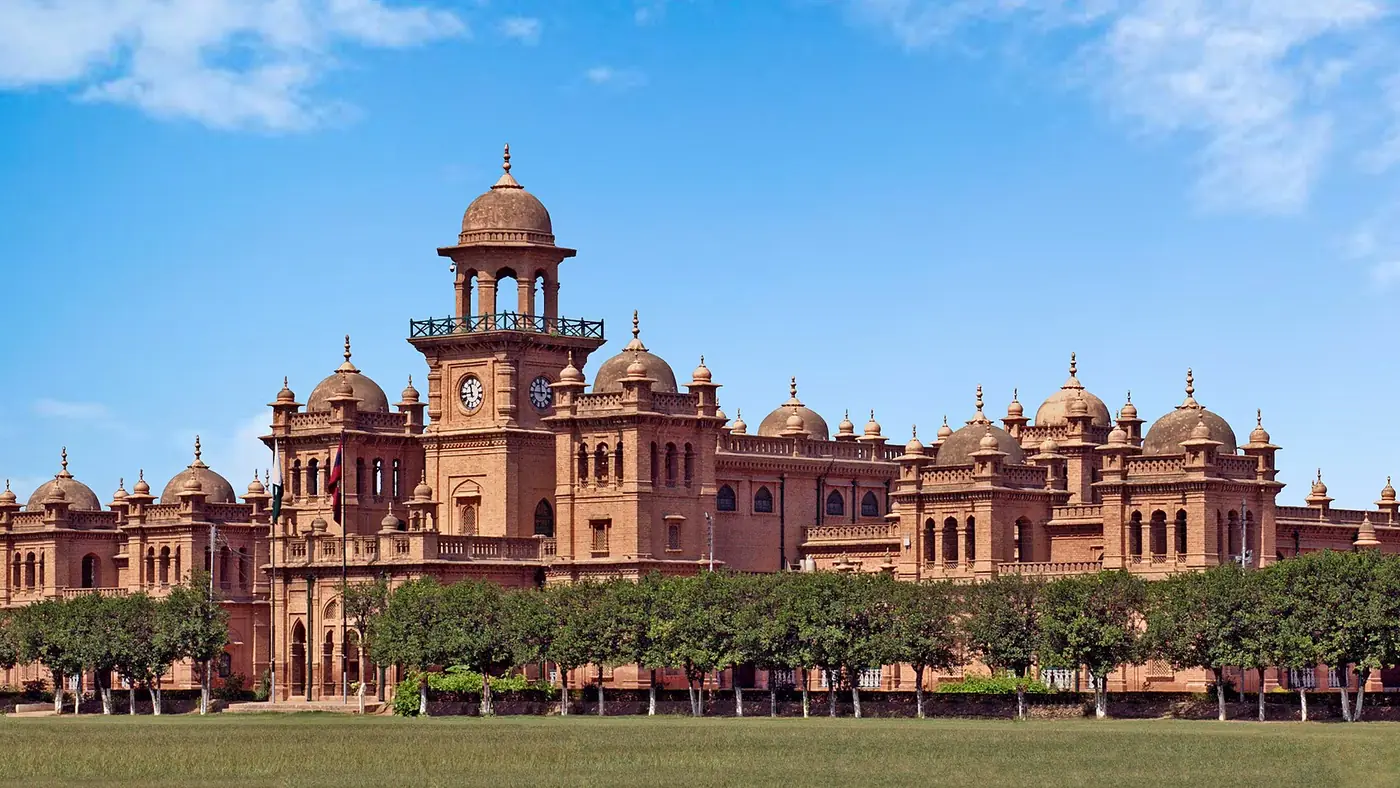
,_Khyber_Pakhtunkhwa,_Pakistan_cropped.jpg)
The best places to visit in Peshawar are in and around the old walled city: Qissa Khwani bazaar, Chowk Yadgar, the jewellers' street of Andar Shehr and the Mughal-era Mahabat Khan Mosque, then the clock tower, Sethi House and the Gor Khuttree archaeological site along a short heritage trail. Add the Peshawar Museum for its Gandharan sculpture, and an evening meal in Namak Mandi. One full day covers the essentials; two days let you take it slowly.
Peshawar is about two hours from Islamabad on the M-1, and it is a city trip rather than a mountain one: bazaars, mosques, merchants' houses and food. This guide lists each place with the time it needs, suggests how to order a day, and covers the practical side, including safety.
| Place | Where | Time to allow |
|---|---|---|
| Qissa Khwani bazaar and Chowk Yadgar | Old city | About an hour, with qehwa |
| Andar Shehr and the Mahabat Khan Mosque | Old city | 45 minutes to an hour |
| Ghanta Ghar, the heritage trail and Sethi House | Old city | 1 to 1.5 hours |
| Gor Khuttree | Old city | 45 minutes to an hour |
| Peshawar Museum | West of the old city | 1.5 to 2 hours |
| Bala Hisar Fort | Edge of the old city | Outside only, unless open to visitors |
| Namak Mandi | Old city | An evening meal, 1.5 to 2 hours |
| Karkhano Market | Hayatabad, western edge | 1 to 2 hours |
| Best months | October to March |
How Peshawar is laid out
For a visitor, Peshawar is three places. The old walled city in the east is where almost everything on this list sits, packed into a few square kilometres of lanes and bazaars best explored on foot. The cantonment and Saddar, to the west, hold the museum, wider roads and many of the hotels. University Town and Hayatabad, further west again, are the newer suburbs, ending at Karkhano Market on the road to the Khyber Pass.
The BRT, known as Zu Peshawar, runs east to west across the whole city from Chamkani to Karkhano, with stations near the old city at Hashtnagri, Khyber Bazaar and Shoba Bazaar. It is a cheap and easy way to move between the three. Inside the old city, walk, or take a rickshaw between the far ends.
The walled city
The old city is the reason to come. Its lanes, gateways and carved wooden balconies have been fought over, burned and rebuilt for centuries, and excavations at Gor Khuttree have traced settlement here back to at least the 3rd century BC.
Qissa Khwani bazaar
Qissa Khwani, the "storytellers' bazaar", was where caravans from Central Asia stopped and professional storytellers entertained the traders at night. The storytellers are gone, but the tea houses are not: the Qehwa Khana here has been serving green tea for well over a century, brewed from a brass samovar with cardamom. It is also a place of hard history. On 23 April 1930 British Indian troops fired on protesters here and killed many of them, and the bazaar has been a place of memory ever since.
Allow an hour to walk the bazaar and sit over a pot of qehwa. The ancestral homes of Dilip Kumar and the Kapoor family are in the lanes close by. The provincial government bought both to turn into museums, but no major restoration had begun by 2026 and both are close to collapse, so look from the lane and don't go in.
Chowk Yadgar and Andar Shehr
Chowk Yadgar is the old city's central square, named after the memorial, or yadgar, at its centre; the first one here was built in 1883. From it, Andar Shehr, the jewellers' street, runs west in a narrow lane of gold and silver shops. It is busy, cramped and worth seeing even if you buy nothing.
The Mahabat Khan Mosque
Beside the jewellers' bazaar stands the Mahabat Khan Mosque, a 17th-century Mughal mosque with a white facade, painted floral and calligraphic decoration inside, and a large courtyard with an ablution pool, built on what was the highest point of the old city. It is still very much in use. Visit outside prayer times, dress modestly, cover your head if you are a woman, take off your shoes at the entrance, and ask before photographing anyone at prayer. Allow 45 minutes to an hour with the bazaar.
Ghanta Ghar and the heritage trail
East of Chowk Yadgar is Ghanta Ghar, the Cunningham Clock Tower, built in 1900 for Queen Victoria's diamond jubilee and named after the commissioner of Peshawar at the time. From here a restored heritage trail of about 500 metres runs through the old Bazaar-e-Kalan and Mohallah Sethian to Gor Khuttree, past some 85 restored buildings from the Mughal, Sikh and British periods. Walk it slowly and look up: the best of it is the woodwork on the upper floors.
Sethi House
Halfway along the trail, Sethi House is the finest of the merchants' mansions built by the Sethi family, traders whose business reached into Central Asia. Completed in the 1880s, it has carved wooden doors and screens, coloured glass from Europe, a courtyard with a fountain and cool basement rooms for summer. The provincial government bought it in 2006, restored it, and has run it as a museum since 2010. An hour here is well spent.
Gor Khuttree
The trail ends at Gor Khuttree, a large walled compound with a long story. Excavations here established Peshawar as one of the oldest continuously inhabited cities in South Asia. In the Mughal period it became a caravanserai; under Sikh rule it was the residence of the governor Paolo Avitabile, and the Gorakhnath temple at its centre dates from then; from 1917 to 2002 it served as a police and fire brigade headquarters. Parts of it have been under renovation, so what you can enter varies. Allow 45 minutes to an hour.
Peshawar Museum
The Peshawar Museum is in the Victoria Memorial Hall, built in 1906–07 in a mix of British and Mughal styles. It holds nearly 14,000 objects, and its heart is the Gandharan collection: Buddhist sculpture from Takht-i-Bahi, Sahri Bahlol, Shah-ji-ki-Dheri and other sites, including the great Buddha from Sahri Bahlol, about three metres tall. There are also galleries of coins, Islamic art, arms and Kalash objects.
Give it one and a half to two hours, and go in the morning before the old city. Opening hours have generally been 9 am to 5 pm with Fridays closed, but check before you go; the museum is run by the Directorate of Archaeology and Museums, Khyber Pakhtunkhwa, which also runs Sethi House.
Bala Hisar, Islamia College and Karkhano
Bala Hisar Fort rises on a mound on the edge of the old city. Its walls are Sikh and British, but a Chinese traveller described a royal residence on the site as early as the 7th century. It is the headquarters of the Frontier Corps, and visitor access has varied, from weekend openings with ID to none at all. If you want to go inside, ask locally and carry your CNIC; otherwise the walls are impressive enough from the road.
Islamia College, founded in 1913, is one of the oldest colleges in the country, and Quaid-e-Azam left part of his estate to it. It is a working university, so treat it as a building to admire from the road unless you have a reason to go in.
Karkhano Market, at the western end of Hayatabad and the last stop on the BRT, is Peshawar's big market for imported goods of every kind. It is crowded and chaotic, and worth an hour or two if you like markets.
Food streets
Peshawar is a food city, and eating is part of the sightseeing. Namak Mandi, in the old city, is famous for lamb karahi cooked in its own fat with little more than salt, tomatoes and green chillies, and for namkeen tikka roasted over charcoal; go in the evening and expect a wait. Qissa Khwani has its qehwa houses, and chapli kebab is fried all over the city. Our guide to Peshawar's famous food covers what to order and where.
A day in Peshawar
- Morning: Peshawar Museum. Arrive when it opens, before the day warms up.
- Late morning: into the old city. Start at Qissa Khwani, with a pot of qehwa.
- Midday: Chowk Yadgar and Andar Shehr to the Mahabat Khan Mosque, avoiding the midday prayer.
- Afternoon: Ghanta Ghar and the heritage trail, with an hour in Sethi House and time at Gor Khuttree.
- Evening: Namak Mandi for karahi, then back to the hotel.
With a second day, add Bala Hisar if it is open, Karkhano Market, and a slower look at the bazaars. Takht-i-Bahi, the Buddhist monastery near Mardan, is a day trip of its own; see our guide to the best places to visit in Khyber Pakhtunkhwa.
When to go, and what to know
- Season: October to March. Summer highs are close to 40 °C in June and July, which makes walking the old city hard work.
- Dress: the old city is conservative. Men and women should cover arms and legs; women will be more comfortable with a dupatta or scarf.
- Fridays: many shops in the old city close for Friday prayers, and the museums are usually shut, so avoid Friday for sightseeing.
- Photography: ask before photographing people, especially women, and don't photograph military buildings or checkposts.
- Safety: Peshawar has a history of militant attacks, including bombings in Qissa Khwani in 2013 and a mosque nearby in 2022, and the UK currently advises its citizens against all travel to the city. Many Pakistani visitors come without trouble, but check the news before you go, keep to daylight in the old city, and if it is your first visit, go with someone who knows it.
- The Khyber Pass: Jamrud Fort and the road to Torkham are on the western edge of the city, but access is controlled and has been closed to foreigners. Check the current rules before you plan on it.
Who Peshawar suits
Peshawar suits travellers who like cities, history and food, and who are comfortable in crowded, traditional bazaars. It makes an excellent winter trip when the mountains are closed, and a good addition to a Swat or Chitral trip for anyone with an interest in Gandhara.
It suits people less well if they want scenery, open space or an easy stroll: the old city is dense, noisy and conservative, and much of its best architecture is crumbling. If you would like a day in Peshawar built into a longer trip, tell us your dates.
Frequently asked questions
What is Peshawar famous for?
Its old walled city and bazaars, especially Qissa Khwani; the Mahabat Khan Mosque; the Gandharan collection at the Peshawar Museum; and its food, above all chapli kebab and the lamb karahi of Namak Mandi.
How many days are enough for Peshawar?
One full day covers the museum, the old city and a meal in Namak Mandi. Two days let you add Bala Hisar, Karkhano Market and a slower look at the bazaars, or a day trip to Takht-i-Bahi.
Is the Peshawar Museum open on Fridays?
It has usually been closed on Fridays and open from 9 am to 5 pm on other days. Timings can change, so confirm with the Directorate of Archaeology and Museums before you go.
Can you visit Bala Hisar Fort?
Sometimes. It is the headquarters of the Frontier Corps, and access has varied from weekend visits with a CNIC to none at all. Ask locally before you go, and carry your ID.
What is the oldest place in Peshawar?
Gor Khuttree. Excavations there traced settlement back to at least the 3rd century BC and established Peshawar as one of the oldest living cities in South Asia.
Is Peshawar safe for tourists?
Many Pakistanis visit without problems, but the city has a history of militant attacks and some foreign governments advise against all travel there. Check current news, keep to daylight in the old city, and go with someone local on a first visit.