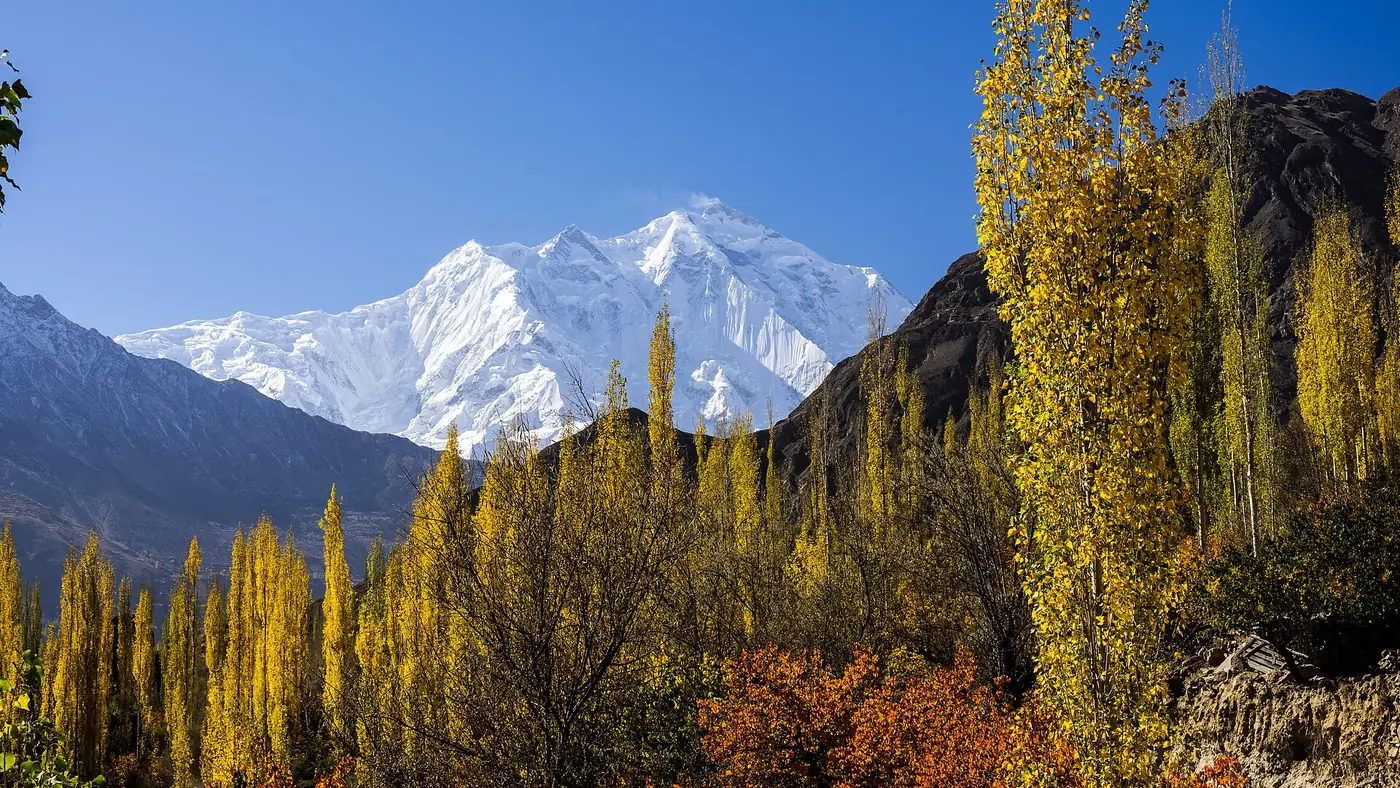
Autumn in Gilgit-Baltistan turns the valleys gold from about mid-October to mid-November, and the colour does not arrive everywhere at once. It starts in the higher, colder places, the upper Ghizer valley around Phander and Gojal in upper Hunza, in the middle of October. Skardu, Shigar and Khaplu follow in the second half of the month, and central Hunza peaks in the last week of October and the first days of November. If you can only go once, the last ten days of October catch the most of it.
This guide goes valley by valley through when the poplars and orchards turn, how to plan a route that follows the colour, and which roads, passes and hotels are closing as the season ends.
| Area | Usual peak | Base for the night |
|---|---|---|
| Upper Ghizer: Phander | Mid-October | Phander or Gupis |
| Gojal: Passu, Gulmit | Mid to late October | Gulmit or Passu |
| Skardu and Shigar | Second half of October | Skardu, Kachura or Shigar |
| Khaplu and the Shyok valley | Late October into early November | Khaplu |
| Central Hunza and Nagar | Last week of October to early November | Karimabad or Altit |
| Gilgit and the lower valleys | Early November | Gilgit |
When do the colours peak?
The turn follows the cold, so height and position decide the order. The poplars that line every field and water channel go yellow first where the nights get cold first, and the apricot, cherry and walnut trees follow with oranges, reds and browns. Across the region, the season runs for about four weeks, but any one village is at its best for only a week to ten days.
The dates in the table are the middle of a window, not fixed days. A mild autumn holds the colour back; an early frost or a few windy days can strip the trees in a week. A message to your hotel a few days before you leave will tell you more than any website, this one included.
Hunza and Nagar
Hunza has the longest spread of colour in Gilgit-Baltistan because it runs from Gojal, high and exposed to the wind off the glaciers, down to the warmer villages below Karimabad. Gojal turns first, in the middle of October, and central Hunza, Altit and the Nagar side of the river follow at the end of the month.
For most people Hunza is the centre of an autumn trip, and our guide to Hunza in autumn covers it in detail, with the best viewpoints and what to pack.
Skardu and Shigar
Around Skardu, the colour comes in the second half of October. The lines of poplars along the Indus and around the Kachura lakes turn gold against a dry, grey-brown valley, which makes the contrast sharper than in greener Hunza. Shigar, an hour north, has some of the best of it: orchards and poplar groves around the restored fort and the villages behind it, with the harvest done and far fewer visitors than in summer.
Two things change in Skardu at this time of year:
- Deosai closes. The plateau shuts when the first heavy snow covers the track, most often around mid-October. Don't plan an autumn trip around it; our guide to whether Deosai is open or closed explains how to check.
- The nights get cold quickly. Skardu averages about 20 °C by day and 4 °C at night in October, and around 13 °C and −2 °C in November.
Our guide to the best time to visit Skardu sets autumn against the rest of the year.
Khaplu and the Shyok valley
Khaplu, 103 km and about three hours up the Shyok river from Skardu, is much quieter than Skardu itself. It sits at about 2,600 metres, and in late October the poplars along the road and around Khaplu Palace turn yellow above the grey river bed. The colour often lasts into the first days of November here.
Give Khaplu at least one night rather than doing it as a round trip from Skardu. The light is best early and late, and the drive back in the dark is not worth the saving. The restored palace is partly a Serena hotel, and there are simpler guesthouses in the town.
Autumn is also a working season in Khaplu. Fallen leaves are gathered and stored, and in winter many families burn them for heat, so the leaf piles you see by the houses are not waste. Stay on the paths and ask before walking into a field or orchard.
Ghizer: Phander and the road west
The Ghizer valley, west of Gilgit on the road towards the Shandur Pass, is less visited than Hunza or Skardu and, in a good year, the earliest to turn. Phander is about 184 km from Gilgit, a drive of five to six hours through Gupis, past the long Khalti Lake. Its broad valley, braided river and lake turn gold from around the middle of October.
Plan at least two nights in Ghizer. It is not a day trip from Gilgit. Places to stay are simple guesthouses and small hotels, and some close for the winter, so check before you go. Beyond Phander, the road over Shandur to Chitral is closed by snow from roughly November to May, and it is rough in any season.
Planning a route that follows the colour
With a week to ten days, you can see more than one valley near its best by moving from high to low:
- Mid-October: Ghizer. Two nights in Phander, then back to Gilgit.
- Around 20 to 27 October: Skardu, Shigar and Khaplu. A night in Khaplu, one in Shigar and one or two in Skardu.
- The last days of October: Hunza. Two or three nights in Karimabad or Altit, and a night in Gulmit if Gojal still has colour.
It means some long days between valleys: four to five hours from Gilgit to Skardu, and seven to eight from Skardu to Karimabad. If you are flying, Skardu has more flights than Gilgit and is the easier airport to use. For a trip built around one valley, our Gilgit, Hunza and Khunjerab tour runs along the Karakoram Highway from Gilgit, and in autumn it can be timed for the colour.
What is open and closing in autumn
Autumn is usually one of the easiest times to travel in Gilgit-Baltistan. The summer flood season is over, the skies are clear, and the roads are generally at their most dependable. The high country, though, is shutting down:
- Deosai: closed by the first heavy snow, often around mid-October.
- Babusar road: usually open into November. In 2025 the Kaghan side closed on 6 November, so late in the season plan on the Karakoram Highway through Besham.
- Khunjerab Pass: usually open to visitors into November, but very cold at the top, and snow can close it for a day or two.
- Attabad Lake boats: run until about mid-October.
- Hotels: some close in November. Check that yours will be open for your dates.
- Flights: clear autumn weather helps, but flights to Gilgit and Skardu are still cancelled when cloud comes in, so keep a spare day.
Cold nights and heating
Autumn days are bright and comfortable. The nights are what catch people out: by late October they are near freezing in Hunza and Skardu and colder in the higher valleys, and power cuts get longer as the weather cools.
Before you book, ask how the room is heated and whether the hotel has backup power, and pack a properly warm jacket and thermals for sleeping. Our guide to Gilgit-Baltistan weather by month has the day and night temperatures for Gilgit and Skardu.
Is autumn the right time for your trip?
For photographers, couples and anyone who wants clear air, empty lanes and gentle walking weather, late October is one of the best times of the year in the north. Hotel prices are generally lower than in summer, and the valleys are quiet.
It suits you less if you want Deosai, the high pastures or long treks, which are closed or closing. Families with small children or older parents should weigh up the cold evenings and rooms that are not always well heated. If those matter more than the colour, September gives you most of the clear weather with warm nights. Our guide to when to go sets every season side by side.
Frequently asked questions
When is autumn in Gilgit-Baltistan?
The colour season runs from about mid-October to mid-November. It starts in the higher valleys, such as Phander and Gojal, and reaches central Hunza and the lower valleys around Gilgit last.
What is the best week to see autumn colours in Gilgit-Baltistan?
The last ten days of October catch the most places near their peak: Skardu, Shigar and Khaplu, the end of Gojal's colour, and the start of central Hunza's. For Ghizer, go about a week earlier.
Is Skardu good in autumn?
Yes, especially in the second half of October, when the poplars along the Indus and in Shigar turn gold. Deosai is usually closed by then, so plan on the valley sights, Shigar and Khaplu.
Is Deosai open in October?
Sometimes, early in the month. The plateau closes with the first heavy snow, most often around mid-October, so don't count on it for an autumn trip.
How cold is Gilgit-Baltistan in November?
Days are cool, around 13 °C in Skardu and 18 °C in Gilgit on average, but nights fall below freezing in Skardu and the higher valleys. Ask about heating before you book.
Can you visit Phander in autumn?
Yes. The upper Ghizer valley is at its best around mid-October. It is five to six hours from Gilgit, so plan at least two nights, and expect simple rooms and cold nights.