
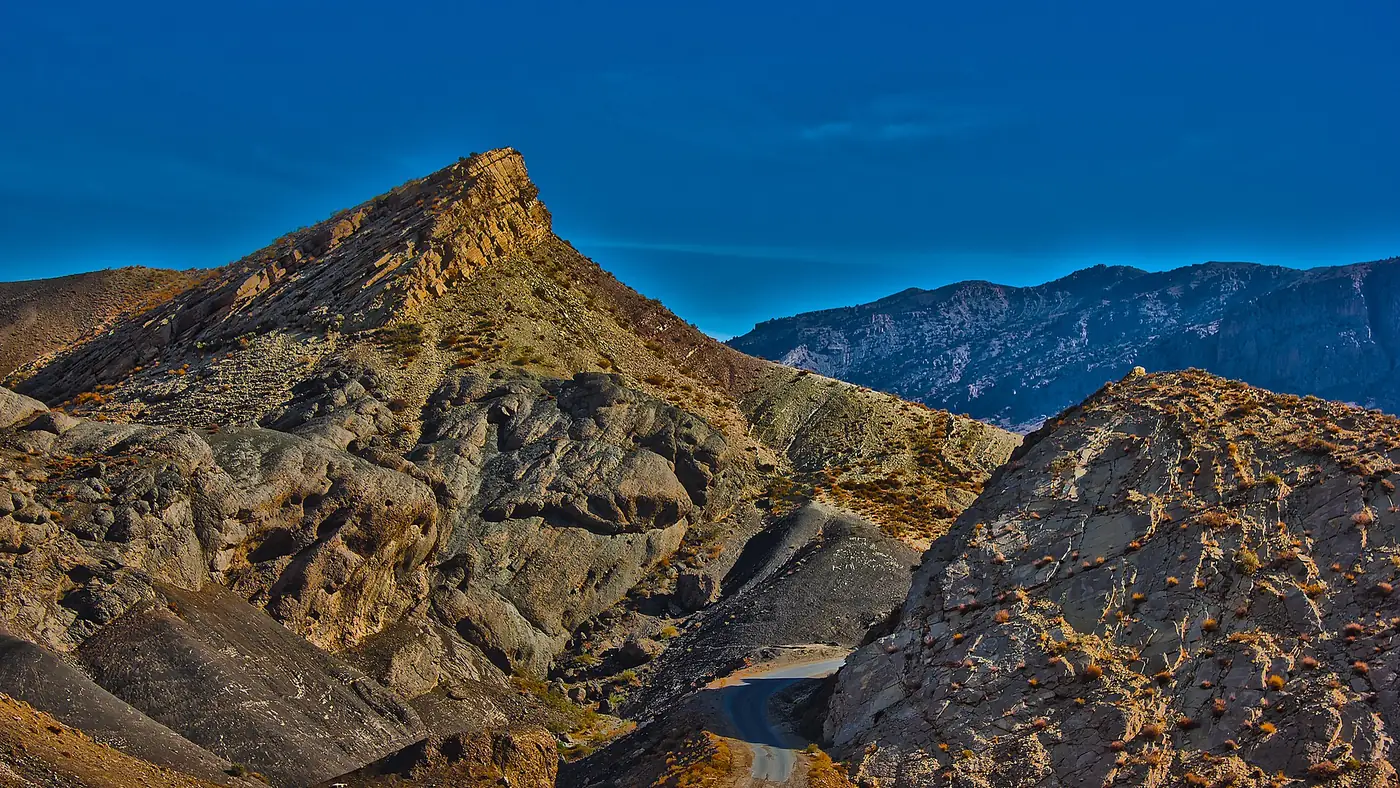

The Ziarat juniper forest covers the hills around the town of Ziarat in Balochistan, about 112,000 hectares by UNESCO's count, and is the largest contiguous juniper forest in Pakistan and one of the largest in the world. It grows between roughly 2,000 and 3,000 metres, some of it made up of gnarled, slow-growing trees whose exact ages nobody has precisely measured, though credible estimates put the oldest at well over a thousand years. UNESCO named it a biosphere reserve in 2013, Pakistan's second.
This guide covers what the forest is, how to walk in it, why it is under threat, and what the biosphere status means.
| At a glance | |
|---|---|
| Where | The hills around Ziarat town, Balochistan |
| Size | About 112,000 hectares (UNESCO), with an 11,000-hectare core zone |
| Altitude | Roughly 2,000 to 3,000 m |
| Tree age | Some individual trees are believed to be well over a thousand years old; exact ages are not scientifically confirmed |
| Protection | UNESCO biosphere reserve since 2013; a wildlife sanctuary since 1971 |
| Best time | May to September for walking; snow-covered branches in December to February |
| Main threats | Firewood cutting, drought, livestock grazing, disease |
What makes this forest unusual
Most of Pakistan's forest is in the wetter north; Ziarat's juniper grows in one of the driest, coldest environments a tree can survive in Balochistan's dry mountains, on thin, rocky soil, with a short growing season and long winters. The species, Juniperus excelsa, grows extremely slowly in these conditions, sometimes putting on only a millimetre or two of trunk girth a year, which is why individual trees can be genuinely old even where they look modest in size.
Estimates of the oldest trees' ages vary a great deal between sources, from a few hundred years to several thousand. No comprehensive scientific dating study of the Ziarat trees has been published, so treat any specific figure you read, including ones on this page, as an informed guess rather than a fact. What is not in doubt is that these are among the oldest living things in Pakistan, and that walking among them, particularly the largest, most twisted trunks on the higher slopes, is unlike anywhere else in the country.
Walking in the forest
The forest is not a fenced reserve with a single entrance; it begins at the edge of Ziarat town and spreads across the surrounding hills, so you walk into it directly from the streets or from the road to Prospect Point. There is no marked trail network or visitor centre, which is part of the appeal and part of the difficulty: you follow tracks and roads rather than a waymarked path.
- From the town, above the Residency. A short walk uphill puts you among juniper within minutes, with views back over the rooftops.
- Towards Prospect Point. The road out to the viewpoint, about 6 km from town, runs through some of the densest and oldest-looking stands, and walking part of it on foot is the best way to see individual trees closely.
- Towards Sandeman Tangi. The gorge walk passes through forest on the lower slopes, greener where the stream runs.
Go in the morning or late afternoon in summer, when the sun is less harsh and the light on the bark is better for photographs. Carry water; there is little shade off the main tracks and no facilities once you are away from the town.
Why the forest is under threat
The forest has lost ground steadily for decades, and conservationists have been warning about it since well before the 2013 biosphere designation.
- Firewood. Ziarat's winters are cold and gas supply is limited, so families cut juniper branches, and sometimes whole trees, for fuel. This pressure increased after the 2008 earthquakes damaged homes and after other periods of hardship, when residents turned to the forest for construction material and fuel.
- Drought and climate change. Rainfall and snowfall in the region have become less reliable, and juniper, already slow-growing, recovers poorly from dry years.
- Grazing and habitat pressure. Livestock grazing and expanding settlement have fragmented parts of the forest and the wildlife habitat within it.
- Disease. Weakened, drought-stressed trees are more vulnerable to fungal attack.
- Limited funding. UNESCO's biosphere designation recognises the forest's importance but does not come with automatic funding for its protection, and conservation work depends on the provincial government and NGOs.
None of this is unique to Ziarat, but the slow growth of the trees means recovery, if it happens at all, will take generations. Visitors can help simply by not breaking branches, not lighting fires with juniper wood, and keeping to existing tracks rather than cutting new ones through the undergrowth.
The biosphere reserve, in practice
UNESCO's Man and the Biosphere designation divides the reserve into a strictly protected core zone, of roughly 11,000 hectares, surrounded by buffer and transition zones where controlled human use, including the town of Ziarat itself, continues. It is a recognition of the forest's global significance rather than a fenced-off protected area in the way a national park might be, and day-to-day management sits with Balochistan's forest department.
For visitors this mostly means the forest is exactly what it looks like: an open, walkable hillside above a small town, not a ticketed attraction. It is also why what you do while walking through it, taking rubbish away, not cutting wood, matters more here than it would in a forest under less pressure.
Is it worth the visit?
Yes, and for most people it is the reason to come to Ziarat at all, more than the Residency or the viewpoints individually. There is nowhere else in Pakistan to walk among trees this old, in a landscape this dry and open. It rewards an unhurried couple of hours rather than a quick photo stop.
It suits travellers who enjoy a quiet walk more than a checklist of sights; there are no facilities, marked trails or interpretation boards, so go with low expectations of infrastructure and high expectations of the trees themselves. For the rest of what to see in the same trip, our guide to places to visit in Ziarat covers the Residency and the viewpoints, and our Ziarat weather guide helps with timing.
Frequently asked questions
How old are the juniper trees in Ziarat?
Estimates vary widely, from a few hundred years to several thousand for the oldest individuals, but no full scientific dating study has been published, so treat any single figure as an informed guess rather than a confirmed fact.
How big is the Ziarat juniper forest?
UNESCO lists the biosphere reserve at about 112,000 hectares, with a strictly protected core zone of around 11,000 hectares. It is the largest contiguous juniper forest in Pakistan.
When did the forest become a UNESCO biosphere reserve?
In 2013, when it became Pakistan's second biosphere reserve under UNESCO's Man and the Biosphere Programme.
Is the juniper forest threatened?
Yes. Firewood cutting, drought, grazing and disease have all reduced the forest over recent decades, and because the trees grow so slowly, recovery is very slow too.
Can you walk in the forest freely?
Yes, there is no fence or ticket. It begins at the edge of Ziarat town and spreads across the surrounding hills, reached on foot from the town or along the road towards Prospect Point.
What is the best time to see the forest?
May to September for easy walking in mild weather, or December to February if you want to see the trees under snow, though winter access depends on the road and forecast.
Is Balochistan safe for overseas visitors?
Pakistani travellers do visit, but as of September 2026 the UK government advises against all travel to Balochistan. If you hold a foreign passport, check your own government's advice before you go, because travelling against it can void your insurance. Everyone should check local news and current police advice before setting out.