
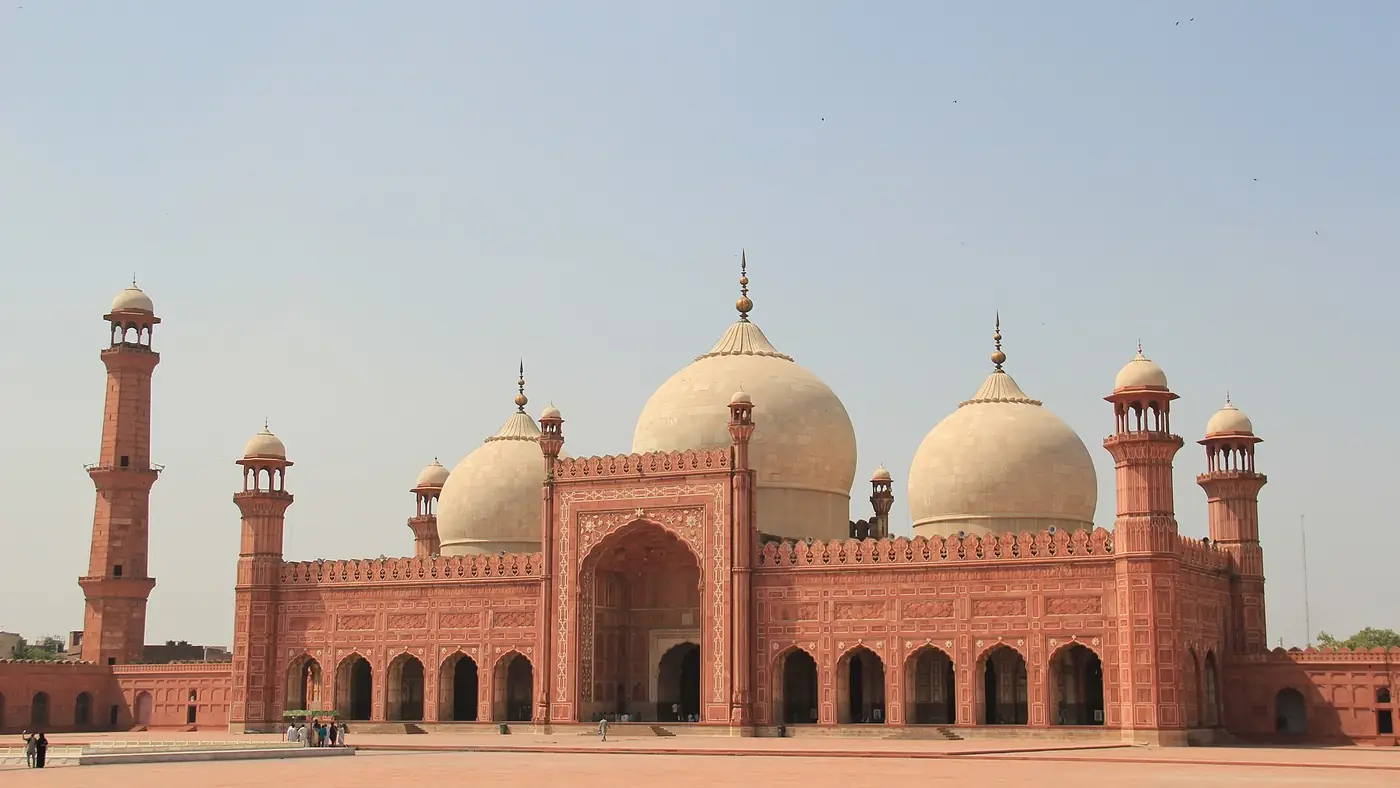

Punjab holds three of Pakistan's six confirmed UNESCO World Heritage Sites: the Lahore Fort and Shalimar Gardens (inscribed together in 1981), Rohtas Fort near Jhelum (1997), and the Taxila archaeological sites near Islamabad (1980, alongside Sindh and Khyber Pakhtunkhwa's own three). Beyond these, a growing list of Punjab monuments sits on UNESCO's tentative list, waiting on the years-long process toward full inscription.
This guide covers each confirmed site and the tentative ones worth knowing about.
| Site | Inscribed | Location | Known for |
|---|---|---|---|
| Lahore Fort & Shalimar Gardens | 1981 | Lahore | Mughal fort and gardens |
| Rohtas Fort | 1997 | Near Jhelum | Largest and best-preserved Mughal-era fort |
| Taxila | 1980 | Near Rawalpindi | Gandhara-era archaeological sites |
| Various (tentative list) | Not yet inscribed | Across Punjab | Badshahi Mosque, Wazir Khan Mosque, Harappa, Pharwala Fort, and more |
Lahore Fort and Shalimar Gardens
Lahore Fort and the Shalimar Gardens were inscribed together in 1981, recognising both the fort's Mughal-era architecture, built up over centuries by emperors including Akbar, Jahangir and Shah Jahan, and the formal Mughal garden laid out by Shah Jahan in 1642 several kilometres away. The fort holds the Sheesh Mahal (Mirror Palace), the Alamgiri Gate and a mix of earlier and later construction layered across its grounds; the gardens are a working example of Mughal garden design, with terraces, fountains and reflecting pools still in use.
Both sites sit within the Walled City area of Lahore and are straightforward to combine with a day exploring Badshahi Mosque and the old city bazaars nearby. Our Lahore Fort ticket price guide covers current entry costs and timings for the fort itself.
Rohtas Fort
Rohtas Fort, near Dina in Jhelum district, was built from 1541 by the Pashtun ruler Sher Shah Suri to guard the route into the Punjab plains and to hold down the surrounding Gakhar tribes, who had resisted him. It's one of the largest fortresses in South Asia, with walls running for several kilometres, monumental gates, and a scale that makes it feel more like a fortified town than a single fort. UNESCO inscribed it in 1997, recognising it as an exceptional example of early Islamic military architecture, blending South Asian, Central Asian and Persian traditions.
It's close to the M2 motorway between Lahore and Islamabad, making it an easy stop on a wider trip rather than a special journey. Our Rohtas Fort guide has ticket and visiting details.
Taxila
Taxila, northwest of Rawalpindi, is a cluster of archaeological sites spanning several ancient cities and Buddhist monasteries and stupas, occupied from around the sixth century BCE through the Gandhara period and into the early Islamic era. It was one of the region's major centres of learning and trade for over a thousand years, sitting at the crossroads of routes linking Central Asia, the Indian subcontinent and beyond, and its Buddhist-era remains are among the most significant Gandhara sites anywhere.
It's close enough to Islamabad and Rawalpindi to visit as a half-day trip, with the Taxila Museum holding much of what's been excavated from the surrounding sites. Our Taxila Museum guide covers what's on display and how to plan the visit.
Punjab's tentative list: what's waiting for inscription
UNESCO's tentative list is the formal step before full nomination, and Punjab's presence on it has grown substantially in recent years. As of 2026, it includes Lahore's Badshahi Mosque and Wazir Khan's Mosque, the Mughal-era tombs of Jahangir, Asif Khan and the Akbari Sarai, Hiran Minar and its tank in Sheikhupura, the Harappa archaeological site, the Tomb of Shah Rukn-e-Alam in Multan, the Salt Range and Khewra Salt Mines, and, added in 2026, Pharwala Fort near Islamabad.
Being on the tentative list is not the same as being inscribed. It means Pakistan has formally proposed the site as a future candidate; actual inscription can take years and isn't guaranteed. None of these carry UNESCO World Heritage status yet, though several, Badshahi Mosque especially, are already major destinations in their own right regardless of that status.
Why Taxila counts as three cities in one
Unlike Lahore Fort or Rohtas, which are single monuments, Taxila's UNESCO listing covers several separate sites spread across the wider area: the ruins of Sirkap, Sirsukh and Bhir Mound, each representing a different era of the city's long history, plus Buddhist stupas and monasteries including Dharmarajika and Jaulian. Visiting properly means moving between several locations rather than parking at one gate, which is part of why a half-day is the minimum rather than a generous allowance.
The Taxila Museum is the natural starting point, holding much of the Gandhara-era sculpture recovered from the surrounding sites, before heading out to whichever of the individual ruins interest you most.
What each site is like to visit, practically
Lahore Fort and Shalimar Gardens sit inside a busy, well-signposted part of the city, with ticket counters, guides available on site, and crowds that build through the day, especially on weekends. Rohtas Fort is far quieter: its scale means visitors spread out across a much larger area, and it's common to have long stretches of wall largely to yourself outside of holidays. Taxila sits between the two, busy at the museum and the more accessible sites, quieter at the more remote monastery ruins further from the road.
None of the three require a permit or advance booking for general tourism. Standard site-entry tickets are sold at each location, and prices differ for local and foreign visitors at all three, so check current rates at the gate or through the linked guides above rather than assuming a fixed figure, since these have changed over time.
Visiting all three confirmed sites in one trip
Lahore Fort, Rohtas Fort and Taxila can all be visited within a single loop through central and northern Punjab. Start in Lahore for the fort and gardens, drive the M2 towards Islamabad with a stop at Rohtas Fort near Jhelum roughly two-thirds of the way, then continue to Taxila as a half-day trip from Islamabad. Spread over several days rather than rushed into one, this covers all three of Punjab's confirmed sites alongside the Salt Range scenery along the route. Our seven-day Punjab road trip builds a fuller itinerary around this same corridor.
Frequently asked questions
How many UNESCO World Heritage Sites are in Punjab?
Three confirmed sites: Lahore Fort and Shalimar Gardens (inscribed together), Rohtas Fort, and Taxila. Pakistan has six UNESCO World Heritage Sites in total, with the other three in Sindh and Khyber Pakhtunkhwa.
Is Badshahi Mosque a UNESCO World Heritage Site?
Not yet. It's on Pakistan's tentative list, the step before formal nomination, but it has not been inscribed as a full World Heritage Site.
Can I visit Lahore Fort and Shalimar Gardens in one day?
Yes, along with Badshahi Mosque and the Walled City bazaars, though it's a full day if you want time at each rather than a rushed visit.
Is Rohtas Fort worth the detour from the motorway?
It's a short detour close to the M2 between Lahore and Islamabad, and its scale, several kilometres of intact walls, makes it one of the more striking stops on that route.
What is the difference between an inscribed site and a tentative-list site?
An inscribed site has completed UNESCO's full evaluation and been formally added to the World Heritage List. A tentative-list site has been proposed by the government as a future candidate but has not yet been reviewed and approved.