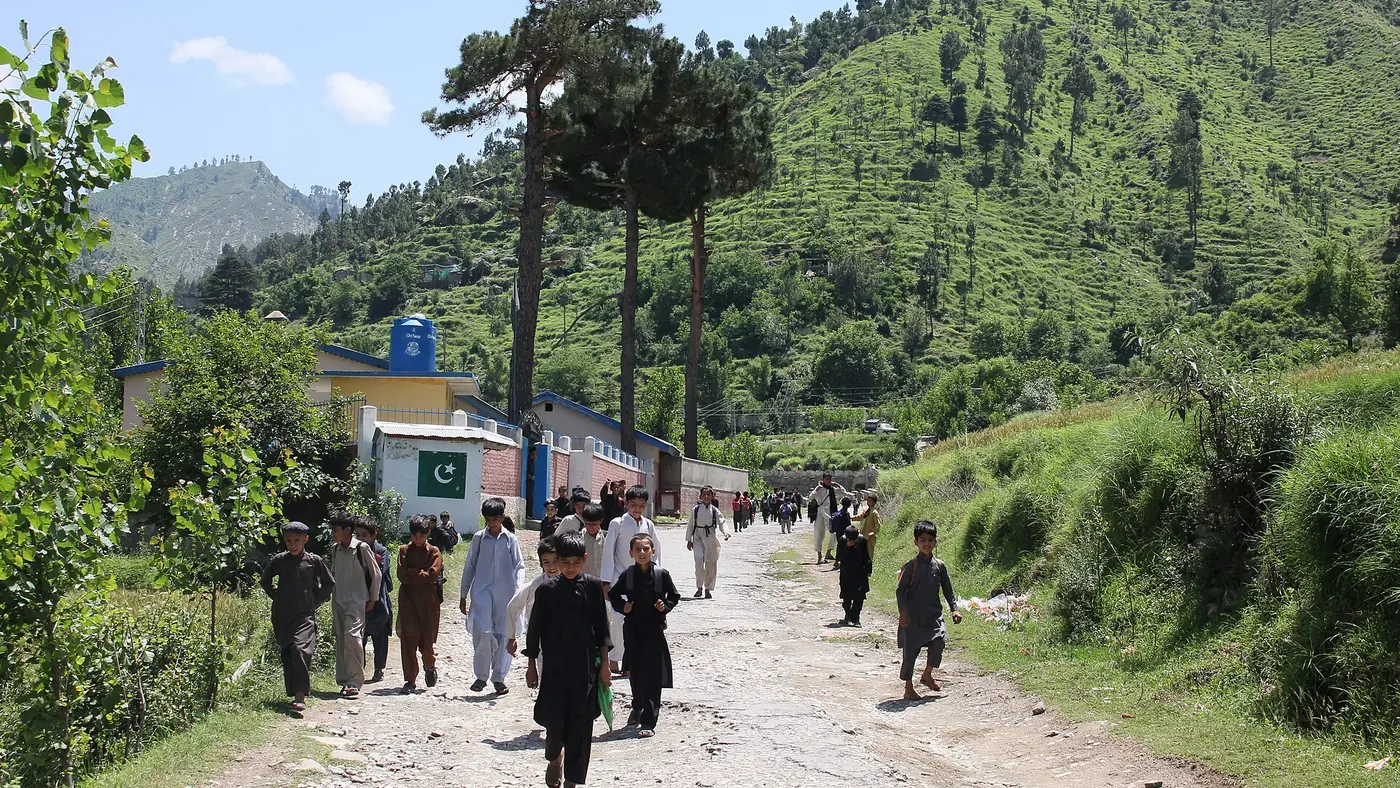
Swat culture is largely Pakhtun in the lower and middle valley, built around hospitality, the hujra as a communal guest space, and Pashto language and dress, but it changes higher up: from Bahrain northward, into Kalam, Utror and Usho, the everyday language is not Pashto but Torwali and Gawri, older Dardic languages unique to this part of the mountains.
This guide covers what visitors actually notice: hospitality customs, dress, music, the valley's linguistic patchwork, and a few points of etiquette worth knowing before you go.
| At a glance | |
|---|---|
| Main language, lower and middle Swat | Pashto |
| Main languages, upper Swat (Bahrain northward) | Torwali and Gawri |
| Core hospitality custom | Melmastia, hospitality to guests, central to Pashtunwali |
| Traditional guest space | The hujra, a communal men's guesthouse |
| Dress | Shalwar kameez for men and women; headscarves common for women |
Hospitality and the hujra
Hospitality, melmastia, is one of the central principles of Pashtunwali, the unwritten Pakhtun code of conduct, and it shapes how visitors are treated across Swat. A guest, even a stranger, is traditionally owed food, shelter and protection, and a household's generosity to guests is a matter of standing in the community.
The hujra is the physical expression of this: a communal guesthouse, traditionally maintained by a village or extended family, used for hosting visitors, settling disputes, and gathering for conversation, storytelling and music. Fewer hujras function in their traditional form today than a generation ago, but the underlying hospitality they represent is still something visitors to Swat regularly experience, particularly outside the main tourist towns.
Dress and everyday life
Shalwar kameez, the loose trousers and long shirt worn by both men and women, is the standard dress across Swat, as it is through most of Khyber Pakhtunkhwa. Men often wear a waistcoat and a cap or turban; women's clothing frequently includes embroidery distinctive to the region, and a headscarf is standard. Visitors, women especially, are more comfortable and better received dressing modestly: loose clothing that covers the arms and legs, and a scarf on hand for more conservative or rural areas.
Music and gatherings
Music in Swat, as across Pakhtun areas, centres on instruments like the rabab and the tabla, often accompanying poetry and storytelling in gatherings that trace back to the hujra tradition. Weddings and community events are the settings where this is most visible to an outsider passing through, though as a visitor you are more likely to hear it informally, in a shop or at a roadside stop, than to be invited to a private function.
A valley with more than one culture
What sets Swat apart from many other Pakhtun areas is that its culture isn't uniform along the length of the valley. Pashto is the everyday language of Mingora, Saidu Sharif, Madyan and Bahrain. But from around Bahrain northward, in Kalam and the side valleys of Utror and Usho, the local languages are Torwali and Gawri, Dardic languages related to each other but distinct from Pashto and unique to this stretch of the Hindu Kush foothills. The Torwali and Gawri communities are ethnically and linguistically closer to the Kohistani peoples of the Indus valley than to the Pashtuns of the lower valley, a reminder that Swat sits at a genuine cultural crossing point, not a single homogeneous region.
Etiquette for visitors
- Ask before photographing people, especially women, and expect a no in more conservative or rural areas.
- Dress modestly, for both men and women; this matters more the further you get from Mingora's more cosmopolitan bazaar.
- Accept hospitality graciously. Being offered tea or food, even briefly, is common and it's polite to accept at least a little.
- Use your right hand for eating and for giving or receiving things, as is standard across Pakistan.
- Keep public displays of affection minimal, in line with general local norms.
Why this matters for how you travel
Understanding this gives more meaning to details that otherwise pass unnoticed: why a shopkeeper in Kalam sounds nothing like one in Mingora, why a roadside stop can turn into an offer of tea you didn't ask for, or why dress and manners that pass without comment in Islamabad draw a second look in a smaller Swat village. Our guide to Swat's famous food and places to visit in Swat cover more of what daily life and travel in the valley look like in practice.
Frequently asked questions
What language do people speak in Swat?
Pashto in the lower and middle valley, around Mingora, Saidu Sharif, Madyan and Bahrain. From Bahrain northward, in Kalam, Utror and Usho, most people speak Torwali or Gawri instead.
What is a hujra?
A traditional communal guesthouse, historically maintained by a village or family, used for hosting guests, settling disputes and gatherings. It's central to Pakhtun hospitality customs, though fewer function in their full traditional role today.
How should visitors dress in Swat?
Modestly, in loose clothing covering the arms and legs. Shalwar kameez is the local norm for both men and women, and a headscarf is a sensible thing for women to have on hand, especially outside Mingora.
Is it normal to be offered tea or food by strangers in Swat?
Yes. Hospitality to guests is a deeply held custom across Pakhtun areas, and being offered tea or a meal, even briefly, is common and considered polite to accept at least in part.
Is it safe to travel in Swat to experience its culture right now?
Pakistani visitors still travel through Swat, but the security situation has worsened in 2026 and the UK government currently advises against all travel there. Check current news and local advice before you go; see our guide on whether Swat is safe for tourists for details.