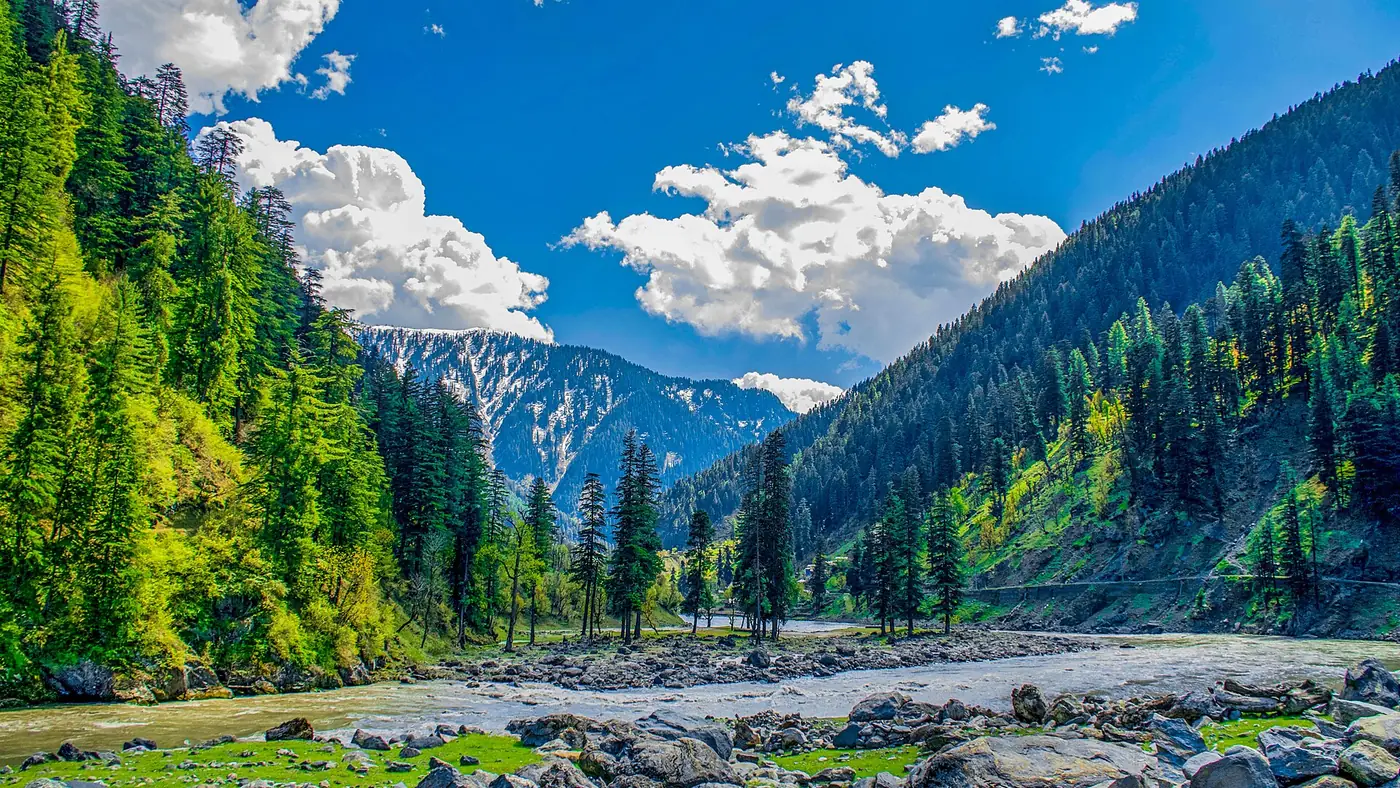
Sharda Peeth is the ruin of a temple and centre of learning above the town of Sharda in the Neelum Valley, built in the Kashmiri style and dating back to around the 6th century. It was one of the most important centres of Sanskrit and Kashmiri Shaivist learning in South Asia for several centuries, and today the roofless stone structure stands on a platform above the Neelum River, about a twenty-minute walk from the Sharda bazaar.
This guide covers its history, what remains to see, and how to visit.
| At a glance | |
|---|---|
| Location | Above Sharda, Neelum Valley, on the Neelum River |
| Altitude | About 1,981 m |
| Founded | Around the 6th century CE, flourished 6th to 12th centuries |
| Walk from the bazaar | About 20 minutes, partly on stone steps |
| Time to allow | 30 to 45 minutes at the site |
| Condition | Ruined; walls and platform survive, the roof does not |
What was Sharda Peeth?
Sharda Peeth grew into one of the foremost centres of learning in the region between roughly the 6th and 12th centuries, teaching subjects that included the Vedas, philosophy, grammar, astronomy and medicine. It was fundamentally a place of Buddhist learning before becoming a major Hindu temple and pilgrimage site, and by the medieval period it was renowned across South Asia, drawing scholars and pilgrims from well beyond Kashmir. A note from the 16th century describes the stone temple as still "regarded with great veneration" centuries after its peak.
The site's importance went beyond religion. It gave its name to the Sharada script, once used to write Kashmiri and Sanskrit across the region, and to the goddess Sharada, a form of Saraswati associated with learning, whose wooden image was kept in the main shrine.
What survives today
What stands now is a ruin: a rectangular stone platform and the remains of the temple structure, built in red sandstone in the Kashmiri architectural style, with a plain conical form rather than elaborate carving. The roof is gone and the interior is open to the weather. Later visitors in the 19th century still found the enclosing walls and pillars standing to a good height; time, earthquakes and long neglect have reduced what is left since.
The most serious recent damage came from the earthquake of October 2005, which struck this part of Azad Kashmir hard and left the site in urgent need of the restoration it has not yet received. Even in its current state, the setting, on a platform above the river with mountains behind, gives a sense of why this location was chosen in the first place.
Visiting Sharda Peeth
The ruins sit above the Sharda bazaar, reached by a walk of about twenty minutes, the final stretch on stone steps. Most visitors spend thirty to forty-five minutes at the site itself, enough time to see the platform and walls and take in the view over the town and the river.
There is no ticket office or formal visitor centre, so treat the site with the same care you would any historic ruin: keep to marked paths where they exist, do not climb on unstable stonework, and take any rubbish back down with you. For those planning a longer stop in the area, our guide to Sharda covers the rest of the town, and our guide to where to stay in Sharda covers accommodation for a night nearby.
Why it still matters
For readers on the Indian side of the Line of Control, Sharda Peeth remains one of the most significant historic sites of old Kashmir, and it has occasionally featured in cross-border discussions about pilgrim access, none of which has resulted in an open route to the site as of 2026. For visitors from Pakistan, it is one of the few places in the Neelum Valley where the region's history predates the modern border by well over a thousand years, and it is worth the short climb for that alone.
Frequently asked questions
What is Sharda Peeth?
The ruins of an ancient temple and centre of learning above Sharda in the Neelum Valley, which flourished as a major site of Sanskrit and Kashmiri Shaivist scholarship from around the 6th to the 12th centuries.
How old is Sharda Peeth?
It dates back to around the 6th century CE, making it well over a thousand years old, though the exact date of its founding is not firmly established.
How do you get to Sharda Peeth?
Walk up from the Sharda bazaar, a route of about twenty minutes with a final stretch of stone steps. It needs no vehicle or permit.
What is left of Sharda Peeth today?
A ruined stone platform and the remains of the temple walls, built in red sandstone in the Kashmiri style. The roof is gone, and the site was further damaged by the 2005 earthquake.
Is Sharda Peeth open to Hindu pilgrims from India?
No. There is no open pilgrim corridor to the site as of 2026, despite periodic discussion of one. Visits are made by travellers within Pakistan and Azad Kashmir.
How long should I spend at Sharda Peeth?
About thirty to forty-five minutes at the ruins, plus twenty minutes each way for the walk up from the bazaar.