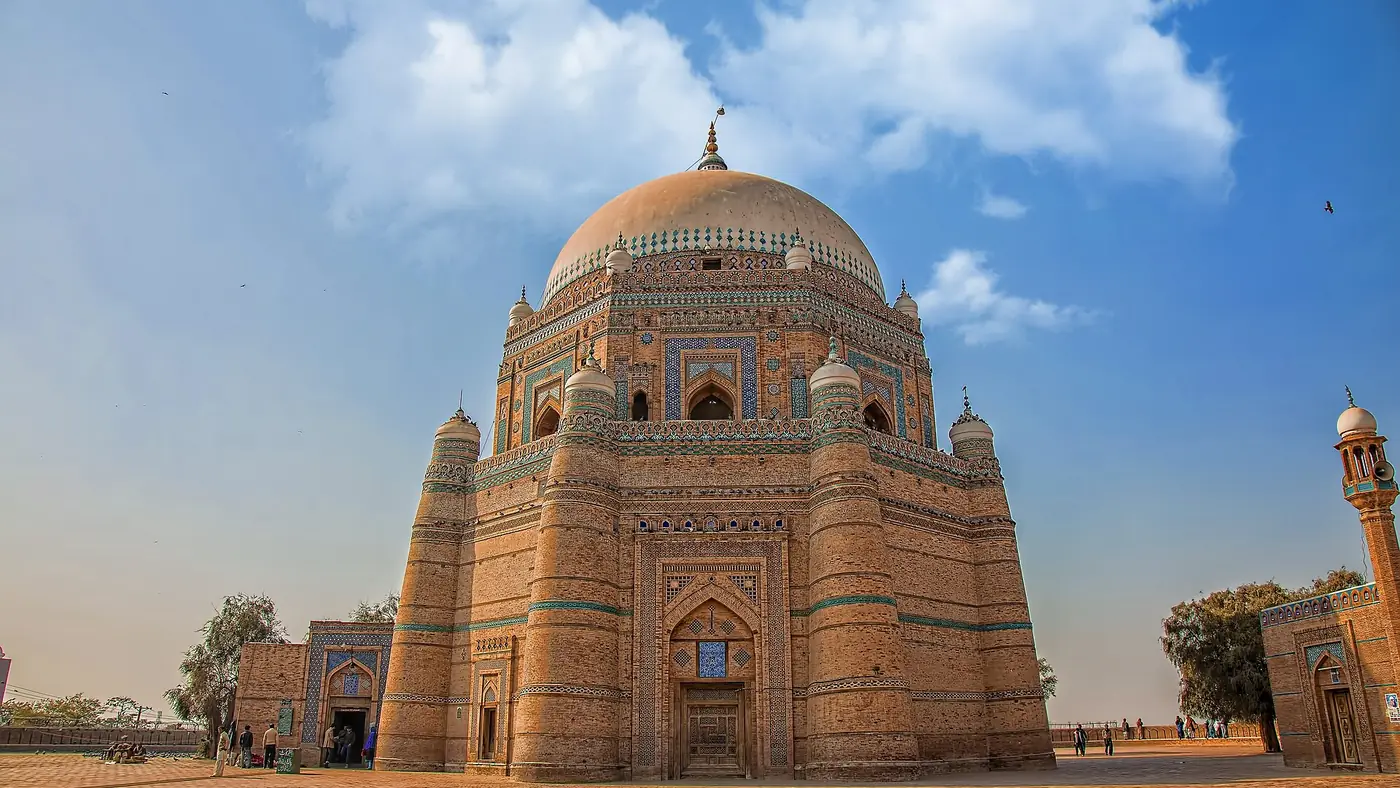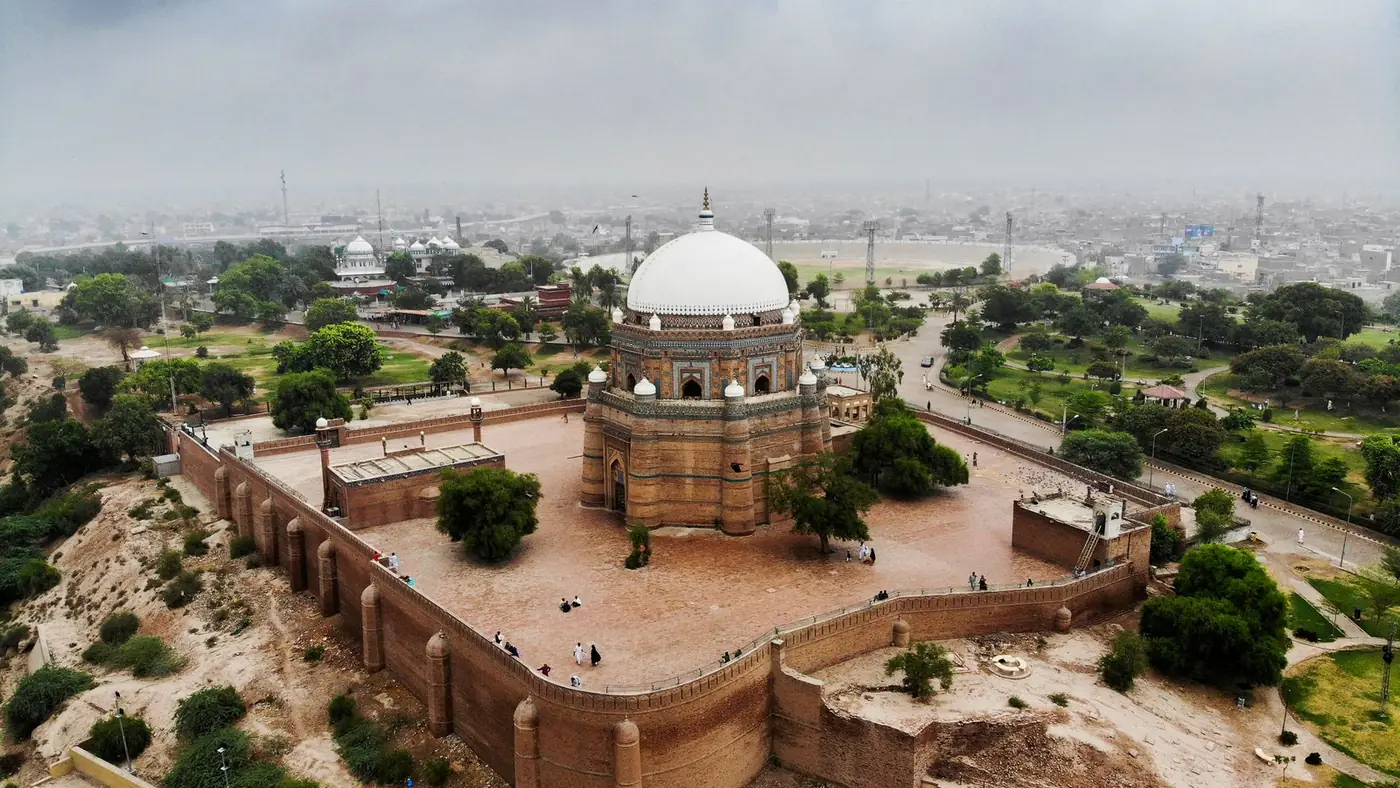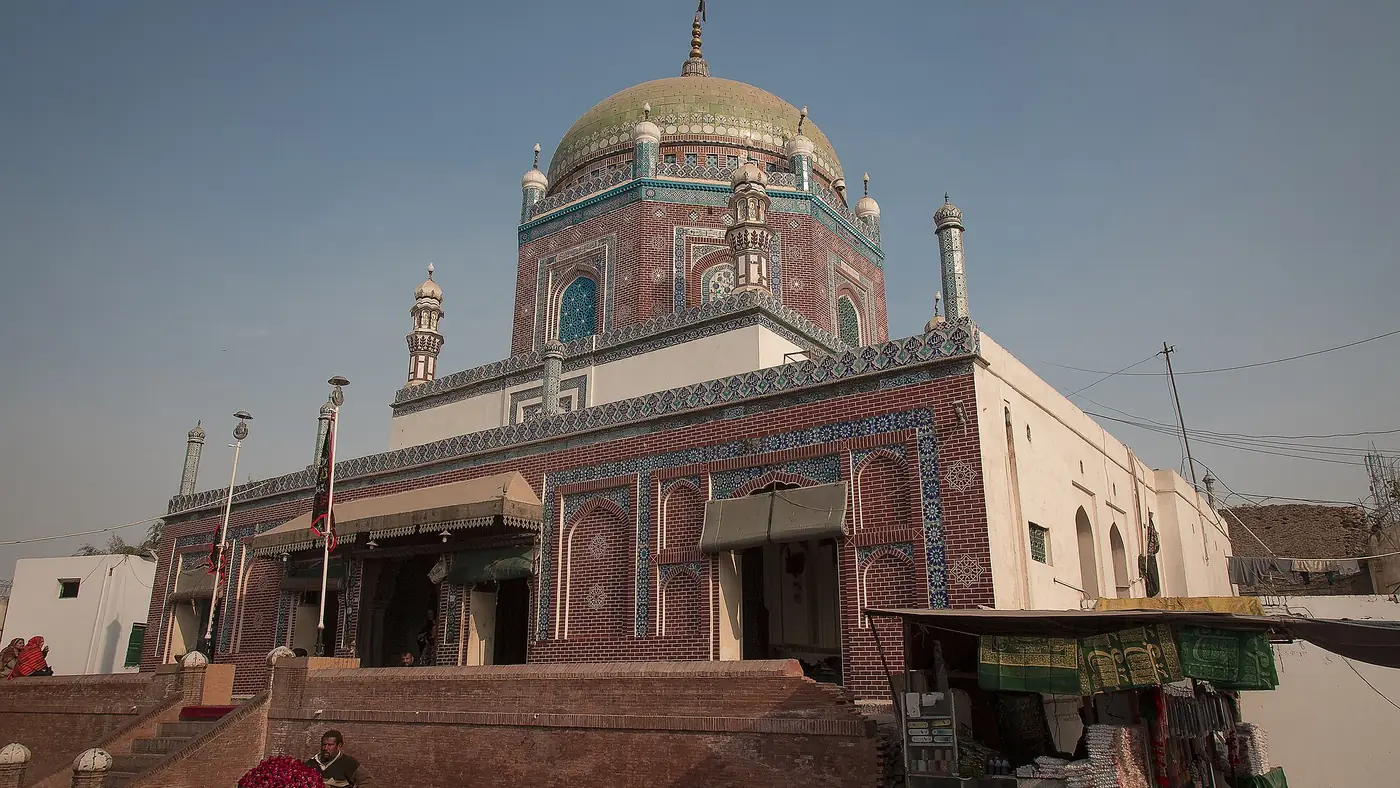
The shrine of Shah Shams Tabrez, properly Shamsuddin Sabzwari, stands on the high ground above the old bed of the Ravi River in Multan, east of the fort mound near Aam Khas Bagh. It is a square, 30-foot brick tomb topped with a dome and decorated in glazed tile, built by the saint's grandson in the 14th century, and it is one of Multan's oldest surviving shrines. It is free to visit and, like the city's other shrines, an active place of worship where visitors are welcome if they dress and behave accordingly.
This guide covers who the saint was, the sun legend attached to his name, the tomb itself, where to find it and how to visit it respectfully.
| At a glance | |
|---|---|
| Formal name | Shamsuddin Sabzwari, known locally as Shah Shams Tabrez |
| Died | Around 1276 |
| Tomb built | 14th century, by his grandson |
| Height | About 30 feet (9.1 m) |
| Material | Brick, with a hemispherical dome and glazed tile ornament |
| Location | High bank of the old Ravi riverbed, near Aam Khas Bagh, east of the fort |
| Entry | Free; shoes off, heads covered |
| Urs | Held in June each year |
Who was Shah Shams Tabrez?
According to tradition recorded from the 19th century onward, Shamsuddin Sabzwari was born in Sabzewar, in present-day Iran, and travelled through Badakhshan, Tabriz and Baghdad before settling in Multan, most likely sometime in the 12th to 14th centuries. His arrival is said to have coincided with the period of Bahauddin Zakariya, the Suhrawardi saint whose own shrine stands on the Multan fort mound, and some accounts describe the two as rivals, with Zakariya reportedly opposed to Shams settling in the city. He died around 1276, and his grandson built the shrine that stands today.
A common point of confusion is worth clearing up. "Shams Tabrizi" is also the name of a far more famous 13th-century Persian mystic, the close companion of the poet Rumi in Konya, and the two are frequently mixed up because they share the name and era. They are, as far as the historical record shows, distinct people; Multan's Shamsuddin Sabzwari picked up the "Tabrez" epithet through his own travels and associations, separately from Rumi's companion.
The legend of the sun
Local tradition attaches a well-known story to the saint's name: while wandering hungry and unable to find anyone willing to let him cook a piece of fish, he is said to have called on the sun to come down and roast it for him, and the sun descended close enough to do it. This is passed down as folklore rather than documented history, and it is worth treating it that way, as the story that explains the epithet rather than as a historical event, but it remains one of the most commonly told legends about the shrine and is part of why the saint's association with heat and light has stuck in local memory.
The shrine building
The tomb is a square brick structure, about 30 feet high, rising to a hemispherical dome and decorated with the glazed tile work that runs through Multan's other major shrines, though on a smaller scale than the towering tombs of Shah Rukn-e-Alam or Bahauddin Zakariya. It was built in the 14th century by the saint's grandson, on rising ground above what was then the bank of the Ravi River, before the river shifted its course away from the city over the following centuries. The site's elevation and its position near the old Aam Khas Bagh gardens make it a quieter, less visited stop than the shrines on the main fort mound, even though it is one of the older tombs in the city.
Getting there
The shrine sits east of the old fort mound, on the higher ground above the former riverbed, roughly half a mile from the fort site itself. It is a separate stop from the Qila Kohna Qasim Bagh complex where Shah Rukn-e-Alam's and Bahauddin Zakariya's tombs stand, so it needs its own short trip by rickshaw or car rather than being folded into the same walk. Local drivers and guides in Multan know it well; if you are combining a day of shrine visits, plan this one either before or after the fort mound rather than trying to walk between them.
Combining it with the rest of Multan
Because the shrine sits apart from the fort mound, it works best as a separate stop rather than an add-on to a rushed itinerary. If you are also visiting Shah Rukn-e-Alam's tomb and the Bahauddin Zakariya shrine on the fort mound, treat Shah Shams Tabrez as a distinct half-day stop, ideally on a different morning or afternoon so you are not rushing between the two areas in Multan's heat. The nearby Aam Khas Bagh gardens, a Mughal-era garden later redeveloped under British administration, make a reasonable place to rest afterwards, though check locally on its current condition and opening hours before planning around it.
November to February is the easiest season for the walk up to the shrine and back, as with the rest of Multan's outdoor sightseeing; from May to August, aim for the early morning, since the exposed high ground around the tomb gets very hot by midday.
The urs
The saint's urs, commemorating his death, is held in June each year. As with any large shrine gathering in Multan, expect much larger crowds, more devotional activity and busier access roads during the urs than on an ordinary day, and June is also one of the hottest months in Multan, so a visit during the urs means planning around both the crowds and the heat.
Etiquette
The usual rules for visiting a working Sufi shrine in Pakistan apply here as elsewhere in the city:
- Remove your shoes before entering the tomb chamber.
- Cover your head if you are a woman, and dress modestly, with arms and legs covered.
- Keep your voice down and stay out of the way of people praying at the grave.
- Ask before photographing anyone at worship, though photographs of the building itself are generally fine.
- Visit earlier in the day if you want a quieter experience, since the shrine, like Multan's others, gets busier from midday onward and especially on Thursday evenings.
Frequently asked questions
Is Shah Shams Tabrez the same person as Rumi's companion Shams Tabrizi?
No. They share a similar name and lived in roughly the same era, which causes frequent confusion, but Multan's Shamsuddin Sabzwari and the Persian mystic who accompanied Rumi in Konya are generally treated as separate historical figures.
Where is the Shah Shams Tabrez shrine in Multan?
On raised ground above the old bed of the Ravi River, near Aam Khas Bagh, roughly half a mile east of the fort mound where Multan's other major shrines stand.
Is there an entry fee for the shrine?
No. Like Multan's other shrines, it is free to enter as a working place of worship.
When is the urs of Shah Shams Tabrez held?
In June each year, which is also one of Multan's hottest months, so expect both large crowds and high temperatures if you visit during it.
What is the story behind the name "Tabrez"?
Local legend says the saint once called on the sun to come down and roast a piece of fish he had no way to cook, and it descended close enough to do so. It is passed down as folklore rather than documented history.