Sadiq Garh Palace, in Dera Nawab Sahib about 15 minutes off the highway from Bahawalpur, is not formally open to the public: the estate has been tied up in a decades-long family legal dispute, and much of the 19th-century palace has fallen into disrepair. Visitors can generally reach the gate and grounds, and the mosque on the property keeps regular hours, but going further inside the palace itself is inconsistent and not something to plan a trip around. This guide covers the palace's history, what you can realistically expect to see, and what else is worth stopping for nearby.
| At a glance | |
|---|---|
| Where | Dera Nawab Sahib, Ahmadpur East tehsil, Bahawalpur district |
| From Bahawalpur | About 15 minutes off National Highway 5 |
| Built | 1882 to 1895, by Nawab Sadiq Muhammad Khan IV |
| Public access | Not formal; gate and grounds usually reachable, palace interior inconsistent |
| Mosque on site | Generally open through the day |
| Condition | Poor in many sections; parts of the estate are actively deteriorating |
| Nearby | Derawar Fort, about 40 km further into the desert |
A palace built for a winter residence
Sadiq Garh Palace was commissioned by Nawab Sadiq Muhammad Khan IV, ruler of the princely state of Bahawalpur, with construction running from 1882 to around 1895. It was intended as the Abbasi family's winter residence, and by the standards of any princely state in the subcontinent it was an enormous undertaking: reports put the labour force at around 15,000 workers and the cost of the main buildings at roughly Rs 1.5 million, a vast sum at the time.
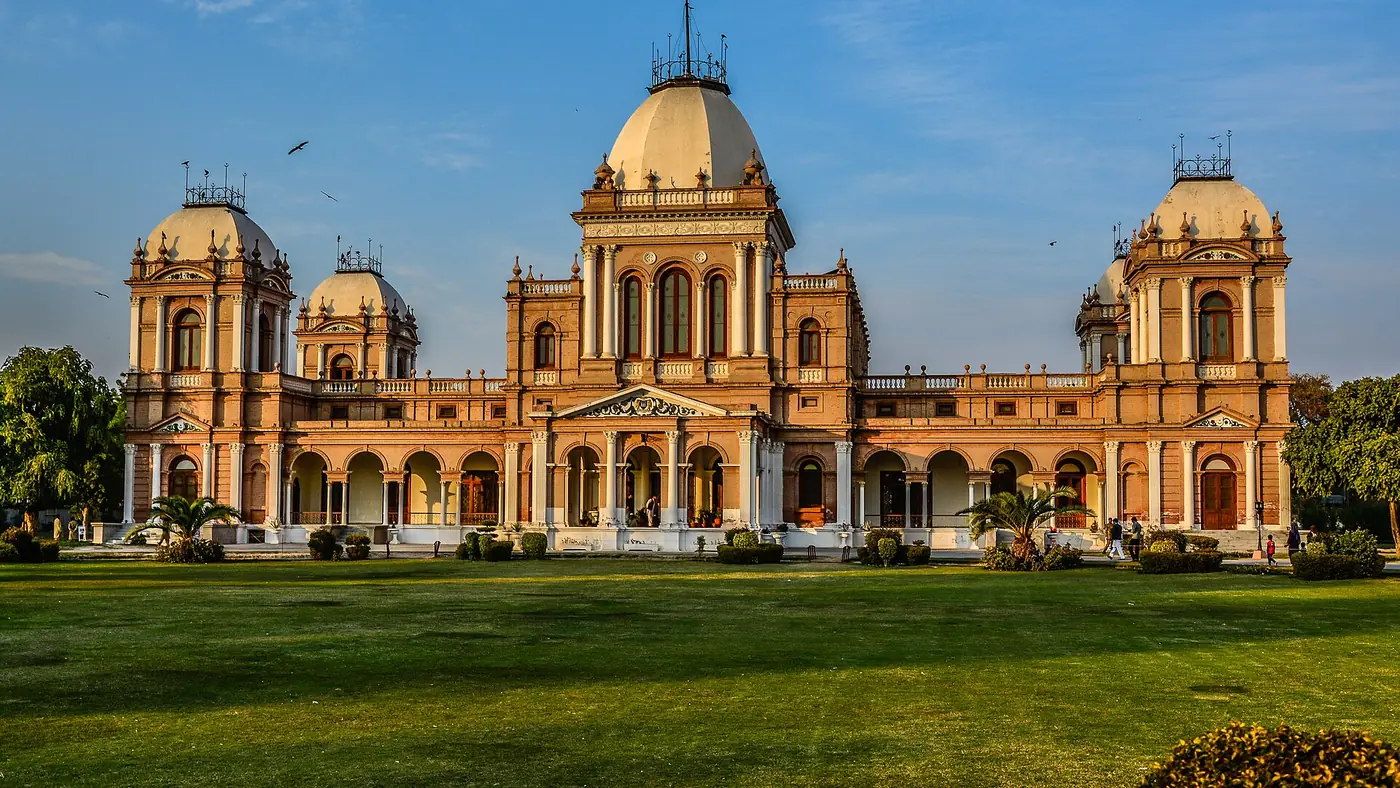
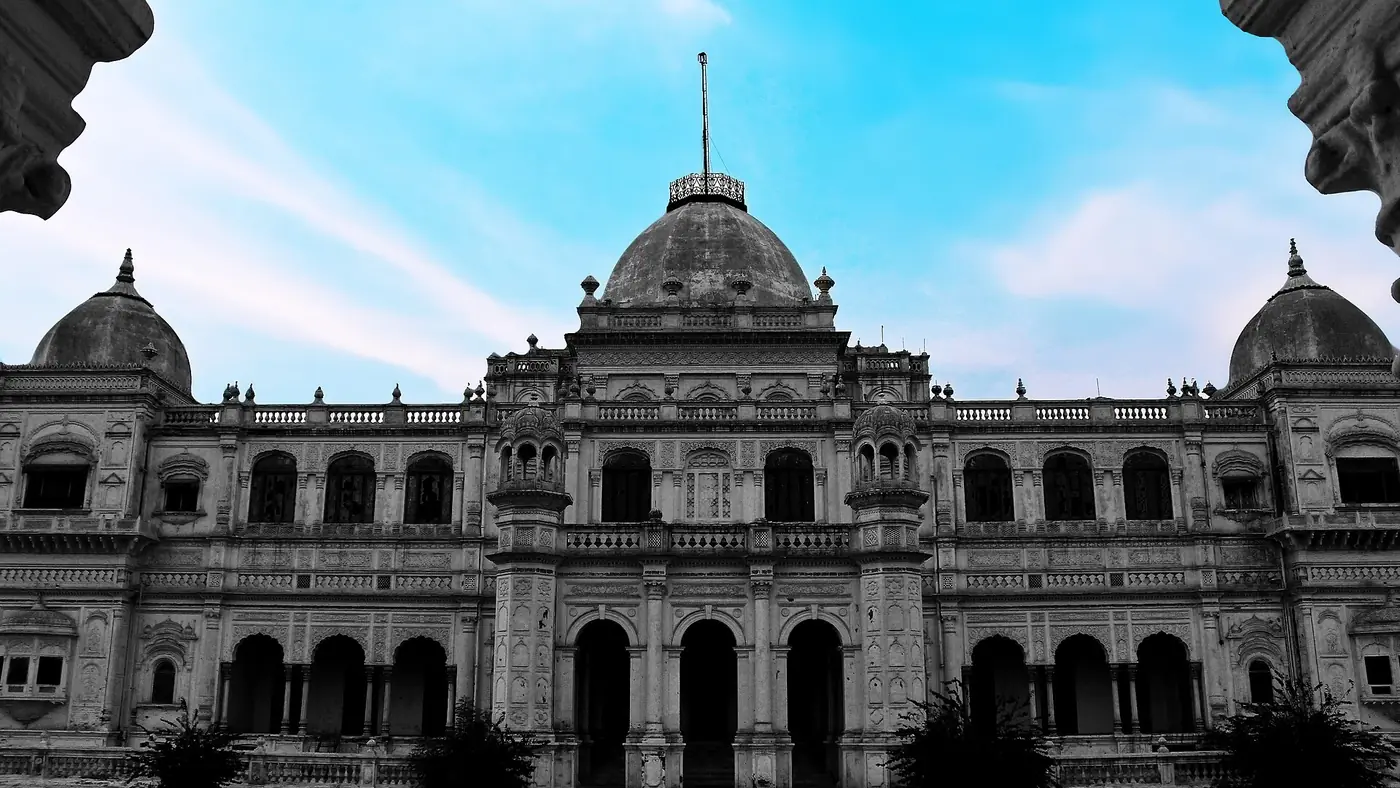
The design, credited to Italian engineers working alongside local craftsmen, blends Indo-Islamic and Italianate styles: a symmetrical white façade, a central ribbed dome flanked by four smaller cupolas, and around 120 large rooms, reportedly decorated in pairs to reflect the styles of different countries. The complex grew during the princely era to include subsidiary palaces, connected in places by underground passages, along with a private cinema, an armoury and a durbar hall used to receive British colonial officials and other dignitaries.
Why it isn't a normal heritage site to visit
Unlike Noor Mahal, which the Pakistan Army now manages as a protected monument with public access, Sadiq Garh Palace has followed a very different path since the end of princely rule. The estate was placed under government sequestration in the 1970s, and decades of litigation among the Nawab's descendants followed. A Supreme Court of Pakistan ruling in 2005 divided the estate among 23 heirs, and the property has remained caught between competing family claims ever since.
That unresolved status, combined with years of neglect, theft of furnishings and fittings during the period of government control, and ongoing structural decay, means there is no single body managing the palace as a tourist site, no fixed ticket, and no guarantee of what a visitor will be allowed to see on any given day.
What you can actually see
Reports from recent visitors describe a broadly consistent picture: you can generally walk up to the gate and into the front grounds, and the mosque on the estate keeps regular daytime hours and is open to visitors as a place of worship. Beyond that, access to the palace interior depends on who is at the gate that day. Some visitors are shown around parts of the building; others are turned away. Treat any further access as a bonus rather than something to expect, in the same way our guide to Derawar Fort advises for that site's interior.
If you are let in, be careful: sections of the palace are genuinely unsafe, with reports of collapsed drainage and flooding around the main gate in recent years. This is not a restored museum with supervised routes; it is a decaying private building.
Photographing the palace
Even without going inside, Sadiq Garh Palace rewards a camera. The symmetrical white façade, the central dome and the four flanking cupolas photograph well from the front lawn, and the contrast between the grand architecture and the visible neglect around it is, for many visitors, the most memorable part of seeing the place in person. Morning light works best, before the day's heat builds and before the grounds get any busier with local visitors coming to the mosque.
Getting there
Dera Nawab Sahib sits just off National Highway 5, roughly 15 minutes from Bahawalpur by car, making Sadiq Garh Palace an easy add-on to a day trip further into Cholistan. Most visitors combine it with the longer drive to Derawar Fort, about 40 km further south into the desert, since both lie along broadly the same route out of the city.
What to carry and how to behave
- Modest dress, since the mosque on the grounds is a working place of worship.
- Cash, in case anyone at the gate asks for an informal contribution; there is no official ticket system.
- Sturdy shoes, given the uneven and sometimes flooded ground around the entrance.
- Low expectations for the interior, and no disappointment if you only see the grounds and the façade.
Combining it with the rest of Cholistan
Sadiq Garh Palace works best as a short stop on the way to somewhere else rather than a trip in its own right. Most visitors pair it with Derawar Fort further into the desert, and some also take in Uch Sharif, though that lies in a different direction from Bahawalpur and is better treated as a separate outing. If you're spending a full day on this side of Bahawalpur, budget no more than 20 to 30 minutes at Sadiq Garh Palace itself before continuing on.
Is Sadiq Garh Palace worth visiting?
For its architecture and its story, yes, as a stop rather than a destination in itself. The façade alone, seen from the grounds, conveys the scale of what the Bahawalpur Nawabs built, and the palace's unresolved legal limbo is part of what makes it a striking, slightly melancholy place to see in person. It does not suit visitors who want a reliable, ticketed heritage experience with guaranteed access; for that, Noor Mahal in Bahawalpur city is the better choice.
If you're planning a day that takes in Dera Nawab Sahib and Derawar Fort, send us your dates and we can help fit the two together.
Frequently asked questions
Is Sadiq Garh Palace open to the public?
Not formally. The grounds and gate are generally reachable, and the mosque on the estate keeps regular hours, but access to the palace interior is inconsistent and depends on who is at the gate.
Why is Sadiq Garh Palace not maintained like Noor Mahal?
Sadiq Garh has been tied up in a family legal dispute since government sequestration in the 1970s, with ownership divided among 23 heirs by a 2005 Supreme Court ruling. Noor Mahal, by contrast, is managed by the Pakistan Army as a protected monument.
Who built Sadiq Garh Palace?
Nawab Sadiq Muhammad Khan IV of Bahawalpur, with construction running from 1882 to around 1895 as the family's winter residence.
How far is Sadiq Garh Palace from Bahawalpur?
About 15 minutes off National Highway 5 at Dera Nawab Sahib, and roughly 40 km short of Derawar Fort for those continuing into the desert.
Is there an entry fee for Sadiq Garh Palace?
There is no official ticket. Some visitors report an informal charge from whoever is at the gate; carry some cash in case.
Is it safe to walk around Sadiq Garh Palace?
Stick to the grounds and any areas you are shown by someone on site. Parts of the building are in poor structural condition, and flooding has affected areas around the main gate in recent years.