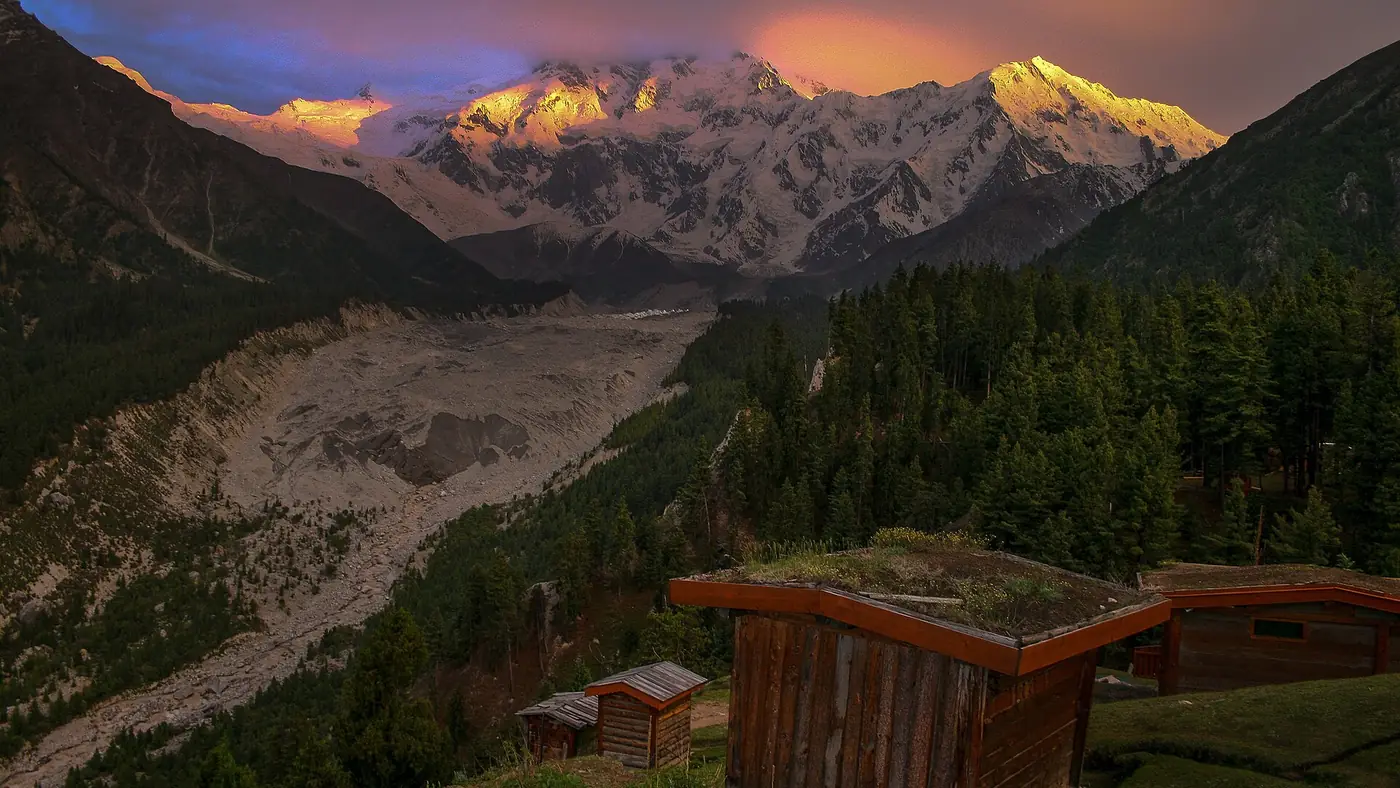
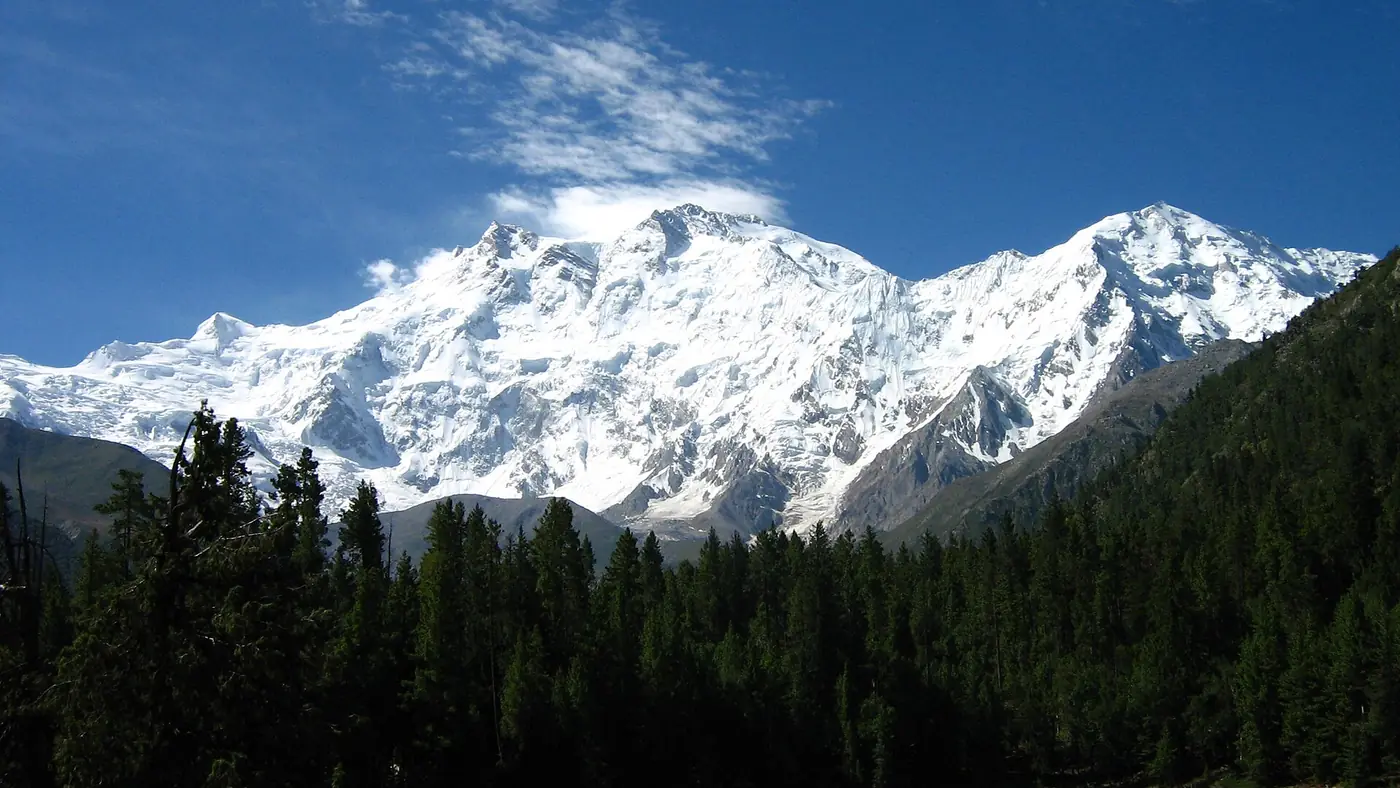
The reflection lake at Fairy Meadows is a small pond at the northern end of the meadow, from a few minutes' to about 20 minutes' walk from the lodges, where on a still morning Nanga Parbat appears upside down in the water. For the mirror view, be there at first light, before the wind gets up: sunrise is around 4:45 to 5 am in June and July and about 5:30 to 5:45 in September. Clear, calm mornings are most reliable in September.
It is the most photographed spot on the meadow and one of the easiest things to do there, but it rewards timing more than effort. This guide covers where to find it, when the reflection works, and how to get a good photograph of it.
| At a glance | |
|---|---|
| Where | Northern end of the meadow, the end the path from Tato reaches |
| Walk from the lodges | A few minutes to about 20, depending on where you stay |
| Best time of day | First light until the wind rises, usually by mid-morning |
| Second chance | The last hour before dark, if the air is still |
| Most reliable month | September, after the monsoon |
| Hardest months | July and August, when cloud often hides the mountain |
| Take | A warm jacket, a torch, your phone or camera |
Where is the reflection lake?
Fairy Meadows is a long, open meadow at about 3,300 metres, with the lodges spread along it and the pine forest around its edges. The path up from Tato arrives at the northern end, and the reflection lake is at that end too, close to the first lodges you reach. From lodges further along the meadow, allow up to 20 minutes on foot.
Nanga Parbat rises to the south, beyond the far end of the meadow. That makes the geometry simple: stand on the north side of the pond and look south, and the mountain sits directly behind the water. Any lodge will point you the way.
It is a pond rather than a lake, and that is part of why it works: with no current and little room for waves, a calm surface holds the mountain almost perfectly.
When do you get the mirror view?
Two things have to line up: a clear mountain and still water.
First light is best for both. Nanga Parbat is most often free of cloud in the early morning, and the air on the meadow is usually still until the sun has warmed the slopes. Arrive about half an hour before sunrise. The summit catches the light long before the meadow does, turning pink and then gold while everything around the pond is still in shadow, and the reflection shows the same colour.
Rough sunrise times at the meadow:
| Month | Sunrise, roughly |
|---|---|
| Mid-May | 5:00 am |
| June | 4:45 am |
| Mid-July | 5:00 am |
| Mid-August | 5:20 am |
| Mid-September | 5:45 am |
| Early October | 5:55 am |
By mid-morning the reflection usually breaks up. A light breeze is enough to ripple a pond this size, and on busy days the edge fills with people. If you arrive at 9 am and the surface is already moving, the mirror view is gone for the day.
Evenings are a second chance. When the wind drops in the last hour of daylight, the water can settle again, and the evening light climbs the face as the meadow falls into shadow. It is less reliable than the morning, but worth a look on your first evening in case the next day is cloudy.
Which months are best?
- June: the meadow is green and snow still lies on the higher ground around it. Mornings are cold, with nights around 6°C.
- July and August: the warmest and busiest months, and the monsoon brings cloud. You may get a clear dawn and lose the mountain by breakfast. Two nights on the meadow give you two tries.
- September: usually the most settled month, with clear air and calm mornings. For the reflection, this is the one to aim for.
- October: clear days are still possible, but nights fall to freezing and the first snow can arrive on the meadow.
Our Fairy Meadows weather guide has the month-by-month temperatures, and our guide to the best time to visit Fairy Meadows weighs up the seasons for the whole trip.
Photo tips
You don't need special equipment. A phone does well here if you take a little care:
- Get low. Crouch close to the water's edge so the reflection fills more of the frame. A low angle also hides the trampled bank.
- Centre the waterline, or don't. A perfectly symmetrical frame, with the mountain above and its reflection below, is the classic shot. For something different, put the waterline low and give the sky more room.
- Expose for the snow. On a bright morning, tap on the summit so the snow keeps its detail rather than turning white.
- Hold still, or rest the phone on a rock. Early light is dim, and a steady hand or a small tripod keeps the picture sharp.
- Use a wide setting to fit both the mountain and its reflection, then try the zoom for a tighter frame of the summit and its mirror image.
- With a camera, be careful with a polarising filter. It darkens the sky, but turned the wrong way it also removes the reflection you came for.
- Keep people to one side. A person standing at the edge of the frame gives scale; a group lined up along the shore in front of the mountain hides the reflection.
- Take one picture without the phone. The colour at sunrise lasts only a few minutes.
The lake after dark
On a clear, moonless night, the pond can hold stars as well as the mountain's outline. Around the full moon, the snow on Nanga Parbat is lit up, and on a still night the water can hold that too. Either way, dress as if for winter, carry a torch for the walk back, and keep to the paths you walked in daylight. Our guide to things to do in Fairy Meadows covers stargazing and the other walks from the meadow.
Looking after the lake
Fairy Meadows was declared a national park in 1995 and has been part of Nanga Parbat National Park since 2021. The pond is small, and it only stays a mirror if it is left alone:
- Don't wash, swim, wade or throw stones in it.
- Keep to the existing paths around the edge rather than trampling new ones.
- Take all rubbish back to your lodge, including tissues and wrappers.
- Keep your voice down at dawn. Other people have got up early for the same quiet.
Is it worth getting up for?
Yes. If you do only one thing at dawn at Fairy Meadows, make it this. It takes 20 minutes of your morning, needs no fitness, and on a still, clear day it gives you the view most people picture when they think of the meadow.
If you have only one night, set an alarm and go whatever the sky looks like from your window; the mountain often clears at first light. If the summit is in cloud and the water is rippling, go back to bed and try the evening. And if you are planning the trip around this view, book at least two nights and aim for September. Our Fairy Meadows destination page covers the rest of the trip, and our packing list covers the warm layers a 5 am start needs.
Frequently asked questions
Where is the reflection lake at Fairy Meadows?
At the northern end of the meadow, the end the path from Tato reaches, close to the first lodges. From lodges further along the meadow it is up to 20 minutes on foot.
What is the best time to see the reflection of Nanga Parbat?
At first light, before the wind starts to ripple the water, usually between about 4:30 and 6 am from June to September. The last hour of daylight is a second chance on still evenings.
Which month is best for the reflection lake?
September is usually the most reliable, with clear, settled mornings after the monsoon. June is good too; July and August are often cloudy.
How far is the reflection lake from the lodges?
From a few minutes to about 20 minutes on foot, depending on where you stay. It is an easy walk across the meadow.
Can you swim in the reflection lake?
No. It is a small pond in a national park, and swimming or wading ruins the reflection for everyone else. Look and photograph from the edge.