The Queen Victoria Monument, known locally as Malikamu Shikari, is a stone marker on the rock face directly above Baltit Fort in Karimabad, reached by a short, steep climb of about an hour from the polo ground. It is one of the easiest good viewpoints in central Hunza to reach on foot, with Ultar Sar and the Hunza valley laid out below once you are up.
This guide covers the route up, how long to allow, what you see at the top, and who the walk suits.
| At a glance | |
|---|---|
| Starting point | Karimabad polo ground, below Baltit Fort |
| Time up | About 45 minutes to an hour |
| Time down | About 30 to 40 minutes |
| Terrain | Steep footpath and stone steps, no technical climbing |
| Altitude gain | Several hundred metres above Karimabad |
| What you see | Ultar Sar, Baltit Fort and the Hunza valley below |
| Best time | Morning or late afternoon |
| Suits | Reasonably fit walkers; not small children or anyone unsteady on rock |
Where does the walk start?
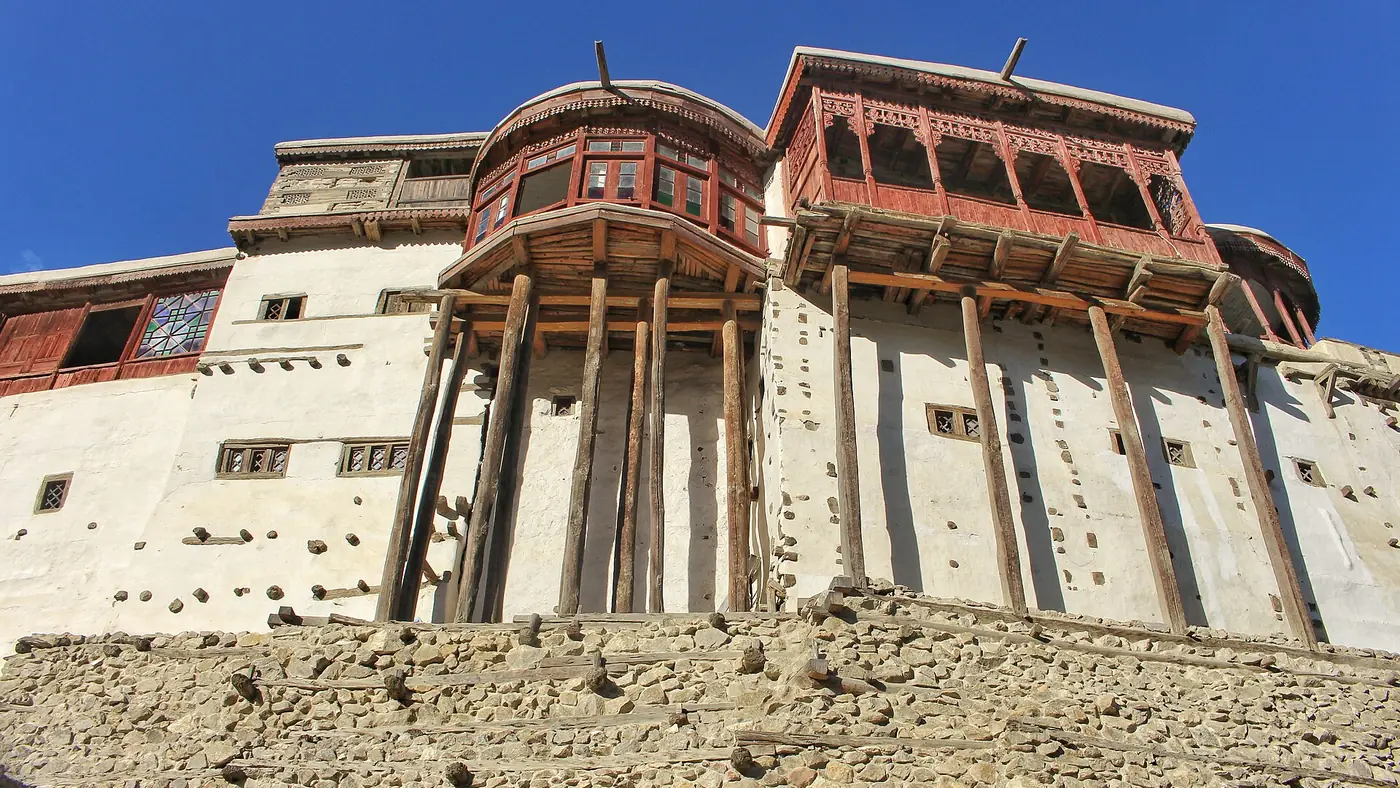
The route begins at the Karimabad polo ground, just below Baltit Fort, and follows an old irrigation channel path a short way above it before turning uphill. It is the same general area where the walk to Baltit Fort and the old town lanes begins, so it is easy to find without a guide.
From the channel, the path leaves the flat ground and climbs the open hillside behind the fort towards the rock outcrop where the monument stands. There is no signage to speak of, so it helps to ask at your hotel or in the bazaar for the start of the "Malikamu Shikari" or "Queen Victoria Monument" path before you set out.
The route up
The climb is short in distance but steep throughout, gaining height quickly on a mix of dirt path and stone steps up the bare hillside above the old town. There is no scrambling and no exposed section that needs hands, but the gradient and the loose ground in places make it a genuine climb rather than a stroll.
Most walkers reach the monument in around 45 minutes to an hour, going at a steady pace with a stop or two to catch your breath; fit hikers can do it faster. Coming down takes less time, roughly 30 to 40 minutes, but the same loose, steep ground means it is easy to slip if you rush.
- Wear proper shoes with grip. Trainers with a worn sole are the main reason people slip on the way down.
- Carry water. There is nothing to buy on the route.
- Start earlier rather than later if you want the light on Ultar Sar and the valley, and to be back down before the afternoon heat builds on the exposed slope.
What is the monument, and who built it?
At the top is a simple stone marker known locally as Malikamu Shikari, understood to have been put up in the time of Nazim Khan, a Mir of Hunza who ruled in the early twentieth century, during the decades when Hunza was a princely state under British political control. There is little written record of exactly when it was built, and it is a modest structure rather than an elaborate monument: the reason to make the climb is the view it stands over, not the marker itself.
The view from the top
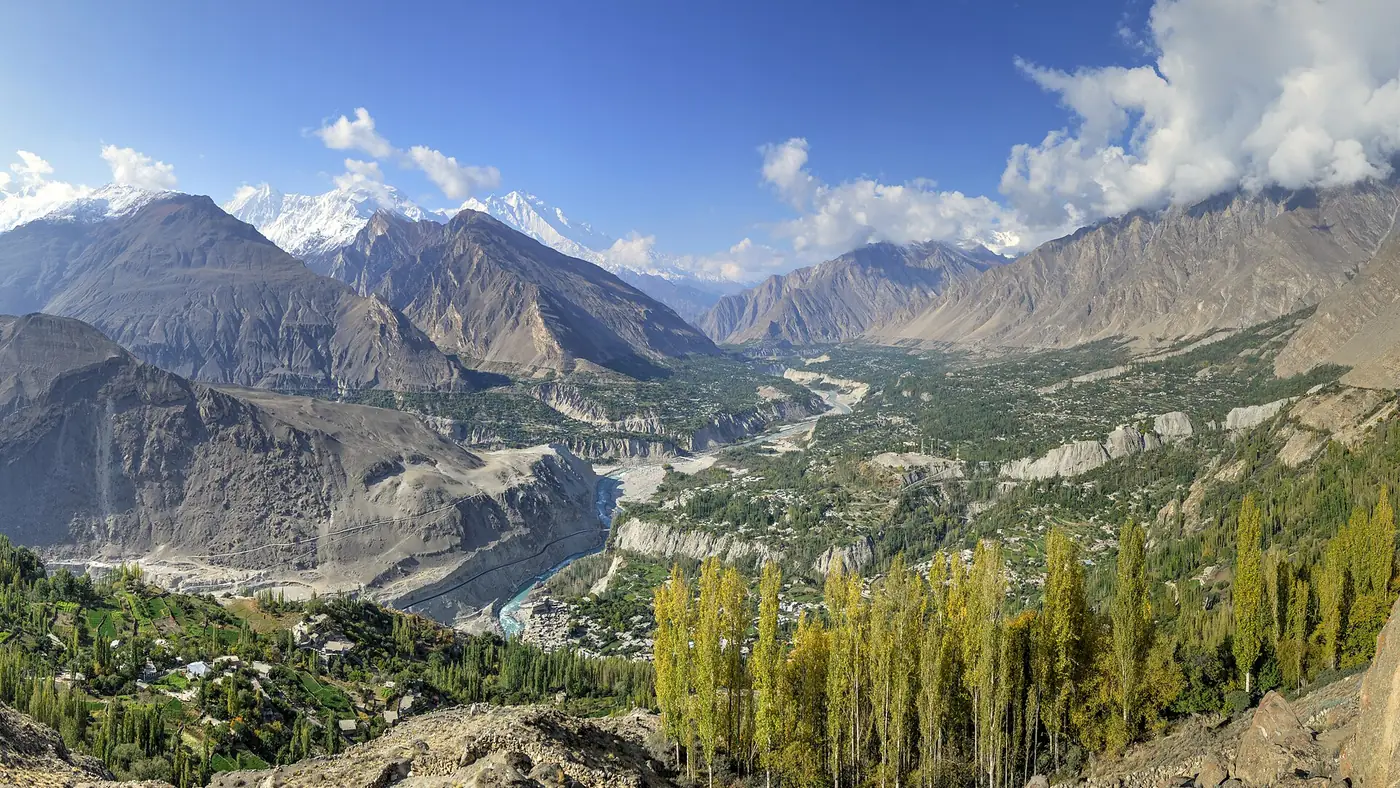
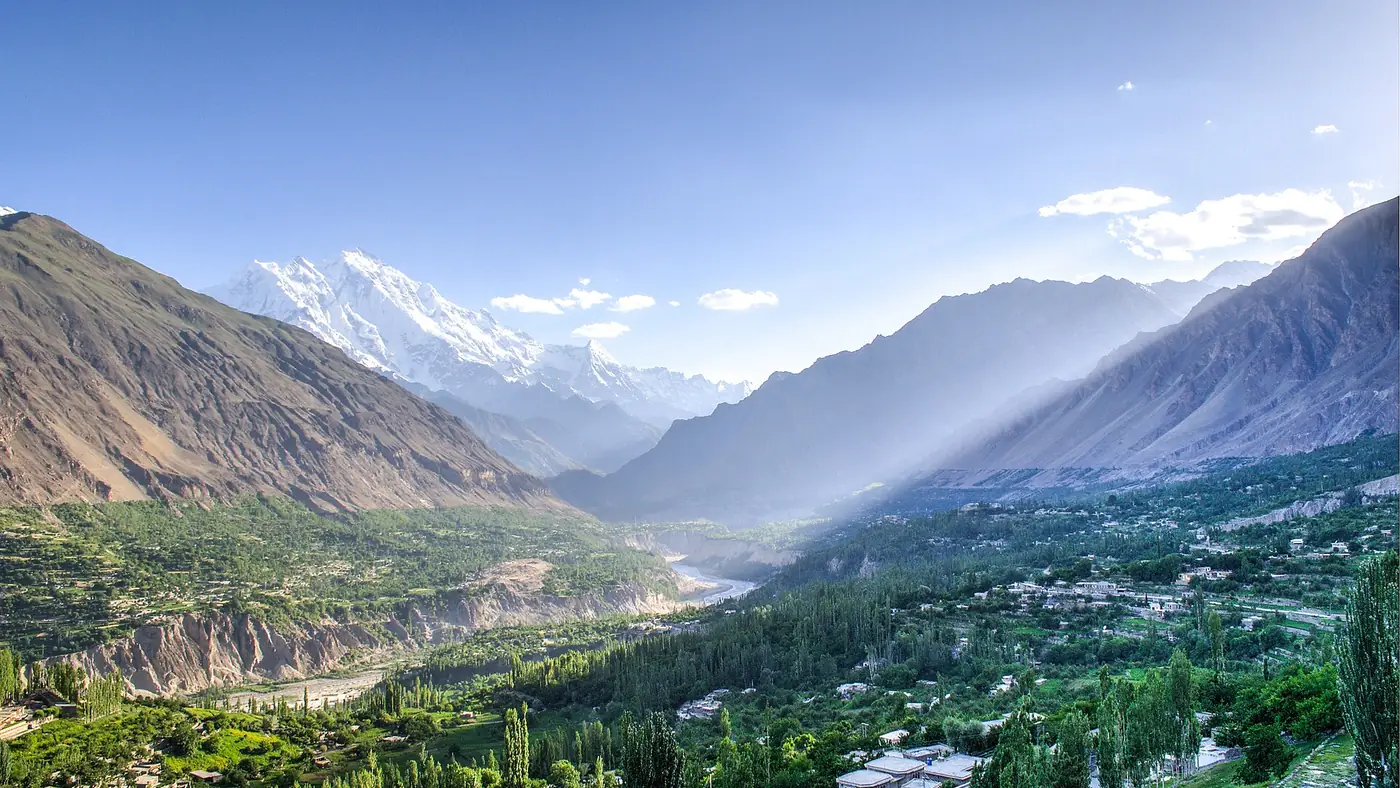
From the outcrop, Karimabad and Baltit Fort sit directly below, with the terraced fields and orchards of the old town spread out around them. Across the valley, Ultar Sar rises to 7,388 metres, close enough that on a clear day its glaciers and lower ridges are sharply defined rather than a distant backdrop.
Down-valley, the view opens towards Aliabad and the wider sweep of the Hunza river, giving a sense of the valley's shape that is harder to get from the town itself. It is one of the better viewpoints in Karimabad for photographs of the fort with the mountains behind it, particularly in the low light of early morning.
Safety on the climb
The path is unmarked, exposed to the sun for most of its length, and steep enough that a slip on loose ground is the main risk rather than any technical difficulty. A few points worth keeping in mind:
- This is not a walk for young children or anyone unsteady on uneven, sloping ground.
- Avoid it in rain, when the dirt sections become slippery and the footing is far less secure.
- Go with at least one other person. The path is quiet, and there is no phone signal to rely on if someone is hurt.
- Turn back if the weather closes in. There is no shelter on the open hillside.
Is the climb worth it?
Yes, for anyone with an hour or two to spare and reasonably steady on their feet. It is one of the few viewpoints above Karimabad that a normal traveller can reach without a guide, a vehicle or a full day's trekking, and the view of Ultar Sar and the fort together is one of the best in the valley for the effort involved.
It is not for everyone. Families with young children, anyone with knee or balance problems, or visitors who are short of time are better served by Baltit Fort's own terrace, which gives a similar view of the valley with none of the climbing. Our guide to things to do in Karimabad covers that and the other easy options in town, and our hikes in Hunza guide sets it alongside the valley's longer walks.
Frequently asked questions
How long does the Queen Victoria Monument hike take?
About 45 minutes to an hour to climb from the Karimabad polo ground, and 30 to 40 minutes to come back down. Allow at least two hours in total with time at the top.
Where does the walk to the Queen Victoria Monument start?
At the polo ground below Baltit Fort in Karimabad, following the old channel path a short way before climbing the hillside behind the fort.
Is the hike to Malikamu Shikari difficult?
It is short but steep, on dirt path and stone steps with no technical climbing. Reasonable fitness and proper footwear are enough; it is not suited to young children or anyone unsteady on uneven ground.
What can you see from the Queen Victoria Monument?
Baltit Fort and Karimabad directly below, and Ultar Sar's 7,388-metre summit across the valley, along with the wider sweep of the Hunza valley towards Aliabad.
Who built the Queen Victoria Monument in Karimabad?
It is understood to date from the reign of Nazim Khan, a Mir of Hunza in the early twentieth century, put up during the period when Hunza was under British political control. Little written history survives about exactly when it was built.