The places to visit in Taxila are the museum and five excavated sites spread across a few kilometres of valley: Bhir Mound, the oldest city; Sirkap, the Greek-planned city; the hilltop monastery of Jaulian; the smaller monastery of Mohra Moradu; and the great stupa at Dharmarajika. With a car or a rickshaw you can see all of them in one full day from Islamabad or Rawalpindi, starting at the museum when it opens and finishing at Dharmarajika in the afternoon.
The sites are too far apart to walk comfortably, and the order matters: done the right way round, the day flows from the oldest city to the monasteries with little doubling back. This guide gives that order, what to look for at each stop, how long to allow, and the practical side.
| Stop | Distance from the museum | Time to allow |
|---|---|---|
| Taxila Museum | Start here | 1 to 1.5 hours |
| Bhir Mound | Beside the museum | 20 to 30 minutes |
| Sirkap | About 2 km | 1 to 1.5 hours |
| Jaulian | About 7 km | 1 hour, including the climb |
| Mohra Moradu | About 6 km, close to Jaulian | 45 minutes |
| Dharmarajika | About 3 km | 1 hour |
| Whole day | About 35 km from Islamabad | 7 to 8 hours with lunch |
| Best months | October to April |
Why Taxila is spread out
Taxila was not one city but three, built one after another over about a thousand years, with Buddhist monasteries on the hills around them. The first city, now Bhir Mound, dates from around the 6th century BC. In the 2nd century BC the Indo-Greeks built a new planned city at Sirkap, and later the Kushans moved again, to Sirsukh. The monasteries at Dharmarajika, Jaulian and Mohra Moradu served the Buddhist community through those centuries, and the whole group has been a UNESCO World Heritage Site since 1980.
That history is why the sites are scattered across the valley floor and the low hills to the east. You need wheels between them: your own car, a car and driver for the day, or one of the rickshaws that wait outside the museum.
The route in order
This is the order we suggest. It starts with context, moves out through the valley and ends close to where you began.
- Taxila Museum, from opening time. See the finds before the ruins.
- Bhir Mound, a short walk from the museum.
- Sirkap, a couple of kilometres up the road.
- Jaulian, the furthest point, on its hill.
- Mohra Moradu, in the valley below Jaulian.
- Dharmarajika, east of the museum, to finish.
Take lunch after Sirkap or after Jaulian, depending on your start. Rickshaw and taxi drivers at the museum know the way between the sites.
Taxila Museum: start here
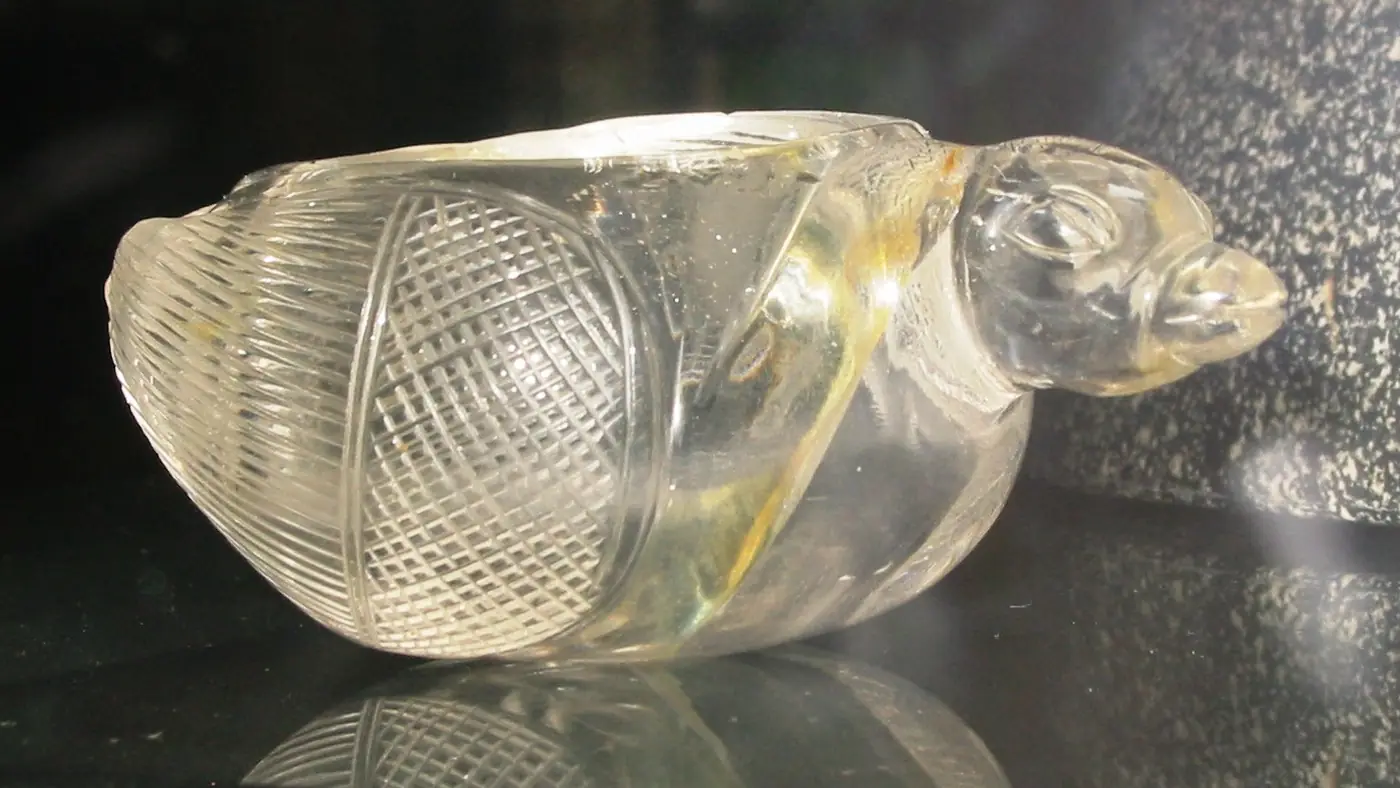
The museum holds the sculpture, jewellery, coins and everyday objects excavated from the sites you are about to see, and it is one of the finest collections of Gandhara art anywhere. An hour to an hour and a half inside means that when you stand in the ruins later, you know what once stood there. It opens at 8:30 am in summer and 9 am in winter, and it is closed on the first Monday of each month and on Islamic holidays.
Our Taxila Museum guide covers the galleries, tickets and photography in detail. Keep your ticket: the sites charge their own entry, and a receipt saves confusion at the gates.
Bhir Mound: the oldest city
Bhir Mound lies right beside the museum, so walk across rather than drive. This was Taxila in its earliest form, the city of the Persian (Achaemenid) period, and it was still lived in under the Mauryas. It was also the Taxila that Alexander the Great reached in 326 BC, when its ruler, Ambhi, submitted to him.
There is not much height to what survives: low stone walls, the lines of lanes and small rooms. Twenty to thirty minutes is enough. Its value is as a contrast: this city grew without a plan, and the next one, Sirkap, was laid out on a grid. Entry has usually been free.
Sirkap: the Greek city
Sirkap, about 2 km from the museum, is the most rewarding of the city sites. The Indo-Greeks founded it in the 2nd century BC, and later Scythian, Parthian and early Kushan rulers lived here. Its city wall ran for about 5 km, and inside it the city was laid out in the Hellenistic way, with a long main street and blocks of houses, shops and shrines opening off it at right angles.
Walk the main street and look for:
- The Double-Headed Eagle Stupa, a shrine whose base is decorated with Greek-style pilasters and niches, one of them carrying the double-headed eagle that gives it its name.
- The Apsidal Temple, a large temple with a rounded, apse-shaped end.
- The round stupa, among the oldest stupas in the region.
- The remains of the royal palace.
Allow an hour to an hour and a half. The ground is flat and easy, but there is little shade, so in warm weather carry water and a hat. The small Greek-style temple at Jandial, just north of Sirkap, is worth ten minutes if you have a special interest.
Jaulian: the hilltop monastery
From Sirkap, drive out to Jaulian, about 7 km from the museum and the furthest stop on the route. Jaulian stands on a hill about 100 metres above the village of the same name. Allow ten to fifteen minutes for the path up at an easy pace; it is steady rather than hard, but take it slowly with older parents, and go early in the day in summer.
The monastery dates from the Kushan period, around the 2nd century AD, and was in use until about the 5th century. It has two parts:
- The stupa court, with a main stupa surrounded by 27 smaller votive stupas and a ring of chapels, some still decorated with stucco figures of the Buddha.
- The monastery, with courtyards of monks' cells, a washing pool, a kitchen and the grain mills the community used.
Look for the "healing Buddha" set into the wall of the main stupa, a seated Buddha with a hole at the navel. Pilgrims put a finger in it and prayed for relief from illness.
Jaulian is just across the provincial boundary in Haripur district, Khyber Pakhtunkhwa, so it charges its own ticket, separate from the Punjab sites. The view back across the Taxila valley from the top is one of the best of the day.
Mohra Moradu: the small monastery
Mohra Moradu lies in a small valley between Sirkap and Jaulian, close to Jaulian, and it is easy to combine the two. It is smaller and quieter than Jaulian and easy to leave out, but it is worth the stop.
Built in the 2nd century AD and remodelled in the 4th and 5th, it has a main stupa and a monastery of 27 cells around a courtyard, with a bath at its centre. Some stucco reliefs survive, though most of their colour has gone. In one of the cells stands a small votive stupa, found almost complete with its tiers of umbrellas, and the copy in the museum is based on it. Forty-five minutes is enough.
Dharmarajika: the great stupa
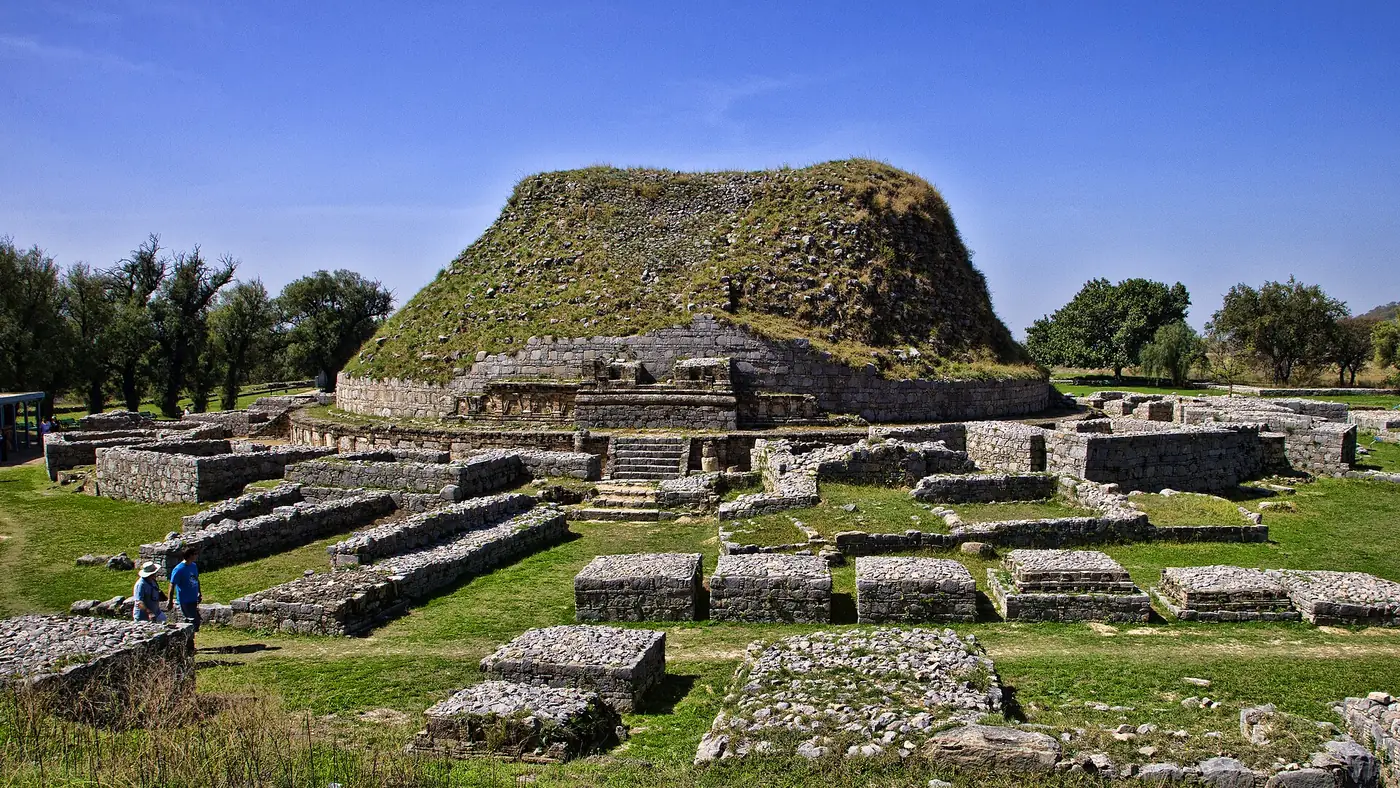
Finish at Dharmarajika, about 3 km east of the museum. This is the oldest Buddhist monument at Taxila. It was founded under the Mauryan emperor Ashoka in the 3rd century BC to hold relics of the Buddha, and the complex stayed in use until around the 7th century AD.
The great stupa is about 131 feet across, with a drum 45 feet high, and a paved path runs around it for circumambulation. Around the path is a ring of smaller votive stupas and chapels added by pilgrims over the centuries, and to the north are the monastery buildings where the monks lived. Allow about an hour.
Getting there and getting around
Taxila is about 35 km from Islamabad and a similar distance from Rawalpindi, 45 minutes to an hour by car depending on traffic. You have three sensible options:
- Your own car. Easiest if you have one. The roads between the sites are ordinary local roads.
- A car and driver for the day from Islamabad or Rawalpindi, booked through a hotel or a ride-hailing app. Agree the full route and waiting time before you set off.
- A ride to the museum, then a rickshaw. Rickshaw drivers wait outside the museum and will take you round all the sites for a price agreed in advance. Settle the route and the fare before you start, and don't pay in full until the end.
Walking between the sites is possible for Bhir Mound, Sirkap and Dharmarajika, but the distances add up in the heat, and Jaulian and Mohra Moradu are too far on foot for most people.
When to go, and what to bring
October to April is the comfortable window, with mild days that suit a lot of walking on open ground. March and early April and late October and November are the best of it. From May to September the plains are very hot, and the sites have almost no shade; if you must go then, start at 8:30 am, keep Jaulian for the morning and plan a long lunch.
Bring:
- Water, and more than you think
- A hat and sunscreen
- Comfortable shoes for uneven stone and the Jaulian path
- Cash for the museum, the site tickets, rickshaws and tea
- Your CNIC (foreign visitors, a passport)
There are few facilities at the sites themselves. Eat in Taxila town or on the roads between the sites.
Who this day suits, and what to do instead
This route suits anyone with an interest in history, art or Buddhism, families with children old enough to enjoy clambering around ruins, and anyone in Islamabad with a free day and a car. It is one of the best day trips from the capital, and very few places in Pakistan let you walk down a 2,000-year-old city street.
It suits less well anyone who struggles with heat or uneven ground, especially in summer. If that is you, see the museum properly, add Sirkap and Dharmarajika, which are flat, and leave the Jaulian climb out.
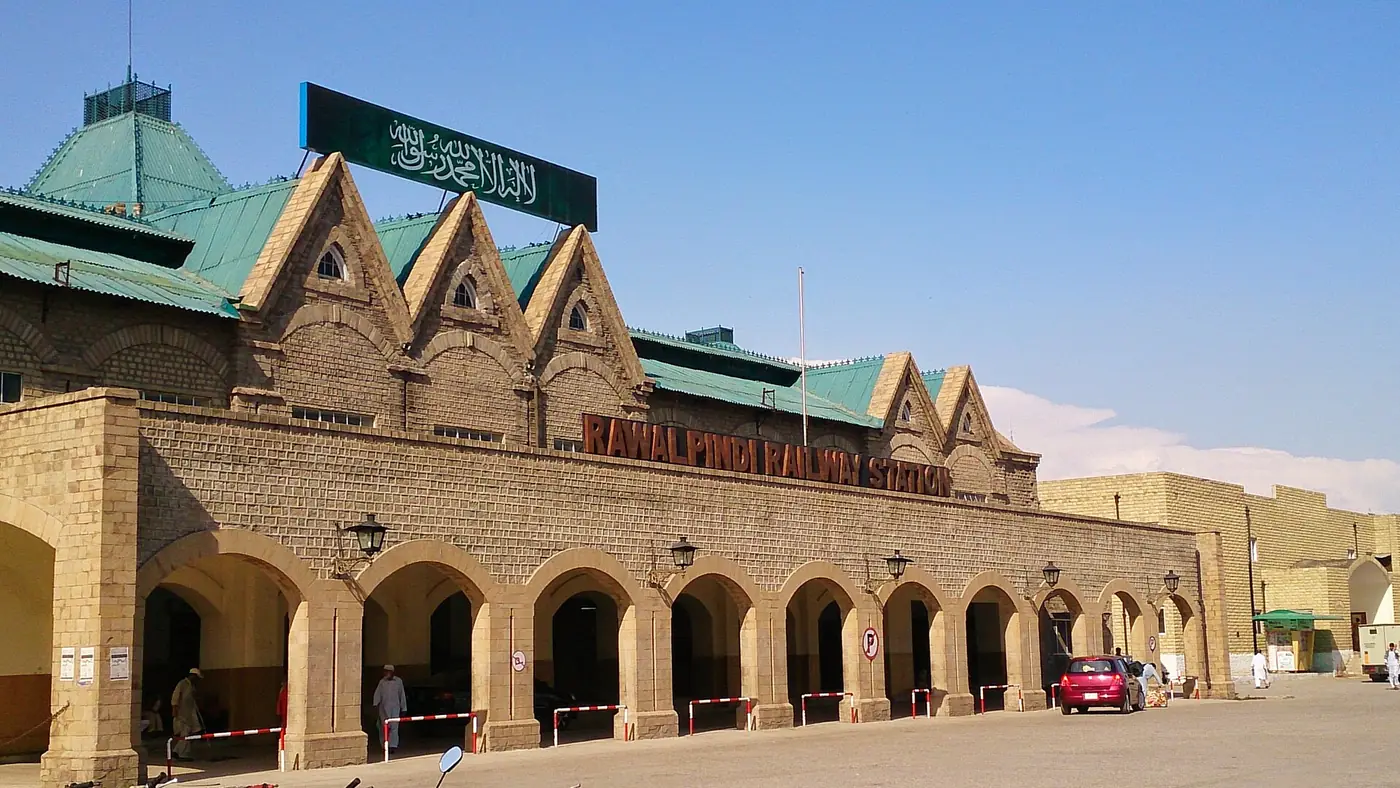
With only half a day, do the museum, Bhir Mound and Sirkap. With more time, the Mughal garden at Wah and Khanpur Dam are both nearby. If you are staying in Rawalpindi, our guide to places to visit in Rawalpindi has plans for the rest of your time, and our trip planning page is the place to start a longer itinerary.
Frequently asked questions
Can you see Taxila in one day?
Yes. With a car or a rickshaw, the museum and the five main sites fit into one full day, about seven to eight hours with lunch, starting at the museum when it opens.
What is the best order to visit the Taxila sites?
Start at the museum, walk to Bhir Mound, then drive to Sirkap, out to Jaulian and Mohra Moradu, and finish at Dharmarajika, a few kilometres east of the museum. It keeps backtracking to a minimum.
Which Taxila site is the most impressive?
Sirkap is the most striking city site, for its planned main street, and Jaulian the finest monastery, for its stupas and hilltop setting. Dharmarajika has the largest stupa.
Is there an entry fee at the Taxila sites?
Yes. The museum and the excavated sites are ticketed separately, with small fees for Pakistani visitors, and Jaulian charges its own ticket because it lies in Khyber Pakhtunkhwa. Bhir Mound has usually been free.
How far is Taxila from Islamabad?
About 35 km, which takes 45 minutes to an hour by car depending on traffic.
Is Taxila worth visiting in summer?
It can be done, but the sites are open ground with little shade and the plains are very hot from May to September. Start at opening time, carry plenty of water and save the museum for the hottest hours.