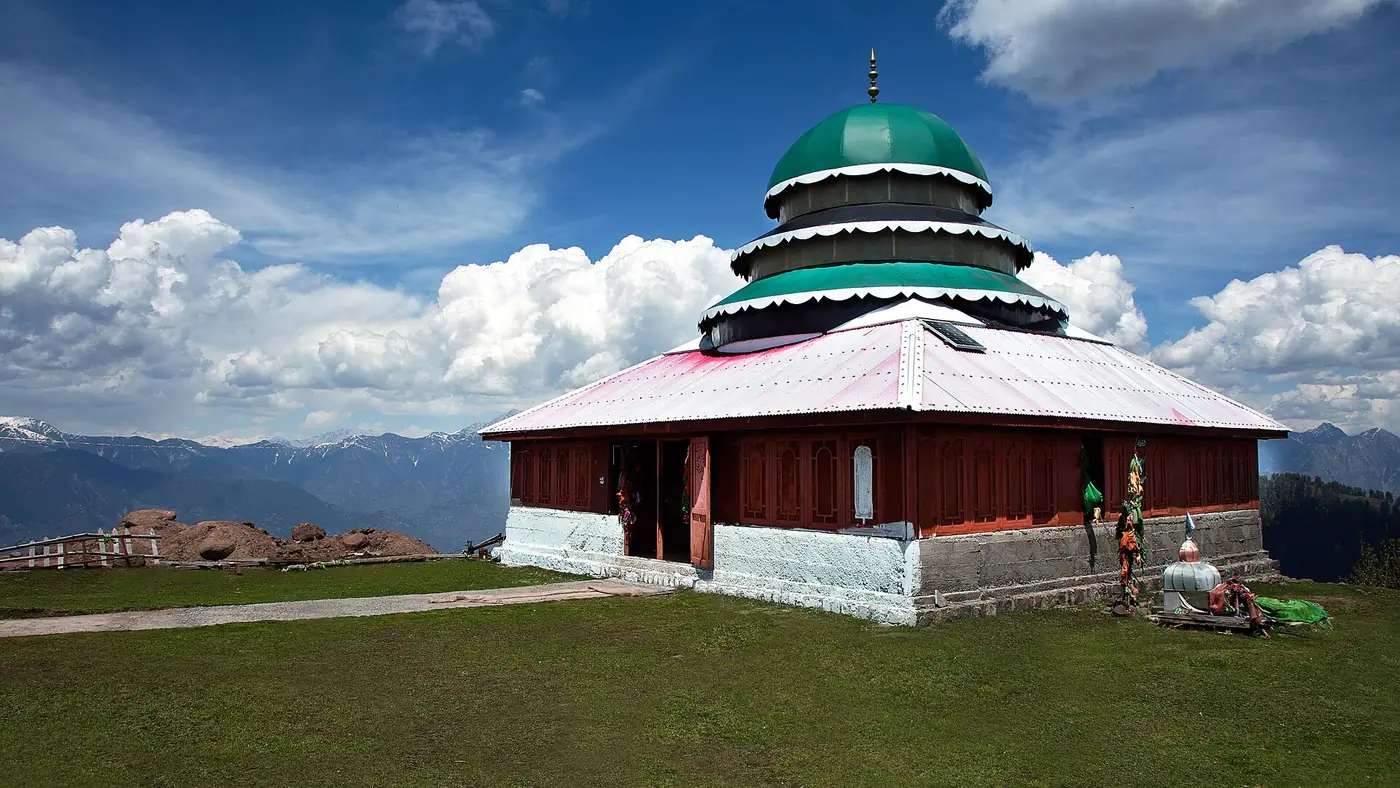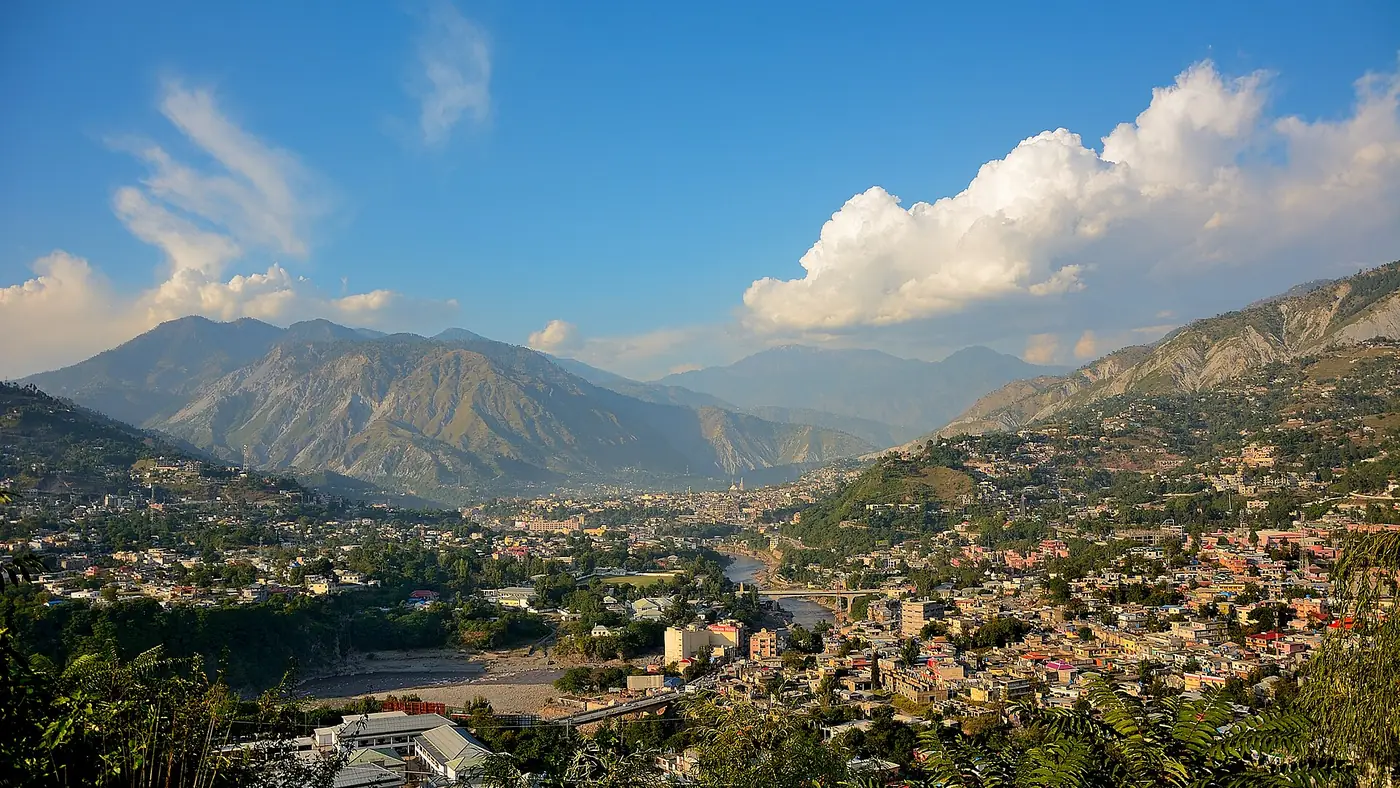
The main places to visit in Muzaffarabad are the Red Fort on the Neelum river, the meeting of the Neelum and Jhelum at Domel, the old bazaars, and the viewpoints above the city at Lohar Gali and Pir Chinasi. The city sights take half a day; add Pir Chinasi and it becomes a full one. Most people fit them in on the way to or from the Neelum Valley rather than making a separate trip.
Muzaffarabad, the capital of Azad Kashmir, sits at about 737 metres in a bowl of hills where the two rivers meet. Much of it was rebuilt after the 2005 earthquake, so it is a working city rather than a museum town, but a few hours here are well spent. This guide lists what to see, how long each place takes and the best time of day for it.
| At a glance | Where | Time needed | Best time |
|---|---|---|---|
| Red Fort (Rutta Qila) | Neelum Road, near Challah bridge | 45 minutes to an hour | Morning |
| Domel | Where the Neelum meets the Jhelum | 30 minutes | Late afternoon |
| Bazaars | Madina Market, Upper Adda | One to two hours | Late afternoon or evening |
| Jalalabad Garden | Jalalabad Stadium Road | 30 minutes to an hour | Evening |
| Lohar Gali viewpoint | About 9 km out on the Abbottabad road | An hour with the drive | After dark |
| Pir Chinasi | Hilltop east of the city, about 2,900 m | Half a day | Morning |
| Shaheed Gali | About 16 km west, 1,640 m | Half a day | Morning or afternoon |
How much time does Muzaffarabad need?
For most visitors, half a day is enough for the city itself: the Red Fort, Domel, and an hour in the bazaar. A full day lets you add Pir Chinasi, which is the one place near the city that feels like the mountains. If you are driving through to the Neelum Valley, you can see the Red Fort and Domel in a couple of hours without adding a night.
If you have a spare night, Muzaffarabad is also a sensible place to break the journey home from the upper Neelum, rather than driving from Kel to Islamabad in one very long day.
The Red Fort (Rutta Qila)
The Red Fort, known locally as Rutta Qila or simply the qila, is the city's main historical sight. Building began in 1559 under the Chak rulers of Kashmir, and it was completed in 1646 by Sultan Muzaffar Khan, the founder of Muzaffarabad. It stands on Neelum Road near Challah bridge, with the river curving around three sides of it.
The fort was badly damaged in the 2005 earthquake. In 2019 the AJK government signed an agreement with the Walled City of Lahore Authority to restore it and other heritage sites, and it remains open to visitors. The walls, gateways and the view over the river are what you come for; do not expect restored interiors or a large museum.
Timings: it is usually open during daytime hours, roughly 9 in the morning to 5 in the afternoon, but hours are not always posted, so check at the gate. The fee, if any, is small. Morning is the best time, before the day warms up.
Across the Neelum stands the Black Fort, or Gojra Fort. It is inside a military area and closed to the public, so view it from the Red Fort side.
Domel and the two rivers
Domel is the point where the Neelum joins the Jhelum, at the heart of the city, and the reason Muzaffarabad is where it is. The best time to come is the late afternoon, when the light is low along the valley. There are places to eat on the right bank of the Jhelum, and it is a pleasant place for tea before dinner.
Be prepared for the Neelum to look smaller than you might expect. Since 2018, the Neelum–Jhelum hydropower project has diverted most of the river's water into a tunnel at Nauseri, about 41 km upstream, and returned it to the Jhelum south of the city. Through Muzaffarabad the Neelum often carries only a fraction of its old flow.
Around the centre: bazaars, Jalalabad Garden and the shrine
The bazaars
The central markets around Madina Market and Upper Adda are where the city shops. Look for Kashmiri shawls and woollens, rugs, wood carving and papier-mâché, and local walnuts and honey. The bazaars are busiest in the late afternoon and early evening. Bargaining is normal in the smaller shops.
Jalalabad Garden
Jalalabad Garden, on Jalalabad Stadium Road, is a public park of a little over eight acres, and a good place to let children run around in the evening after a long drive.
Sain Saheli Sarkar shrine
The shrine of Sain Sakhi Saheli Sarkar, a Sufi who died in 1900, is in the old Civil Secretariat complex in the city centre. It is busiest during the annual urs, held from 13 to 21 January, when devotees come from Hazara, Punjab and across Azad Kashmir. Dress modestly and cover your head, as at any shrine.
Viewpoints above the city: Lohar Gali and Pir Chinasi
Lohar Gali
Lohar Gali is a point on the road to Abbottabad and Mansehra, about 9 km from the city, known for its view back over Muzaffarabad, especially at night when the city lights come on. It is also a known landslide zone, and the road there was closed by a large landslide in 2024. Go only when the road is open, park well off the carriageway, and do not linger under the slope after heavy rain.
Pir Chinasi
Pir Chinasi is the big one: a hilltop shrine and meadow at about 2,900 metres east of the city, an hour to an hour and a half up a paved road of hairpin bends. On a clear morning the views stretch over Muzaffarabad and the mountains around it. In winter it gets snow. Go in the morning, before cloud builds, and take a warm layer even in summer. Our Pir Chinasi travel guide covers the drive, the shrine and the facilities at the top.
Short trips out: Shaheed Gali, Patika and Subri Lake
A few places just outside the city are worth knowing about:
- Shaheed Gali, about 16 km west of the city at around 1,640 metres, is a forested spot with a tourist rest house and a walk of about 4 km to Sirikot. It makes a quiet half day.
- Patika, about 19 km up the Neelum road, is the first stop for most people heading into the valley, with a small zoo, a fish hatchery and a tourist rest house.
- Subri Lake, a widening of the Jhelum about 8 to 10 km south-east of the city on the Chakothi road, is a picnic spot with river views.
For longer outings, such as Chikar and Zalzal Lake or Leepa Valley in the Jhelum Valley, see our list of the best places to visit in Azad Kashmir.
Fitting Muzaffarabad around a Neelum trip
The Neelum Valley road starts in Muzaffarabad, so the city fits naturally at either end of the trip.
On the way in
- Leave Islamabad by 6 or 7 in the morning. The drive takes three and a half to four and a half hours; our guide to Islamabad to Muzaffarabad compares the two routes.
- The Red Fort, late morning. An hour is enough.
- Lunch in the city, then on up the valley. Keran is about 93 km on, two and a half to three hours, so you arrive before dark.
On the way back
- Leave the upper valley early and aim to reach Muzaffarabad by mid-afternoon.
- Domel and the bazaars in the late afternoon, then dinner in the city and a night in a hotel.
- Pir Chinasi the next morning, leaving by 8 and back down by early afternoon.
- Islamabad by evening. Avoid driving the Murree road late at night after a long day.
This is roughly how the first and last days of our Neelum Valley Escape work: through Muzaffarabad on the way in, and back to the city for the final night before Islamabad.
Is Muzaffarabad worth stopping for?
Yes, for a few hours, and for a night on the way back if you are coming down from the upper Neelum. The Red Fort and Domel give the city a sense of place, and Pir Chinasi is the easiest high viewpoint in Azad Kashmir.
It is not a destination in its own right for most travellers. Summer days are hot, with average highs of around 37°C in June, and the city has few sights beyond those listed here. If you are short of time, skip the bazaars and give the morning to Pir Chinasi instead. For more on the valleys beyond the city, see our Kashmir destination page.
Frequently asked questions
What is Muzaffarabad famous for?
It is the capital of Azad Kashmir, the point where the Neelum and Jhelum rivers meet, and the gateway to the Neelum Valley. Its best-known sights are the Red Fort and Pir Chinasi above the city.
How many days are enough for Muzaffarabad?
Half a day covers the city sights, and a full day adds Pir Chinasi. Most visitors combine it with the Neelum Valley rather than staying longer.
What are the Red Fort's timings?
It is usually open in daytime hours, roughly 9 am to 5 pm, but hours are not always posted. Check at the gate, and go in the morning.
Can you visit the Black Fort in Muzaffarabad?
No. The Black Fort, across the river from the Red Fort, is in a military area and closed to the public.
What is the best time to visit Muzaffarabad?
March to May and September to November are the most comfortable. June is hot, July and August bring heavy rain, and winter brings mild days and cold nights in the city, with snow on Pir Chinasi above it.