
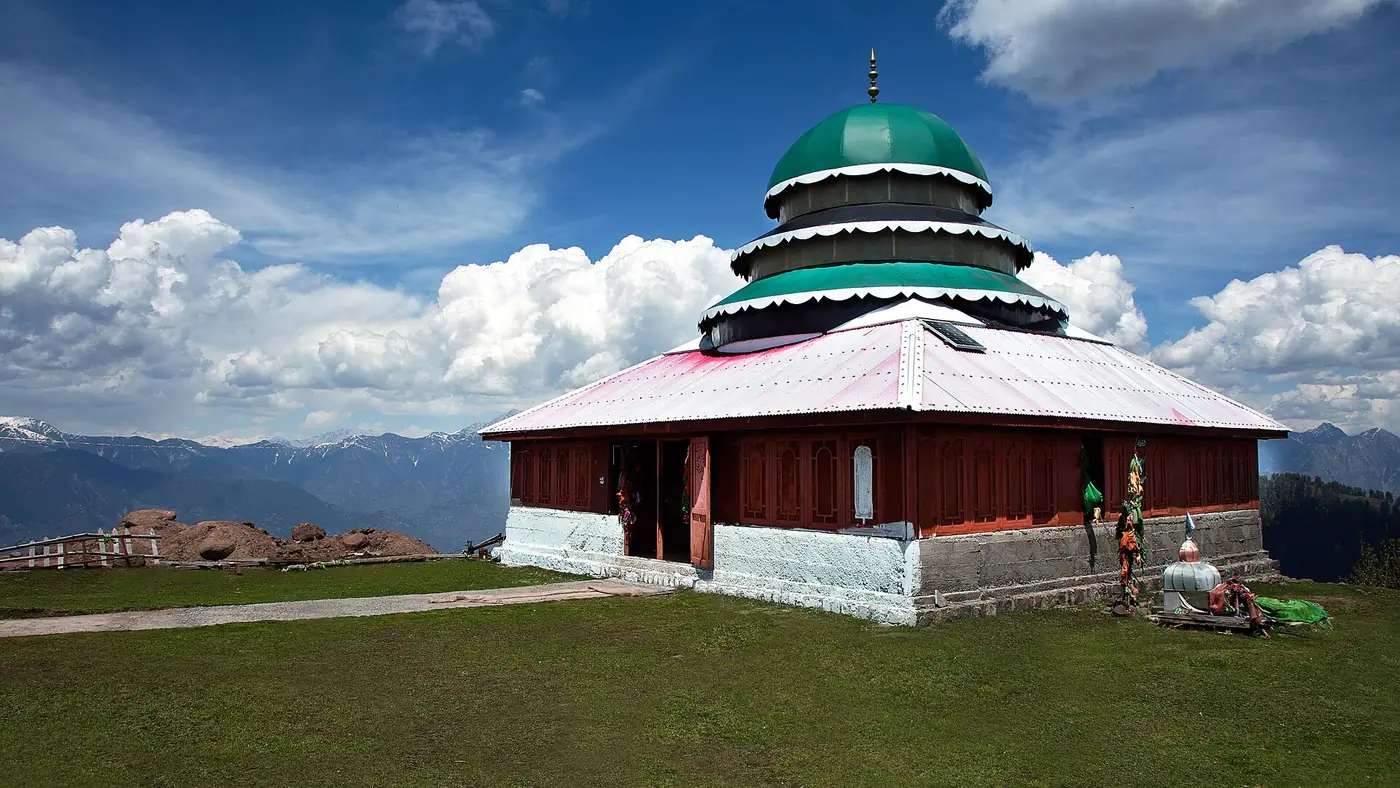
Pir Chinasi is a hilltop shrine and meadow at about 2,900 metres above Muzaffarabad, an hour to an hour and a half up a paved road of hairpin bends. It is open all year, and the drive is a half-day trip from the city. Go in the morning for the clearest views, between May and October for green meadows, or in December and January for snow.
It is the easiest place in Azad Kashmir to go from a city at around 740 metres to a mountain top in about an hour, with views over Muzaffarabad and the ranges around it. This guide covers the route, the shrine, what is at the top, and how to time your visit.
| At a glance | |
|---|---|
| Altitude | About 2,900 m |
| From Muzaffarabad | Usually quoted as about 30 km; 1 to 1.5 hours up |
| From Islamabad | About 5 to 6 hours in total, so stay a night in Muzaffarabad |
| Road | Paved, narrow and winding, with 30 or more hairpin bends |
| Open | All year; snow can close the road for a day or two in winter |
| Best for greenery | May to October |
| Snow | Usually December and January |
| Facilities | Tea stalls and a small cafeteria; very limited toilets and rooms |
Where is Pir Chinasi and how do you get there?
Pir Chinasi sits on the ridge east of Muzaffarabad, above the city and the Jhelum and Neelum rivers. It is usually described as about 30 km from Muzaffarabad; depending on where in the city you start, the road distance can be somewhat less. Either way, the drive up takes an hour to an hour and a half, because the road climbs more than 2,000 metres.
By car
Any car in good condition can make the drive in summer. The road is paved all the way, but it is narrow, with sharp bends and little room to pass, so drive it slowly in a low gear on the way down. In winter, after snow, a 4x4 or chains are a better idea, and on some days the road above the snow line is closed until it is cleared.
By van
Public vans run daily between Muzaffarabad and Pir Chinasi, mostly used by local people and pilgrims. They are cheap and slow, and leave when full, so start early and ask the driver when the last van comes down.
From Islamabad
Islamabad to Muzaffarabad takes three and a half to four and a half hours, and our guide to Islamabad to Muzaffarabad compares the routes. Adding the climb to Pir Chinasi makes a very long day with a lot of driving, so it is better to stay a night in Muzaffarabad and go up in the morning.
The road up
The road leaves the city and climbs in a long series of switchbacks through villages, farmland and then pine forest. There are more than 30 hairpin bends. It is well used, and in normal weather it is open every day, but it can be closed by landslides after heavy rain and by snow in winter.
A few things make the drive easier:
- Drive up in daylight and come down well before dark. There are no street lights and the bends are tight.
- Use a low gear on the descent rather than riding the brakes.
- Expect vans and pilgrims' vehicles coming the other way, especially on weekends and holidays.
- Let anyone who gets car-sick sit in the front, and stop for a break on the way if needed.
The shrine of Syed Hussain Shah Bukhari
The name Pir Chinasi comes from the saint whose shrine stands on the summit, Syed Hussain Shah Bukhari. The shrine, a domed mausoleum with a mosque beside it, draws a steady stream of devotees as well as tourists, and it is open all year. Food is cooked and given out as niyaz for visitors.
It is an active place of worship, so behave as you would at any shrine:
- Dress modestly, and women should cover their heads.
- Remove your shoes where others do.
- Keep your voice down, and ask before photographing people praying.
The top: views, meadows and walks
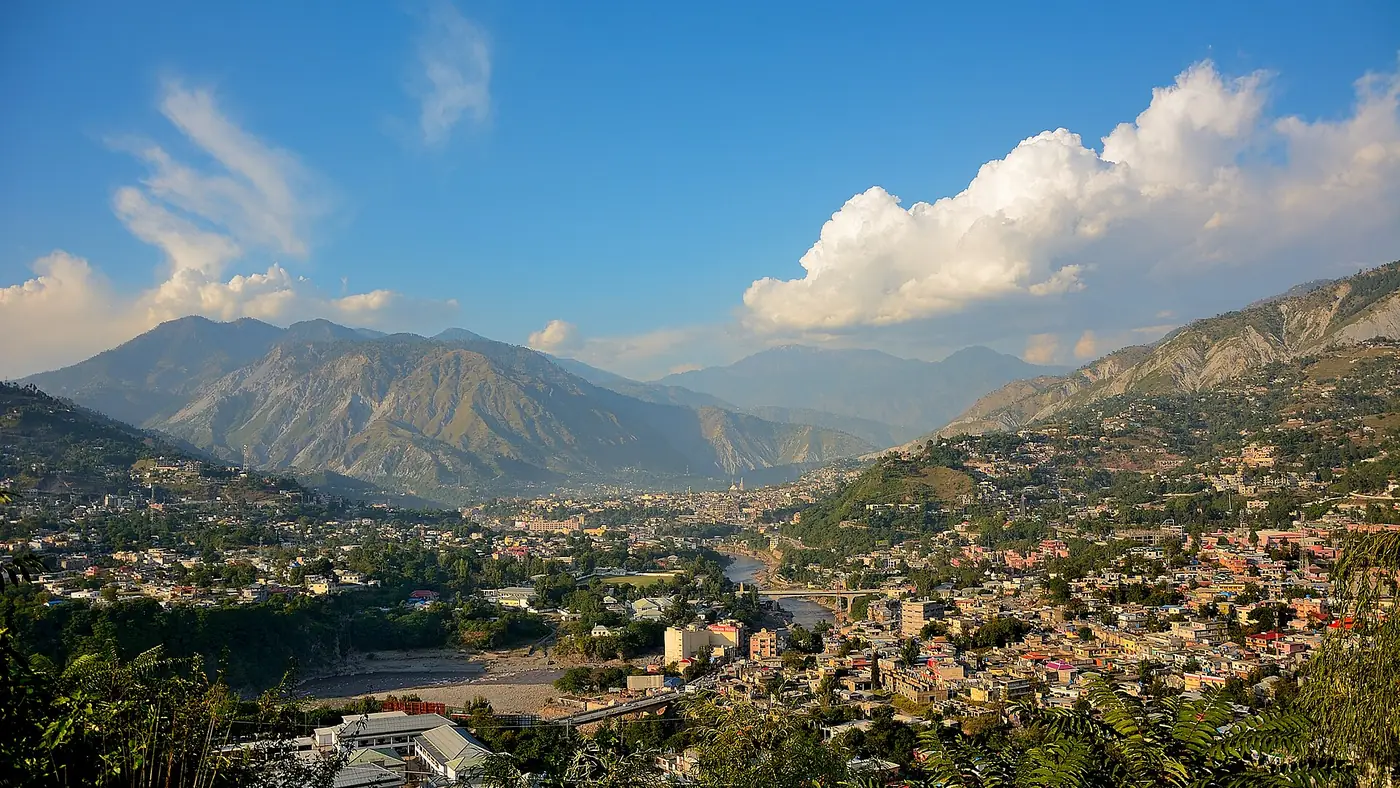
The summit is an open, grassy ridge around the shrine. On a clear day you look down on Muzaffarabad and the two rivers, and out across ridges and forested valleys in every direction, including peaks across the Line of Control. The views are what most people come for.
Around the top and on the slopes below are meadows and villages, including Saran, Sud Bun, Mushki, Sakki and Jarran, that are used for short walks, picnics and camping in summer.
Two activities have their own guides in our plan, so only briefly here:
- The walk to Pir Hasimar (Pir Asmar). A trek of about four hours, for fit walkers with a local guide and a clear forecast.
- Paragliding. Pir Chinasi has several take-off spots, but they are regarded as suitable only for experienced pilots. If you want to fly, go only with qualified pilots and proper equipment.
Pir Chinasi is also known for snow jeep rallies, held in winter.
A word on altitude
You gain more than 2,000 metres in about an hour. At 2,900 metres most healthy people feel nothing more than slight breathlessness on the walk up to the shrine. Walk slowly, drink water, and if anyone develops a bad headache or dizziness, take them back down. Anyone with a heart or lung condition should ask a doctor before going.
Facilities: food, toilets and staying overnight
Pir Chinasi is not a developed resort, and the facilities at the top are basic:
- Food and tea. There is a small cafeteria and tea stalls selling pakoras, chai and cold drinks, which are enough for a snack. Do not count on a proper meal or on hygienic food at busy times; eat in Muzaffarabad before or after.
- Toilets. Facilities at the top are limited, so use the ones in the city before you set off.
- Water. Carry your own.
- Staying the night. There are a few huts and rooms near the top, but options are limited and should be arranged in advance. The AJK Tourism and Archaeology Department has a tourist lodge at Saran, on the way up. If you plan to camp, bring your own tent, mattress and sleeping bag, and expect a cold night even in summer.
Don't rely on mobile signal on every stretch of the road, and agree a meeting point at the top if you are travelling in two cars.
Timings: when to go and how long to stay
Time of day
Go in the morning. Leave Muzaffarabad by about 8, be at the top by half past nine, and give yourself an hour or two there. Views are usually clearest early, before cloud and haze build up in the afternoon, and you will be back in the city by lunchtime.
If you are fitting Pir Chinasi around a Neelum Valley trip, the easiest slot is the morning after you come back down the valley, before the drive home to Islamabad. Our guide to places to visit in Muzaffarabad shows how it fits with the city sights.
Time of year
- May to October: green meadows, cool air and the easiest driving. Summer is cool and pleasant at the top when Muzaffarabad is hot. July and August bring the most rain and the most cloud.
- September and October: often the clearest views, with drier air after the monsoon.
- December to February: snow, usually heaviest in December and January, with temperatures falling to about -5°C. The road can close for a day or two after heavy snowfall. Go only after the road has been cleared, drive up in the middle of the day, and come down well before sunset, when wet patches refreeze.
For how Pir Chinasi fits into the wider seasons in Azad Kashmir, see our guide to the best time to visit Azad Kashmir.
Is Pir Chinasi worth it?
Yes, if you are already in Muzaffarabad. For half a day's effort it gives you a real mountain top, a working shrine and one of the widest views in Azad Kashmir, and in winter it is the easiest snow near the city.
It is not worth a special trip from Islamabad on its own unless you also want to see Muzaffarabad, because it is a five- to six-hour journey each way. It is also not for anyone who dislikes steep hairpin roads, and families with very young children or elderly parents should keep the visit short and be ready to turn back if anyone feels unwell at the top. If you have a choice between Pir Chinasi and the upper Neelum Valley, the Neelum wins; our Kashmir destination page has more on the valleys beyond Muzaffarabad.
Frequently asked questions
How far is Pir Chinasi from Muzaffarabad?
It is usually quoted as about 30 km, and the drive up takes an hour to an hour and a half on a paved road with many hairpin bends.
What is the height of Pir Chinasi?
About 2,900 metres, or roughly 9,500 feet, above sea level.
Is the Pir Chinasi road open in winter?
Usually, yes, but heavy snow in December and January can close it for a day or two until it is cleared. Check in Muzaffarabad before going, and use a 4x4 or chains after snowfall.
Can we stay overnight at Pir Chinasi?
There are a few huts and rooms near the top and an AJK Tourism lodge at Saran on the way up, but options are limited, so arrange them in advance or bring camping gear. Most visitors go up and back in half a day.
Is there public transport to Pir Chinasi?
Yes. Vans run daily between Muzaffarabad and Pir Chinasi. They leave when full, so go early and check the time of the last van down.
Whose shrine is at Pir Chinasi?
The shrine is that of the saint Syed Hussain Shah Bukhari, and the hilltop is named after him. It has a domed mausoleum and a mosque, and is visited by devotees all year.
_Muzafarabad,_Azad_Kashmir.jpg)