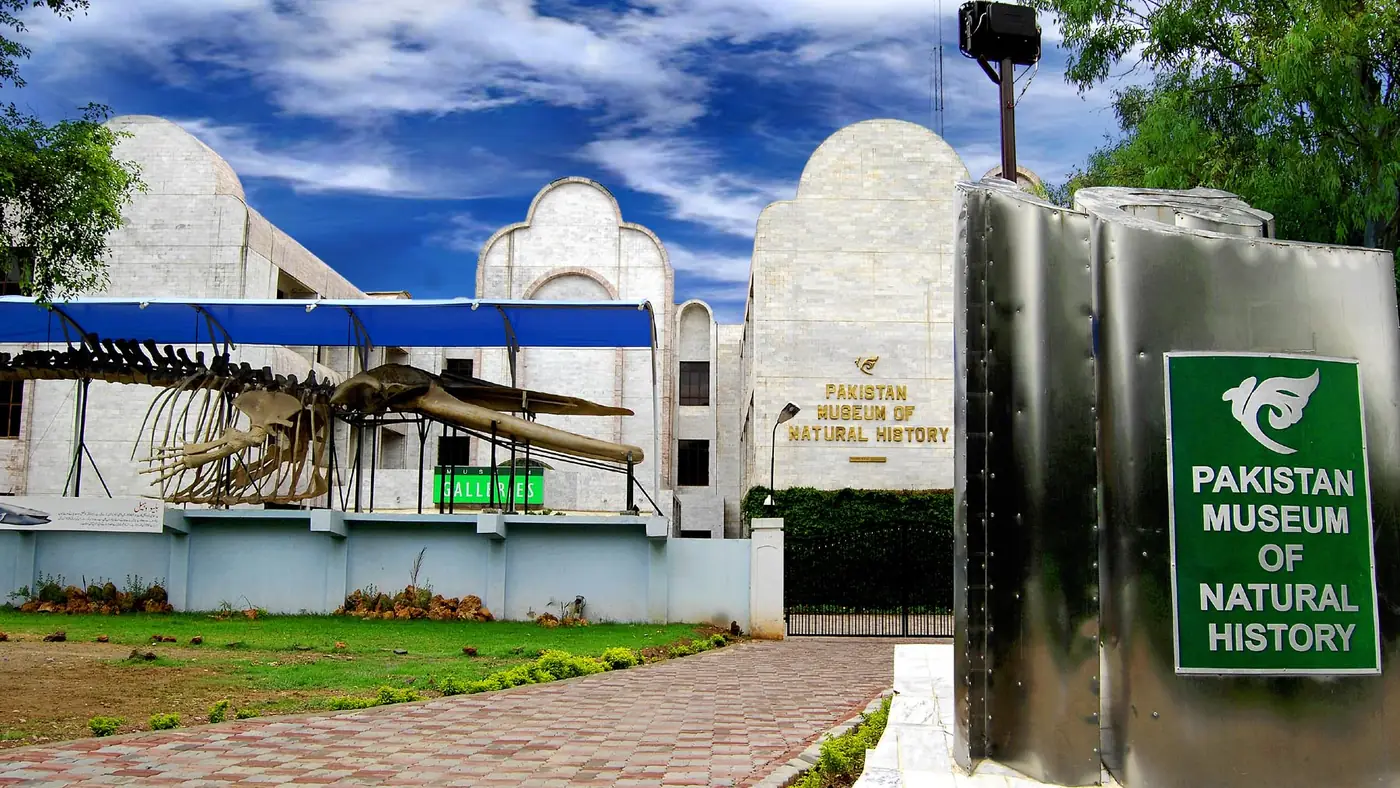
The Pakistan Museum of Natural History, on the Shakarparian hills in Islamabad, is the country's main natural history museum, with galleries covering fossils, wildlife, gemstones and geology. It's a modest, low-cost stop rather than a full day out, and it works best paired with the parkland around it rather than as a destination on its own.
This guide covers what's inside, the timings and ticket prices, and how well it holds up for a family visit with children.
| At a glance | |
|---|---|
| Location | Garden Avenue, Shakarparian, Islamabad |
| Opening days | Open daily except Friday |
| Timings | Roughly 9:30 am to 5:30 pm in winter, later in summer, with a midday break |
| Ticket price | A modest fee for adults, a lower rate for students, free for young children |
| Time needed | 45 minutes to an hour and a half |
| Good for children | Yes, especially the skeletons and the interactive gallery |
What's inside the museum
The museum is organised into a handful of themed galleries rather than one continuous exhibit, and most visitors move through in under an hour and a half.
- The palaeontology gallery is the highlight for most visitors, with fossils going back hundreds of millions of years and full skeletons, including large mounted animals, that make a strong first impression, especially for children.
- A gallery of Pakistan's wildlife displays birds, animals and plants in settings meant to reflect their natural habitats, giving a sense of the country's range of ecosystems in a single room.
- A geology and rocks gallery covers minerals and rock formations, including material relating to the Khewra Salt Mine.
- A gemstones gallery shows Pakistani gems in both raw and cut form: garnet, emerald, ruby, aquamarine and others, which tends to interest adults more than children.
- An interactive or orientation gallery offers screens and simple activities aimed at younger visitors, in both English and Urdu.
None of the galleries is especially large by international museum standards, and the displays and signage are dated in places, but the fossil and wildlife sections in particular are well worth the short visit.
Timings and ticket price
The museum keeps shorter hours in winter and longer ones in summer, generally opening at 9:30 am, with a break around midday for prayers and lunch, and closing in the late afternoon in the cooler months or into the evening during summer. It's closed on Fridays. Because hours can shift, it's worth confirming the current timings locally, especially if you're planning a visit around a specific time of day.
The ticket price is modest by any standard: a small fee for adult visitors, a lower rate for students, and free entry for young children. Foreign nationals pay a separate, higher rate. Bring cash, since it's a government-run site rather than one set up for card payments.
How well does it hold children's attention?
Reasonably well, for the length of a typical visit. The fossil skeletons and the wildlife dioramas are the two sections that consistently interest children, and the interactive gallery gives younger visitors something to do with their hands rather than just look. That said, the museum is compact, and a visit rarely stretches much past an hour even with an interested child in tow, so it works better as one stop in a longer day than as the main event.
Older children with any interest in dinosaurs, fossils or wildlife tend to get more out of it than very young children, who may lose interest in the more static geology and gemstone displays.
A little history
The museum was established in 1976 under the patronage of the Pakistan Science Foundation, and it remains one of the country's few dedicated natural history institutions, alongside its role as a research and reference collection for Pakistani geology and wildlife. The building and its galleries have been updated over the years, though visitors used to the scale and polish of major international natural history museums should adjust their expectations accordingly; it's a modest, government-run institution rather than a large-scale modern attraction.
Tips for a smoother visit
- Go earlier in the day if you can. The museum is compact, so it doesn't take long to get crowded when a school group or a tour bus arrives, and the galleries are more pleasant to walk through with fewer people around the display cases.
- Bring small notes for the ticket counter, since it's a government site set up for cash rather than card payments.
- Combine it with Shakarparian's gardens, either before or after, so the short museum visit becomes part of a longer outing rather than a stand-alone stop that only takes an hour.
- Don't expect a café or much in the way of a gift shop. Bring your own water, and plan your next meal for elsewhere in the city.
- Check whether photography is allowed before taking pictures of the displays. Rules at government museums can change, and staff on site will tell you what's currently permitted.
Getting there and what's nearby
The museum sits within the Shakarparian hills, reached via Garden Avenue off the Islamabad Expressway, and shares its grounds with terraced lawns, gardens and views over the city. It's an easy stop to combine with a short walk or picnic on the surrounding lawns; our roundup of picnic spots in Islamabad covers Shakarparian alongside the city's other options.
There's a car park on site, and the museum is a short drive from most central Islamabad sectors, so a private car, taxi or ride-hailing app is the simplest way to reach it.
Is it worth visiting?
For families with children who have any interest in fossils, animals or rocks, yes, and it's inexpensive enough that it's an easy addition to a day that includes Shakarparian's gardens or a wider Islamabad itinerary. It isn't a destination to build a whole day around, and visitors expecting the scale of a major international natural history museum will find it modest, but as a short, low-cost, air-conditioned stop with something for both adults and children, it does its job well.
If you're planning the rest of your time in the capital, our guide to places to visit in Islamabad covers the wider city, and our plan page is there if you'd like help building an itinerary.
Frequently asked questions
What are the timings of the Pakistan Museum of Natural History?
It's open daily except Friday, roughly from 9:30 am, with shorter hours in winter and longer ones in summer, and a midday closure. Confirm the current hours locally before a visit, as they can vary by season.
How much is the entry ticket?
A modest fee applies for adult Pakistani visitors, with a lower rate for students and free entry for young children. Foreign nationals pay a higher rate. Bring cash.
Is the museum good for children?
Yes, particularly the fossil skeletons, the wildlife displays and the interactive gallery aimed at younger visitors. It suits older children with an interest in animals or fossils better than very young children.
How long does a visit take?
Most visitors spend 45 minutes to an hour and a half, depending on how thoroughly they go through each gallery.
Where exactly is the museum located?
On Garden Avenue in the Shakarparian hills, reached off the Islamabad Expressway, within the same grounds as Shakarparian's parkland and gardens.